
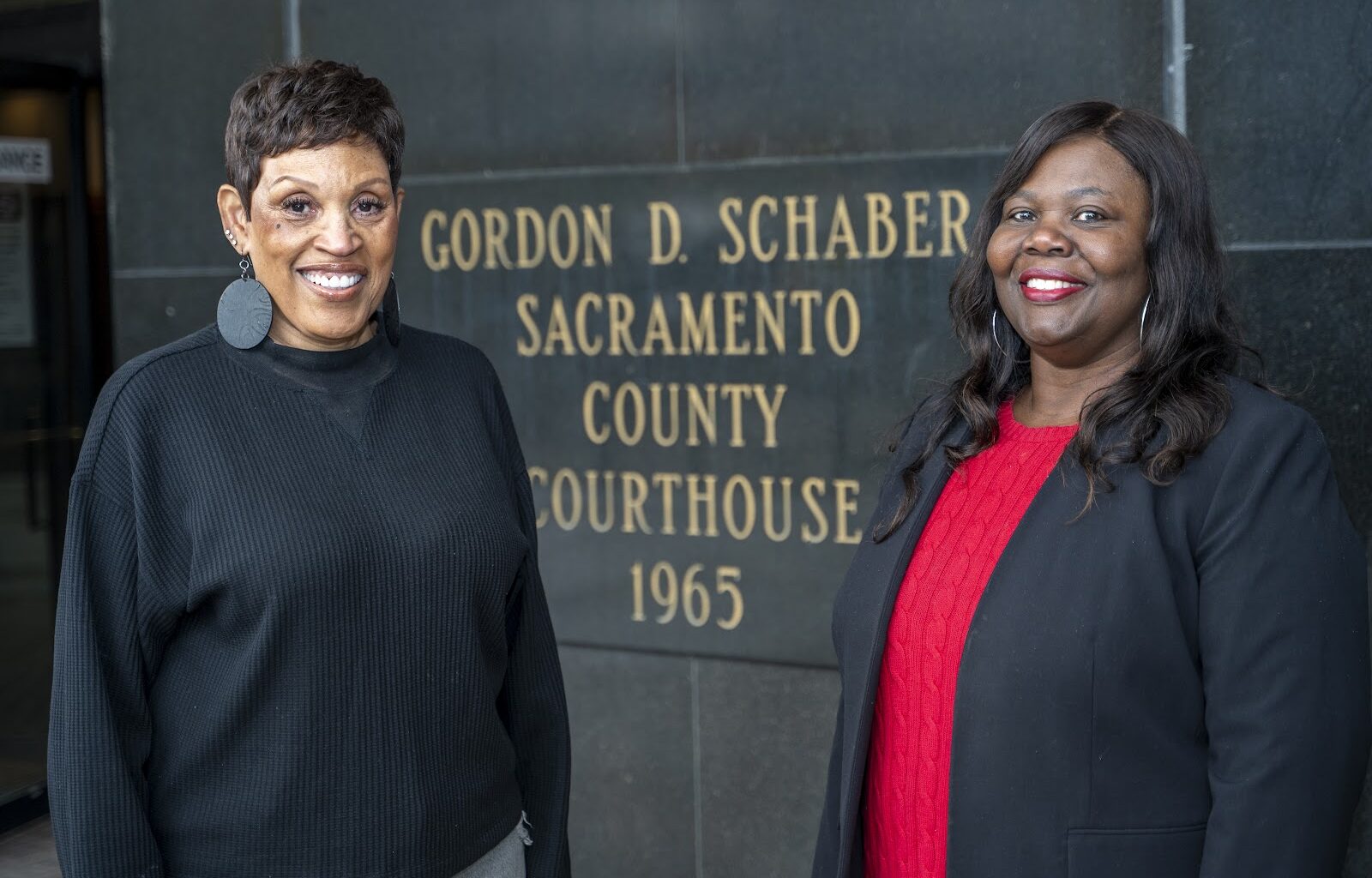
When retired policy consultant Nolice Edwards attended an orientation for potential grand jury members, the lack of diversity in the meeting was glaring and her “spidey sense” started tingling. At the end of the session, a facilitator asked if those present had any questions. Edwards lifted her hand.
“I just sort of raised the question — I said, ‘There’s not a lot of diversity in the room and not to be negative, I’m just wondering if you have some thoughts about why that is.”
At a time when diversity and inclusion are under attack, Edwards says her inquiry wasn’t shut down as it may have been in other spaces.
“They acknowledged it when I brought it up,” she says. “They didn’t downplay it or back pedal on it. I’m not sure it had been asked before.”
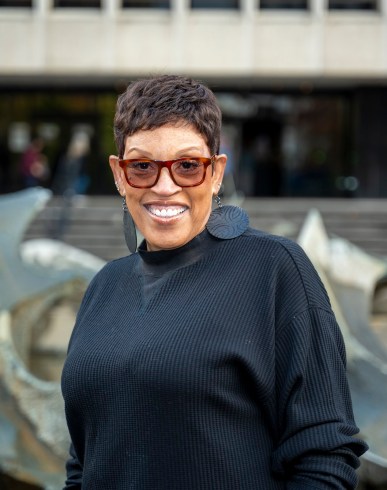 Nolice Edwards chairs the Community Engagement Committee for Sacramento County’s 2025-2026 grand jury. In addition to their service on the grand jury, jurors are required to participate in two investigative committees and an additional support committee. Russell Stiger Jr., OBSERVER
Despite its critical role as a government watchdog, the Sacramento County grand jury historically has lacked diversity.
A grand jury examines the operations, finances and conduct of local government agencies, cities, and special districts. It issues reports on its findings and can make recommendations for improvements in how local government functions.
Each year, the local grand jury has 19 members and 11 alternates. A look at rosters the last few years shows that only one or two African Americans typically serve at a given time. Current and former jurors are spearheading efforts to change that by targeting outreach to minority communities.
This push for diversity is critical, they say, as a lack of varied perspectives at the table — especially from communities that often feel unheard — can lead to an “out of sight, out of mind” effect, resulting in recommendations and investigations that fail to address the systemic issues faced by all residents.
Participation on the local grand jury was on Edwards’ “bucket list.”
“I’m always interested in anything where I can look at policy,” she says.
Having worked in the legislature for decades, Edwards waited until she retired during the COVID pandemic to check this particular item off her list.
“It’s a time commitment that’s a little tough to do while you’re working,” she says.
Individuals can expect to spend 30-35 hours a week doing the work of the grand jury and serving on mandatory subcommittees.
While Edwards did not observe a high level of participation by people of color, the opportunity to have a seat at the table and influence policy was her main motivation.
“Inclusion is always something that’s important to me, but it was really the policy aspect of it, in terms of looking at issues within government entities, that caught my eye.”
Before a recent meeting at grand jury headquarters, Edwards took stock of group photos adorning the walls that showcased jurors from the last 25 years.
“I started counting to see how many Black folks were in the pictures,” she says. “I don’t think I counted more than five at one time.”
Edwards, who chairs the grand jury’s community engagement committee, doesn’t think the lack of diversity has been deliberate.
“I think that it’s how they recruit,” she says. “I think it’s how they put the message out there about the grand jury. I think it’s where they put the message out there and how they talk about it so they catch the interest of people of color. They do things black and white, and they’re used to doing things a certain way, and so they don’t expand outside the box to say, ‘Where else can we go?’”
Edwards stresses the importance of not looking at things, and making recommendations, from a narrow viewpoint.
“Things impact people differently. I’m an African American woman, so what a white woman or white individual may think about something, because of their life experiences, are totally different from mine. If our lenses aren’t included, then the breadth of discussion isn’t there. You’re not going to be able to come to a solution or a recommendation that is balanced.”
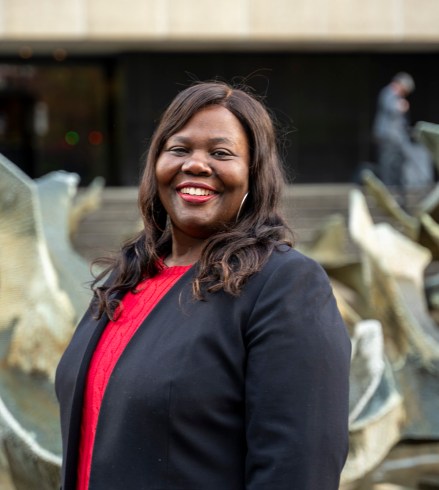 Wanda Smith, who retired from state employment in 2024, views serving for a year on the grand jury as her “civic duty.” Smith encourages other African Americans to do the same. Russell Stiger Jr., OBSERVER
It’s a matter of familiarity, says Barry F. Boyd, a community advocate who served on the 2024-2025 grand jury.
“If you’re in Arden Arcade, an affluent neighborhood, what is your circle? You know the folks around Arden Arcade, not Meadowview, not Del Paso Heights,” Boyd says.
There’s a responsibility to make sure outreach is equal, he continues. “If there isn’t representation of varying voices outside of the mainstream, you won’t have the addressing of communities outside of that mainstream.”
Boyd saw a general application announcement for the grand jury on Facebook four years ago. He initially thought it was a scam and didn’t read it. When he eventually did, he saw it as an avenue to lodge complaints about things that he saw happening in the historically disadvantaged community of South Sacramento that needed attention. The more he read, the more interested he became in “putting [his] two cents in.”
“I thought, forget the complaints, let me see if I can be a part of the process to bring in an equitable, unbiased mindset. I know I’m fair minded, so I thought, ‘Let me see what happens.’”
Boyd served after three years of trying to get on the grand jury. The stages for applying to and being selected include an online application, an initial review for eligibility, an interview with the selection committee, and a final random drawing from the qualified applicants to form the jury and alternates. Applicants must meet basic qualifications and be prepared to commit 25-35 hours per week to the service, which begins in July and lasts one year.
“It’s no joke,” Boyd says of the time commitment required.
“That’s why I think most folks who do this are retired,” Edwards says.
Edwards has prioritized creating inclusive outreach materials and widening the places where those materials are distributed.
“You start where you want your message to go and who you want it to go to,” Edwards says. “If I’m thinking about trying to get more African American individuals [involved], I’m going to where I know I can reach the community.”
While participants say diversity efforts haven’t been blocked, some interaction has shown why it’s necessary.
“From the conversations around the table on certain issues, it’s very clear to me why it’s important to continue to have and expand on diversity so you have it at the table,” Edwards says. “My life experiences are different than yours. We can be women of the same age, but what my lens is, is totally different than what your lens is and that comes out around the table.”
It makes for some good discussion, she adds.
Boyd says he was able to hold his own during such deliberations.
“I don’t bite my tongue,” he says. “White privilege is everywhere, but there was no one that was going to be able to talk around me or talk over me.”
There were trying times like with anything else, he says.
“You have a roomful of individuals and we all don’t share the same opinion or perspective. If I’m the only African American in that particular committee, I don’t give the African American perspective,” he says. “I give the fair and unbiased perspective that’s being given from an African American.”
Some in Boyd’s personal circle disapproved of his presence on the grand jury, accusing him of being “part of the system.” He was unphased.
“I’ll take the heat,” he says. “It doesn’t bother me. I’m here to help the community. I’m not the doormat; I’m not the boot licker.”
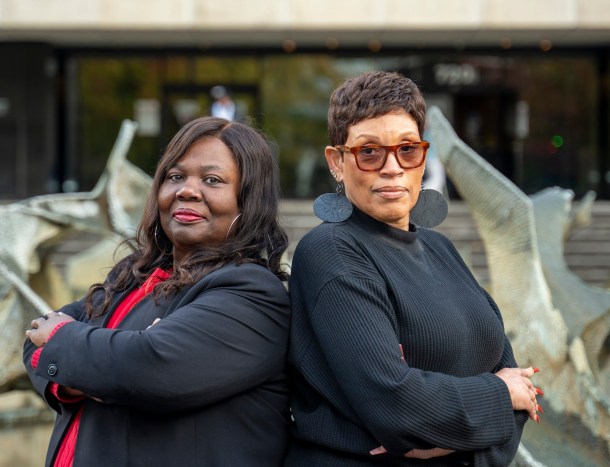 Local radio personality Wanda Smith, left, and former policy consultant Nolice Edwards, right, are bringing their perspectives to the Sacramento County grand jury. They’re two of the three Blacks currently serving. Russell Stiger Jr., OBSERVER
A historic mistrust of government and court-related proceedings also impacts low African American participation. Many confuse civil grand juries with criminal trial juries.
Current juror Wanda Smith admits she did at first.
“I thought it was going to be like it is on ‘Law & Order,” Smith says of the long-running NBC crime drama series that follows cases from investigation to trial. “I thought I was going to be indicting people and sending people to jail.”
Smith, a local radio personality, retired from her day job as a state employee. She sees grand jury participation as her “civic duty.” Smith says she’s “not one to be on the frontlines,” but more the type to discuss and explore the many nuances of an issue and how it impacts the community, which she does on her weekly KDEE 97.5 show and podcast, “Ms. Wanda’s Full Circle Radio.”
“We have opinions and thoughts too,” Smith says on the importance of diversity.
She and Edwards are among three African Americans on the current grand jury, a count that includes an alternate who recently replaced a departing juror. Smith says while the governing body has been a hard sell thus far, it will kick outreach into high gear as the application period opened Nov. 21.
“That means continuously trying to hit events and get things out and in various communication networks,” Edwards says.
She hopes to get a better response by driving home the need for more voices.
In recent years, the county grand jury has issued reports on teens in foster care, elder financial abuse and how students with disabilities fare within the Sacramento City Unified School District.
“A lot of folks don’t know that these complaints come from the public,” Edwards says. “That’s their voice. If there’s something that you want to have investigated or looked into, in terms of whether it’s a government entity or what have you … the community has the opportunity to file a complaint.”
Boyd counts his time serving on the 2024-2025 grand jury as a positive and plans to reapply someday.
Individuals can serve on the Sacramento County grand jury more than once. However, they are limited to a maximum of two consecutive years. A current grand juror can request to be a “holdover” for a second year and, if approved, serve another term.
“It’s intensive, but it’s satisfying being a part of the collective that’s presenting not only great work, but great work that will make a change, versus spending a year on something with no teeth behind it,” Boyd says.
While Smith is OK with her year of service being a “one and done,” Edwards, like Boyd, plans to continue her participation.
“I would love to probably do it as a holdover,” she says. “Just simply because of the outreach, if for nothing else than to be able to see how we’re doing, how we did this year in terms of our outreach and tracking and where we can look at the gaps again, because there’s a lot of gaps now. To look at the gaps again and how we’re doing moving forward.”
The future guides diversity efforts, Edwards says.
“We’re trying to build the pool not just for the coming year, but so that folks can go back years from now and say ‘OK, what did they do for outreach to build the list?’”The application period for the next grand jury is open and ends Friday, Jan. 2. The 2026-2027 term runs July 1, 2026, to June 30, 2027. For more, visit sacgrandjury.org.
Related