
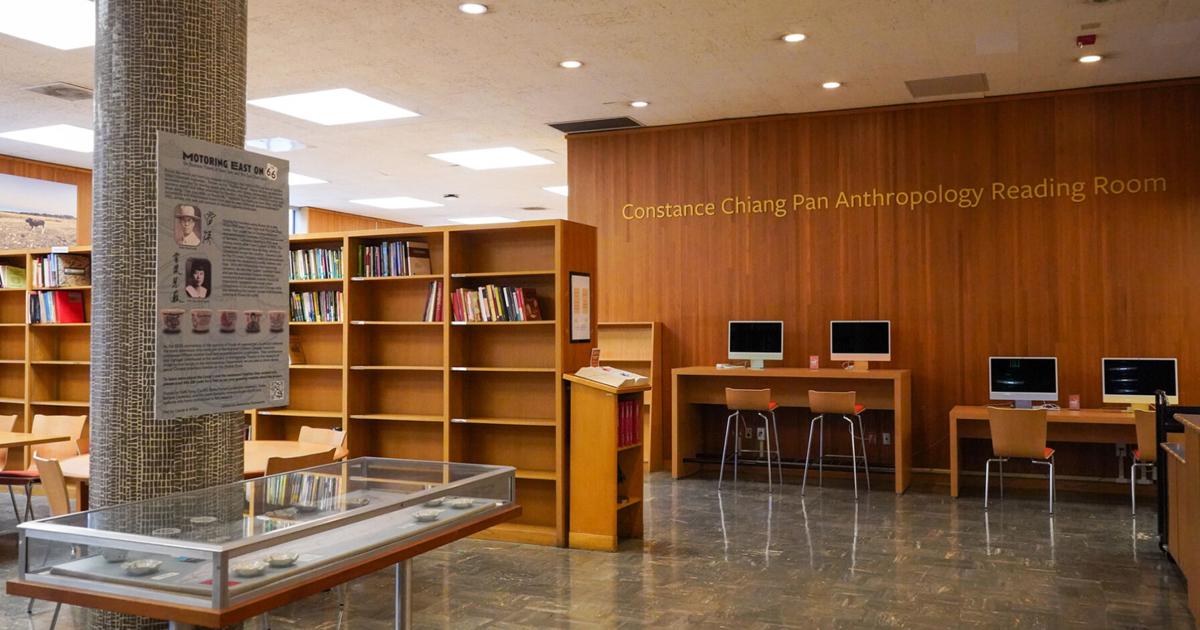
UC Berkeley’s anthropology department opened the refurbished Constance Chiang Pan Anthropology Reading Room, or CCPARR, through a gift from anthropology and economics alumna Constance Chiang Pan.
Due to budget cuts, campus closed the original Anthropology Library as a circulating library in January 2023, which was considered a “big loss” for the campus and department, according to anthropology department chair Sabrina Agarwal.
“The collection and the room itself were something students and faculty fought hard to preserve, and seeing it revitalized within our department feels like a real triumph. It also demonstrates that the University is capable of listening to its community, working with us, securing donor support, and committing to a dignified space that reflects our needs and values,” said anthropology Ph.D. candidate Sandra Oseguera in an email. “Although I would have loved to see it remain a full library, I am grateful that we retained this space, and I am excited to help ensure it thrives going forward.”
The initial announcement about the library’s closure in 2023 led to a months-long occupation and protest from students and faculty. Eventually, campus and then-Chancellor Carol Christ allowed the department of anthropology to keep the space to create a reading room.
It took almost eight months for the library staff to help retain and reorganize the “invaluable” collection of 20,000 historical anthropological volumes, selection of emeriti books and the UC Berkeley Folklore Archive that was saved by campus’s smaller renovation funds, according to Agarwal. The other 10,000 to 15,000 books were placed in another campus library or can be obtained at the Northern Regional Library Facility, where UC Berkeley archives are stored.
With donations from cultural and educational institution SR Pan Foundation, Agarwal said the new reading room will provide an innovation learning studio for small group student learning and community engagement, host visiting speakers with the advanced AV system and be a state-of-the-art conference room for remote global collaboration.
According to Agarwal, it will also allow for the creation of innovation installations led by faculty and students, the development of student-led initiatives such as the new Handprint undergraduate journal as well as a space for student groups, including the Anthropology Undergraduate Association, to organize and host student events.
“(The reading room) supports a mode of learning and discovery that happens through encounter … engaging with knowledge materially rather than only digitally,” Oseguera said in the email. “In a moment when AI and digital tools increasingly shape how knowledge is produced and accessed, the Reading Room becomes even more important. Books and physical collections embody the materiality of human inquiry; they anchor us in the history, ethics, and disciplinary conversations that continue to shape anthropology today.”