
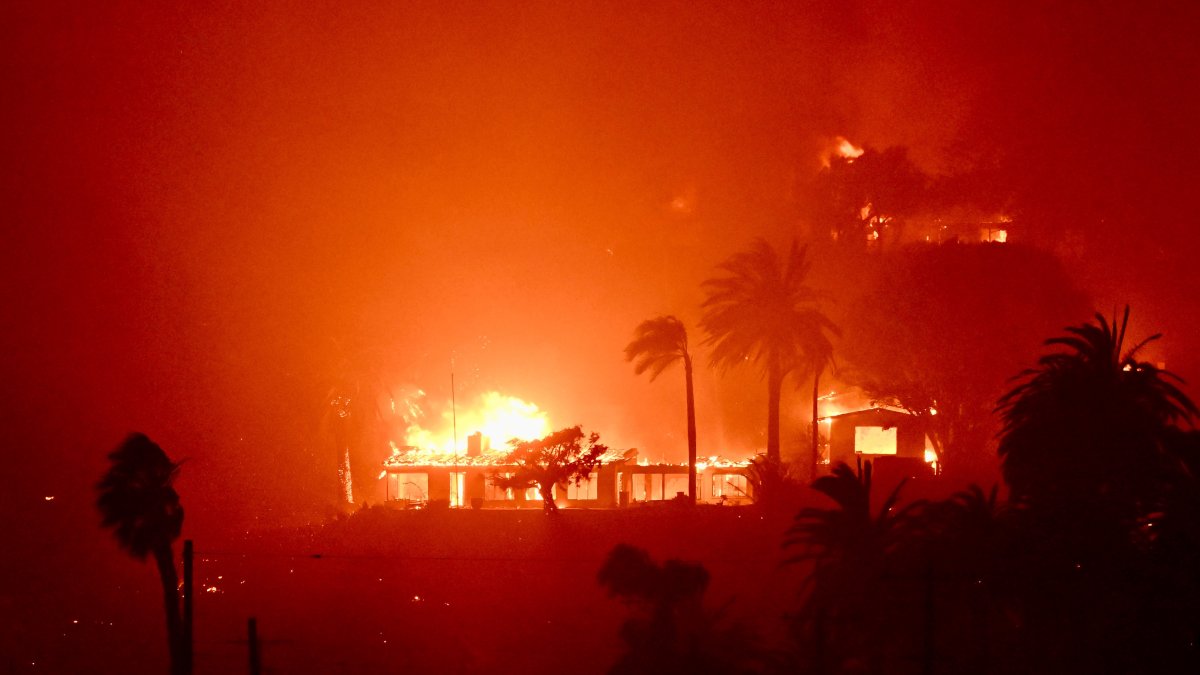
A judge Tuesday ordered the production of documents and the depositions of firefighters and state officials in the lawsuits filed by Palisades fire victims against the City of Los Angeles and the State of California, that allege the government allowed hazardous conditions to exist that led to the loss of life and property during the wildfires in January.
LA Superior Court Judge Samantha P. Jessner limited some of the requests from the fire victims’ attorneys, but directed that the depositions of 12 LA firefighters and 5 California State Parks employees be conducted, and that documents related to their involvement in the January 1 ‘Lachman’ fire be turned-over.
“What I’m trying to achieve is some limited discovery that is meant to preserve some of the recollections…of the people who responded to the Lachman fire,” Judge Jessner said.
The Lachman fire ignited around midnight on January 1 and was contained within a few hours. The ATF said it concluded embers smoldering underground from that fire were reignited on January 7 and exploded into the Palisades fire during intense winds.
Federal prosecutors have charged 29-year-old Jonathan Rinderknecht with causing the Lachman fire; he has pleaded not guilty.
The fire victims said in court filings this month they needed to record the depositions as soon as possible, in order to investigate whether firefighters were directed by state employees to limit the ‘mop-up’ following the Lachman fire after the flames had been extinguished but while the ground was still smoldering on January 1 or 2.
“They may have been told by state parks people that they couldn’t do an overhaul in the entire burn scar area, and that’s why we want to take the depositions and get the truth,” fire victims’ attorney Alexander Robertson said after the hearing.
A photo captured on January 1 and included in Robertson’s court filing showed firefighters in a charred clearing talking with a person wearing a state parks jacket or sweatshirt within the Lachman fire burn area, and federal prosecutors recently issued a subpoena to LAFD for text messages, emails, or other communications exchanged amongst firefighters who were there.
“The notion that State Parks favors plants over people is ludicrous,” California State Parks said in a statement in response to the lawsuit allegations last week. The agency did not respond to questions about the judge’s order Tuesday.
“State Parks never hinders an active firefighting response, and firefighting decisions are up to the responding agency,” it said.
In a response filed in court Deputy Attorney General Kenneth Lake said claims in the lawsuits against California, “fails to state facts,” sufficient to pursue a legal claim against the state and urged the court to dismiss the actions.
The LA City Attorney’s Office did not immediately respond to a request for comment but said in a court filing the broad allegations didn’t meet the legal threshold for claims against the City and should be dismissed.
During the hearing Tuesday Robertson and other plaintiffs’ attorneys made reference in court to a fire planning document for Topanga State Park that instructs that certain environmentally sensitive areas are not to be overhauled with shovels or tools after a wildland fire, but the lawyers said the document was missing the maps that show which areas are sensitive.
Judge Jessner directed the state to produce the maps.
More than 3,500 Palisades fire victims have joined a number of lawsuits that allege the local and state governments were negligent and should be held financially responsible for the damage that resulted from the fire.
Some of their initial legal filings in the case sought to blame the LA Department of Water and Power for failing to maintain an adequate water supply for firefighting and possibly contributing to the spread of the fire by failing to quickly de-energize electric lines.
The City has denied the claims against the DWP in court filings.