
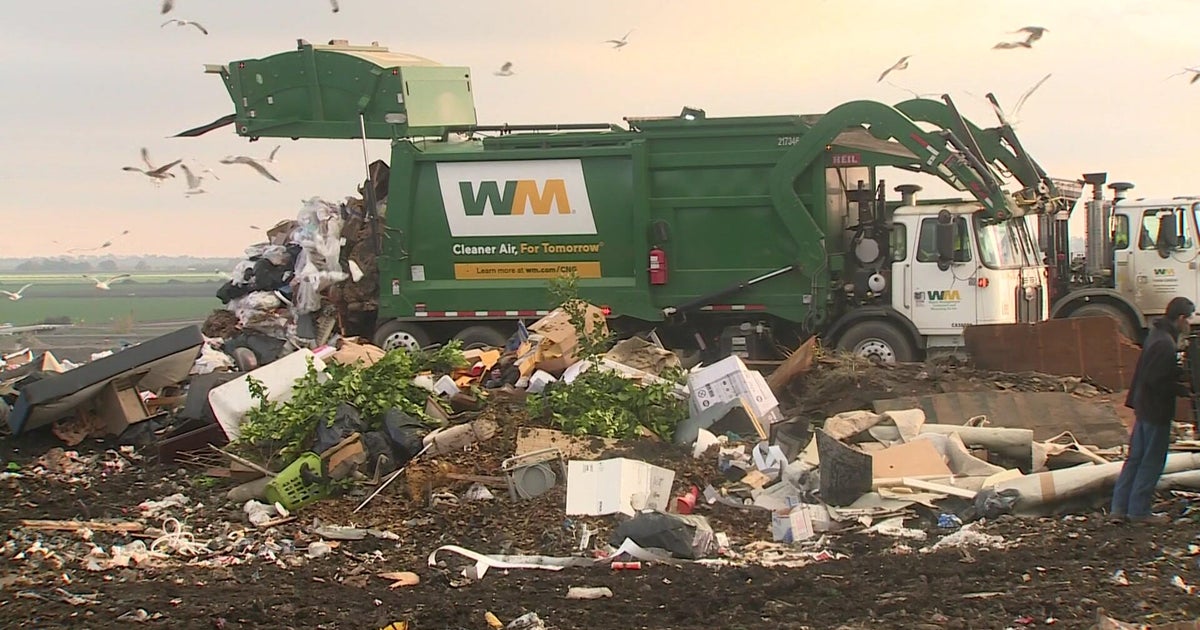
The State of California is now using a satellite to spot greenhouse gas emissions from space, and one of the first problems it has pinpointed is in Yolo County.
Trucks dump tons of trash each day at the county landfill near the city of Davis. All that waste is buried underground, where it produces methane.
Landfill director Marissa Juhler says the facility has more than 150 extraction wells to capture methane, so it doesn’t escape into the atmosphere.
“There are greenhouse gases like methane that are really detrimental to the environment,” Juhler said.
However, sensors onboard the state’s new satellite spotted a plume of methane gas leaking from the landfill and drifting over nearby farmland.
Landfill crews actually spotted the leak a day earlier, which was caused by a broken well cap. The problem has now been fixed, but they say it shows the value of using new technology.
“There could be landfills out there that are not doing the proper monitoring that definitely need that extra oversight,” Juhler said.
The California Air Resources Board (CARB) is spending $95 million on the methane monitoring satellite.
“Landfills are the second biggest source of methane in the state,” said Cliff Rechtschaffen, a CARB board member.
Last week, the board also released more stringent methane monitoring standards, but Yolo County has some concerns over the cost.
“We think it’s going to be far more expensive,” Juhler said. “It could be an extra dollar on your garbage bill each month. It might be an extra $4. We don’t know.”
The state’s new regulations and space-based surveillance are part of a goal to reduce methane emissions by 40% by the year 2030.
“If the state finds it and it’s detected, we’re going to fix it,” Juhler said.
So what happens to all that methane? Yolo County actually sells the gas to SMUD, where it’s used to generate up to five megawatts of electricity.