
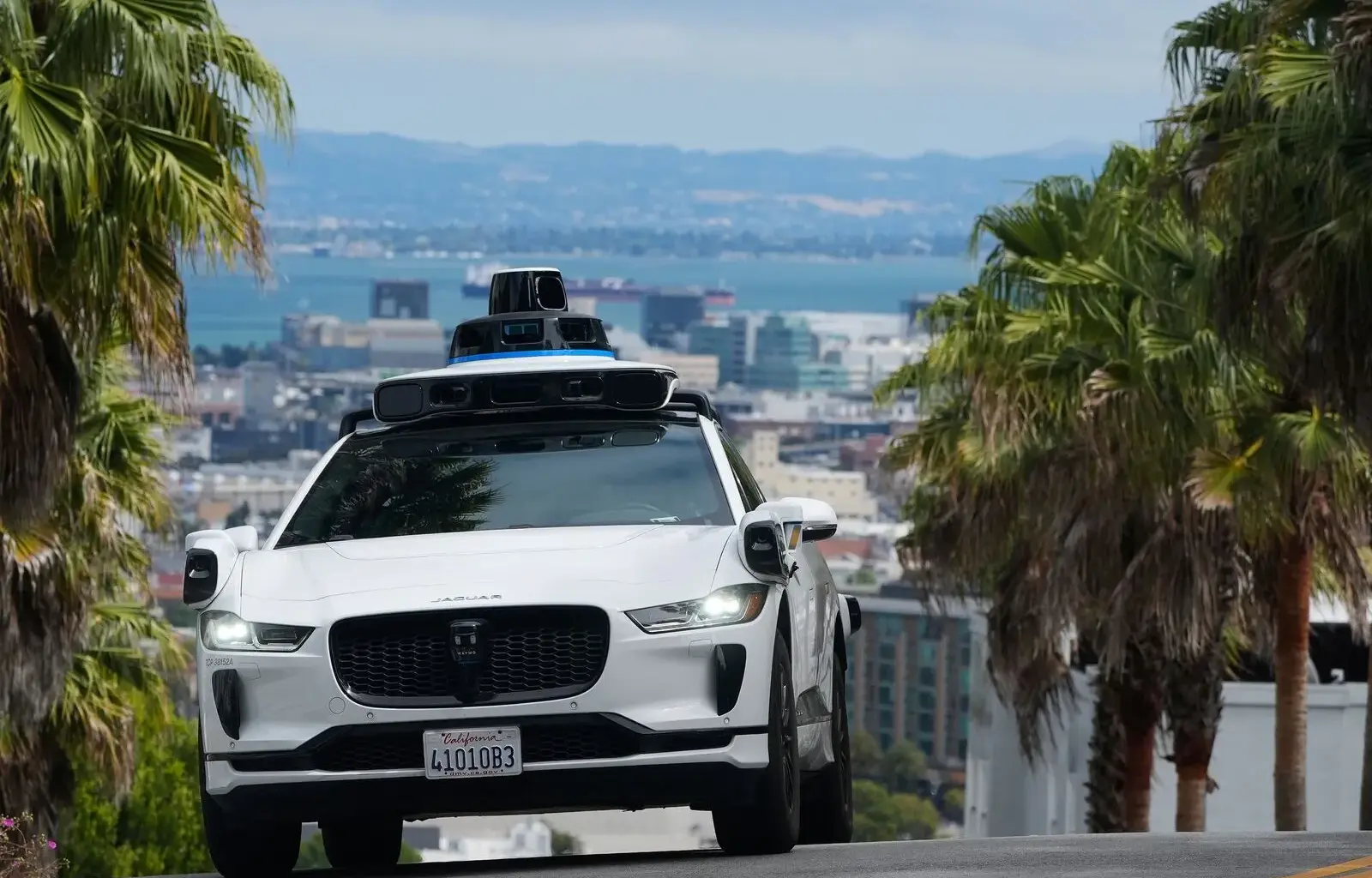
Autonomous cars are one step closer to driving passengers in Oakland and other East Bay cities.
But can they navigate Oakland’s hundreds of potholed roads and the prevalence of red-light running and speeding that makes driving dangerous in the city?
Those are some of the questions locals are asking a few days after the state’s Department of Motor Vehicles approved Waymo, a San Francisco company, to “conduct driverless testing and deployment operations” in the East Bay, including Berkeley, Fremont, Hayward, Alameda, and Oakland.
The department’s approval follows conversations between company officials and local politicians and comes after a few years of operations in neighboring cities, including San Francisco.
Waymo also announced last week that its cars have been approved for operation in additional cities across the country, including Detroit.
In the East Bay, Waymo will be allowed to deploy Jaguar I-Pace and Zeekr RT SUV electric vehicle models, outfitted with cameras and radar and LiDAR sensors that help the car’s software systems gain awareness of tens of thousands of details on and off the road.
Most Waymo pricing rates per ride are above those of Uber or Lyft, with one analyst telling the TechCrunch technology blog last year that during peak hours, a ride costs about $11 more than a Lyft and $9.50 more than an Uber.
DMV approval is a critical part of getting robo-cars on the road here. However, the company still needs a permit from the California Public Utilities Commission. It’s unclear when the CPUC might take this up.
The five-member CPUC Board includes several people with experience in transportation regulation, including John Reynolds, who was the lead lawyer at Cruise, the autonomous-vehicle company, when he was first appointed by Governor Gavin Newsom in 2021. Cruise ended its autonomous vehicle work after several safety incidents and a lack of market success, with its parent company, General Motors, taking the tech in-house. Another board member, Alice Reynolds (no relation to John Reynolds) is on the public policy board of the electric vehicle advocacy organization Veloz.
The operation of Waymo cars and other automated vehicles in San Francisco and elsewhere has excited people about their potential benefits, such as possibly reducing rates of assaults. But there remain concerns about robo-cars’ ability to handle the spontaneity of everyday driving. Waymos have hit cyclists and pedestrians, run over pets, and created traffic jams. In response, Companies like Waymo have argued their cars cause fewer injuries on average than human drivers.
Members of the Oakland City Council did not respond to questions from The Oaklandside about the DMV’s decision to approve autonomous vehicles on local roads.
Bo Zou, a Civil, Materials, and Environmental Engineering professor at the University of Illinois Chicago, who has worked on autonomous research, said Waymo’s operation could be a “net positive” for safety on Oakland roads but “only if it is done in a cautious, transparent, and locally tailored way.”
Zou noted that while vehicles can reduce crashes compared to human drivers, they are not perfect and can’t replace the need to fix potholes and other infrastructure problems, or improve law enforcement. He recommends that, before the company deploys the cars in Oakland, there is “a phased, limited rollout at first; extra caution in sensitive areas; provision of transparent, Oakland-specific safety data, mechanisms for residents’ feedback, and equity commitment so that autonomous vehicles do not just cluster in wealthier areas.”
“*” indicates required fields