

Page last updated 11/24/2025.
In alignment with leading
medical, health, and patient advocacy groups, the
County of San Diego affirms that vaccines are not linked to
autism. We remain committed to ensuring residents continue to
have access to safe and effective vaccines that are based on
credible, transparent, and science-based
evidence.
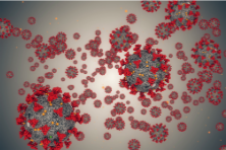
COVID-19 is a respiratory disease caused by SARS-CoV-2, a coronavirus
discovered in 2019.
COVID-19 most often causes respiratory symptoms that can feel much
like a cold, the flu, or pneumonia. Other parts of your body may also
be affected by the disease. Most people with COVID-19 have mild
symptoms, but some people become severely ill.
See below, or click the following links, to learn more about:
The California Department of Public Health (CDPH) continues to
recommend that everyone ages 6 months and older should have access to
receive the COVID-19 vaccine. CDPH also emphasizes the importance of
additional protection for groups at higher risk of severe illness
including:
You can also take simple everyday steps to protect
yourself and others—like covering your mouth when you cough or
sneeze, washing your hands regularly, improving indoor air quality,
and staying home and away from others if you’re feeling sick.
COVID-19 mainly spreads from person to person through tiny droplets
in the air.
When someone who is sick with COVID-19 coughs, sneezes, or
talks, the droplets go into the air. Other people can breathe them
in or get them in their eyes, nose, or mouth. Sometimes,
the droplets land on things. If someone touches those things and
then touches their face, they might get sick too.
People with COVID-19 have many different symptoms, from mild to
serious. Symptoms usually show up 2-14 days after being exposed to
the virus.


Shortness of breath or difficulty breathing


New loss of taste or smell


This list does not include every possible symptom. Symptoms can
change with new COVID-19 variants and may be different depending on
whether you’re vaccinated.
If you have symptoms or were exposed to someone with COVID-19 and
have developed symptoms, test immediately. Testing can help you know
if you have COVID-19 so you can decide what to do next.
Getting a COVID-19 Test
Buy a self-test (at-home test). Buy at-home tests
online at pharmacies or in stores. If you have health
insurance, it may cover the cost of the test. Most
at-home tests can be safely used past the date on the box. Check
the Food
and Drug Administration (FDA) website to see if your
COVID-19 test’s expiration date has been extended.
Go to a testing site in your community.
Treating COVID-19
Most people with COVID-19 have mild illness and can recover at
home. You can treat symptoms with over-the-counter medicines to help
you feel better.
There are also treatments available that may help reduce how sick
you become if you get COVID‑19. The U.S. Food and Drug Administration
has authorized, or approved, several antiviral
medications. These medications treat mild to moderate COVID-19
in people who are more likely to get very sick.
People who are more likely to get very sick include:
Older adults, 50+ especially those 65+ years of age.
People who are unvaccinated or not up-to-date with the COVID-19
vaccinations. People with certain medical conditions, such as
chronic lung disease, heart disease, or a weakened immune
system.
Being vaccinated makes it much less likely that you’ll get very
sick. But studies have shown that treatment can still help, even if
you’re vaccinated.
A healthcare provider will help decide which treatment, if any, is
right for you.
Don’t delay! Treatment works best when started as early as
possible – within 5-7 days after you first develop symptoms.
California Department of Public Health
Centers for Disease Control and Prevention