
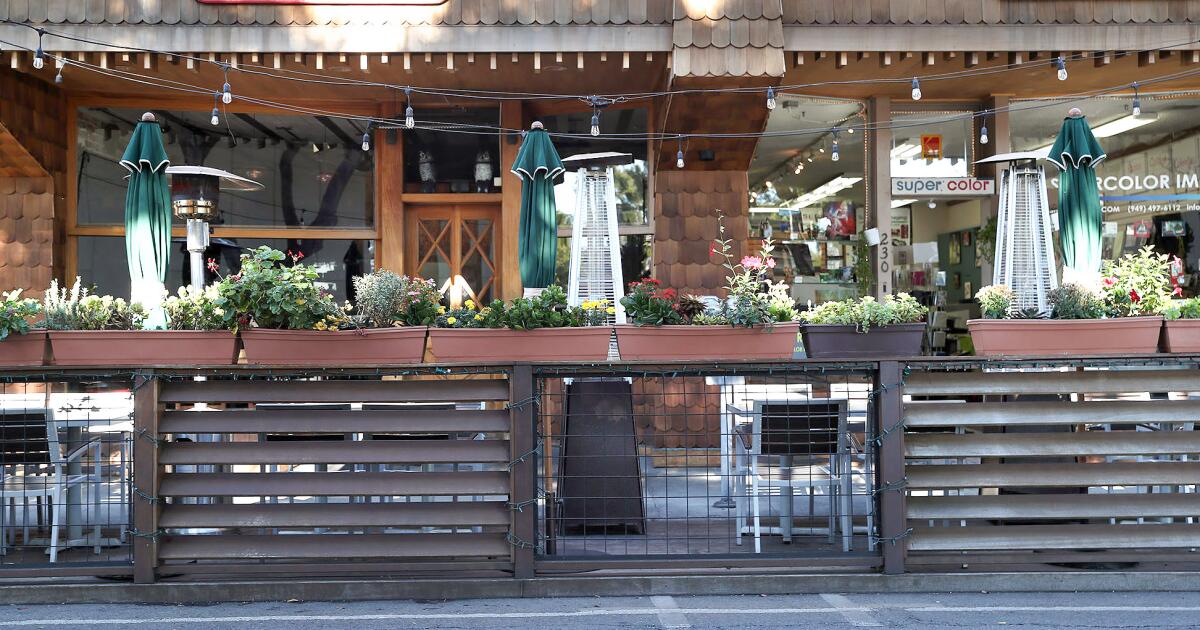
Laguna Beach’s outdoor dining scene could be in for some changes, particularly for restaurants not located on the downtown promenade, as city officials have expressed interest in developing a permanent outdoor dining program.
The coastal community’s temporary use permit outdoor dining and parklet program is set to expire at the end of this year. The city, like many others, turned to outdoor dining to provide assistance to restaurants in a challenging economic environment during the coronavirus pandemic.
Recently passed Assembly Bill 592 will extend or make permanent several pandemic-era relief efforts. Enacted in October, the legislation allows for exemptions from local parking requirements to accommodate outdoor dining.
Additionally, the Department of Alcoholic Beverage Control will have the authority to approve expanded alcohol service areas for three more years.
During a Nov. 18 City Council meeting, staff sought direction on the future of outdoor dining with the new rules coming into play. The council balked at the idea of the continued use of parklets at the expense of public parking spaces, although that conversation did not extend to the Promenade on Forest.
The council provided direction to staff that included a six-month extension of temporary use permits for the restaurants currently operating parklets that sit on public parking spaces. Eateries that fit into that category have until then to transition their outdoor dining setting to the sidewalk or risk losing it entirely.
Assembly Bill 413 is also a consideration. That legislation, which became effective Jan. 1, prohibits vehicle parking within 20 feet of the approach side of a crosswalk. Those spaces could be converted into landscaping, pedestrian amenities or potentially sidewalk-based dining areas.
Adonis, located on Park Avenue, Oto Sushi on Glenneyre Street, Salerno on Beach Street and Tango on Forest Avenue each used two public parking spaces for parklets.
“I don’t personally favor keeping the parklets there because, first of all, all the businesses knew that it sunsetted at the end of this year,” Councilwoman Sue Kempf said. “That was always the case — it was extended once, I think. I don’t really favor it because … I don’t think they look very good. In fact, I could point out some of them I just find appalling.
“I like outdoor dining. I like the idea of the promenade. I think people like a gathering space, but it is taking up parking. We can say that we’re going to get more sidewalk dining, we’re going to do our bump-outs and stuff, but it will be a couple years probably before that’s done.”
Mayor Pro Tem Mark Orgill took a similar tone, remarking that there were spaces being “taken advantage of.”
“We spend a lot of time walking around downtown and evaluating the retail climate,” Orgill said. “We’re all talking constantly, being anxious about getting some retailers that can really bring the downtown to life, but then I see these parklets that have been let go. … I find it quite frustrating.”
Currently, the city’s temporary outdoor dining and parklet program allows for up to 68 parking spaces to be repurposed for outdoor dining. A staff report noted there are 49 total spaces being by businesses for that purpose.
Las Brisas on Cliff Drive, which is adjacent to Heisler Park and overlooks the sea, converted 14 private parking spaces. Laguna Beach Beer Company on Laguna Canyon Road converted six spaces for outdoor tables.
Council members pushed for long-term, sidewalk-based solutions, while also indicating a desire to evaluate businesses operating outdoor dining on private spaces individually.
“I think that’s a better solution long term, and I want to give businesses time to make that shift,” Councilwoman Hallie Jones said. “In terms of private spaces … I think we need to look at them on a case-by-case basis and see what the parking requirements are going to be, and how we start recapturing some of those parking spaces, because I don’t think it’s really fair to be using these private spaces for dining and putting all those customers out into city spaces.”
The council directed staff to extend the temporary use permits by up to one year for businesses offering outdoor dining without the use of parking spaces while a permanent program is developed.
Restaurants using private parking areas may also see their temporary use permits extended by a year. Staff would evaluate each property and return with recommendations, including the possibility of conditional use permit amendments, parking management participation or applying existing parking-reduction provisions.
For businesses currently using public parking spaces for parklets, the council directed staff to limit the extension of those temporary use permits by six months. Those establishments will also be subject to updated maintenance and operational standards. Guidelines could prohibit the use of parklets for storage, call for them to be open during business hours and require upkeep of the outdoor dining facilities.