
What’s at stake:
Seven LGBTQ+ organizations received community grants from the City of Fresno to strengthen existing programs or develop new resources amid declining federal funding.
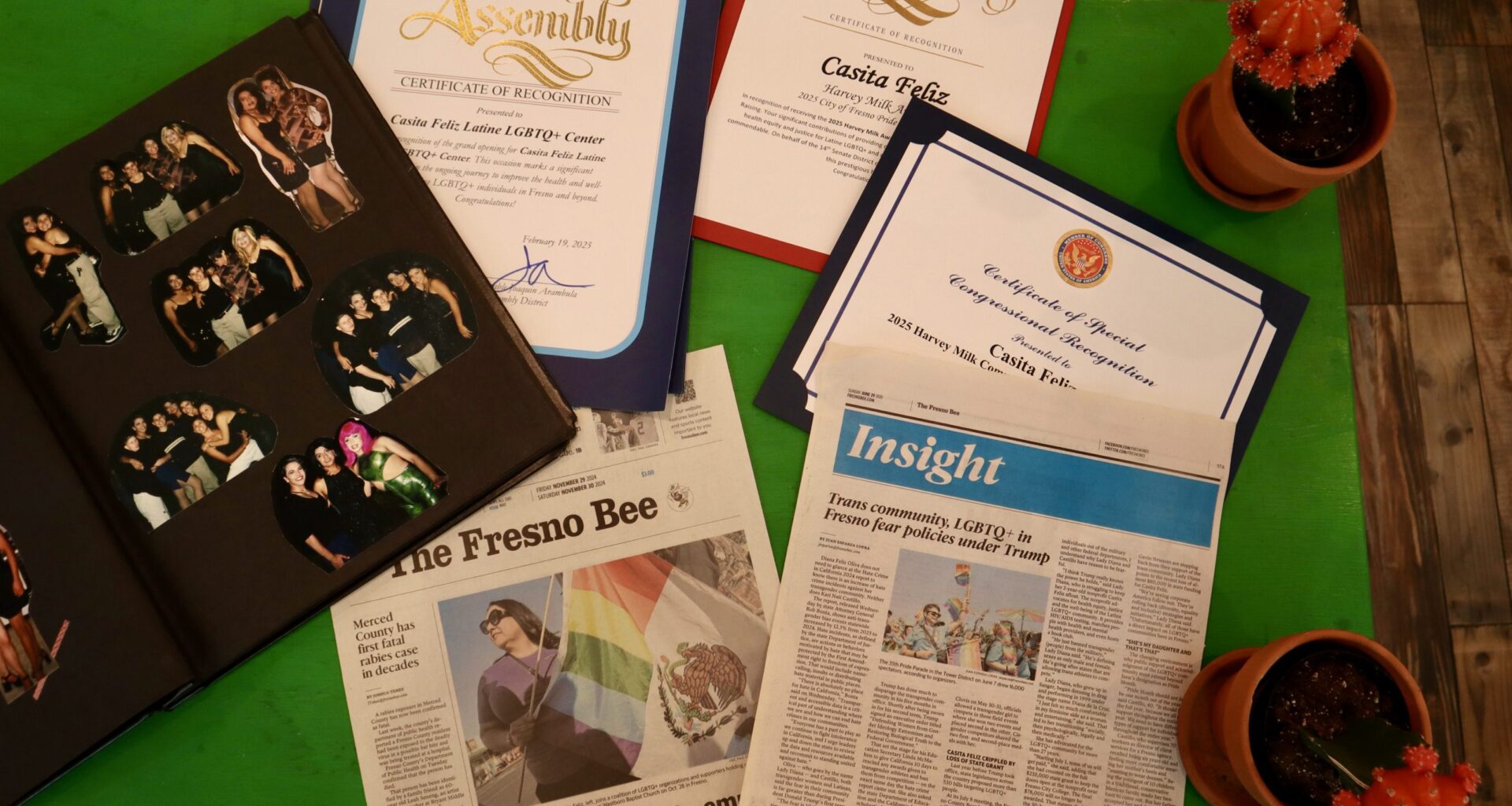
When Diana Oliva returned to Fresno two years ago with the vision of opening Casita Feliz, she imagined purchasing a commercial space to launch what would become the region’s only Latine LGBTQ+ community center.
But after repeated rejections from property owners, which she suspects were tied either to her being a trans woman or to her intention to open an LGBTQ+ nonprofit, Oliva pivoted. She bought a home in the north Tower District and opened its doors to the community.
From that living room, Casita Feliz held its inaugural Día de los Muertos gala in November 2023, raising nearly $15,000 and setting the foundation for a series of cultural gatherings, youth and senior support groups, and wellness events that quickly established the organization as a new hub for queer community-building in Fresno.
She said the rapid growth of Casita Feliz has been fueled by a patchwork of state and local grants and a network of donors who have stepped in at critical moments.
This includes a recent $10,000 community grant from the City of Fresno written in the budget by Councilmember Annalisa Perea. Casita Feliz is one of seven organizations who received the same grant.
Never miss the top stories in Fresno — sign up for our free, daily newsletter.
“I’m proud to be back in Fresno,” Oliva said. “And I’m proud that my city government supports me, my identity, and my culture.”
Still, Oliva says the organization is bracing for an increasingly difficult funding climate under a federal administration intent on eliminating LGBTQ+, DEI, and BIPOC-focused opportunities nationwide.
In this shifting landscape, support from the city of Fresno has become increasingly important for LGBTQ+ communities. This year marks the second cycle of the city’s LGBTQ+ community fund, which awarded $70,000 among seven organizations. The inaugural round was supported by federal American Rescue Plan Act dollars tied to COVID-19 pandemic recovery, but this year’s grants were covered by the city’s own general fund.
No matter what’s happening in Sacramento or Washington, we will continue to do what we’ve always done: hold our local officials accountable and report the stories that shape daily life in Fresno.
Become a monthly member today during our crucial end-of-year campaign so that we can continue to tell hyperlocal stories you won’t find anywhere else. All donations are matched through December 31.
How did the grants come about?
Perea said she’s led the effort to embed LGBTQ+ support into the city budget.
“One of the biggest needs that we have here locally is funding for our LGBTQ+ nonprofits,” Perea said. “This has become more of an exacerbated issue, given how cuts at the federal level have trickled down to impact these organizations who historically serve some of our most vulnerable populations.”
The City of Fresno was threatened by President Donald Trump’s administration’s efforts to yank federal funding away over demands to ban DEI programs, remove all trans references and certify that it will not use grant funds to promote “gender ideology.”
Seven local governments and agencies, including Fresno, came together to file a joint lawsuit in August and a federal judge’s decision a month later blocked the Trump administration’s efforts.
Perea emphasized that amid rising political hostility toward LGBTQ+ people, strong allyship and accessible resources are essential. The city’s grants help nonprofits address major gaps in public health, mental health, and crisis support—areas where LGBTQ+ residents are often underserved.
She highlighted Casita Feliz, which supports Latine trans residents, as an example of how small, community-based groups meet urgent needs. Strengthening these organizations, she noted, is especially important now, as LGBTQ+ youth remain among the most vulnerable in Fresno.
Although the grants are relatively “nominal in the grand scheme,” Perea said that they represent a “level of investment that the city has never made in this part of our population before.” She added that “a city that truly believes in equality cannot simply just say the words — we have to live them.”
She said the city must continue expanding its support, from grants to visible commitments like the LGBTQ+ liaison position, raising the Pride flag each June, and supporting Fresno’s annual Pride parade.
Robin McGehee, Fresno’s first LGBTQ+ liaison, said the city’s recent grant funding comes at a critical moment for LGBTQ+ residents, who she described as facing heightened anxiety amid a polarized political climate.
“I feel it as a lesbian woman who is raising a family and an active participant in this community,” McGehee said. “I’m not only nervous for myself, but for my immigrant neighbors, and for our country’s future in general.”
McGehee emphasized that the grants provide tangible support for the local LGBTQ+ community and signal the city’s commitment to ensuring that local community organizations have the resources to serve those who need them most.
“When I live in a community that makes me feel like my neighbor, no matter whether or not they identify like me, cares about my well-being and is supporting the organizations that take care of my community, it makes me feel safer,” McGehee said. “It makes me feel more valued as a citizen of Fresno.”
The grants, McGehee noted, are part of a broader effort to strengthen support networks for LGBTQ+ residents in Fresno, encouraging more local organizations to apply and expand their programs. She added the City of Fresno’s first-ever grant writing workshop for LGBTQ+ serving organizations for help with shaping a grant idea or proposal.
The workshop will also cover that LGBTQ+ funding does exist at the city level. The workshop is in collaboration with Fresno State’s Department of Women’s, Gender and Sexuality Studies on Dec. 1.
What will the grants be used for?
Casita Feliz plans to use its $10,000 city grant to launch a six-month community arts project called “Nuestra Raíces,” (“Our Roots”), aimed at archiving decades of Brown queer history in the Central Valley—stories Oliva says have long been overlooked.
“We want to collect old photos for the past 15 to 75 years of brown queer people who are our trailblazers,” Oliva said. “If it wasn’t for them, we wouldn’t have the liberties as brown queer people we do have today in 2025.”
While Fresno State archives general LGBTQ+ history, Oliva noted there’s little focus on brown queer community members. The grant will fund a social media campaign encouraging residents to share photos from the 1960s to today, building both an archive and a community arts gallery.
“Sometimes community centers have these stock photos of white gay men, but not necessarily Mesoamerican or Indigenous communities,” Oliva said. “I want Brown queer people to walk in and see their own reflections on the walls, to feel at home.”
The project is expected to debut as part of Fresno’s ArtHop circuit and, if funded further, could expand into a traveling exhibit. For now, Oliva said the grant is a critical start toward preserving stories that have too often been erased.
WestCare California in Fresno, part of a nationwide network, offers physical and mental health services, housing support, and educational programs. This is the first time the organization has received the city’s LGBTQ+ community grant, which Ashley Morris, education and prevention director, says will help expand vital services for queer and trans residents.
Morris oversees programming at The Living Room, the organization’s HIV drop-in center, where WestCare launched an LGBTQ+ support group about three years ago. The weekly group now draws roughly 14 to 15 participants, and Morris said the grant will allow them to grow both attendance and the scope of services.
WestCare also plans to offer HIV, hepatitis C, and syphilis testing to group members, with incentives to encourage ongoing participation. These incentives may include monthly social outings as well as items like Bluetooth speakers or Stanley Cups.
Morris said the organization also plans to put the group facilitator through LGBTQ+ competency training through the National Coalition for LGBTQ Health, as well as sexual health education training.
“We have lots of resources and we’re hoping to be able to be a resource to our community and link people to additional services if needed,” Morris said.
Oasis Legal Services, which provides legal support to LGBTQ+ immigrants in the Central Valley and the Bay Area, received the city grant for the second time this year, following a $25,000 award last year.
In an emailed statement to Fresnoland, Mateo Gael Sánchez Morales, development & communications manager, said the ongoing partnership helps the organization maintain trusted, community-led legal representation and social services navigation across Fresno and the Central Valley.
“Many parts of the U.S. are not safe for LGBTQ+ immigrants, and this is increasingly the case,” Adam Chang, executive director of Oasis Legal Services said. “We are committed to working with the City of Fresno and partners across the County to ensure Fresno remains a role model for inclusivity and belonging.”
Oasis Legal Services’ team said in the emailed statement that the grant helps cover the cost of maintaining its Central Valley office, which is “essential for providing consistent local legal services and case management.”
The organization said a permanent Fresno presence allows it to support both local residents and LGBTQ+ immigrants across the region, highlighting Fresno as a hub for “resources, safety, and opportunity.”
While the grant does not fund new programs, the team said it helps sustain core services that support “community safety and economic well-being.”
The statement added that communities are facing intensified threats, including new asylum fees, ICE raids, and fear fueled by changing policies. In response, Oasis Legal Services has expanded deportation defense work, created a Know-Your-Rights guide for LGBTQ+ immigrants, and accompanied clients to ICE check-ins.
The organization said city funding “reinforces our role in ensuring legal stability for LGBTQ+ immigrants and further legitimizes our work.” Oasis Legal Services called for continued LGBTQ+ funding to meet growing needs and ensure ongoing safety and opportunity.
Other organizations that received the grant include South Tower Community Land Trust, Fresno Inclusive, Gender Alchemy, and the LGBT Community Network.
Fresno’s LGBTQ+ Resource Center uncertainty
The future of the Fresno LGBTQ+ Resource Center, also known as “The Center” in the community, is uncertain, as the Economic Opportunities Commission plans to furlough more than 600 employees indefinitely in two months due to the federal shutdown.
According to an Oct. 6 letter shared with The Fresno Bee by an anonymous employee, the center’s current funding runs only through Dec. 27.
The letter states that without new grant support, “the program will end, and all positions will be eliminated.” The center has provided health and wellness services to Fresno’s LGBTQ+ community since 2019.
Fresno EOC did not respond to Fresnoland’s request for comment.
Perea said she has not heard direct concerns from residents but believes other local LGBTQ+ nonprofits have stepped in to absorb some of the demand.
McGehee highlighted Casita Feliz as a newer organization shouldering a significant share of services for Latine community members. She added that the city’s seed funding, though limited, can help spark community support and additional fundraising to sustain these programs.
“My hope is that the Fresno LGBT center does not go anywhere, and that they figure out how to prioritize funding, especially during this time for the LGBT community,” McGehee said.
Oliva said her team at Casita Feliz has been preparing to accommodate additional clients by expanding drop-in hours, staff training, and capacity.
“It will be a tremendous loss to the community,” Oliva said. “But we want people to know that we’re here, and we’re ready to fill the gap.”
Morris said WestCare California has partnered with The Center on HIV testing and client referrals, calling The Center’s possible closure “really discouraging.”
“It’s a much needed resource here in Fresno,” Morris said. “Having these spaces for people to go to, and being able to collaborate with other organizations, is incredibly important.”
Support our hyperlocal reporting with a donation today.
Every week we bring you deeply reported stories about the essential issues facing our region. Help us continue our work by becoming a monthly member. All donations are matched through 12/31.
Related