
California is beginning the annual water planning process for the upcoming year with a conservative estimate of the water it will deliver across the state, while noting that the recent wet weather is helping out, authorities said Monday.
The state Department of Water Resources announced an initial allocation of 10% of requested supplies for the State Water Project in the new water year, which runs from Oct. 1 through Sep. 30, saying the low starting percentage reflects current hydrological conditions, existing reservoir storage, and an assumption of dry conditions through the rest of the year.
The State Water Project is the system that provides water to 27 million Californians and 750,000 acres of farmland across the state. The SWP allocation is the basis for the state’s water management strategy, and the initial Dec. 1 allocation is seen as a starting point for water budgeting and managing both the immediate needs and the long-term risk of California’s frequently-volatile water situation.
“Recent history has shown us that anything can happen during a California winter, so it’s important that our early season allocation for the State Water Project is conservative,” said DWR director Karla Nemeth in a press statement.
The allocation is the first initial estimate for 29 public water agencies of their core supply and allows them to plan their operations, conservation programs, and reliance on alternative supplies for the year.
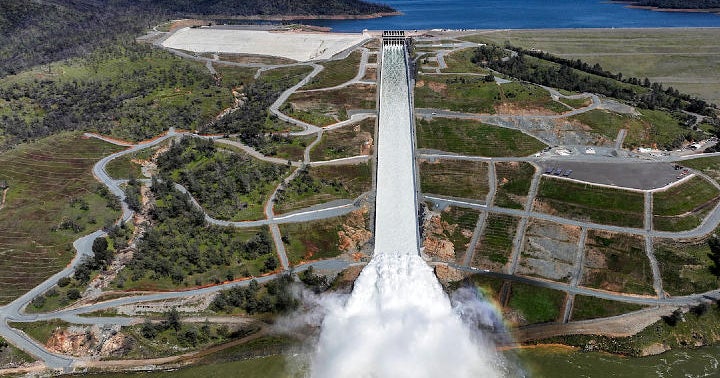
The DWR said the wet season is off to a good start, with beneficial rain falling across Northern and Southern California, and reservoir is a healthy 114% of average for this time of year. Storage at the SWP’s largest reservoir, Lake Oroville, currently stands at 100% of average.
The 10% initial allocation is double what the DWR announced at the start of last year’s water year, which was then followed by significant precipitation allowing the allocation to eventually increase to a final delivery of 50% of requested supplies. The DWR said that low initial allocations often see dramatic increases as the season progresses, and its forecast is updated monthly as officials analyze new data on snowpack, rainfall, and runoff.
“Traditionally our wettest months are yet to come, said Nemeth. “With improvements to forecasting and science, we are better prepared to capture water supply during wet periods if Mother Nature delivers.”
The National Weather Service’s long-range outlook shows the outlook for much of Northern and Central California showing equal chances of below- or above-normal precipitation, while other parts of Northern and Central California and most of Southern California lean toward below-normal precipitation.
The final SWP allocation percentage is typically determined in late spring, near the end of the season in May or June, the DWP said.