
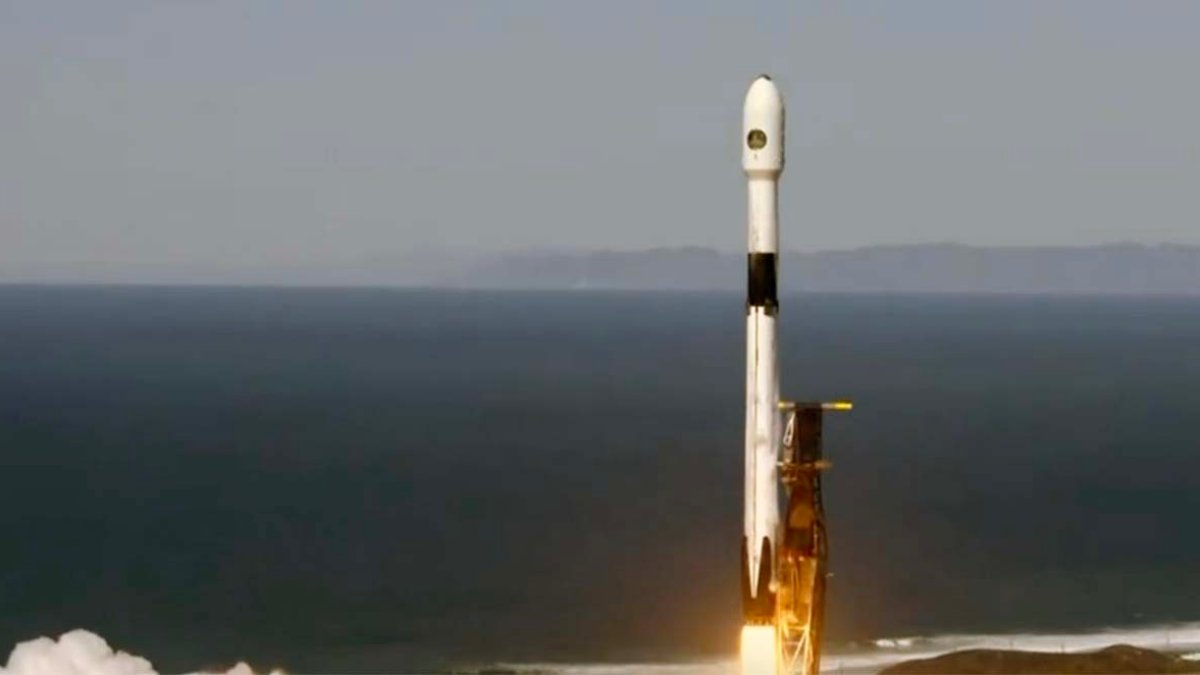
More than two dozen Starlink Internet satellites will be sent into space when a SpaceX rocket launches Monday night from Vandenberg Space Force Base.
The Falcon 9 rocket is set for liftoff between 6:10 p.m. and 10:10 p.m. from the Santa Barbara County base northwest of Los Angeles. The rocket and its exhaust plume might be visible, largely depending on weather conditions, in Southern California and northwestern Mexico.
Launch times are subject to change, depending on factors like weather conditions.
The rocket and spectacular exhaust plume are sometimes visible for hundreds of miles as it soars along the coast, if skies are clear and light conditions are right. Launches just after sunset and before sunrise usually provide the best views as the rocket reflects the sun’s rays against the backdrop of a darkened sky.
Sunset Monday in Los Angeles is at 4:44 p.m., so the sun may not provide sufficient light to illuminate the rocket and exhaust plume.
After separation, the first stage booster landed on the Of Course I Still Love You droneship in the Pacific. People in Santa Barbara, San Luis Obispo, and Ventura counties may hear one or more sonic booms.
A SpaceX rocket soars of LA June 24, 2024.
The rocket will carry 27 Starlink satellites into low-Earth orbit.
The launch is one of several planned for Vandenberg Space Force Base this month, including Falcon 9 launches scheduled for Thursday, Sunday and Dec. 10.
SpaceX has a Starlink constellation of satellites orbiting Earth about 340 miles up, shuttled into space by the company’s rockets. The Starlink network is designed to deliver high-speed internet anywhere around the globe.
If light conditions are right, the satellites appear in a train as they parade across the night sky. The satellites are sometimes visible in the first few minutes after sundown and before sunrise when the sun is below the horizon, but the satellites are high enough to reflect direct sunlight.
Use the FindStarlink tracker to find the best upcoming viewing times.