
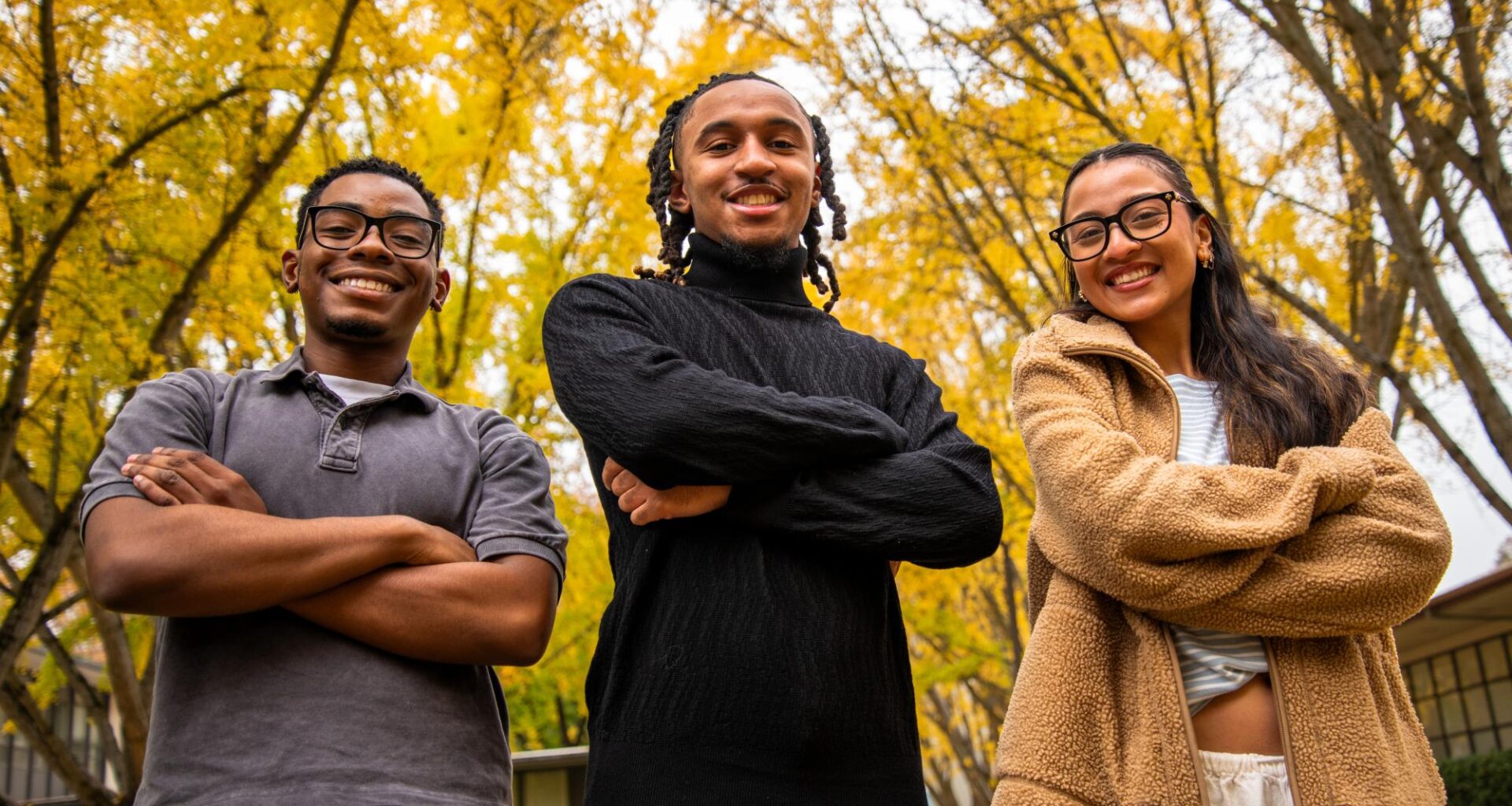
On Nov. 21, Sac State students came together virtually to present the Intercultural Oral and Deaf History Project, directed by ethnic studies and sociology professor Ayanna Yonemura. The Zoom panel showcased how scholarly research insight can bring society closer to marginalized communities and understand those who have been overlooked.
The Intercultural Oral and Deaf History Project is centered on the idea of “sociological imagination,” a concept created by American sociologist C. Wright Mills. The term highlights the idea that individual experiences relate to broader society.
Members of the IODHP said their goal is for students to step up into a researcher role and present their findings through the lenses of culture, identity and history.
“Professor [David] Player and the research associates are really the key inspiration and motivation behind this,” Yonemura said.
Professor David Player, who teaches American Sign Language and Deaf studies at Sac State, said he once expressed in a meeting with Yonemura that the campus community is not doing enough to spotlight or advocate for the deaf and hard-of-hearing. The two met about a year and a half ago at Sac State’s Black Staff and Faculty Association gathering. Professor Player spoke passionately and provided clear examples of how members are not doing enough to spotlight and embrace the Deaf and hard-of-hearing community, Yonemura said.
Yonemura said she had felt marginalized from her own community and couldn’t help but be inspired by Player’s callout.
“At the end of the meeting, I approached David, and I said that we need to change this.”
Within the panel, three student research associates illustrated a narrative through their studies that began a broader conversation around ethical, cultural and Deaf themes.
Research associate Ameil Ramirez, a second-year computer engineering major and minor in biological science, laid the groundwork that explored the topic of community health sciences through the perspective of his mother, Juliana Oke.
Oke was only 24 years old when she was diagnosed with Behçet’s Disease, a rare autoimmune and inflammatory disorder. Ramirez said he recalls the day his mother was finally diagnosed with the condition after having spent a long period of time in pain and in the hospital, where she didn’t feel heard by any of the doctors.
Through his research, Ramirez conveyed the experience of facing healthcare bias as a woman of color while dealing with such an unrecognizable disease.
“Research is a big, big deal. I think doing research, understanding and taking time for what the patient is saying is essential,” Ramirez said.
Ramirez said during his presentation that because Behçet’s Disease is so rare and limited, it was hard for Oke to find credible sources – specifically sources that wouldn’t discredit her symptoms for being a woman of color.
“What led me to want to research that type of autoimmune disease was that, right now, it’s not curable,” Ramirez said.
Shifting his main focus towards biological science, Ramirez said he is determined to help minimize his mother’s symptoms, along with others who are struggling with Behçet. Throughout his research, Ramirez said he discovered the importance of advocating for people of color and women to be understood in medical health.
RELATED: OPINION: Sac State must act boldly and transparently to support DEI
Another presenter at the panel, second-year political science major Sahar Ashimi, structured her research on law, culture and society for immigrants. She was born in America and grew up to learn the stories of her parents and their culture back in Afghanistan. When it came down to who she wanted to research for her project, she knew she wanted to hear more from her father than her mother, who had already opened up a lot about herself to Ashimi.
Ashimi studied the story of her father, Abdullah Ahmadi, an Afghan who fled the country’s war with his wife and first child on the way. She said Ahmadi was only in his early 20s when he flew to New York City and began his new life. During her presentation, Ashimi exposed the fear her father went through as an Afghan man following the Sept. 11 terrorist attacks.
Ashimi said Ahmadi faced deep concerns for the safety of his family, more so than himself. During her research presentation, Ashimi presented an audio clip of her father sharing a story about where he was during the attacks and how many people at the time targeted Arabs and Muslims in America.
“It affected my family because my mom is a hijabi, and so having the fear that the law isn’t enough to protect his wife kind of was lingering in the back of his mind,” Ashimi said. “The men [of Afghanistan] are required to take on a bigger role of being strong and emotionless. It was definitely a stepping stone for him to show his emotions.”
Elijah Williams, a fourth-year pre-medical student, centered his research on the Deaf and hard-of-hearing community, focusing specifically on experiences within Black culture. Yonemura had shared with Williams the story of Player, who is Black and Deaf, and how his community had not always made an effort to understand his linguistic limitations.
To gain a complete comprehension of Player’s story, Williams said he had to conduct interviews with ASL interpreters. Through their discussions, Williams uncovered the challenges Player faces, especially the lack of accommodations and recognition from the hearing.
“There definitely needs to be more advocacy between Black people for the Deaf community,” Williams said. When discussing his ASL class, Professor Player noted that the majority of his students are women and that only a few black male students typically enroll in these kinds of courses.
Williams said he learned the importance of acknowledging that those without hearing disabilities need to accommodate the Deaf and hard-of-hearing instead of being the ones accommodated by them.
As a Black pre-med student preparing for his future career, Williams said he is inspired to become a doctor who will learn ASL for deaf patients and community members. Williams’ determination to learn sign language showcases the need for and importance of putting effort into those who need to be advocated for.
“Inspiring others in the Black community or other ethnicities to learn ASL, I think, would be great,” Williams said.
All researchers presented a wide variety of topics tied to understanding people who may be experiencing life differently because of their race, disability or culture. They all showcased their own interpretation of “sociological imagination”. Many panel attendees walked away with valuable insights that deepened their awareness of the connections between personal experiences and broader social issues.
Zachariah Wooden, a political science major who recently transferred, attended the panel and shared his perspective on the research presented.
“I found [the research] very powerful,” Wooden said. “Ultimately, that personal narrative is incredibly important because it illustrates the kind of people you actually engage with on a day-to-day basis, and the personal decisions and how they operate in their life.”
The impact of the developmental analysis was significant not only for the student researchers but also for Yonemura, who said she aimed to educate the public on the importance of recognizing cultural, oral and Deaf history. As the first-ever presentation of this research panel, the organization hopes to continue expanding the research on students engaging with diverse communities. They are currently recruiting new interns for Spring 2026, offering more students the opportunity to create a meaningful impact.
The IODHP director said she intended to create opportunities for students to find mentorship and develop research skills.
“You have students from diverse racial, ethnic and language backgrounds, interviewing people who are also diverse,” Yonemura said. “This is the beginning of a project that’s really going to impact the greater Sacramento area and beyond because we are really moving forward into diversity and embracing it. We’re really building bridges across identities, and that’s exactly what we need in such a diverse time.”