
What’s at stake?
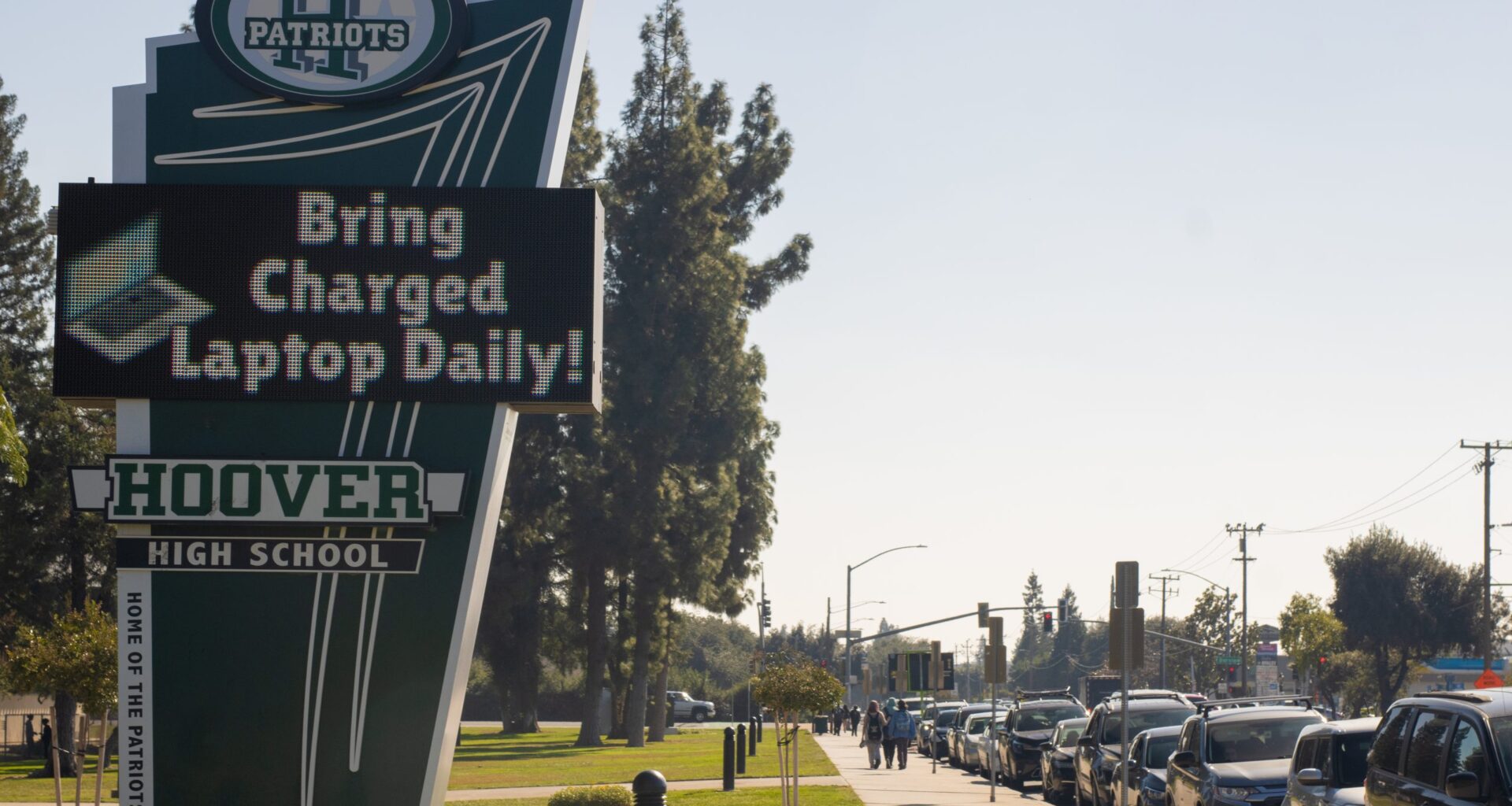
Hoover High School and McLane High School saw some of the highest SBAC score increases in 2024-25, specifically in English. Educators and principals attribute the jumps to a mix of policy changes, curriculum alignment with SBAC testing and improved student engagement.
Fresno Unified’s state testing scores haven’t looked great historically. For at least a decade, more than half of tested students have scored below state standards for English and math.
But in Fresno Unified’s third year back to in-person classes since the pandemic began, there are pockets of improvement in California’s third-largest K-12 school district.
Every year, students in third through eighth grade, as well as 11th grade, take the annual Smarter Balanced tests, also known as SBAC. Results for tests taken in 2025 were released in October.
This year, SBAC scores in math and English increased at 2 in 3 Fresno Unified schools — some of them double-digit point increases.
For example, high school juniors increased Hoover High School’s English proficiency levels by 21.7% — going from 35.3% in 2024 to 57.1% in 2025. Middle schoolers at Edison Computech increased math proficiency levels by 12%, a rise from 55.2% in 2024 to 67.2% in 2025.
Both of them are among at least a dozen Fresno Unified schools with notable jumps in proficiency levels. Fresnoland spoke with administrators and teachers at some of those schools, who attributed a number of factors for the improvement in student proficiency levels.
That includes updated phone policies and enforcement, curriculum alignment with SBAC testing and better student engagement.
“We’re obviously excited that we’re making growth and we’re making gains,” said Carlos Castillo, chief academic officer for FUSD. “At the same time, we’re also anxious to make more explosive gains.”
Curriculum alignment and policy changes at Hoover High School
When Courtney Curtis first arrived at Hoover High School to serve as its principal in the 2023-24 school year, his objective was to ensure students in the classroom were engaged with learning material.
Before he could do that, he made sweeping changes to the school’s phone, tardy and bathroom policies.
“The whole first year that I was here, we focused on changing the conditions for learning, because if the conditions for learning are not right, learning is not going to happen in the way that it needs to happen,” Curtis said.
In the 2023-24 school year, Curtis said the school implemented a new program from 5-Star Students that tracks student attendance as well as tardiness between school periods and bathroom passes, helping teachers keep track of when students are late or missing from class for extended periods of time.
The system relies on students swiping their school ID cards when entering and exiting classrooms. How long a student is late to class and how long they are out of class from bathroom breaks is also tracked.
The school also prohibited having phones out during class. After an initial warning, students are asked to either hand their phone over to their teacher until the end of class or to an administrator at the office for a parent to pick up at the end of the day.
Curtis said that while students were initially apprehensive about the policy changes, they were eventually acknowledged and understood after he hosted open discussions with students.
Curtis told Fresnoland those changes helped set up the right environment for learning, and for proficiency levels to rise.
In August 2024, it was the beginning of a new school year, and 80% of staff at Hoover High said in a survey that the school needed to focus on improving literacy. That same year, the school began testing students in grades ninth through eleventh using short practice tests, similar to the SBAC.
These short tests, known as interim assessment blocks or IABs, allow teachers to essentially pre-test students, and even have the tests be tailored to specific parts of the SBAC.
“Our teachers in English and math from ninth all the way through eleventh grade agreed that we needed to give our students access to content and assessments that looked like and match the rigor and style of SBAC,” Curtis said.
Additionally, during official SBAC testing for eleventh graders at Hoover High School, freshmen and sophomores are also required to take a practice version of the SBAC. Teachers across all subjects have also tweaked curriculum to reflect the SBAC’s style in their own curriculum to further student engagement with state testing.
According to Curtis, the practice tests both help students get familiar with the SBAC’s style and rigor, and allow teachers to see where students need additional help. It also removes the gap in testing between the 8th grade and the 11th grade.
“Really, every single teacher here at Hoover — and this is why we were successful last year — was responsible for literacy,” Curtis said.
The school also hosted multiple Saturday sessions for teachers to help students set goals and prepare for SBAC testing, with incentives like prom tickets for students who attended and met their testing goals.
The result: Students expressed more confidence in taking the test.
“We’re gonna have growth again this year based on what I’m seeing,” Curtis said.
Curtis didn’t take credit himself for the improvement in testing scores. He said all he did was provide students and staff with what they needed to ensure effective learning inside the classroom.
However, Curtis did mention that the school received help and inspiration from other school sites and educators, particularly McLane High School and its own goal-setting initiatives.
Student engagement at McLane High School
McLane High School’s testing scores also had a notable 15.34% growth in English, going from 40.15% in 2024 to 55.39% in 2025. It was the third highest increase out of all Fresno Unified schools on the English test.
Educators at McLane told Fresnoland it came out of focusing on one thing: cultivating a supportive community to build relationships with students.
“Our success comes down to really one simple thing, and that’s just building relationships with students,” said Byanca Leyva, an 11th grade English teacher.
Leyva, a McLane High and Fresno State alumnus, explained that the beginning of the year is spent connecting with students through personal assignments as part of a personal narrative unit, including a life map, where students trace significant moments in their lives.
The assignment has helped students open up about hardships in their lives — everything from their parents going through a divorce and family members passing away to personal struggles in their own communities.
In one life map, a student talked about feeling insecure and embarrassed about a personal health condition. After presenting the project to another classmate and receiving positive support, Leyva said she noticed the student came out of their shell and started engaging more in class.
McLane’s teachers also participate in the exercise, and they said it builds trust with their students, too.
Agustin Ramirez, who co-teaches eleventh graders with Leyva and is a Fresno High alum, explained that being a part of the same community that he and Leyva serve helps them further understand how they can uplift their students.
“A lot of people look at their weaknesses and focus on that,” Ramirez said. ”We look at their strengths and build from what we can with them and then highlight anything that they need to be aware of as they progress through the school year.”
Leyva and Ramirez’s class and others participate in an annual assignment in which students anonymously detail their lives, communities and the people closest to them in essays, which end up getting compiled into a book.
Last school year, their class’ essays were themed around “Memories with Mom,” and featured art from two classes taught by Jessica Ketchum at the school’s ArtVenture department.
For McClane High School Principal Brian Wulf, the school’s emphasis on creating community in classrooms and connections between students, teachers and peers has been key to finding success in engaging students following the pandemic.
Wulf explained that after returning to in-person classes, the school had trouble reaching students and getting them engaged. Now, even with a phone policy similar to Hoover’s, Wulf says that teachers seldom worry about enforcing policy since students are focused.
“Post-COVID, we were trying to impose things on them and it wasn’t working and we were having trouble and we shifted,” Wulf said. “That’s why we started seeking out new curriculum, new innovative practices, and we found success.”
Related