
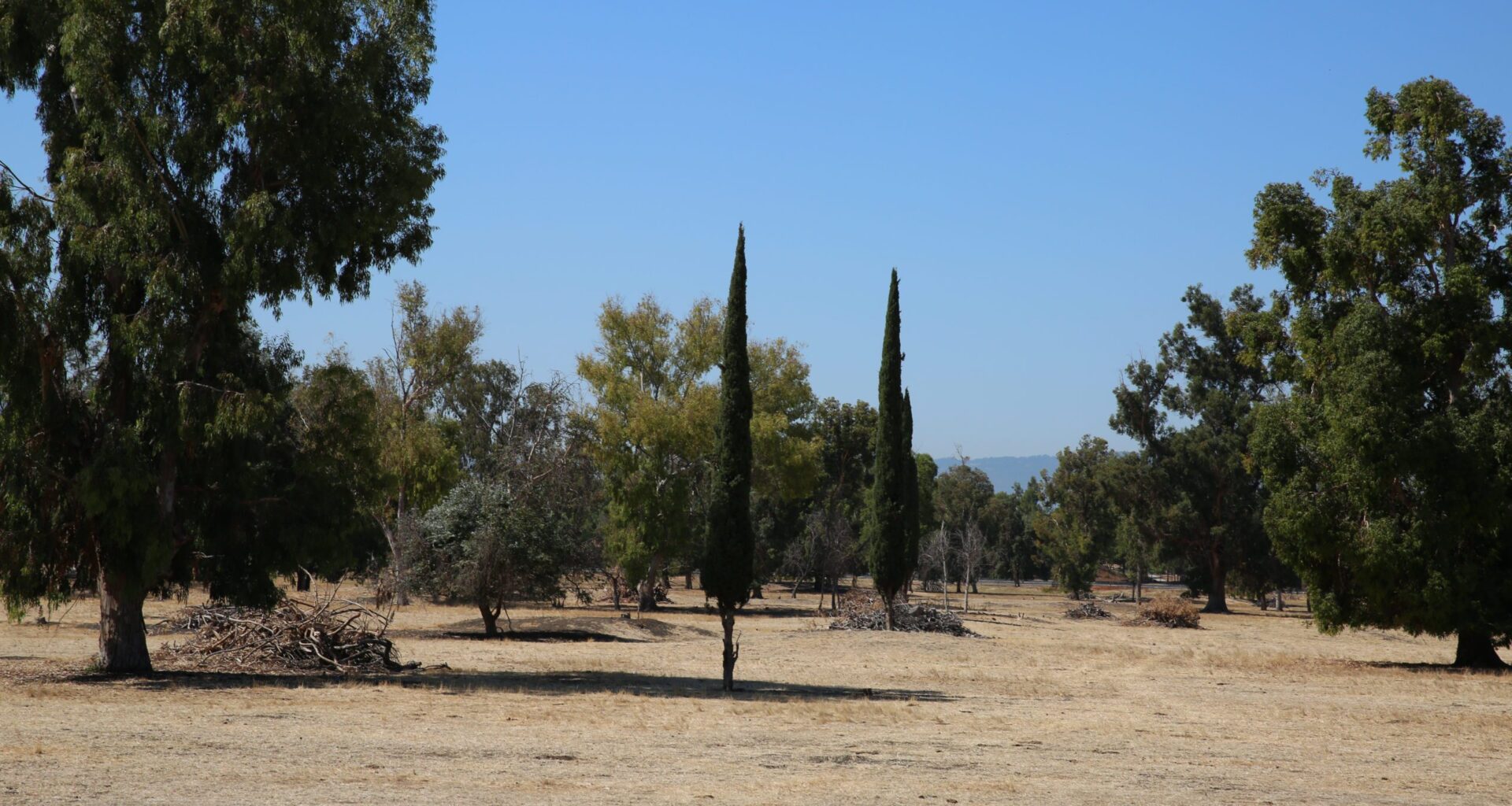
EAST SAN JOSE’S LONGTIME Duino family is ready to let go of its 115-acre former golf course. But they’re caught between clashing visions over the future of the property. City leaders want more density than developers and some neighbors had in mind.
A letter obtained by San José Spotlight shows city planners earlier this year told real estate developers Mark Lazzarini and Tony Arreola — whose development firm Lakeside Community is poised to buy the land from the Duinos — their proposal for 1,700 homes on the former Pleasant Hills Golf Course is too small. The city’s July 3 letter said their initial proposal did not provide high enough density and came up short on affordable housing. The city plans to annex the site, which is unincorporated county land.
“The housing units associated with the proposed development present a (state housing needs) shortfall that the County must account for to meet state law requirements,” the city’s letter to Lazzarini and Arreola reads. “The proposed project would result in a shortfall of 1,129 residential units, including 68 lower-income units.”
The tug of war comes as neighbors in the surrounding community of single-family homes have voiced concern about the potential impacts of high-rises. Results from a series of community workshops last year show most public participants favor single-family homes and oppose buildings with more than three stories. Housing advocates, meanwhile, lambasted the city from the opposite end — arguing for a more scaled up development than the proposal laid out by Lazzarini and Arreola. But the property sale can’t close until the developers get through the project permitting process.
“The family is at the mercy of both the community and the city and arriving at some sort of happy medium,” Stan Perry, a broker and confidante representing Francis Duino, the eldest son of golf course designer Henry Duino, told San José Spotlight.
Henry Duino shaped Pleasant Hills into a public golf course that closed in 2004 due to rising costs and shifting interests. The land has sat idle for two decades. But it could carve major inroads in a regional housing crisis — closing one chapter of San Jose’s golf history while turning a page in the Duino family’s civic footprint.
“We have studied it to death, and like so many potential housing sites in San Jose it sat fenced off for decades while housing costs spiraled out of control,” Francis Duino told San José Spotlight. “If the city wants to get serious about building more housing, they need to work with, not against, property owners and developers.”
Clashing visions
Perry said Mayor Matt Mahan’s office has been trying to push the development proposal to go higher in scale. Representatives for Mahan did not respond to requests for comment.
“The original proposal was 1,700 units and the mayor is trying to push it higher, but the community is only going to go so far. It’s kind of a back and forth right now,” Perry said. “There are some market forces driving this in the sense that if it becomes too dense, it’s not financeable to construct. If the requirements at the city get so onerous — it will not be developed.”
In a joint statement, Lazzarini and Arreola said their proposal is designed to stay realistic in a tough construction market while abiding by the wishes of immediate neighbors and surrounding residents.
“We’re placing higher-density and affordable housing where it fits best and keeping lower-scale homes near existing neighborhoods,” they told San José Spotlight. “That balance is a big reason we’ve seen strong support from residents who’ve participated in the process. Our goal is a project that can actually get built and that the community feels good about.”
The developers said they’re working through the remaining entitlements and expect a full package to be ready for consideration by the San Jose City Council in the second half of 2026.
Alex Shoor is the executive director of Catalyze SV, a pro-housing and sustainable development advocacy group. He said he’s never seen such a comprehensive critique on a project from the city. His organization agrees with the city, calling the proposal insufficient in scale considering the massive area of the site.
“We need to see the developer go back to the drawing board,” Shoor told San José Spotlight. “This proposal is rooted in the 1950s of San Jose, which is great for a lot of people but not for the people trying to live there right now.”
Perry said his client has grown weary of the prolonged process.
“The family members have pretty much spent a good portion of their lives trying to get the property sold,” he said. “They’re landlocked, if you will.”
The city’s letter also called on the developers to include stronger pedestrian connections to Lake Cunningham Regional Park and the surrounding neighborhood. The letter also requested Lazzarini and Arreola maintain the Private Recreation and Open Space General Plan designation for the proposed private parks.
District 8 Councilmember Domingo Candelas, who represents the area surrounding the unincorporated land where the former golf course is located, has been the face of community engagement over the future of the property. Perry said Candelas has been supportive of the project as long as the property does not become too dense.
Candelas did not respond to questions about the city letter, but said project planning is still in its infancy.
“We’re still in the early stages of the Pleasant Hills Golf Course development process, and there is much work ahead before a final project is brought to the council,” Candelas told San José Spotlight. “From the outset, I have been clear about the community’s guiding principles being the foundation of any future development to accurately reflect the needs of the surrounding community.”
Contact Brandon Pho at brandon@sanjosespotlight.com or @brandonphooo on X.