
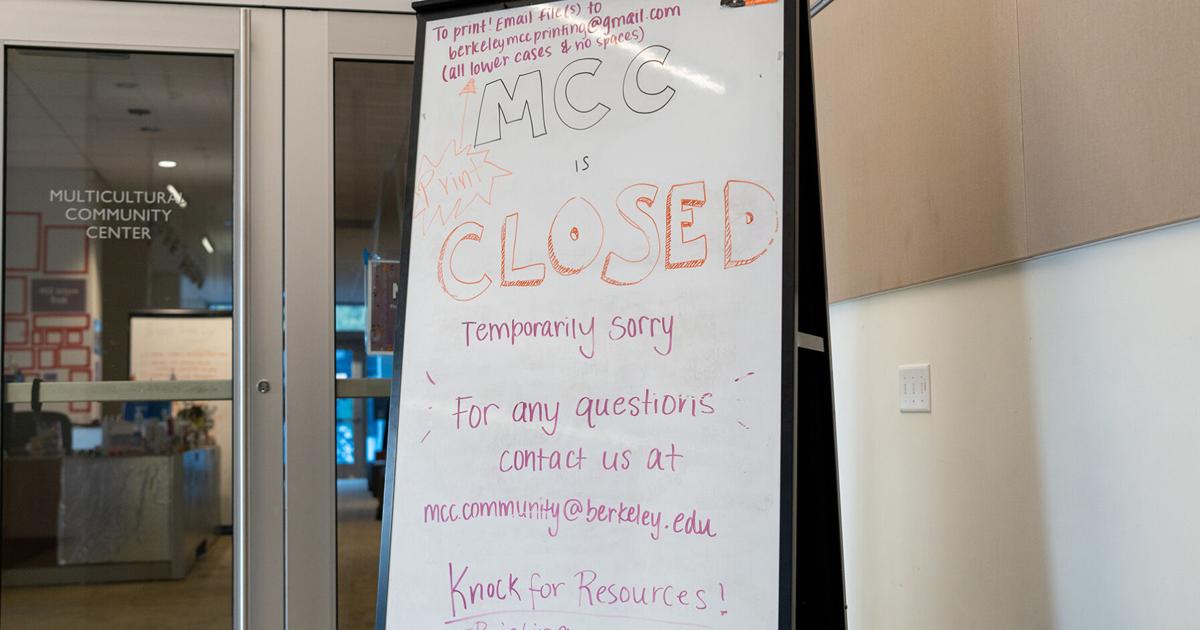
The UC Berkeley Multicultural Community Center, or MCC, — a space that once held campus gatherings, food drives, student art and cross-cultural communion — now sits empty and dark.
The space was shuttered by UC Berkeley administration, citing “criticism received from a number of campus stakeholders.” The decision sparked widespread outrage and backlash from students and alumni alike who had grown to call the MCC home, as it had supported the campus community for years.
The doors to the space have remained locked for more than six months, and campus leadership has not provided a solid date for the beloved MCC’s return.
“It’s been really devastating, particularly for the student organizing community on campus, but also just for students at large, especially students of color, who’ve been in need of resources,” said Anya Kushwaha, a second-year graduate student. “All around, it’s been really heartbreaking and such a loss.”
While campus administrators have additional details on the MCC’s closure, spokesperson Dan Mogulof said a spring reopening is likely.
When The Daily Californian asked ASUC President Abigail Verino for details on the closure, she did not respond to the questions; instead she provided a statement.
“It is also important that we respect the MCC’s space as they navigate this time,” Verino said in the statement. “The MCC is not closing for good, but rather realigning their mission as a center with campus policy.”
The MCC’s history is rooted in the fight for an ethnic studies department at UC Berkeley, a movement that was part of the Third World Liberation Front Research Initiative, or TWLF.
By the mid-to-late 1990s, the ethnic studies department was gutted due to budget cuts; meanwhile, legislative measures that attacked bilingual education and immigrant rights were passed simultaneously. A new coalition was formed – the twLF, a similar movement to the one in the late ’60s. Students at the time went on a three-month-long protest that culminated in an eight-day hunger strike and ultimately led to the establishment of the MCC.
“The MCC has so much political significance because it was born out of the long history of student protests,” said ethnic studies Ph.D. student Sarah Halabe. “It’s really a betrayal to that history. A hunger strike is no joke; students put their bodies on the line. The space was born out of bloody struggle, and it’s a complete insult to that history and an insult to those students who put their bodies on the line.”
With the MCC closed, student organizers are struggling to continue their work. Kushwaha said the space was a “political home” for her. A member of the Young Democratic Socialists of America, Kushwaha said the club used the space for grocery drives while workers were on strike.
Campus alumna Julie Shea noted the space was important to her as a transgender student, since the Trans Student Wellness Initiative would plan events there. The MCC provided free nutritional meals to transgender students, which was especially important to Shea as she struggled to access food with her heavy workload.
“That’s really going to impact the social networks that (people of color) are going to be able to make, that trans people are going to be able to make, any intersectional people with intersectional identities,” Shea said. “It really just is an irreplaceable space.”