
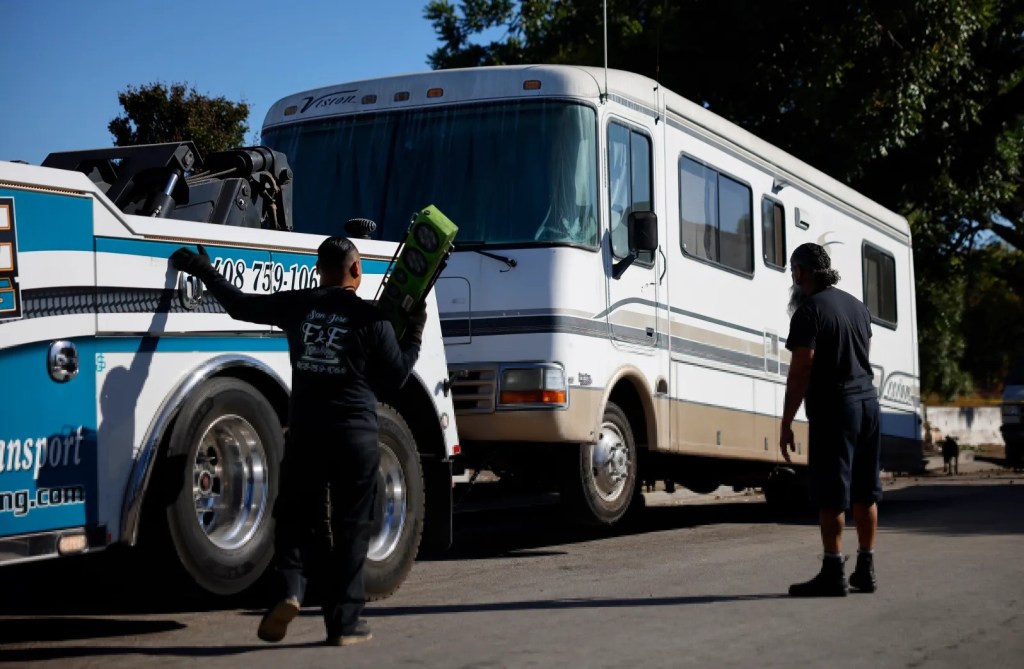
San Jose’s new city team dedicated to cracking down on parked vehicles with expired registrations towed more than 500 of them in the first 12 weeks of enforcement — part of an overall effort to improve safety and keep neighborhoods clean.
The Expired Registration Enforcement Program is one of several new initiatives the city launched this year to quell some of the most frequent parking-related complaints and to limit the impact of vehicles with people living inside them parked on neighborhood streets.
Following an outreach period from July 1 to Aug. 17, when the parking officers issued approximately 3,000 warning notices, data released by the city through Nov. 8 showed 552 citations issued and 527 vehicles towed.
“I am optimistic about our new approach to these unregistered vehicles,” District 5 Councilmember Peter Ortiz said at Monday’s Transportation and Environment Committee meeting. “I am encouraged by the new strategies (and) the new hiring that is going to be starting in the new year to improve this function … I want to make sure that areas like District 5, District 3, District 7 and their residents see relief of this over-concentration because it’s not sustainable.”
Parking enforcement, including against RVs and lived-in vehicles clogging public streets, has long been a source of frustration for elected officials and residents.
During the last fiscal year, the city received more than 32,000 vehicle complaints through its San Jose 311 app.
A vehicle inventory conducted by the city’s Department of Transportation between August and October 2024 found over 2,000 oversized or lived-in vehicles on public streets, with approximately 36% of them showing expired or unverifiable tags.
In January, the city began taking steps to reduce the impacts of RVs by launching the Oversized and Lived-in Vehicle Enforcement Program, or OLIVE, which created more than 30 temporary tow-away zones near schools, parks, waterways and interim housing sites.
Along with expanding the OLIVE program to up to 50 sites and creating a supplemental initiative for lower-priority areas and hotspots that pop up, the city rolled out other programs aimed at moving some of these vehicles off the streets and forcing others to move more frequently and follow parking laws.
Among the new programs the city budgeted for this year was a pilot program to create tow-away zones in street-sweeping areas. Despite only 13% of its curb miles being lined with permanent parking restrictions, the city issued roughly 65,000 citations last year.
Another major initiative was a vehicle buyback program to remove dilapidated RVs from circulation. During the abatement of Columbus Park, which began in August, San Jose purchased 69 vehicles for $2,000 each in gift cards.
With a bevy of vehicles out of compliance, city officials touted the need for accountability when they announced the creation of the Expired Registration Enforcement Program. An analysis of DMV data showed over 4,200 vehicles in the city had registrations that had been expired for six months or longer.
Along with expanding the OLIVE program to up to 50 sites and creating a supplemental initiative for lower-priority areas and hotspots that pop up, the city rolled out other programs aimed at moving some of these vehicles off the streets and forcing others to move more frequently and follow parking laws.
Among the new programs the city budgeted for this year was a pilot program to create tow-away zones in street-sweeping areas. Despite only 13% of its curb miles being lined with permanent parking restrictions, the city issued roughly 65,000 citations last year.
Another major initiative was a vehicle buyback program to remove dilapidated RVs from circulation. During the abatement of Columbus Park, which began in August, San Jose purchased 69 vehicles for $2,000 each in gift cards.
With a bevy of vehicles out of compliance, city officials touted the need for accountability when they announced the creation of the Expired Registration Enforcement Program. An analysis of DMV data showed over 4,200 vehicles in the city had registrations that had been expired for six months or longer.