
A multi-genre love letter to Naples; a collection of writings on comic book artists and an expansive biography on disability rights activist Ed Roberts are among the five new books by Berkeley authors.
A column on books in Berkeley.
Nonfiction“An Independent Man: Ed Roberts and the Fight for Disability Rights,” by Scot Danforth
University of California Press, 401 pages, $30
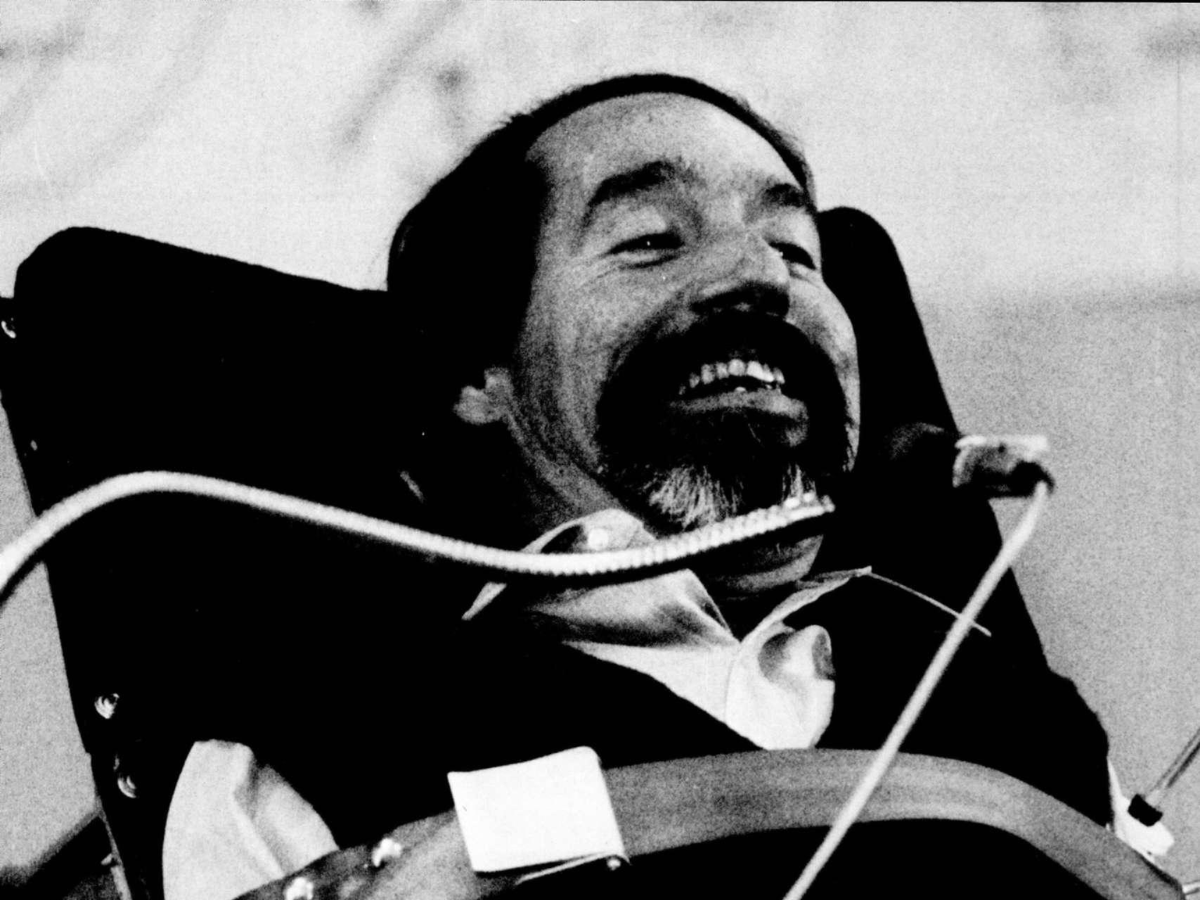
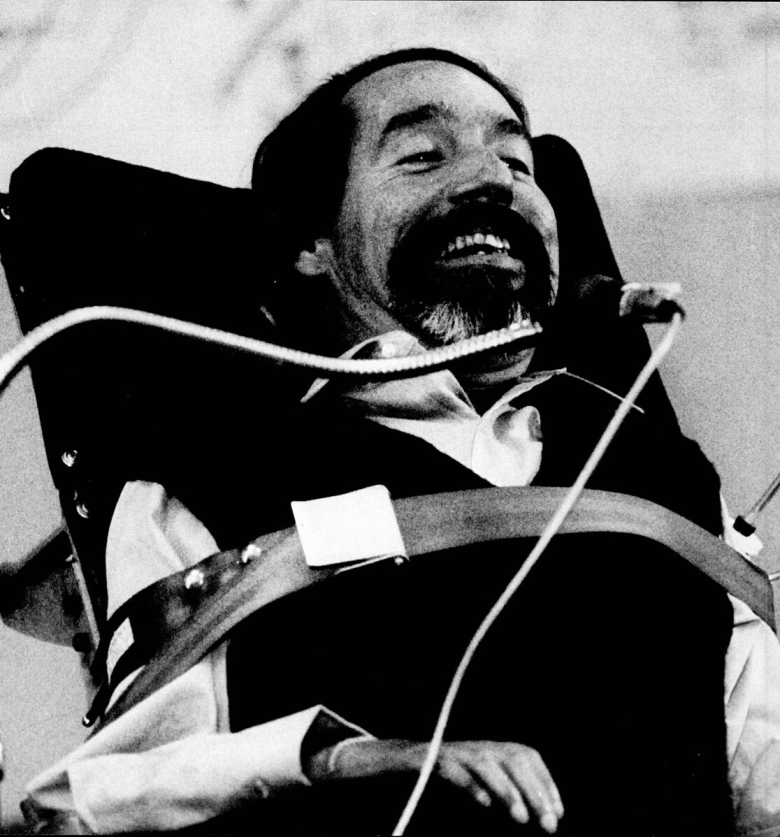 Ed Roberts at a conference in the 1980s. Credit: William Bronston/California Department of Rehabilitation
As a professor of Disability Studies at Chapman University, Scot Danforth was intrigued with a group of UC Berkeley students known as the Rolling Quads, initially made up of a dozen students in 1969 that expanded “in less than a decade into the most influential disability rights organization in the country,” Danforth writes. His article on the Quads appeared in the History of Education Quarterly in 2018.

In researching the article, Danforth was surprised to discover that no one had written a biography of Ed Roberts, who would go on to become one of the founders of the disability rights movement and helped lay the groundwork for the Americans with Disabilities Act.
“I decided to take it on,” said Danforth, a full-time professor, “even if it felt, honestly, like too much.”
Danforth’s book, “An Independent Man: Ed Roberts and the Fight for Disability Rights,” was published on Oct. 14.
Roberts’ story is well known in Berkeley, which served as the backdrop for most of Roberts’ groundbreaking advocacy. Paralyzed by polio from childhood and consigned to sleep in an iron lung, Roberts (1939-1995) refused to accept a life of limitation and pity.
In 1962 he was the first severely disabled student to attend UC Berkeley, where he would earn a bachelor’s and a master’s degrees in political science. (He did the coursework for a Ph.D. in the subject, but never finished his dissertation.)
In the book, Danforth describes the many events that made Berkeley the ideal setting for Roberts and a new generation of activists.
“No place was like Berkeley,” Danforth said, mentioning the city’s role in the Free Speech movement, anti-Vietnam and the People’s Park protests and UC Berkeley’s promotion of ethnic studies. “No place had the numbers, the attitude and the arrogance and the aggressive, anti-authority sort of mentality. Ed and the other students he was with soaked it all in and asked the great question, ‘What about us?’”
As an undergrad, Roberts co-founded UC’s Physically Disabled Students Program, which became the model for Berkeley’s Center for Independent Living and more than 400 independent living centers across the country. Roberts was a longtime director of CIL and later became the first California State Director of Rehabilitation with a disability in 1976. In 1983 he was co-founder and president of the Berkeley-based World Institute on Disability.
Downtown Berkeley’s Ed Roberts Campus is named in his honor. The universally designed, transit-oriented center includes CIL and provides services and advocacy for people with disabilities so they can lead independent lives.
Eight years of research went into the book, which entailed poring through archives at Cal’s Bancroft Library and Berkeley’s World Institute on Disability, interviews with dozens of Roberts’ colleagues and friends of Ed’s and former Congressmen George Miller and Tony Coelho, who had worked with Roberts.
Danforth was also faced with a ticking clock: Many of those who had worked with and known Roberts were dying off. Often he would have a name and discover that the person was no longer alive.
“Luckily, I was able to interview Judy Heumann, who died a year ago,” Danforth said, of the woman often referred to as “the mother of the disability rights movement” who helped co-found CIL.
In addition to his many professional accomplishments, Danforth explores Roberts’ determination on living a “very full and rich life — in every way,” Danforth said. “He got married and had a child and was a Dad — not just a dad but a man who went through a divorce, which was very painful.”
Though disability is his field of expertise, Danforth, himself, does not have one. When interviewing people who were disabled, he sometimes felt the need to explain himself.
“I kept telling people, ‘I’m the right guy to write this because I know a lot about Ed and what was happening,” he said. “I was the wrong guy in other ways. I knew I had a challenge in not understanding personally the experience of having a disability.”
He got closer to that experience, however, when he discovered that his teenage son was diagnosed with autism at 16. He said his son’s diagnosis gave him a closer emotional connection to a person who is stigmatized because of a disability.
“That shifted my perspective on Ed,” he said. “I was no longer a researcher/author attempting to do my job well. It became deeply personal.”
“Messiahs, Meshugganahs, Misanthropes and Mysteries: True Tales of Comics, Conflict and Creativity” by Bob Levin
Fantastagraphics Books, 356 pages, $30
Like many American kids in the 1950s, Bob Levin had a comic book habit. At the time, reading comics was being blamed for a rise in juvenile delinquency because of the sex and violence they depicted.
“Nobody had more graphic violence or more sex than EC Comics,” Levin said, which happened to publish Levin’s favorite titles. Congressional hearings in 1954 ended up terrifying the comic book industry, which soon began censoring itself.
“That gutted EC,” Levin said.
Fast forward some 30 years. Levin, who lives in Berkeley, was an injury and worker’s comp attorney who got a master’s degree in creative writing from San Francisco State so he could be the next Hemingway. He had a novel published by Harper & Row. But he never got over his EC Comics obsession. He even dreamed about them. That’s when he discovered the world of comics as collectibles — and rediscovered EC Comics.
“I was reading about the world of comic collectibles and EC Comics was regarded as a high water mark,” he said. At the same time, writing about comics had become legit, in part due to The Comics Journal, which treated comics as a serious art form.
Levin had his first article published in TCJ in 1988. Over the next 40 years, he would write about 75 more.
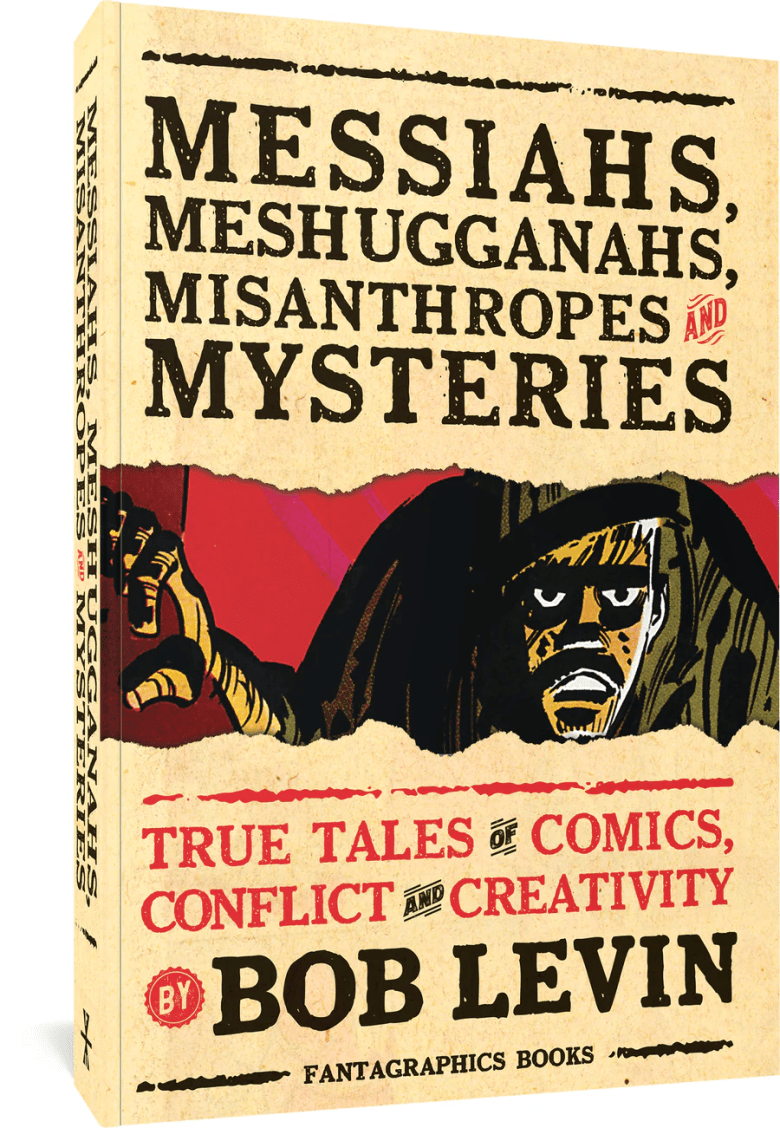
His fourth book for Fantastagraphics, “Messiahs, Meshugganahs, Misanthropes and Mysteries,” brings together 17 Comics Journal articles Levin penned between 2005 and 2023.
In the book’s introduction, Dan Nadel, author of a definitive biography of R. Crumb, writes that “Messiahs” contains “some of the finest writing ever published about comics.” Nadel described Levin’s approach as “an investigator interested in the people involved in the medium,” not as a critic, historian, fan or friend, “but a writer.”
In a piece titled “Creating Dangerously,” Levin digs into the controversy surrounding Berkeley artist Guy Colwell’s Abu Ghraib painting, “The Abuse,” which “allegedly led” to vandalism at a San Francisco gallery. While Levin pokes holes in the gallery owner’s story, he still supports the work of Colwell and his commitment to social justice. (Colwell’s latest book was recently featured in Berkeleyside.)
Other artists given the Levin treatment in the book include the late S. Clay Wilson of San Francisco, part of the Bay Area underground comix movement in the 1960s and ’70s, Art Spiegelman, Edward Gorey, Alex Toth and Dave Sim.
For Levin, ending up in comics was never part of the plan, but he’s nevertheless happy to have found a niche that suits him.
“Comics Journal let me write about these artists any way I wanted. I evolved this style and this reputation and over time people would ask me to write about them,” he said. “I just stumbled along and now it seems inevitable.”
“The Future is Collective: Effective Workplace Strategies for Building a Culture of Care” by Niloufar Khonsari
North Atlantic Books, 248 pages, $21
Even the most well-intentioned social justice nonprofits can find themselves struggling with long-ingrained hierarchies that create stress, burnout and even exploitation of their own staff.
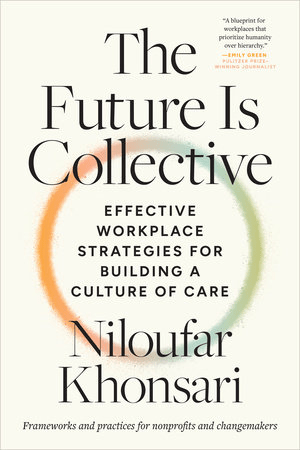
“The Future is Collective: Effective Workplace Strategies for Building a Culture of Care,” by Berkeley resident Niloufar Khonsari, seeks to help organizations build more democratic workplaces by bringing their workplace and management systems in line with their missions and values.
Khonsari, an attorney, is one of the co-founders of the 13-year-old Pangea Legal Services in San Francisco and San Jose, a worker-led migrant justice organization inspired by a Buenos Aires cooperative Khonsari visited when spending a semester abroad in 2004.
There, at a worker cooperative that made men’s suits, Khonsari was stunned to discover that the workers had no boss, shared decisions, rotated leadership and distributed salaries based on people’s needs.
“I had never experienced a system that was so deliberate and humane,” they said.
The book includes many of those concepts adopted by Pangea, along with best practices from other worker-owned organizations, including Berkeley’s legendary Cheeseboard Collective, which became a co-op in 1971.
Khonsari highlights Cheeseboard’s peer support system, which resolves conflicts through trained mediators at other regional cooperatives: Arizmendi Bakery in Emeryville and Rainbow Grocery and Other Avenues Grocery, both in San Francisco.
“When there’s a conflict, there’s no need to hire an expensive outside consultant,” Khonsari said. “They have a mediator on each business’s team that holds some skills around that and to be each other’s support. Not only do they handle conflict well, they do it extremely collaboratively across organizations.”
The book covers topics such as tools for transitioning to a shared leadership model, implementing equity-based pay scales; and fostering a culture of learning, trust, accountability and humility, along with more than 50 pages of tools and resources in the appendix.
“People want to be heard,” Khonsari said, of the book’s central message. “We can’t go about doing things in workplaces the way we used to.”
Fiction“Like Human” by Janet Goldberg
Cornerstone Press, 194 pages, $25
In “The Prank,” a teenage girl wakes up to find a rose — and a condom — on her windshield. In “The Keeper,” an adult daughter flies to her father in Florida with a secret stash of bees, hoping to sting her father into remission. In “Desert Draw,” a couple hiking in the woods are confronted by a man who intends to kill them, and then have an unusual encounter with a roadrunner as they’re trying to escape.
Though their situations and settings — from suburban Florida to Lake Tahoe, Chicago and Death Valley — greatly vary, the 18 short stories in Janet Goldberg’s second book, “Like Human,” share some common characteristics.

“Definitely they’re edgy,” said the Berkeley author. Seemingly benign situations can quickly turn threatening, aided by the many wild animals that inhabit the stories: a bear that attacks a couple camping in the Tahoe area, plus a mountain lion, racoons and coyotes.
“The danger comes not only from animals or animal predators, but also human predators,” said Goldberg. “I don’t think there’s much difference between the two as far as the stories go.”
Goldberg wrote the stories between 1989 and 2023, including “The Hike,” the first short story she wrote at Mills College’s MFA program in 1989, where she was studying poetry. Many of these stories have appeared in literary magazines, such as “The Santa Clara Review,” “Black Zinnias,” “Full Circle: A Journal of Art & Literature” and “Rosebud.”
Fredrick Soukup, author of “Blood Up North,” called the book “a delectable tour of humanity’s sick souls and innocents, of nature’s superb splendor and the peril therein.”
“Like Human” is Goldberg’s second book, likewise published by a small, literary imprint. Her first, the novel “The Proprietor’s Song,” came out in 2023. She is the fiction editor of the literary magazine “Deep Wild” and has taught as an adjunct at the City College of San Francisco for the past 25 years.
Her next book, to be published by Phylum Press in 2027, will bring together more recent stories, written over the past two or three years. They, too, will bear her characteristic edge.
“I think all good fiction is edgy,” she said, “but that’s just me.”
Hybrid“Dreams of the Return” by Alan Bern
Old Scratch Press, 113 pages, $25
Contrary to the centuries’ old adage, Berkeley author Alan Bern didn’t die after seeing Naples for the first time in 1965, when he lived there for a year as a teenager. But the city’s ancient beauty, raucous street culture and disregard for traffic regulations left a (literal) imprint.
Bern has returned again and again and made this southern Italian locale the subject of his fifth book, “Dreams of the Return.” A multi-genre work, “Dreams” contains Bern’s own prose and poetry, along with his translations of Italy’s most famous poets, Dante Alighieri and Giacomo Leopardi, and Bern’s photographs of the city, including the cover image taken on his last trip in 2018.
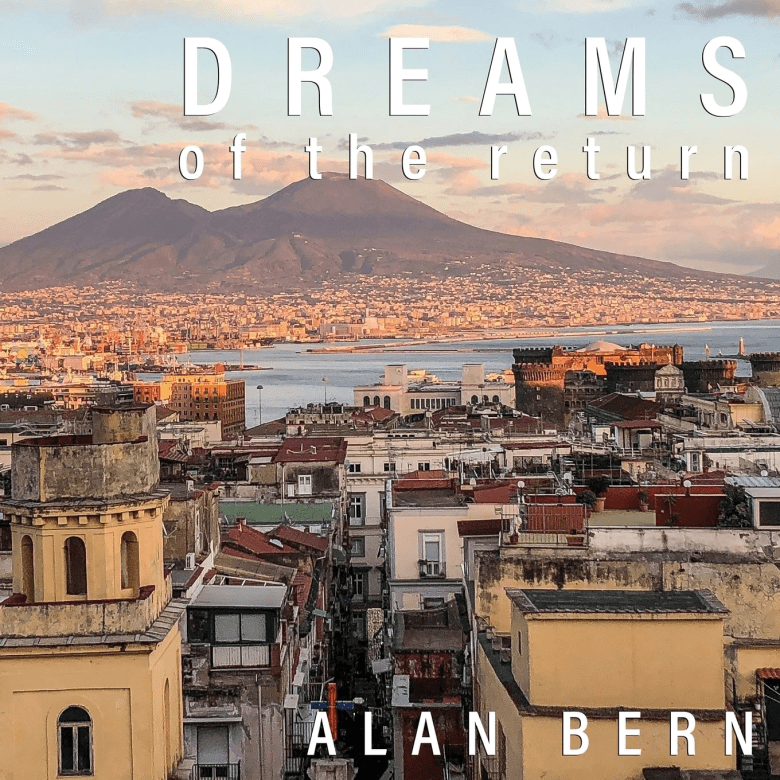
Bern ended up in Naples when his father, Howard Bern, a longtime UC Berkeley zoology professor, took a sabbatical. Bern was in high school.
“There I was in one of the crazier places I’ve ever been in my life,” said Bern. “It’s filled with people driving on the sidewalks and having a very kind of festive time as a matter of course during their day. I’d never experienced anything like that in my life. Berkeley, in comparison, was a hamlet.”
Bern was so innamorata with Naples, he ended up studying Italian literature as an undergrad at Cal. He studied translation with the classist Donald Carne-Ross and poetry with Anne Sexton at Boston University, where he received a master’s in creative writing in 1971. Back in Berkeley, he got a master’s in library and information science at Cal in 1993 after working in publishing for 15 years.
He was then a Berkeley children’s librarian for 21 years, which helped provide the backdrop for his previous book, “In the Pace of the Path,” a fictional memoir.
When pondering his perennial attraction to Naples, Bern described it in almost past-life terms, feeling as if he had been from there. “It felt like home,” he said.
Once, when walking in the historic section, he experienced what is practically an initiation rite in this city of renegade drivers: his foot was run over. When Bern shouted, “You ran over me!” the driver shouted back, “You were in my way!”
“They run you over and they blame you,” Bern said. “That’s my kind of town.”
“*” indicates required fields