
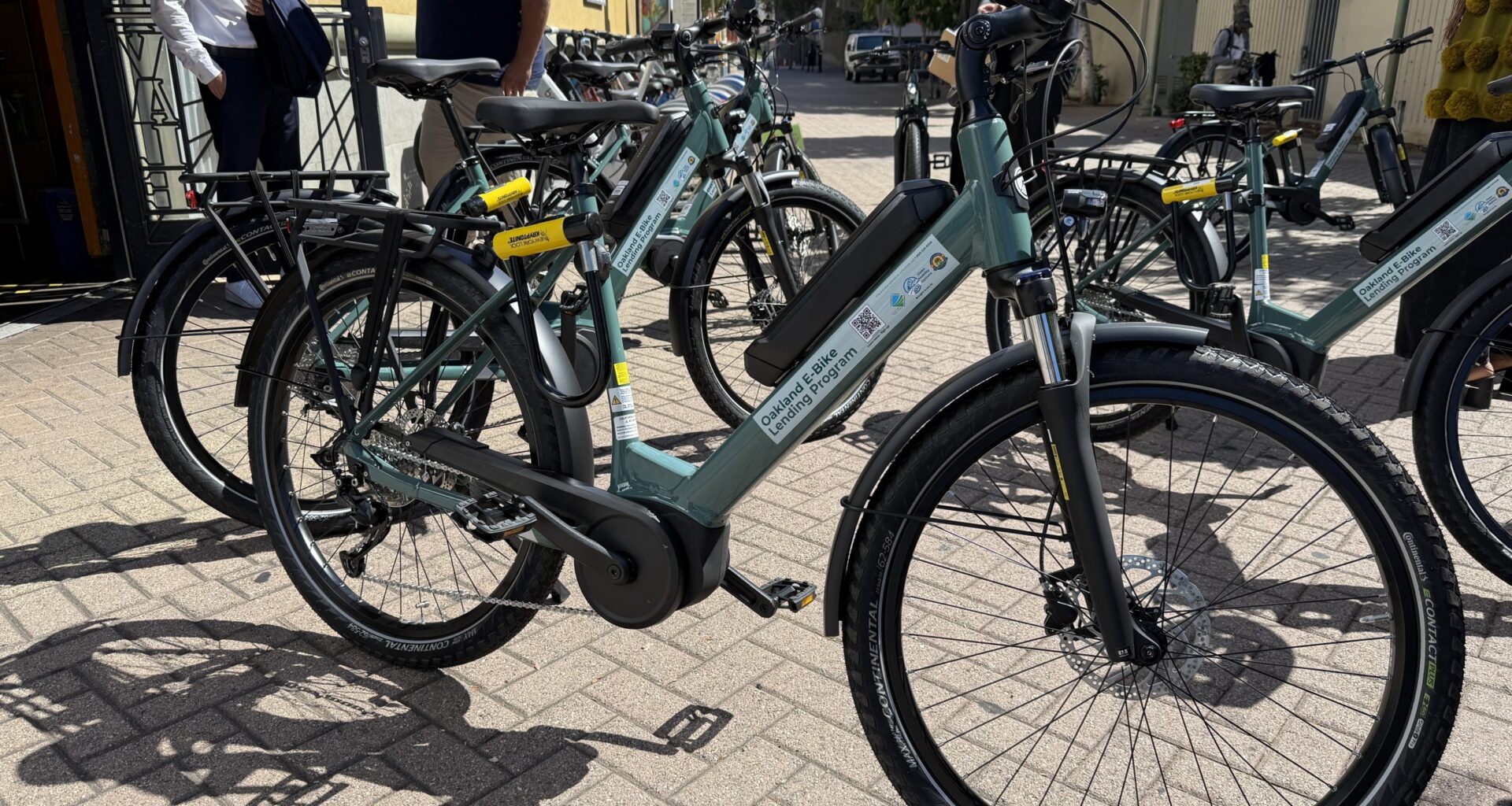
Oakland’s transportation department expects the city administrator to accept and appropriate $800,000 in grant funds from CalStart, an environmental nonprofit, for the electric bike lending program launched in September. The funds will mostly be used to cover rising bicycle and insurance costs, and the costs of administering the program for four more years.
That’s according to a staff report that will be considered at an upcoming Dec. 9 meeting of the Public Works and Transportation Committee, where members will discuss a resolution that includes the grant. The item will then require approval by the full city council at a subsequent meeting.
The city’s e-bike lending program offers new e-bikes, helmets, and locks in a package to low-income Oaklanders over the age of 18 for $20 for four weeks, or for $120 for four weeks for other residents. Rentals can be picked up at the Bikehub location at the base of the Fruitvale BART station in East Oakland.
The item before the city committee also seeks authorization for an extension of Oakland’s contract with Bikehub, the local bike operator, to manage bike maintenance and rentals for $66,203 a year for four years. And it seeks a waiver of the requirement to bid out the contract to competitors.
The report attached to the resolution, authored by Josh Rowan, director of Oakland’s department of transportation, notes that the program is the first opportunity for low-income people in Oakland to have affordable, consistent access to e-bikes, which are much more expensive than most manual bikes. E-bikes rentals through the Bay Wheels Bike Share Program, run by Lyft, or the one run by the private company Veo, rent their bikes by the minute or through recurring monthly passes.
The Oakland e-bike lending program was first proposed in the city’s bike plan published by the transportation department in 2018, two years after the department was created. The new money will “address key transportation gaps identified through that Plan,” the report said, which include “high transportation costs, a lack of access to bicycles, and limited geographic access to key resources.”
The e-bike lending program opened for business this September after several years of preparation by the city, including procuring the 50 Gazelle Medeo T-9 City e-bikes, each of which cost around $2,500 retail.
The city has not yet produced a report detailing whether low-income people — or anyone else — is actually renting the new e-bikes.
“*” indicates required fields