
People in the Bay Area continue to experience the “flare up” of earthquakes into Monday afternoon, December 8, SFGATE reported. Oakland is the latest Bay Area city to experience an earthquake on Monday at 2:55 pm. It had a preliminary magnitude of 2.9, according to the U.S. Geological Survey, and a depth of 2.85 miles. The epicenter was located north of Montclair.
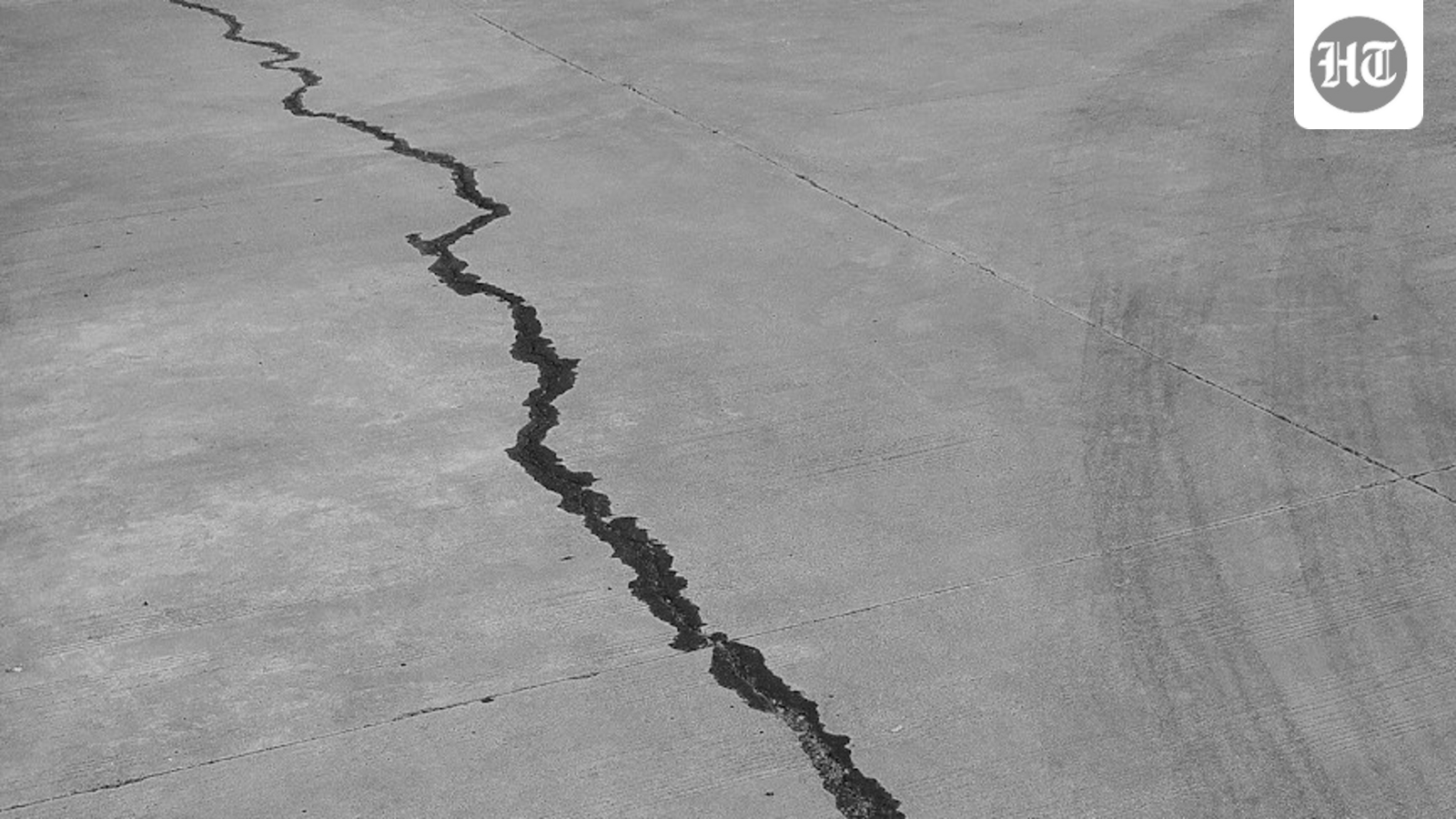
 Bay Area earthquakes: Why are Oakland, San Ramon experiencing ‘flare-up’? (Unsplash – representational image)
USGS’s ‘Did You Feel It’ map revealed that people in Alameda and Contra Costa counties said they felt “light” shaking.
Monday’s quakes
The earthquakes in and around San Ramon continued into Monday afternoon following at least seven quakes in the morning. Two more small quakes were later reported – one with a preliminary magnitude of 2.9 at 1:50 pm, another with a preliminary magnitude of 2.6 at 1:59 pm, according to the U.S. Geological Survey.
Roland Burgmann, a UC Berkeley seismologist, told SFGATE that the series of quakes that hit San Ramon Monday morning are a “flare-up” of last month’s swarm, which caused about 90 small quakes in November. This is not rare in the San Ramon and Alamo area, Burgmann explained. This area has experienced about a dozen or so swarms in the past 20 to 25 years.
“These are a little bit different from earthquakes that we usually see, where commonly we see a bigger event first and then you have smaller ones that are called aftershocks,” Burgmann said. “This is different in the sense that they come and go for a while, they tend to never get very big.”
Burgmann further said that the quakes took place near the Calaveras Fault, the same fault that produced a cluster of earthquakes in Gilroy on November 26. Whenever there are earthquakes, the probability of a bigger shake increases for about a week or so, he added.
“People shouldn’t be scared, but just statistically, yes, the chances are so much higher,” he said. “We’re not telling people to not go on with their regular life, but whenever you feel an earthquake, it’s a good time to check your preparedness.”
Meanwhile, there was another quake in San Ramon on Monday in a series of small jolts. The latest shake struck at 10:06 am, and was measured at a preliminary magnitude of 2.9. It had a depth of 5.16 miles, according to the United States Geological Survey.
Another quake with a preliminary magnitude of 3.7 was the sixth to hit San Ramon on Monday. The jolt, which took place at approximately 9:07 am, had its epicenter south of Canyon Lakes Country Club in San Ramon and a depth of 5.9 miles. Weak to light shaking was felt in Concord, Berkeley, Oakland, San Francisco, Hayward, San Leandro, Livermore, Fremont and San Jose, per the USGS Did You Feel It? report.
Read More | San Jose earthquake: Massive jolt in California; tremors in Hollister, Salinas and Dublin
Several other quakes hit the area earlier Monday morning, including a 2.6 magnitude jolt at 9:05 a.m., 2.5 magnitude at 7:24 a.m., 2.7 magnitude at 5:37 a.m., 3.0 magnitude at 5:21 a.m. and a 2.9 magnitude at 2:33 a.m., according to USGS.
Last month, about 90 small quakes hit San Ramon. Monday’s earthquakes took place four days after several people in California received a false USGS alert about a 5.9 magnitude earthquake in Nevada.
Why do ‘flare ups’ happen?
Earthquake “flare-ups,” more scientifically known as earthquake swarms or aftershock sequences, take place when there is a sudden release and subsequent redistribution of stored-up energy in the Earth’s crust along a fault line.
Read More | Magnitude 4.0 earthquake rattles California’s San Jose, several people report sharp shake
According to USGS, “Many earthquakes follow a non-swarm pattern known as a mainshock-aftershock sequence. In its simplest form, this means that the largest earthquake occurs first in this sequence, followed by a series of smaller shocks, decaying over a time period ranging from weeks to decades. On average, the magnitude of the largest aftershock tends to be about one magnitude unit smaller than the mainshock.”
USGS explains that there is no precise definition of when a mainshock-aftershock sequence becomes a swarm. “In reality, the distinction is not sharp. Earthquake sequences follow a whole range of behaviors from “very mainshock-aftershock” to “very unlike mainshock-aftershock.” The “swarm” designation is typically applied when we observe relatively many earthquakes within a relatively small area, which just don’t fit the pattern of a mainshock-aftershock sequence,” it adds.