
In 1980, at the beaming dawn of a budding musical career, an energized 23-year-old singer/musician from Sacramento named Charlie Peacock walked into San Francisco’s legendary Automatt recording studio to record some songs in his hunt for a record deal.
The recording studio at 827 Folsom, founded by producer David Rubinson, who operated it from 1976 to 1984, had already recorded the likes of Santana, Journey and Sister Sledge. Peacock, born Charles Ashworth, hoped to similarly add his name to those lofty names of the music industry.
During his days inside the Automatt, Peacock would rub elbows with stars and other up-and-comers. He’d encounter a young Wynton Marsalis and several professional basketball players. The upper floor of the building was leased to Francis Ford Coppola’s Zoetrope Film studio. The legendary rock impresario Bill Graham, who would later help promote Peacock, had an office around the corner. He had entered the heart of a pulsing music scene.
“You just never knew what you were going to see as a young 23-yearold just getting started in the music business,” Peacock said by virtual call from his home in Nashville.
A still of producer/performer Charlie Peacock from around 1981 when he made several recordings at San Francisco’s Automatt studio.
Peacock’s career as a successful Christian musician and Grammy-winning producer was still years away. For now, he was just another hungry artist trying to get a foot in the door of the music biz. A bit of a break came when producer David Kahne took an interest in him. Kahne, who worked as an A&R director and staff producer for 415 Records, kept an office in the Automatt and persuaded Rubinson to go see Peacock perform. Rubinson liked what he heard and gave them use of the Automatt when it wasn’t booked. They recorded in between other paying sessions.
It was an era when punk and new wave were the prevailing musical sounds in San Francisco. Peacock and his bands would regularly haul their gear from Sacramento to San Francisco to play clubs like The Stone and Mabuhay Gardens. It was also a transitional time for the recording industry itself as drum machines and digital recording were become the standard.
“Back then in the early 80s, it really was the advent of all this technology that was just bursting on the scene,” Peacock recalled.
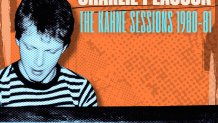
Grammy-winning artist/producer Charlie Peacock just released a set of recordings from early 1981 recording sessions at San Francisco’s legendary Automatt recording studio.
Signed by A&M Records to make some demos, Peacock recorded six tracks in the Automatt — the music heavily imbued with gestures of new wave, punk and funk. Having grown up in the agricultural community of Yuba City outside Sacramento, Peacock had been raised on a steady diet of West Coast jazz, funk and R&B — bands like Tower of Power and Sly and the Family Stone. His musical palette was dabbed with many colors.
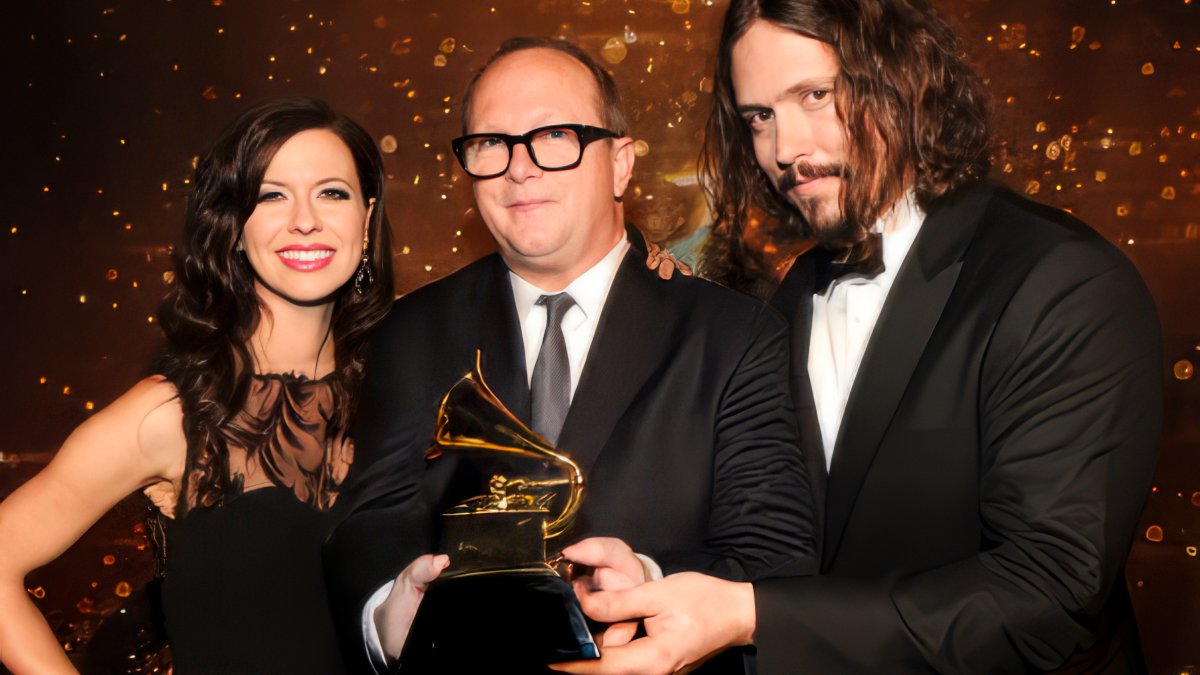
Kahne and Peacock were both at the precipice of large careers in music. Kahne would go on to produce the Bangles, Paul McCartney and The Strokes. Peacock would enjoy a successful career as a performing Christian artist, before moving to Nashville where he would co-write Amy Grant’s mega-single Every Heartbeat and would produce artists like Jackson Browne, Al Green, Switchfoot and the Civil Wars, who’s first album earned him a Grammy.
In his rise within the music industry, those early Automatt recordings disappeared.
“At one point I thought in my mind, ‘Oh, those are definitely lost to time,'” Peacock remembered.
Peacock began a search for the recordings, a musical time capsule of his early days in music. He sifted through boxes and hard drives, until, like an archaeologist, the pieces began to emerge.
“I started finding some analog tape, finding cassettes,” he said.
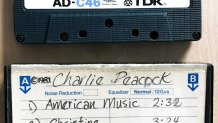
Grammy-winning artist-producer Charlie Peacock dug into his archives to find his missing 1981 recordings from San Francisco’s legendary Automatt recording studio.
After re-discovering those sessions, he set to listening to them. The sound of his still-developing singing voice sat heavy on his modern day ears. Some of it impressed him. Some of it he wished he could change. Some of it embarrassed him. Yet, emanating from the speakers was the voice of his life more than 40 years back. The question now was would he let anyone else hear them?
“I think as you get older and you’ve had a successful career, it’s less about your ego and more about sharing something that was unique and special for its time.” Peacock mused. “What was lost became found, because really my heart changed about it. I decided, yeah, I’d be willing to let people hear them.”
Peacock just released the recordings titled The Kahne Sessions 1980-81. From a prodigious career covering all aspects of the music industry, Peacock hopes others will enjoy the whimsy of looking back at a point in his life when his musical journey was at its infancy, and maybe hinting at the promise of what was ahead.
“To me, the fun about listening, about discovering these kind of lost tapes is to realize, you know what, I could never do that again,’” Peacock said. “I couldn’t hear music like that again.”