

Last year, in one of the more brutal examples of San Francisco’s money- and time-wasting habit of holding competing ballot initiatives, voters approved a measure — Proposition E — that established a temporary task force with a mandate to prune our overgrown collection of volunteer commissions and mostly toothless advisory bodies.
Twelve months later, despite the hard work of the five-person Commission Streamlining Task Force, there’s a real chance that special interests will torpedo its recommendations to eliminate 61 of these unneeded entities.
Kim Tavaglione, head of the San Francisco Labor Council, told me last week she has discussed the task force’s work with several members of the Board of Supervisors or their staff. Though she hasn’t decided if organized labor will oppose the legislation that would zap the volunteer outfits, it isn’t difficult to see which way she’s leaning. “All they’re doing is weakening the voices of hardworking San Franciscans and our city government,” she said. “I’m not optimistic.”
I have a different view of the task force: It is doing vital work to make San Francisco’s government function more efficiently and show that the city works on behalf of its citizens, not its labor unions, lobbyists, or advocates. In its efforts to cull overly burdensome and pointless commissions, the task force has engaged in a deliberative, purposeful, and exhaustively open process that should serve as a model for future reforms.
Numbers tell the story of this thoroughness. Before Wednesday’s six-hour session in a cramped City Hall hearing room, the group had met 18 times for a total of 65 hours, according to the task force’s tabulation. Members of the public commented 454 times, accounting for about 15 hours. Five task-force staffers have spent a combined 4,200 hours outside the public meetings supporting the group’s work.
Tellingly, the task force counted up the number of voluntary committees it was assessing. Previously, even city experts were not sure of the actual tally; it was thought to be around 130. The task force figured out that there are precisely 150 advisory groups in San Francisco.
Listen toThe Standard Podcasts
Pacific Standard TimeWednesday, Nov. 26

“We found some sneaky, inactive bodies in the code that weren’t meeting,” said Rachel Alonso, a special projects manager in the city administrator’s office, whose latest special project has been to staff the task force.
Of the 50 volunteer entities the task force plans to recommend for elimination from the administrative code, 29 don’t meet at all.
In other instances, the task force has identified deliberating bodies that have outlived their usefulness; whose tasks could be conducted by departmental groups that also would hold public meetings; or, in some cases, that should be governed by the city’s administrative code, which can be easily amended, rather than by the tough-to-change city charter.
At the conclusion of its work early next year, the group will submit an ordinance to the board that eliminates or changes the status of several dozen bodies. It will become law unless eight of 11 supervisors vote it down.
The task force will suggest separate fixes to commissions governed by the city charter. These are likely to be rolled into the larger effort helmed by Mayor Daniel Lurie to revise the charter, the first time in 30 years the city has embarked on such an effort, which kicked off Monday (opens in new tab).
Winning a supermajority of the board to vote down the task force’s recommendations would seem a tall order — until you consider how loudly San Francisco special interests complain any time someone threatens to move their cheese. With so many issues impacted by commissions and advisory bodies — from bike advocacy to urban forestry to homelessness — it’s easy to see how enough supervisors could be picked off to oppose the measure.
This brings us to the political maneuvering that could defang the task force that’s doing all this crucial work. It’s worth remembering that Prop. E was the brainchild of Aaron Peskin, then president of the Board of Supervisors, who created it to spoil the more draconian Prop. D, whose main benefactor was Michael Moritz, chairman of The Standard. Peskin endowed the task force with considerable power. Now he is on the record expressing his misgivings about the monster he created.
In March, Peskin addressed the task force directly, at its invitation, and compared its efforts to Elon Musk’s stewardship of the Department of Government Efficiency, then at the height of its reign of terror over the federal bureaucracy. Peskin opined that the panel needed to do less; it could make tweaks to improve the efficacy of commissions, but that was about it.
Tavaglione, the labor leader, made a similar argument to me last week. “In the era of Donald Trump, we should be welcoming people to get involved in their government,” she said in defense of citizen-run commissions, before slamming the existence of the Prop. E-mandated task force. “This is a make-work project that is not going to accomplish what people thought they were voting for in November.”
In actuality, Peskin’s ballot-initiative language, approved by voters, gave it far more power than merely making tweaks. It authorized the panel to advise the mayor and Board of Supervisors on how to “eliminate, consolidate, or limit the powers and duties of appointive boards and commissions” to improve the administration of government. Leveraged correctly, the task force can do real and necessary damage to the status quo.
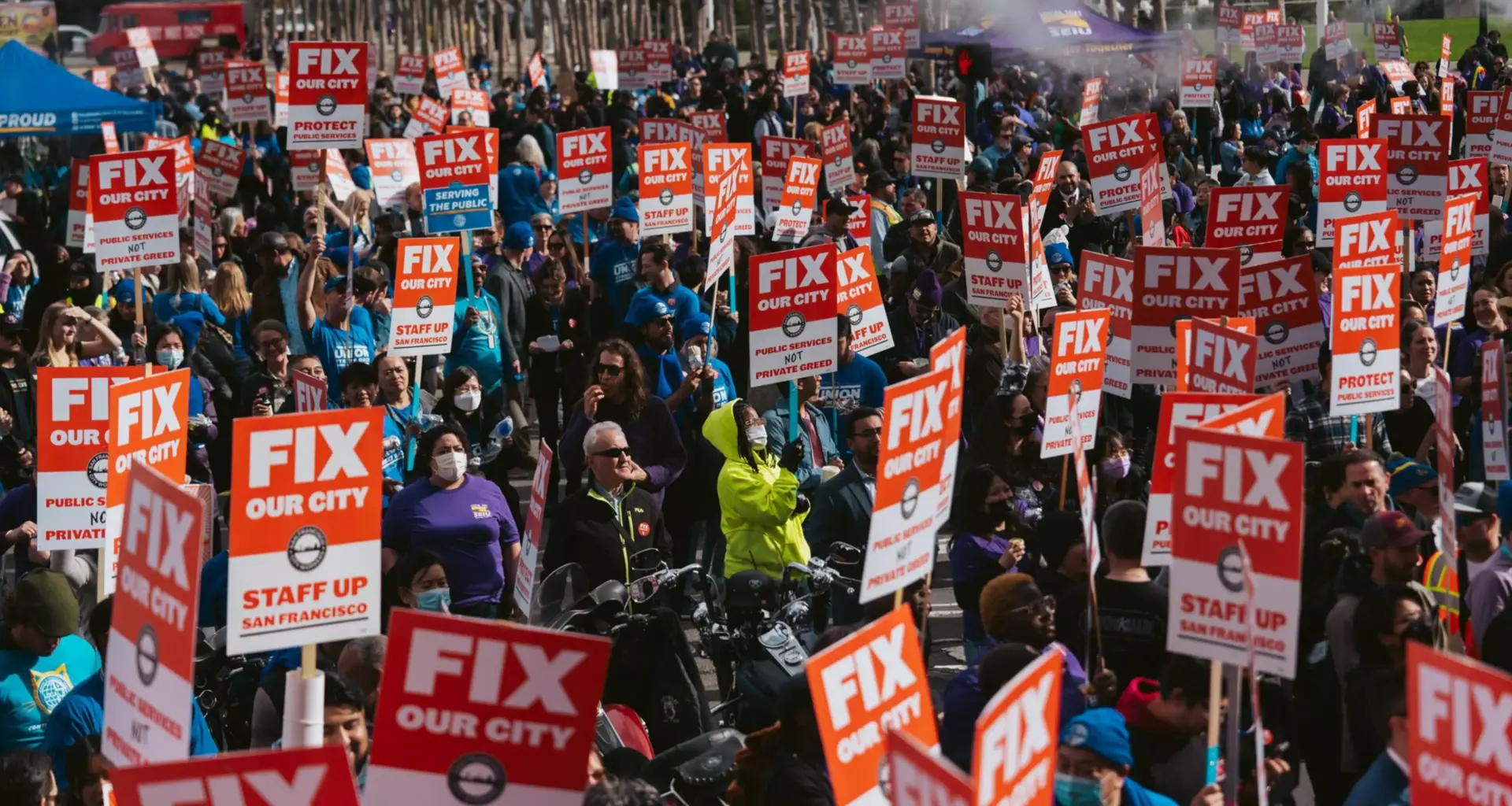
The debate over the task force is a quintessential San Francisco political fight. I have no doubt that many passionate San Franciscans fervently believe that these commissions advance the cause of democracy and give voice to ordinary citizens. I also have no doubt that others, particularly organized labor, see them merely as levers of raw power. Because labor often gets a designated seat on each body — as it does, by the way, on the task force itself — union leaders have an inordinate say on which city-funded projects get extra scrutiny or who gets hired and fired for city jobs.
There is one last thing about which I have no doubt. The Commission Streamlining Task Force has done important, painstaking work that has surprised even those who didn’t vote for it, and its recommendations deserve to become law.
It’d be a shame if the task force’s efforts came to naught. Worse, it would be a signal that the city’s progress on adopting commonsense policies, including what Lurie hopes to achieve with charter reform, is going in the wrong direction again.