
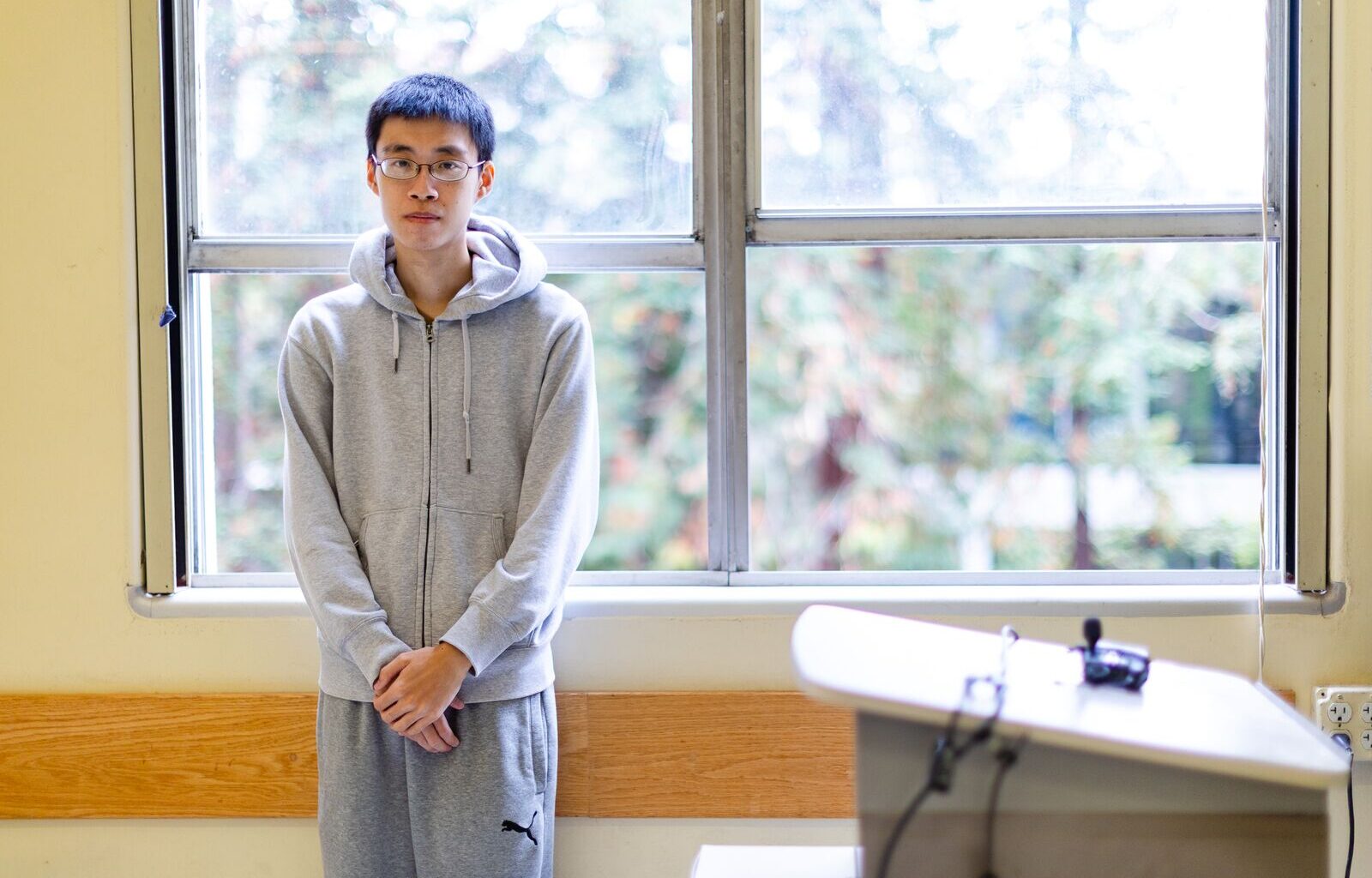
 Peyrin Kao, a UC Berkeley computer science lecturer, stands in an empty classroom on Oct. 2 during his month-long hunger strike protesting “the use of tech in Israel’s genocide in Gaza and starvation of Palestinians.” Credit: Estefany Gonzalez for Berkeleyside
Just a few months after UC Berkeley said it had released the names of 160 students, faculty and staff mentioned in antisemitism complaints to the Trump administration, the university has suspended one of them for sharing his pro-Palestinian political beliefs with his students.
Peyrin Kao, a computer science lecturer whose 38-day hunger strike made him one of the campus’s most high-profile faculty critics of the war in Gaza, said he learned Thursday that UC Berkeley is placing him on six months of suspension without pay beginning in January.
The suspension, first reported by The Daily Californian, comes after student complaints, according to a letter signed by Professor Jelani Nelson, chair of the university’s Electrical Engineering and Computer Sciences department. Several academics within and outside the university decried it as an assault on academic freedom that is likely to chill political speech on a campus already at the center of the Trump administration’s crackdown on colleges.
At issue are two lectures Kao delivered, one in April 2024 and the other in August 2025, that university officials say violated a University of California policy barring “misuse of the classroom” and “political indoctrination” of students.
In the first, which took place as UC Berkeley students were protesting the Gaza war, Kao took about five minutes after the last class of the semester had officially ended to talk about political dialogue and the role of technology companies in providing tools used by the Israeli military. He called the war a genocide and said conversations about the ethical use of technology were important to engage in as part of recruiting and retaining diverse people to computer science. He ended by expressing solidarity with student protesters and Palestinians.
In the second instance, Kao told students, “I might be a little fatigued because I’m doing a starvation diet for a cause that I believe in.” He did not say what the cause was, but provided students with a link to his personal website, where they could find additional information.
“No one can deny that, outside the classroom, Mr. Kao’s First Amendment rights allow him to advocate for causes he supports,” Executive Vice Chancellor Benjamin Hermalin wrote in a review of Kao’s conduct. But Kao’s hunger strike, he wrote, qualified as a “nonverbal” form of in-class advocacy due to “the visible physical toll it presumably was taking and the adverse consequences it may have had on the quality of his instruction.” Kao also drew attention to the strike by mentioning it in class and being interviewed about it in the press, Hermalin wrote.
Hermalin said Kao’s teaching should be “monitored” until the suspension takes effect and that he had “no objection” if the department chose to terminate Kao.
Kao says he’s been careful not to run afoul of university rules
Kao said in an interview that he believes he was specifically targeted because of his pro-Palestinian views, and that the university had not raised any questions about the April 2024 lecture until late October 2025, when he was summoned to an investigatory meeting.
“The timing of this one raises some very serious questions about whether the university is capitulating to the demands of the Trump administration and using me as bait,” he said.
After being warned by the university in 2023 to keep his pro-Palestinian advocacy out of the classroom, Kao said he had been careful not to run afoul of university rules. He said the April 2024 conversation took place after an end-of-term class session that had been billed as optional, in which other topics of conversation included what books he and his co-instructor were reading, and had told students before he began speaking that they were free to leave.
“I explicitly said, ‘It’s OK if you don’t agree with me,’” he said. “When I talk about these things to students, it’s not like I’m trying to indoctrinate them or coerce them to think a certain way. It’s really just that I think students are capable of thinking critically and having these conversations among themselves.”
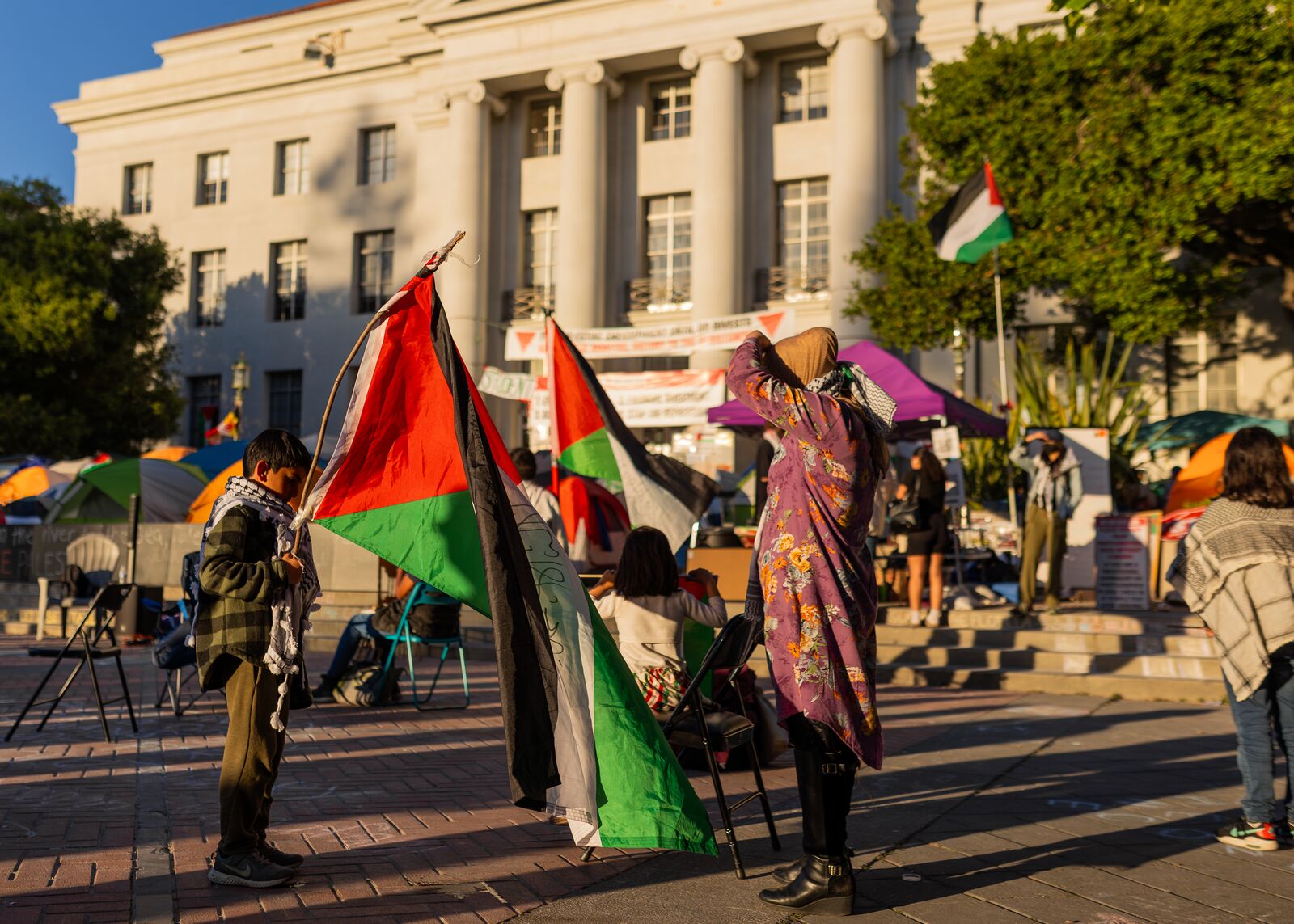 A Palestinian family from San Francisco visits the “Free Palestine Camp” at the UC Berkeley in May 2024. File photo: Ximena Natera, Berkeleyside/CatchLight
That distinction is key, said Jonathan Zimmerman, a historian at Penn State’s Graduate School of Education who focuses on free speech.
“Expression and indoctrination are not the same thing,” Zimmerman said. “This professor has a right to say anything he wants about Palestine. He doesn’t have the right to impose his views on his students.”
In the absence of any evidence that Kao was grading his students in a biased manner or otherwise pressuring them to agree with him, Zimmerman said, the suspension “seems really draconian.”
But he said it fits a nationwide pattern of increased restrictions on in-class speech, pointing to a September incident in which a Texas A&M professor was fired after a student recorded her making comments about gender identity that incensed Republican lawmakers. The Trump administration is currently investigating allegations of antisemitism at dozens of colleges and universities, including UC Berkeley, a campaign that has been welcomed by some conservative and Jewish scholars but that critics describe as a thinly veiled effort to exert control over higher education and silence political dissent.
UC Berkeley spokesperson Janet Gilmore said the university doesn’t comment on confidential personnel matters.
“The university will always take a viewpoint-neutral approach when it comes to supporting freedom of expression and actions that align with policy,” she said.
She declined to answer whether the university has disciplined any other professors this year for violating the same policy.
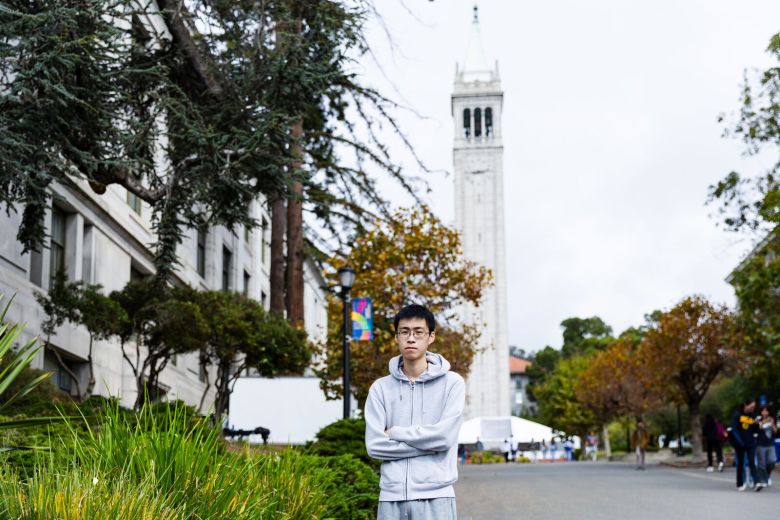 Peyrin Kao, a UC Berkeley computer science lecturer, on Oct. 2. Credit: Estefany Gonzalez for Berkeleyside
UC Berkeley faced a public backlash in September when it announced it had shared the names of the 160 students, faculty and staff with Education Department officials investigating the campus’s handling of antisemitism complaints. This appears to be the first publicized case since then of the university disciplining someone named in the documents. UC Berkeley officials have said they were directed by UC system leaders to share the unredacted documents and notified those named in the interest of transparency.
Judith Butler, a prominent gender studies scholar whose name was also forwarded to the Trump administration, called Kao’s suspension a “terrible decision.”
“The consequences will not only be to chill political speech on campus, but to further ruin UC Berkeley’s reputation as upholding the principles of free speech,” they said.
In the letter announcing the suspension, Nelson told Kao that his failure to comply with university policies “continues to make students in your courses very uncomfortable.”
“I received reports that your actions made CS 61B a hostile environment for them and they disguised their identity for fear of retaliation.”
Other students spoke out in support of Kao. A spokesperson for the student organization Stem4Palestine said it was planning campus demonstrations in Doe Library on Wednesday and Sproul Plaza on Thursday to protest his suspension.
“Peyrin’s suspension shows that the university will selectively retaliate against pro-Palestine speech, even if it means depriving EECS students of an educator who has always prioritized his students and the quality of their education,” the group said in a statement.
Planned hunger strike woul protest the suspension
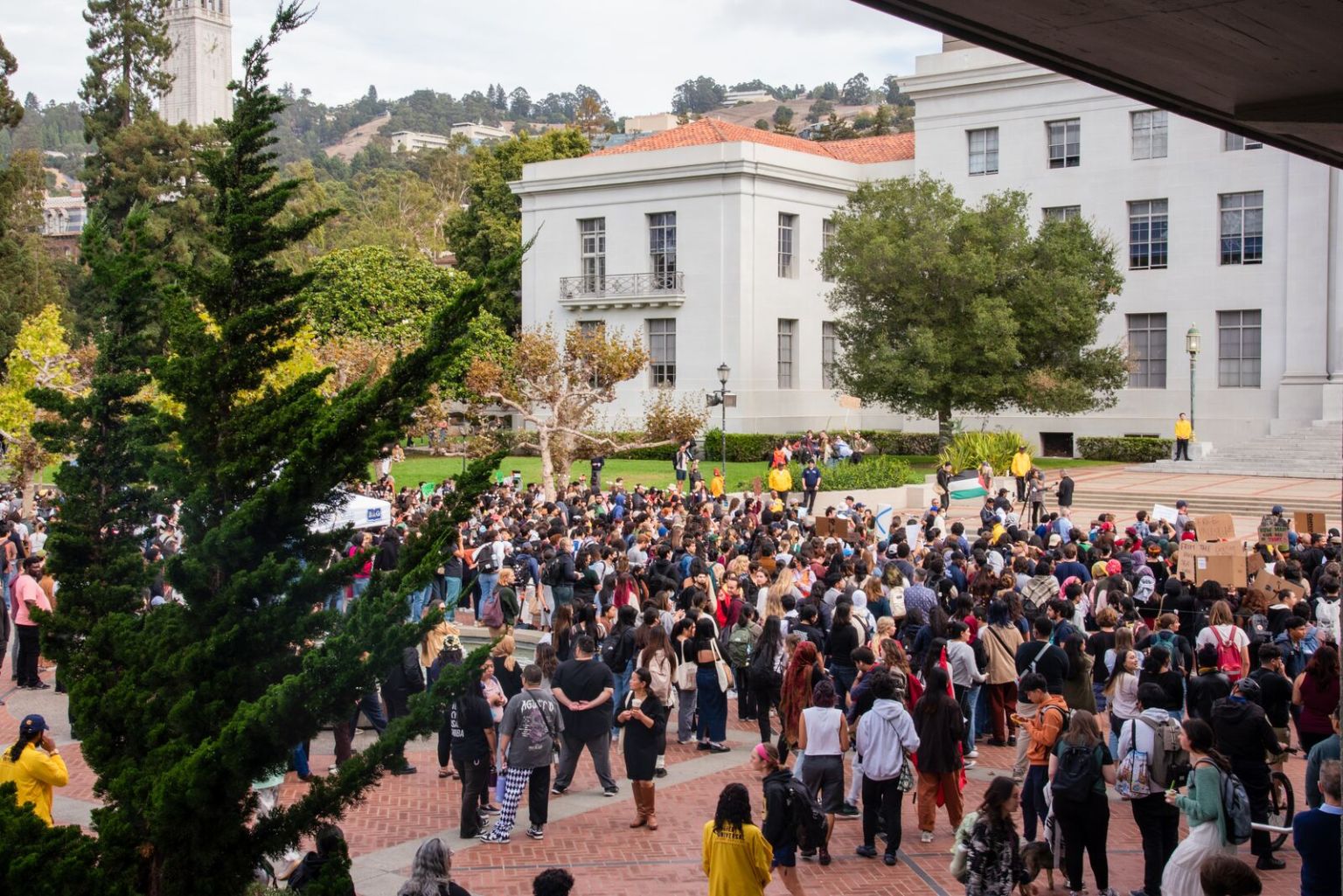 UC Berkeley students protest the Israeli military campaign in Gaza at a 2023 demonstration. File photo: Ximena Natera, Berkeleyside/CatchLight Local
Some members plan to launch an extended hunger strike Wednesday to demand Kao’s reinstatement, the group said.
A field representative for the University Council-AFT, which represents campus lecturers, said the union planned to file a grievance over Kao’s suspension.
“We don’t find that UC Berkeley had any just cause for this suspension,” said the field representative, Jessica Conte.
Kao said he planned to continue speaking out about Palestine.
“When you make a choice not to talk about something, that’s also a political decision,” he said. “You are making a decision to uphold the status quo.”
Related stories
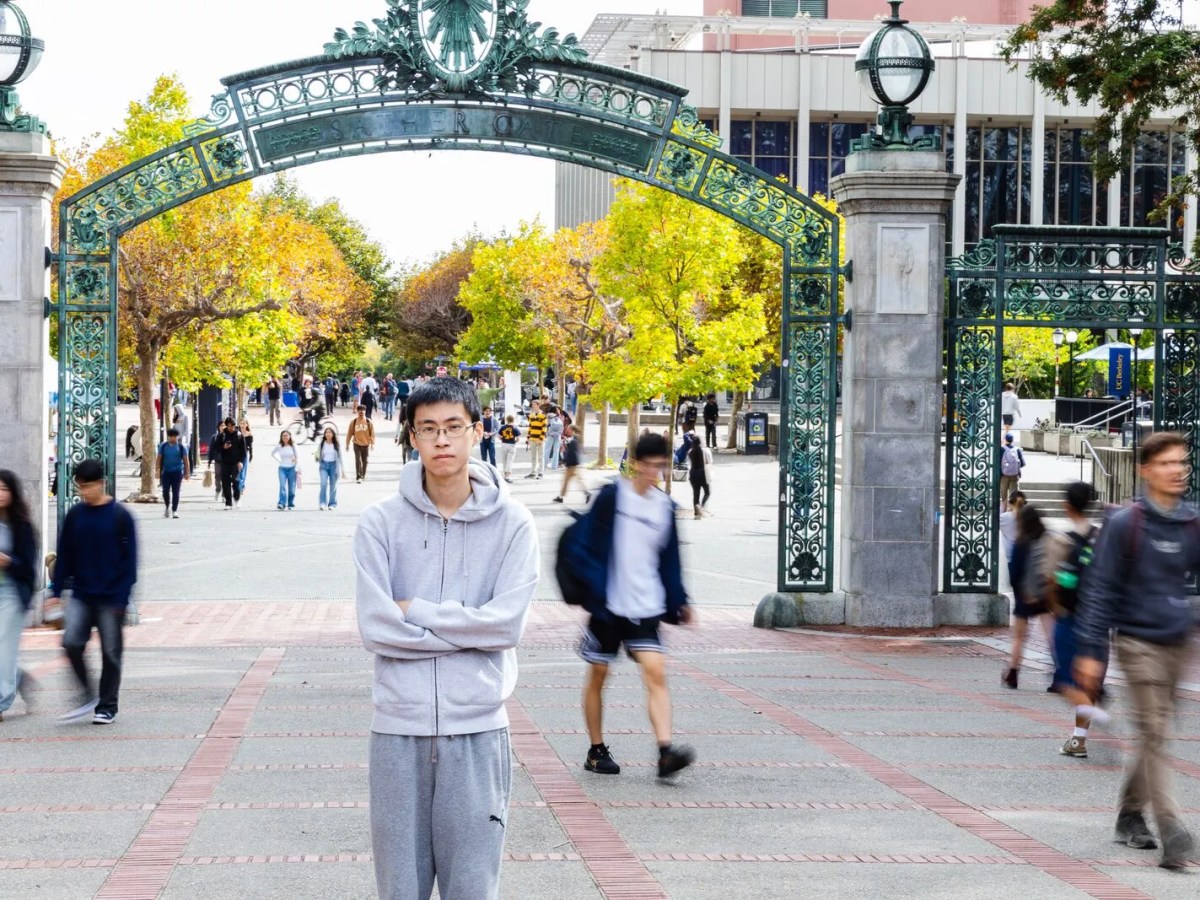
Cal sent his name to the Trump administration. He’s still kept up a 38-day hunger strike for Gaza.
October 3, 2025Oct. 4, 2025, 10:18 a.m.
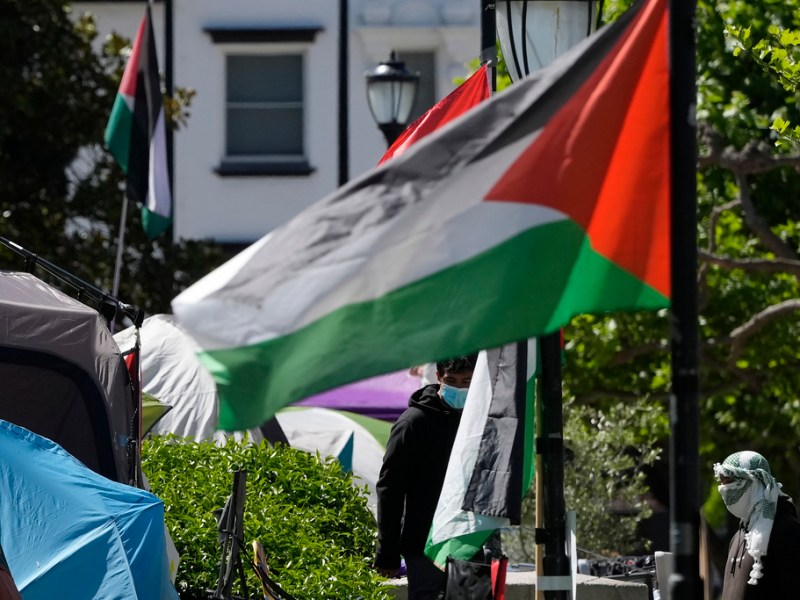
UC Berkeley shares 160 names of students, staff with Trump administration in ‘McCarthy era’ move
September 12, 2025Sept. 13, 2025, 1:42 p.m.
July 15, 2025Nov. 20, 2025, 10:40 a.m.
“*” indicates required fields