
Silicon Valley’s wealthiest residents are steering billions of dollars to national and global causes instead of investing in their own backyard — a trend that’s persisted for at least five years.
The region’s richest donated $1.52 billion to philanthropy this past year, according to a recent report from the Silicon Valley Community Foundation. But just 8.6% of that money went to fund local needs in Santa Clara and San Mateo counties. A whopping 79% of money left the region to support causes outside the Bay Area, the state and even the U.S.
The troubling pattern isn’t new. An analysis of the past five years of grantmaking found local giving under 10% each year — with the worst year on record in 2023-24 with only 3.9% of philanthropic dollars staying local.
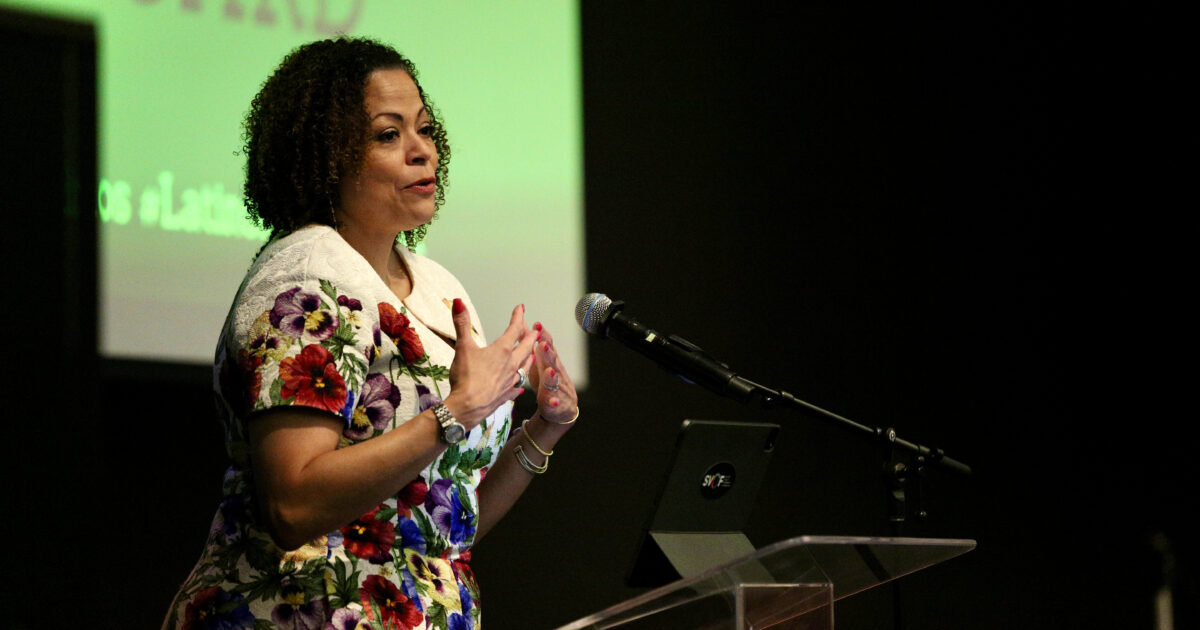
“Am I satisfied? No,” Nicole Taylor, CEO of the Silicon Valley Community Foundation, told San José Spotlight. “There is good news in 2025, though, that we’ve already exceeded through the third quarter what the (local) grantmaking has been in 2024.”
With the year drawing to a close, the foundation reports $131 million went to local organizations and programs — inching closer to last year’s $182.2 million. And funding for international causes dropped by about $35 million this year.
“I think the needles are moving in the right direction,” Taylor said. “Just not as fast as I’d like.”
Taylor said the trend is driven by the transient nature of Silicon Valley’s tech workforce, its worldwide diversity and the global identity of major companies.
“We are a valley of transplants, so a lot of people want to give back to their home country, or their home state or home city,” Taylor said. “There’s also the national and global crises that our donors pay attention to.”
Lack of local investment
Neha Gohil, a philanthropic strategist who previously managed $30 million in grants at the William and Flora Hewlett Foundation, said some donors mistakenly believe the Bay Area doesn’t need philanthropic support because of its affluence. Others want the prestige and name recognition that comes from national or global giving.
Since local nonprofits operate at a smaller scale, Gohil added, Silicon Valley philanthropists might not see the impact if they’re moving from city to city — giving them a sense of playing “whack-a-mole” with social problems.
“That feels fruitless for a lot of large philanthropies,” she told San José Spotlight.
But for nonprofit leaders like Alex Shoor, the lack of local investment directly harms the people they serve.
Shoor’s nonprofit, Catalyze SV, recently scaled back one of its most important programs — housing advocacy — silencing a critical voice on a pressing issue facing Silicon Valley. The decision came after local foundations withdrew funding, despite Catalyze SV meeting its goals around affordable housing, sustainable development and public transit.
“Many Silicon Valley companies are very short-sighted,” said Shoor, who founded the organization in 2017. “They don’t realize they are cuffing the hands that feed them. In some cases, it’s literally the hands of working-class folks providing them their food. By not supporting a more equal society and not giving to local causes, they are making it nearly impossible for regular folks to live here.”
Silicon Valley is one of the most unaffordable regions in the world, with a widening economic divide driven by tech growth and the housing crisis. More than 10,000 people are homeless in a place defined by extraordinary wealth.
While many billionaires sidestep responsibility to the region that fueled their wealth, John A. Sobrato is a striking exception.
Sobrato, a real estate developer whose net worth is an estimated $6.5 billion, and his family have contributed more than $1.3 billion to Santa Clara County and the broader Bay Area. That’s more than many tech companies.
 San Jose leaders gather at the grand opening of Via Del Oro, a tiny home site that can give up to 150 homeless people housing. Philanthropist John A. Sobrato (third from left) leased his land to the city for 10 years at $1 annually. Photo by Joyce Chu.
The family and its philanthropic organization support affordable housing, health and human services, education and economic mobility, among other causes. Sobrato takes the greatest pride in putting a roof over people’s heads, including interim housing on Cherry Avenue and the Via del Oro community which has 135 rooms for homeless people.
“Giving locally is deeply personal for me and my family — it’s a reflection of our faith, family values and belief in the power of community,” Sobrato told San José Spotlight. “We’ve been blessed in so many ways, and we’ve tried to remain true to the conviction that we have a deep responsibility to give back.”
He challenges his wealthy peers to do the same.
“Step forward boldly and invest where you live,” he said.
A call for change
Philanthropic leaders say change is possible — even if it might take time.
Gohil says Silicon Valley must rewrite its story, focusing on the community’s economic needs and reminding donors that social change begins on the local level.
Shoor believes meaningful change will require demanding corporations and wealthy individuals to step up — driven by corporate social responsibility, pressure from foundation and tech workers, or intervention from federal lawmakers and threats of higher taxes.
The Silicon Valley Community Foundation encourages local giving by educating donors through events, newsletters, giving guides and pooled funds. Its leaders work to dispel myths about people in need.
But the foundation can’t tell people what to do with their money — and “forcing” donors to give locally doesn’t work.
“It takes the joy out of giving, and it feels more like a tax,” Taylor said.
Taylor said donors are invited to meet nonprofit leaders and the people they serve — humanizing issues often reduced to dollars and cents. At a recent donor event about immigration, she said tears flowed after a man told his story of living in fear amid local enforcement actions.
He walks around with a worn copy of the Constitution, saying if he gets stopped he will pull up the page showing what his rights are.
“That’s why it’s important to give locally and give to the organizations,” Taylor said. “It’s important for people like him to get our support.”
Contact Ramona Giwargis at [email protected] or follow @RamonaGiwargis on X.
Editor’s Note: San José Spotlight has received support from Silicon Valley Community Foundation’s journalism fund and John A. Sobrato.