
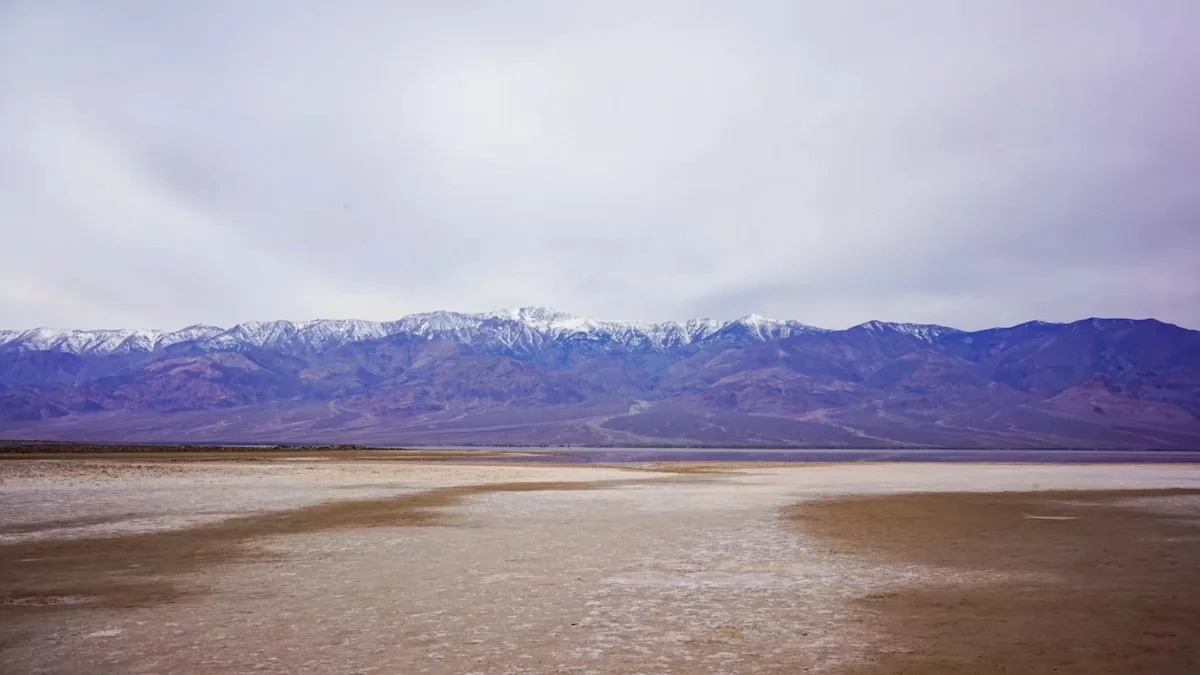
Record rainfall in one of the driest places on Earth has created a rare treat for visitors to California’s Death Valley National Park.
A lake that dates back to the Ice Age has reemerged. “Lake Manly” sits in the Badwater Basin at the lowest point of the park and the lowest point in North America, at 282 feet below sea level.
Storms between September and November dropped 2.41 inches of rain there — more than Death Valley usually sees in an entire year, according to the National Park Service.
(MORE: The Strongest Meteor Showers Of The Year Are Here)
The rainfall made it the wettest autumn and wettest November on record.
That has allowed a shallow, small lake to form; park officials say in most places the water won’t rise above the top of your shoes.
This lake is much smaller than the one that emerged when the remnants of Hurricane Hilary passed through the park in 2024, park officials say. The water was high enough then for people to kayak.
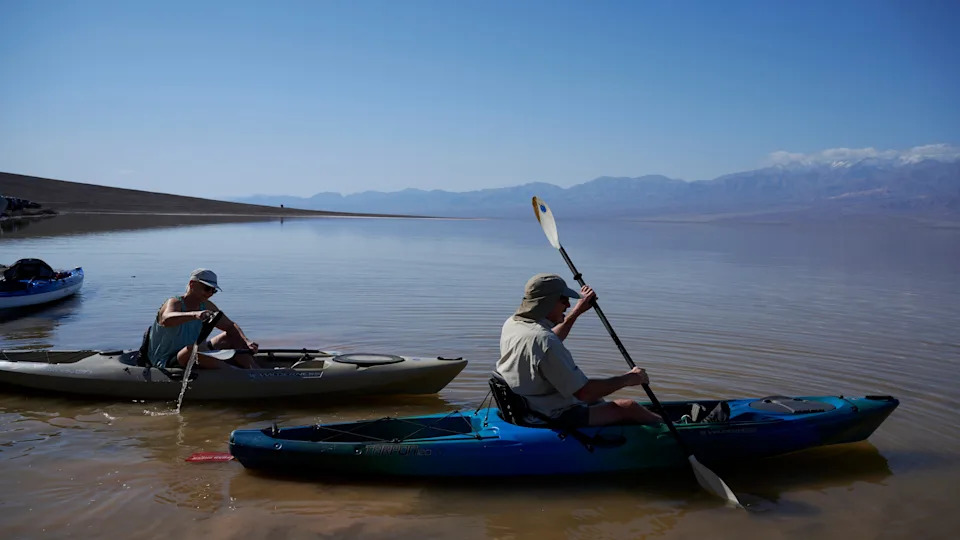
Photo by Bridget Bennett for The Washington Post via Getty Images
Both pale in comparison to the ancient lake that existed more than 128,000 years ago.
NASA scientists say it was 600 feet deep and nearly 100 miles long, filling Death Valley.
(MORE: La Niña May Affect December’s Best Skiing)
As the climate warmed and the ice retreated, the evaporating salt water left its mark on the landscape, and the bed of the prehistoric lake remains visible.
This time around, the water is about a mile from the Badwater parking lot, but the National Park Service has cautioned visitors that numerous roads throughout the park are closed due to flooding damage from the storms.
You can check on road status and park access at nps.gov/deva.