
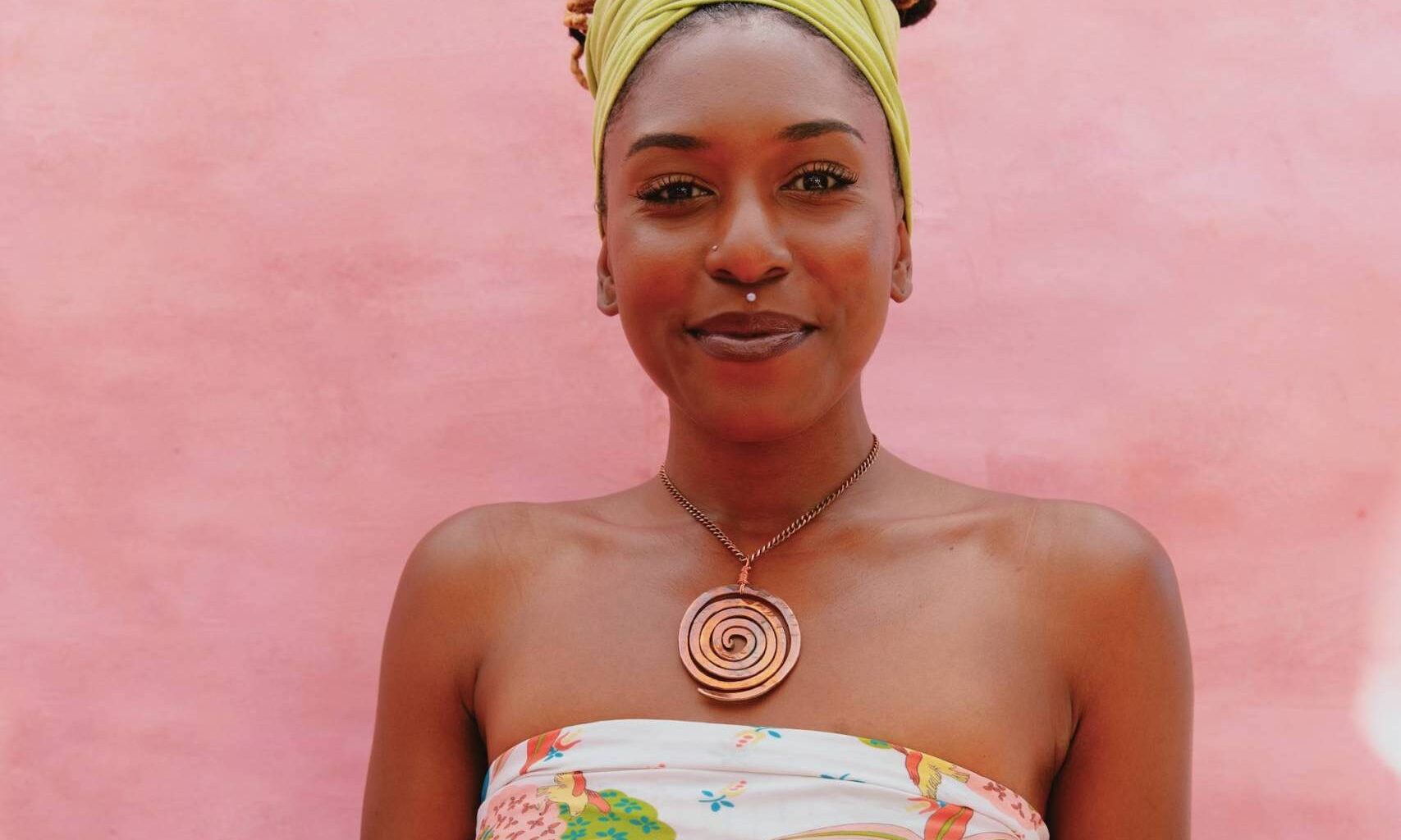
“We’re not here to critique people’s work,” says Deborah Marie. Before the event even starts, she explains, community agreements are plainly stated on half-sheets of paper. The audience isn’t there to “problem solve.” Instead, she says, it’s about reflecting on people’s work and building community by way of sharing related experiences.
“It’s my idea of mixing live performance arts with peer support,” she says.
The donation-based series is new, with only three events to date and a fourth one happening this Sunday, Dec. 14 at the Air Temple art gallery in Oakland. But so far, Deborah Marie says, “it’s been so magical,” adding that “it’s also been different each time.”
At a past event, the discussion naturally flowed in and out of references to mental health and the media-fueled impossible standards that women — specifically Black women — face.
“The conversation got to the point,” Deborah Marie recalls, “where someone just broke down crying.”
Other audience members immediately supported that person and didn’t try to problem solve. Instead, they held space and allowed the person to open up about recently losing a friend to a mental health struggle. And that’s when Deborah Marie realized, “this is really something special if we can incubate this level of vulnerability in a performance space.”
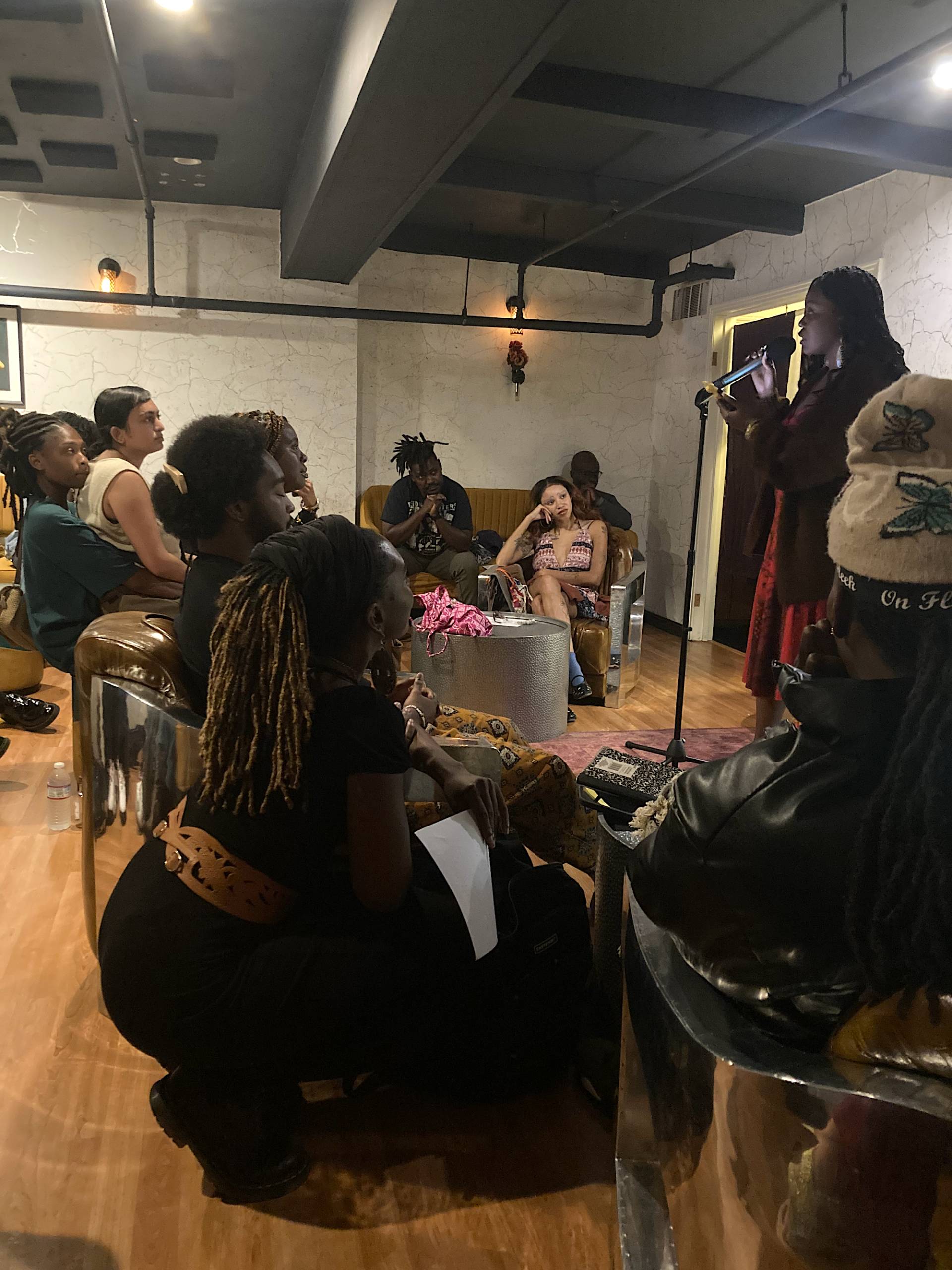 Can I Get A Witness? host Deborah Marie squats low as a poet performs during a recent event at Mushin 2.0 in Oakland. (Diana Rose)
There’s an unexpected overlap between open mic events and sobriety-centered spaces, asserts Deborah Marie. There’s art, community and even support from those who’ve experienced similar things in life.
Conversely, Deborah Marie says harm reduction spaces, where people navigating addictions are guided toward safer methods of using, are “extremely clinical.”
In her view, the area of healthcare, where people are given clean syringes and overdose prevention in the form of NARCAN, is somewhat of a parallel for creative performers who are in the midst of dealing with their own trauma.
What harm reduction spaces and open mic circles are missing — but that sobriety centers or abstinence-based spaces often have — is a social side. Through her work, Deborah Marie has seen the benefits of peer support groups and group outings.
“Those social elements make a big difference in people’s quality of life,” says Deborah Marie, “whether you are or you aren’t using substances.”
With that in mind, she asked herself, “How can we get a room full of people and give them that social support that you get when you choose abstinence? Without them having to choose abstinence.”
She’s created an event where people can share their work freely and be heard without being critiqued like they would be at, say, a writer’s salon. And, she adds, it’s not about the audience giving praise either. “That’s two sides of the same coin,” she says.
“What we’re really aiming for,” Deborah Marie clarifies, explaining the flow of the event, “is like, you heard this [piece]. Now, how did it feel in your body? What did it bring up for you?”
It’s a room for the writers and a lounge for the listeners. A home for healers and a house for those seeking healing. There’s poetry for the people and commentary that creates community.
And ultimately, Deborah Marie says, it’s an opportunity for us to ingest art, quiet the internal dialogue of critique and really delve into our own experiences while being around others.
The next installment of the Can I Get A Witness? open mic series happens from 5 p.m. until 8 p.m. on Sunday, Dec. 14, at the Air Temple art gallery in Oakland (236 2nd St.). RSVP here.