
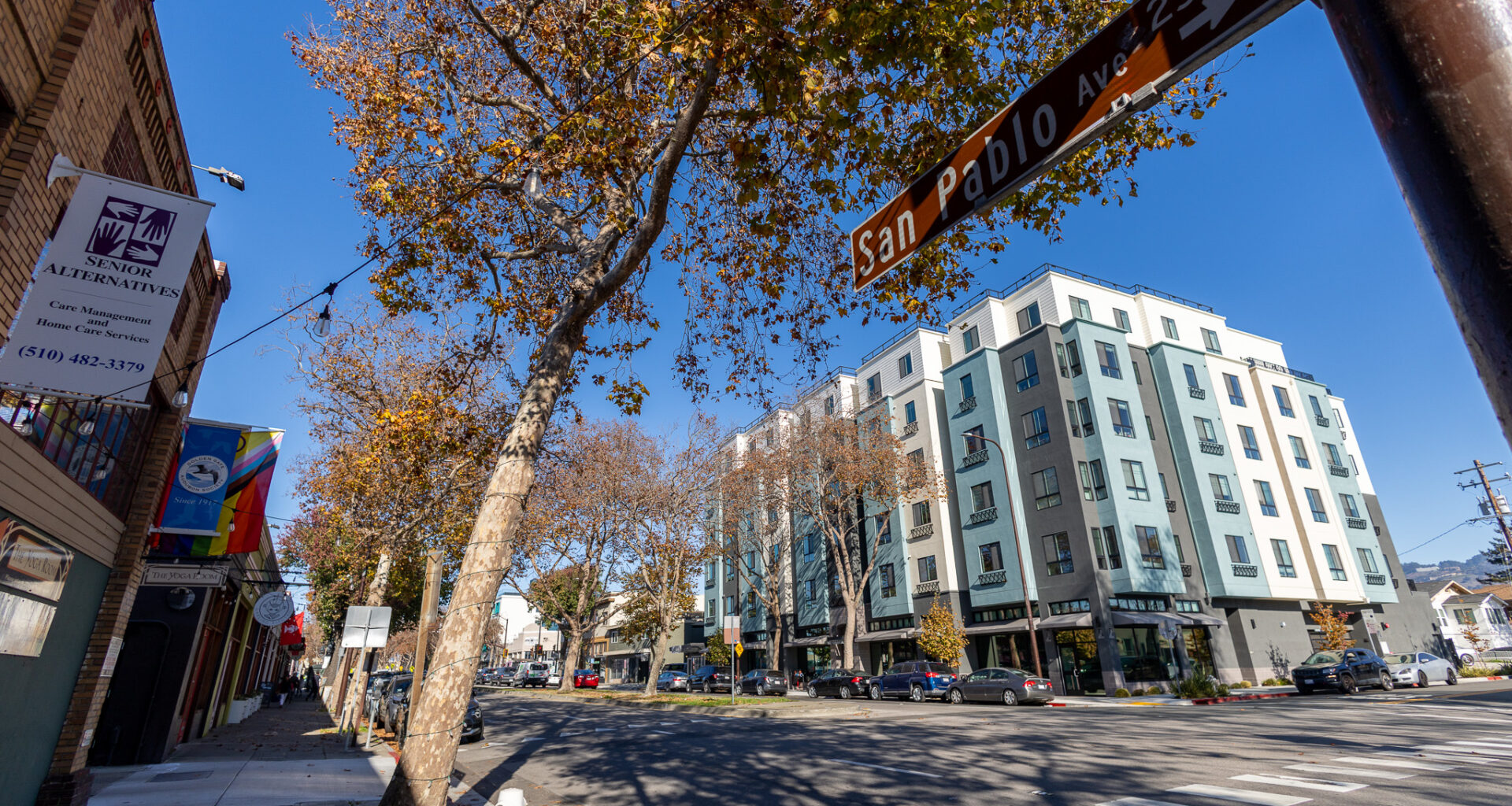
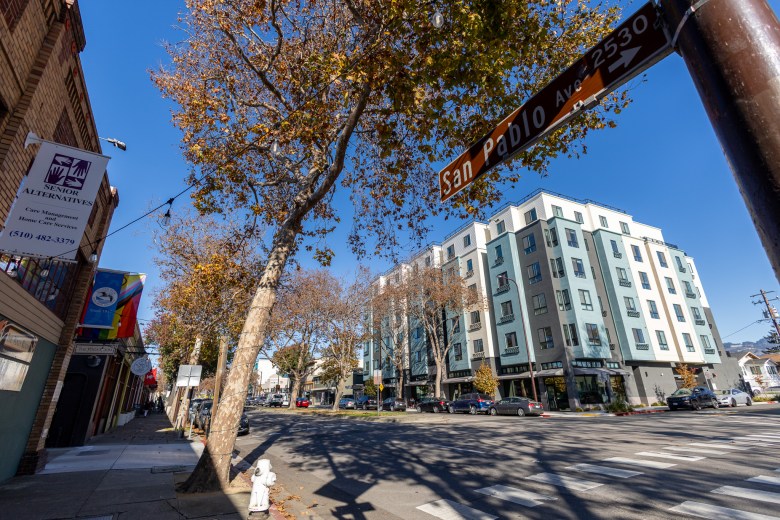
 Several new apartment buildings have opened along San Pablo Avenue in recent years, including The Grinnell, which replaced a former auto shop at Blake Street. Credit: Sara Martin for Berkeleyside
San Pablo Avenue is a corridor in flux, with new apartment buildings rising where auto repair shops once stood and a diverse array of merchants working to foster attractive shopping districts in spite of stubborn vacancies.
Now city officials are considering a set of zoning changes that could accelerate the pace of change, by allowing taller and denser housing developments that might bring thousands of new apartments to the avenue.
Backers of the proposal contend it will help revitalize San Pablo by bringing in more prospective customers who will patronize the area’s businesses and spurring improvements for pedestrians that make the four-lane state highway a more attractive place to visit and linger.
“I’m hoping that this plan will help us bring more people and foot traffic to San Pablo Avenue, so that we can work toward filling the storefronts that have been vacant for so many years,” said Councilmember Rashi Kesarwani, who represents the north end of the corridor.
The plan’s critics similarly want a more inviting experience along San Pablo — but contend the City Council isn’t moving to adopt zoning rules to deliver that change. They fear the proposal to raise height and density caps will instead lead to a wave of development that pushes out small businesses and leaves what they view as an unattractive street.
“We don’t just want blocks of housing, you know what I mean?” said Meryl Siegal, a co-founder of the group Beautiful San Pablo. “Developers will be getting a lot, and we want to see more incentives to build community [and] provide some gathering spaces.”
The debate over San Pablo Avenue reflects Berkeley’s long-running schism over whether new development makes the city’s neighborhoods more vibrant or less appealing. And it mirrors one unfolding over a similar proposal to change zoning rules along portions of three major streets in wealthy neighborhoods — Solano, College and the north end of Shattuck avenues — to encourage more housing.
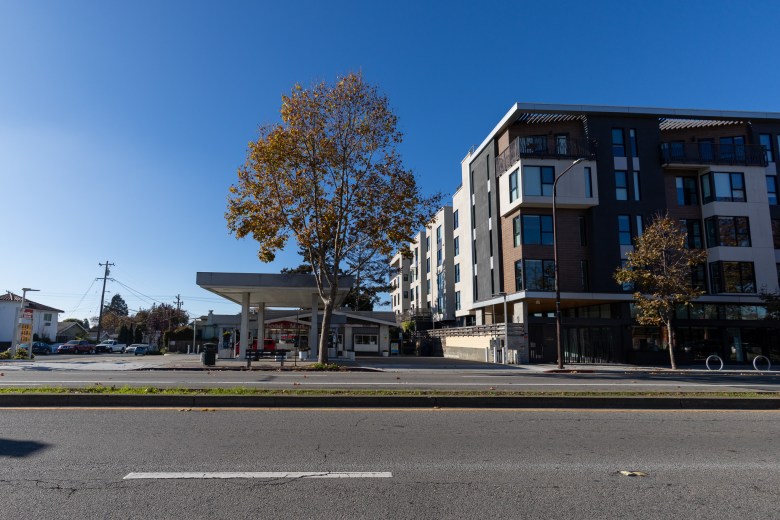 Long a low-slung commercial strip, San Pablo Avenue today is a corridor in flux. City officials are considering raising height limits along the avenue to as tall as eight stories. Credit: Sara Martin for Berkeleyside
But while the two zoning plans are unfolding simultaneously, there are key differences between them.
Where College, Solano and North Shattuck are in parts of the city that for generations used their zoning code and discriminatory practices to exclude those who weren’t wealthy and white, San Pablo is the main thoroughfare of West Berkeley — a historically red-lined area now far along in the process of gentrification. And unlike the other three avenues, which have not seen new housing developments break ground in decades, developers have built several new apartment buildings along San Pablo; more projects have been approved, although high interest rates have slowed housing construction in recent years.
Most noticeably, the effort to rezone San Pablo hasn’t generated the intense backlash from merchants, shoppers and nearby residents who oppose the plan to add more housing along College, Solano and North Shattuck — even though the San Pablo changes are likely to result in far more housing. Berkeley’s Planning Department estimates the San Pablo Avenue Specific Plan could result in as many as 6,750 new apartments, while the zoning changes along the other three corridors might combine to create fewer than 1,800 homes.
Siegal says that’s because San Pablo — which stretches for more than two miles, from Berkeley’s southern border with Oakland to its northern one with Albany — isn’t as cherished in its current form as neighborhoods like the Elmwood District.
“It’s not as cohesive as the other corridors,” she said.
Councilmember Terry Taplin, a supporter of the zoning changes whose district includes the southern half of San Pablo, contends West Berkeley’s residents aren’t as opposed to new development as those who live in the Elmwood and North Berkeley.
“People down here are much more welcoming to new neighbors, and people down here embrace change,” Taplin said.
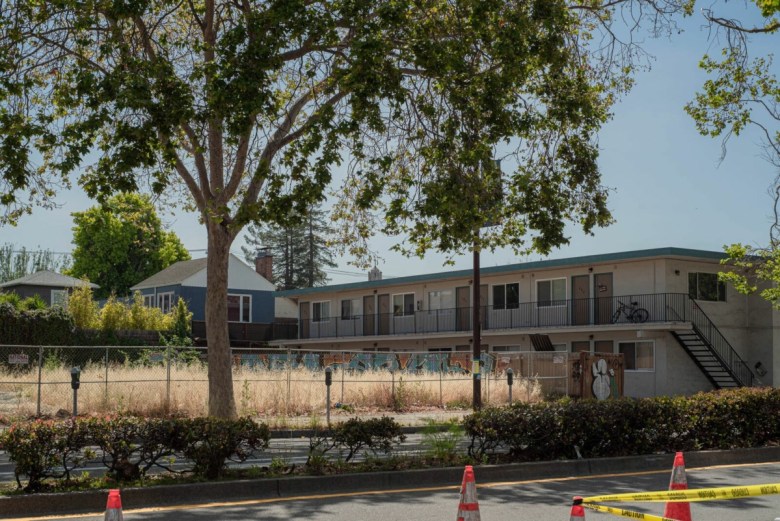 Berkeley has approved a plan to build a six-story building at this vacant lot along San Pablo Avenue in Northwest Berkeley, though the project has not broken ground. Credit: Ximena Natera, Berkeleyside/Catchlight Credit: Ximena Natera, Berkeleyside/Catchlight
Council calls for seven-story height cap throughout San Pablo
A draft of the San Pablo plan that was presented to the Berkeley City Council last month envisioned putting the avenue’s tallest buildings at its busiest intersections, setting an eight-story height cap around Ashby Avenue, University Avenue and Gilman Street. Other blocks would have a five-story limit, up from three stories today.
But those limits aren’t absolute — California’s “density bonus law” allows developers to exceed height caps and other zoning restrictions in exchange for including a share of affordable apartments in their project. Developers often use the law to build projects that are 50% bigger than zoning would normally allow, which would translate to 12-story buildings at San Pablo’s major intersections. And state legislators have sweetened the incentive in recent years to allow projects that include more affordable homes to double local limits.
The draft proposal from Berkeley’s Planning Department also suggested steps to support small merchants, such as undertaking a parking management plan and creating a business improvement district.
And it listed several ideas to create a better pedestrian experience, including improved lighting and incentives for developers to create publicly accessible but privately owned open spaces at street level. Planners also suggested Berkeley could block off certain smaller streets where they intersect with the avenue to create new public spaces — one-block-long Cowper Street, near Allston Way, could become a cul-de-sac with a plaza, for example.
The council, which holds the final vote on the rezoning, backed the vision of a denser avenue during a Nov. 6 meeting to discuss the draft, though several members called for planners to simplify the proposed regulations.
Taplin and Kesarwani said they wanted to see a seven-story height limit along all of San Pablo, rather than stepping the cap up or down. That’s the height several council members and advocates from local “Yes In My Backyard” groups want Berkeley to impose along all of its commercial streets — including Solano, North Shattuck and College — saying the city should treat those corridors equally.
Some Council members were also wary of the idea that Berkeley should encourage developers to build privately owned plazas, saying they would prefer the city focus on creating fully public open spaces. And Kesarwani was dubious about design standards in the plan that called for steps such as varying the facades of buildings, saying that could require reducing the number of homes in a project and wouldn’t satisfy critics of new housing anyway.
“The people who have a problem with the design of new buildings, honestly, are against all development, in my experience,” she said during the November meeting. “I don’t think we’re winning anybody by having these numerous and complex and costly design standards.”
Planning staff are expected to update the rezoning proposal in response to the council’s comments, and will bring a revised draft back to the Planning Commission and City Council for a final vote next year.
Will San Pablo’s next chapter be ‘uninviting’ or ‘thriving’?
Siegal and others from Beautiful San Pablo came away from the Nov. 6 council meeting frustrated. They felt West Berkeley got short shrift to begin with — the council began its discussion of the San Pablo plan at 11:15 p.m., after hearing five hours of comments from the public and council members about the proposal to rezone College, Solano and North Shattuck avenues. They also aren’t happy that council members seemed to have little interest in provisions the group supported such as promoting privately owned plazas, which they contend would improve the experience of walking down the avenue.
The group has called for the city to cap height increases at five stories and limit what Baldwin describes as “single-demographic buildings,” highlighting as an example dorm-style “group living accommodation” projects such as one that recently opened at 2435 San Pablo. Without more stringent regulations, group members fear the avenue will be lined with apartment buildings that have vacant commercial spaces facing out onto sidewalks with few amenities.
“I feel like what we’re going to end up with is the same as the MacArthur BART station development, which has had empty-storefront ground floors forever,” said artist Aimee Baldwin, another co-founder of Beautiful San Pablo. “It feels like a wasteland — you might as well see tumbleweeds down there.”
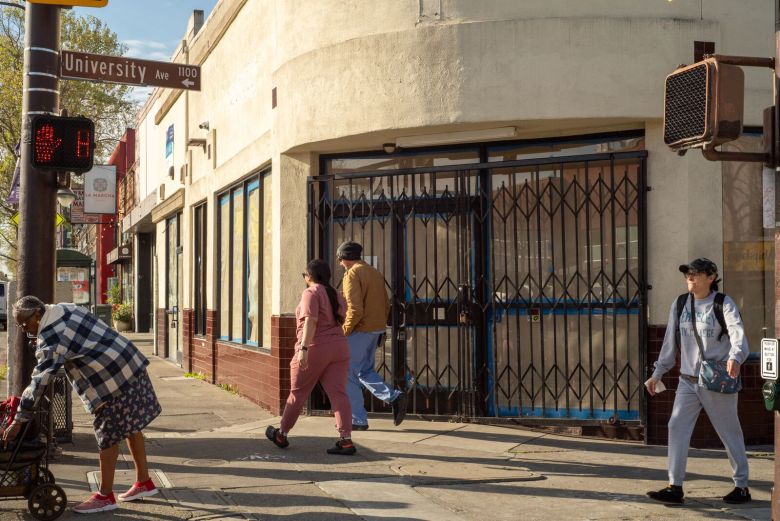 Pedestrians walk past an empty storefront at the intersection of San Pablo and University avenues. Credit: Ximena Natera, Berkeleyside/Catchlight
Acme Bread owner Steve Sullivan said he doesn’t see the rezoning as a threat to his business, which is planning to move next year into a new building the company owns just across the avenue, after renting its space at Cedar Street for decades. Still, Sullivan said he is concerned the plan will amount to a lost opportunity if it only spurs new housing and doesn’t include steps to create a more “comfortable, walkable, commercially vibrant, safe place.”
“This notion of end-to-end multi-story buildings just seems uninviting,” he said.
Chance Boreczky of the YIMBY group East Bay For Everyone says that worry isn’t realistic because zoning changes like the ones Berkeley is considering lead to “patchy” development at the most appealing sites, not unbroken walls of apartment buildings.
Boreczky says East Bay For Everyone supports allowing developers to put apartments, rather than commercial space, on the ground floor of buildings as a strategy to avoid unsightly vacancies at street level. The city’s draft plan would allow developers who pay a fee to build residential space on the ground floor along certain portions of the avenue.
The zoning changes, which would take effect as county transportation officials enact a plan to improve bus service and create safer pedestrian crossings along San Pablo, could be “transformational,” Boreczky said.
“Having more Berkeleyans nearby will keep these retail areas healthy,” he said. “This is exactly the kind of investment in neighborhoods that Berkeley needs to be making in order to make sure those neighborhoods are healthy, vibrant and have thriving local businesses.”
“*” indicates required fields