
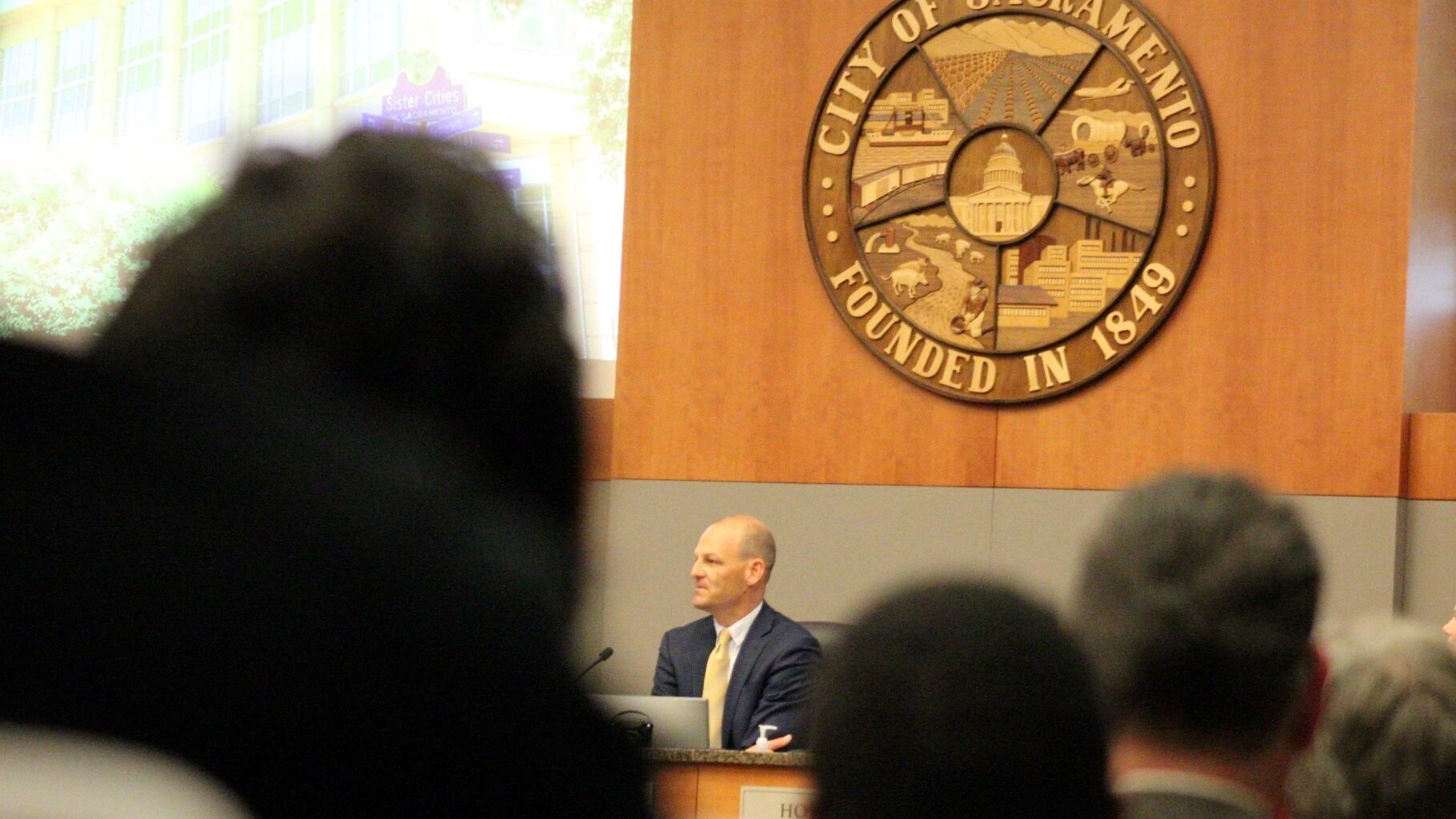
With his first year as Sacramento mayor now complete, Kevin McCarty is laying the groundwork to bring a ballot measure to voters next year that would ask taxpayers to pitch in on addressing key issues in the city – homelessness and the affordable housing crisis.
The proposition comes amid financial hardships for Sacramento. The city closed a $60 million budget deficit last year and is bracing for state and federal funding cuts. The city’s homelessness population also continues to be a top concern among residents.
McCarty told CapRadio this week his plan is still in its infancy. But he said it would raise money by more than tripling the city’s real property transfer tax from 0.275% to 1% for properties valued at $1.5 million or more citywide. The tax is charged to either the buyer, seller or recipient of property during an ownership change.
“ We’re trying to identify more resources to build more tiny homes, to get people off of the streets,” he said. “To help renters stay out of homelessness, as well as to address the affordable housing issue to help first time home buyers.”
McCarty said funds raised by the ballot measure could create a city-run rental assistance program and a down payment assistance program for first-time home buyers. He said they could also build more shelter for the unhoused through tiny home villages.
“We don’t always have the opportunity to look in the general fund to address these issues,” he told CapRadio. “I’m doing what other cities have done across California and that’s exploring, going to the voters.”
McCarty first teased the ballot measure proposal at his first State of City address in October. He also announced his “six-point approach” to addressing homelessness and housing. These include the creation of four tiny home sites for unhoused seniors, a safe camping site, as well as a safe parking site for those living outside of vehicles.
The mayor said the transfer tax increase could generate around $10 million annually to add more tiny home stock and to fund other programs.
“We’re in the deliberation stages, talking to housing advocates and people who love this idea, talking to people in the business community and real estate community who wanna understand what this proposal would look like,” he said. “We need to make sure we focus on a balanced approach.”
What do housing advocates think?
Michael Turgeon is a spokesperson for House Sacramento, a nonprofit dedicated to increasing Sacramento’s housing stock, creating more affordable housing opportunities, and ending the displacement of low-income residents.
He said he is both supportive and hesitant of the proposed measure. He told CapRadio that small details could make or break its effectiveness.
As an example, he pointed to the fact that many properties valued at over a million dollars could be large, vacant lots that could be used for low-income housing or multifamily residences – meaning their owners could be on the hook for the fee.
“It’s definitely possible that if you don’t exempt those things you end up actually negatively impacting dense infill which is exactly the wrong thing,” he said. “It’s unclear yet whether McCarty’s been thinking about that.”
Turgeon said his group would be interested in a parcel tax, where every owner of a parcel of land in a city pays a flat fee to fund these initiatives annually.
“ It ends up being a more progressive tax because it turns out most of the parcels are owned by homeowners who already have a home and are doing financially way better than people who don’t,” Turgeon said.
Turgeon says the greatest need is to build more tiny homes as opposed to a downpayment assistance program, which can come with unique caveats.
“It seems like the city is finding their way to more cost effectiveness on the tiny home program. and it’s been really encouraging,” he said. “Honestly, if all the money went to that, I wouldn’t be against that.”
McCarty told CapRadio that he would model his downpayment assistance program after the state’s version, The California Dream For All, geared at first-time home buyers.
Turgeon told CapRadio that this program faced media backlash when it first rolled out in 2023.
“ The first year, I think everyone who got these down payments were Sacramento insiders who like knew the minute it was dropping,” he said. “Which is not a great look.”
Sacramento Housing Alliance Board Chair Nur Kausar said her group, which advocates for greater access to safe and affordable housing, is most interested in the rental assistance aspect of the proposal.
“ If you can prevent someone from losing their home with just a couple hundred extra bucks that they might need, maybe to make an extra payment, or maybe they had a medical bill they couldn’t pay,” she said. “Rental assistance can really do a lot.”
Kausar told CapRadio that the alliance sat down with McCarty this week and felt the dialogue was productive.
“ The one thing the Sacramento Housing Alliance and our members have always advocated for, in the city of Sacramento, is the need for a permanent source of affordable housing funding,” she said. “I do hope that the mayor and the city take that into consideration for this measure.”
Kausar said that $10 million annually is not a big pot of funding considering the scale of the issue, but could be enough to make change to help the city’s most vulnerable.
McCarty has until next summer to refine his plan and bring it to the city council for approval. The council could then decide to place it on the November 2026 citywide ballot.
CapRadio provides a trusted source of news because of you. As a nonprofit organization, donations from people like you sustain the journalism that allows us to discover stories that are important to our audience. If you believe in what we do and support our mission, please donate today.