
FRESNO COUNTY – Fresno County is taking into its own hands the oversight of something county officials say is largely unregulated by the state of California.
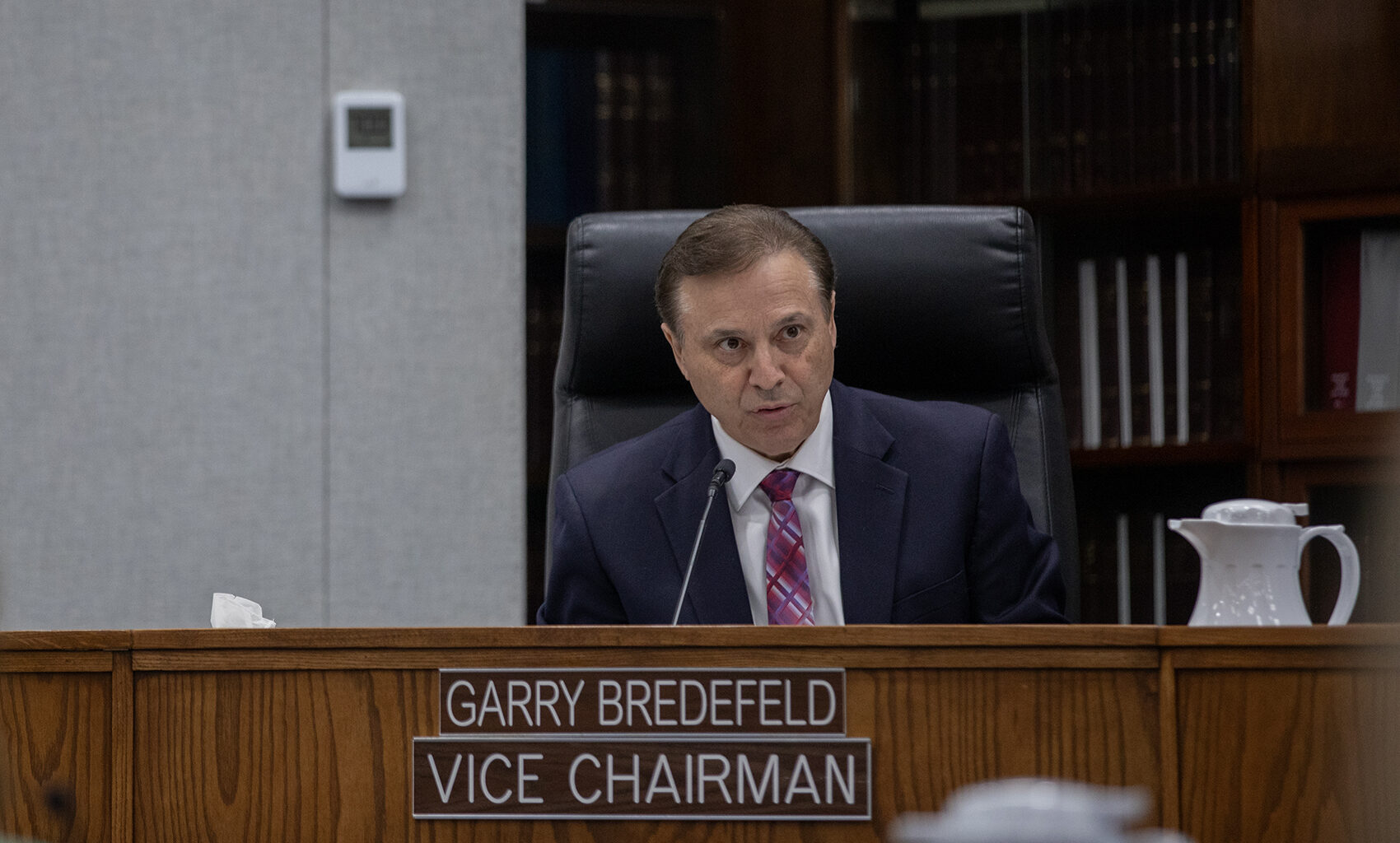
Concerned with what it sees as an over-concentration of convicted sex offenders in residential neighborhoods, the Fresno County Board of Supervisors on Dec. 9 considered the first reading of a new ordinance that would cap how many sex offenders can live in a single-family dwelling. The ordinance, spearheaded by Supervisors Brian Pacheco and Garry Bredefeld, specifically targets the number of sex offenders living in homes that are used as documented transitional living facilities.
“I want to thank Supervisors Pacheco and Bredefeld for bringing this forward, for putting some teeth in the law and to improving the quality of living in Fresno County and improving public safety in Fresno County,” Sheriff John Zanoni said. “This is an ordinance that will give us tools to do our job, but also it will make our neighborhoods safer.”
Deputy County Administrative Officer Samantha Buck introduced the ordinance, explaining that it intends to prevent the over-concentration of sex offenders in a single location in unincorporated areas of the county. By doing so, it would reduce supervision and monitoring challenges for law enforcement, Buck said.
The ordinance prohibits three specific situations, with exceptions solely for individuals who are legally related by blood, marriage or adoption.
It states that a responsible party — such as the homeowner or landlord — cannot knowingly rent, lease or allow more than six sex offenders to occupy or reside in a single-family dwelling. The ordinance additionally limits the number of beds allowed in a single-family dwelling to six if the home is occupied by one or more sex offenders.
Further, the ordinance states that no more than six unrelated people can live in a single-family dwelling that is occupied by one or more sex offenders. This essentially means that seven unrelated people cannot live together if one of them is a convicted sex offender.
Bredefeld said the limit of six individuals is not the county’s law but the state’s. If it were up to him, Bredefeld said the number would be lower.
“It is my opinion that the sex offenders should not be in residential neighborhoods, they belong in prison and shouldn’t be leaving prison — certainly the pedophiles who never change, they don’t change,” Bredefeld said. “Our community should be free of those folks and not have to worry about them reoffending, which sadly, they often do.”
The California’s Sex Offender Registration Act does not specify how many convicted sex offenders may reside in one location. State law does, however, limit local governments from enacting zoning regulations that treat group homes or residential care facilities with six or fewer people differently than any other single-family residence.
Pacheco said this first came to his attention when he received a call a few years ago from a constituent who questioned how the county could let such a facility move in across the street from them without providing any notice.
“When we did our research, we found out that these homes are strictly sanctioned by the state of California,” Pacheco said. “They’re not required to give any notice to the local jurisdictions, and that’s where I have heartache with that.”
He added that he thinks residents should have some sort of notice so they can take appropriate action and “have their guard up.” Pacheco said the county will parallel state law as required, but if these facilities violate the law, they are giving the sheriff’s office the tools it needs to enforce the law.
Zanoni said that as far as he knows, transition living facilities and sober living homes have no regulation from any state agencies. The state’s intention with these facilities is that they are meant to help integrate people back into society once they are released from prison.
“But because of that, it allows them to go into residential neighborhoods, and the bigger the house, the more people they can put in there,” Zanoni said. “And this is obviously a for-profit business, and I’m not here to tamp down on anybody trying to make money, but it does cause issues, as we’ve seen in some of our neighborhoods.”
Penalties and opposition
Two Fresno County residents spoke in opposition to the ordinance during public comment. Dawn Coyle and John Coyle, a married couple, operate Centers for Living, a nonprofit that provides re-entry and supportive housing programs for men and women in the county.
The two said statements made by supervisors and other community members about their organization are false, and that their facilities are highly-structured. Dawn Coyle said that in the last seven years, they have served more than 260 individuals required to register as sex offenders and have been in full compliance with state and county requirements.
John Coyle said the ordinance would displace more than 100 people, which would further exacerbate the city of Fresno’s issues with homelessness and shelter space. Dawn Coyle said Centers for Living is also specifically concerned about the “uneven enforcement and heightened parole activity” directed at their facilities in Old Fig Garden, an unincorporated county island in the middle of Fresno.
“We welcome oversight, but it must be fair, consistent and evidence based,” Dawn Coyle said. “These homes have not created problems; they have prevented them.”
Resident and neighbor Peter Kapetan spoke after the Coyles and said that this ordinance isn’t a “not in my backyard” argument of someone who lives in the neighborhood. He said he has personally witnessed narcotic sales and sexual acts outside the house.
“I don’t care what community you’re in. I don’t care if you’re on the south side of Fresno, on the north side of Fresno, you’ve got to have reasonable controls over these houses,” Kapetan said. “It’s not fair to the community. Whatever community it is, I don’t care what district it’s in, your people should be safe.”
Responding to John Coyle, who invited him over to dinner and to get to know the organization, Bredefeld said “what you sling is a bunch of crap.”
“So I don’t want to have dinner with you. Thank you for the invitation; I’m not interested,” Bredefeld said. “I’m interested in protecting the neighborhoods. You have a business for profit, you have to live with what you do, that’s fine, no problem for me. I have a job to do, which is to make the neighborhood safe. You’re making them unsafe. We’re making them more safe.”
Bredefeld said the board will continue to work with law enforcement and the probation department to ensure that what Kapetan said he has seen does not continue to happen.
Violations of the ordinance will be charged as misdemeanors, punishable by a fine of up to $1,000 and/or six months of jail time. Any violation of the ordinance can be considered as grounds to revoke a business license, if applicable.
The ordinance also gives the county the ability to level administrative citations for each violation: up to $10,000 for the first violation, $20,000 for the second violation, if it occurs within one year of the first, and $50,000 for any third or subsequent violation that also occurs within one year of the first. Fresno County could choose to take civil action against those who violate the ordinance to ensure compliance.
Any private citizen impacted by a violation of the ordinance can also enforce the provisions of the law through a civil lawsuit, according to the ordinance.
The first reading of the ordinance passed unanimously without any additional discussion from the board. A second reading of the ordinance is scheduled for Jan. 6, 2026, and the ordinance will take effect 30 days later if adopted.
Regulating kratom
The board also unanimously approved the second reading of an ordinance introduced in November that regulates the sale of kratom, a tropical tree leaf typically used as a supplement for energy or pain management.
Although the second reading of unanimously-approved ordinances is typically placed on the board’s consent calendar, Supervisor Nathan Magsig said the board had wanted it to be brought before the public again after it was amended at the last meeting. Compared to when the ordinance was introduced and the board heard from numerous residents, just one member of the public spoke during the second reading.
Speaking on behalf of the American Kratom Association, Geoffrey Laredo said that last month, he urged the board to rely on science and evidence to craft its kratom regulations.
“Today, I’m here to thank you and to support your current proposed ordinance amendment and to offer our help should you need it,” Laredo said.
Laredo said the American Kratom Association feels the best way to preserve public safety is to target the main problem with kratom, which is the sale of a highly concentrated chemical compound called 7-OH. The compound, which exists in small amounts in natural leaf kratom, can be deadly; however, the natural leaf version of kratom has been used widely by communities in Southeast Asia for centuries.
While the first version of the kratom ordinance sought to ban all sales of the product in unincorporated areas of the county, residents asked the board to adjust that. Now, the ordinance only bans synthetic kratom products with a 7-OH concentration of 2% or higher, and restricts the sale of other kratom products to individuals 21 and over.
“Thank you very much for choosing to protect your constituents by keeping safe natural leaf kratom products available,” Laredo said. “Strict limitations on 7-OH and age restrictions are the right way to regulate, and we applaud your efforts.”
The kratom ordinance will officially take effect in Fresno County on Jan. 9, 2026.