
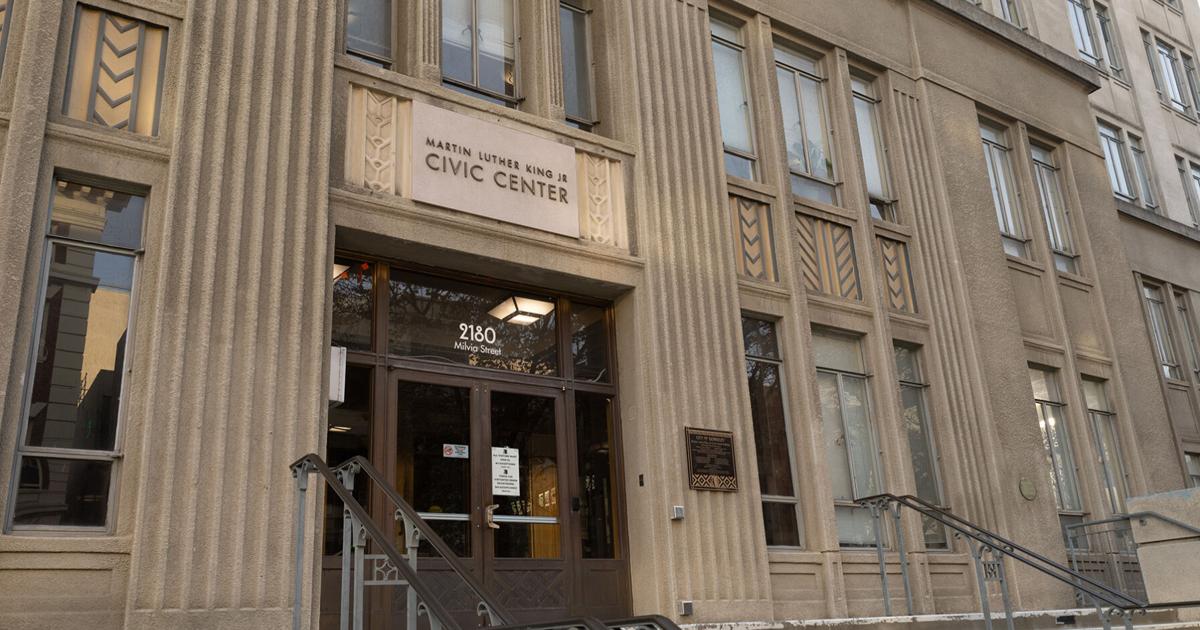
During its final meeting of the year, the Berkeley City Council capped off a packed legislative calendar that included developments on housing, public safety, infrastructure and immigrant protections. At the same time, the council navigated a projected $18 million budget deficit.
Here’s a look at 10 of the most impactful city policies in 2025 — and what to expect in the new year.
1. Sanctuary city protections and immigrant safety
In January, Berkeley established a Sanctuary City Task Force to assess threats facing immigrant communities and help codify local protections for undocumented immigrants into law.
Based on the task force’s recommendation, the council unanimously passed a Sanctuary City Ordinance in September that codified longstanding practices that limit city cooperation with federal Immigration and Customs Enforcement, or ICE. The ordinance prohibits city departments and staff from responding to or sharing information with ICE without a judicial warrant.
“We must do everything we can to educate our entire community about their rights, provide legal defense funding, continue to uphold our Sanctuary City Ordinance, and, when necessary, volunteer to put our bodies on the line to keep our neighbors safe,” said District 7 Councilmember Cecilia Lunaparra in an email.
2. Middle housing and zoning reforms
A middle housing ordinance passed in June aims to expand entry-level homeownership and benefit middle-class residents as prices for individual units are reduced. The legislation allows housing units that reach up to three stories and eight units to be built in most residential neighborhoods, replacing previous single-family-only zoning.
Separately, Berkeley began implementing SB 79, a state law that requires upzoning near major transit stops such as BART. The law overrides local height limits to allow for denser development along corridors such as San Pablo Avenue and supports sustainable, walkable communities.
3. Berkeley Carebridge Program
The Berkeley CareBridge Program is a “post-arrest diversion initiative” for unhoused individuals with behavioral or substance use issues. This reentry plan would support participants via a six-month transitional housing model with services such as transitional housing, daily meals, mental health treatment and job readiness assistance. According to Mayor Adena Ishii, it will serve up to 80 people annually.
City Council accepted $8 million in grant funding in October to implement CareBridge, which will return to the council with contract agreements.
4. Southside Complete Streets Project
The council debuted new infrastructure as part of the Southside Complete Streets Project, a renovation effort to make streets safer and more sustainable. Having been in progress for nearly five years, the program introduced bus-only lanes, modified traffic signals and protected bike lanes along major roads such as Bancroft Way and Dana Street.
“This new infrastructure makes people safer, keeps bikes and scooters off our sidewalks, and encourages more sustainable forms of transportation,” Lunaparra said in the email. “That said, Southside’s streets will not truly be ‘complete’ until we are able to bring a Car-Free Telegraph and Dwight Plaza (at the corner of Telegraph and Dwight) to life.”
5. Fire Safety and the EMBER program
The Effective Mitigation for Berkeley’s Ember Resilience program, or EMBER, focuses on strengthening home and neighborhood defenses against wildfires by prohibiting flammable materials in “Zone 0” — the 5 feet surrounding a structure that is most vulnerable to ignition from embers. In 2026, District 6 Councilmember Brent Blackaby hopes to make it easier for residents to comply with EMBER.
“That includes financial support (Resident Assistance Program grants to seniors and lower-income households, expanding the transfer tax credit, securing additional grants, and providing loans), direct materials support (free wire mesh and gutter guards for home hardening), and education and training (community workshops, design templates for Zone Zero-friendly yards, training landscapers and contractors),” Blackaby said in an email.
6. Vision Zero and safe streets progress
Berkeley reaffirmed its commitment to Vision Zero — a policy to eliminate traffic fatalities by 2028 — byinvesting in street safety.The plan aligns with the updated Vision 2050 plan, Berkeley’s long-term strategy for sustainable infrastructure.The city is also exploring a $300 million bond measure for the 2026 ballot to increase the lifespan of roads and facilities.
“It’s made a huge difference for residents,” Blackaby said in the email. “Next year I’m looking forward to the full Marin Ave safety redesign effort being executed — especially at intersections near Cragmont School — and the expanded amount of repaving and safety work that will happen in the first full year of Measure FF funds coming online.”
7. Downtown revitalization
To breathe life back into Downtown Berkeley post-pandemic, the council passed a recommendation for a “vibrant storefront” policy to tackle long-term vacancies. If passed, it would set clear standards for ground-floor properties in business corridors and consider incentives to encourage “activations,” including art and seasonal displays. The city attorney is reviewing the item before it comes back to council for a vote, according to District 4 Councilmember Igor Tregub.
“Downtown success ensures the economic success and vibrancy of all of Berkeley,” Tregub said. “This is the highest priority for me: that we do everything in our power to ensure that it is a vibrant, accessible destination where small businesses and community-serving nonprofits and the arts can thrive.”
Looking ahead, Tregub said his next steps will focus on building from “the ground up”: activating underused public spaces, improving safety and streamlining processes for small businesses and local creatives to occupy vacant storefronts. His office is working with the mayor and fellow council members on revamping the city’s events policy to make public programming and street closures easier to plan, according to Tregub.
8. Bringing grocery stores to Telegraph Avenue
The council lifted a longstanding restriction on retail alcohol sales in the Telegraph Avenue Commercial District in an effort to attract full-service grocery stores to Southside. According to Lunaparra, previous restrictions made the area less viable for potential grocers, contributing to a lack of healthy and affordable food options.
“We will continue pushing for creative, feasible, systemic solutions to food insecurity and hunger,” Lunaparra said in an email.
9. Berkeley Police Department radio encryption
The Berkeley City Council approved a proposal to encrypt the Berkeley Police Department’s radio communications, which allowed BPD to begin encrypting its radio transmissions in order to comply with state encryption mandates.
The Police Accountability Board and many residents have expressed concern regarding the loss of civilian oversight. BPD expressed intent to expand public access through near-real-time call logs with a 30-minute delay to protect officers and victims.
10. Drones in 2026
The council approved an item allowing the Berkeley Fire Department and BPD to acquire drones for first response operations — including car chase surveillance, search-and-rescue operations and conducting threat assessments. In response to privacy concerns, Berkeley Police Chief Jennifer Louis said drones can’t see beyond the thermal outline of a person.
Louis said she plans to return to the council in February with next steps.