
There was a time when every gay man in West Hollywood was walking around with either a copy of Frontiers or In Magazine, held tightly in hand. Not only did they feature a bevy of hot guys, but they also included queer celebrity interviews, hot topics, and a weekly photo diary of the community that every socialite thirsted to appear in. Beyond serving as queer pop culture’s pre-tech answer to social media, they were also brands that united a community that continued to lose members to the AIDS epidemic. Looking back, they weren’t just glossy magazines; they served as part of the glue that kept Los Angeles’ queer community together.
Much of the publications’ success was due to David Stern, who went from top salesperson to co-owner of both magazines. There wasn’t anyone in town who didn’t know Stern. He brought business sense and sincerity to the company and knew how to be the life of the party. He helped the magazines, and in turn, the community, thrive.
It’s hard to envision that version of David Stern as the young boy who showed up on Hollywood Boulevard, as a runaway, with literally no clothes or money to call his own. This young boy was running away from a volatile and abusive household where his sexuality served as his undoing; he was running away from the PTSD he acquired when his father fell down an elevator shaft to his death when Stern was just 15 years old. By the grace of a drag queen, perseverance, and the queer community that, when times get tough, can support its own.
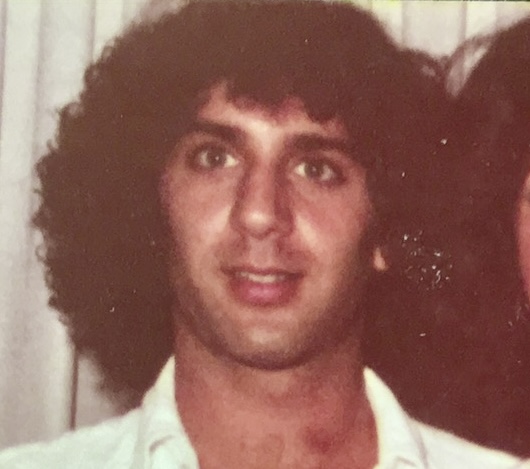 David Stern and his signature big hair / Photo courtesy of David Stern
Elevator Boy, as told from an intimate and very naked point of view, tells the story of how he overcame a tumultuous past to become the man who ran a media empire. The story is not a bed of roses, and his rise to success was not without even more cuts and bruises. Stern does not shy away from the details here as he dives deep into his past. Drugs, sex, AIDS, friendship, and an unhealthy relationship with his mother all play roles in this tale.
Stern does not stop his story with his success. He is not afraid to tell the whole truth, and nothing but the truth, and shoves a spotlight into the seedy and illegal practices that were happening at his publications, unbeknownst to him. The empire was taken away from him, and eventually crumbled. Despite the challenges that Stern has faced throughout his entire life, the novel is not doom and gloom. There is a strong spirit here, a queer joy, that describes how our queer courage and perseverance will get us through. Our real family is made up of those whom we choose, who have been there for us unconditionally. This book is an inspiration. We can get through anything.
Stern started Elevator Boy over ten years ago, when he walked away from the Frontiers empire. It took that long for him to be able to face his past and put it down in words. The pain, the joy, the good, the bad, it is all here. What a moving and truly intimate life share that not only tells a compelling personal story of survival, perseverance, and hope, but also shares a slice of gay history that all generations should be exposed to.
In today’s political and social climate, well-told stories like Stern’s are imperative for the queer community to understand what kind of trailblazing energy we come from, and what we can do to overcome.
We had the opportunity to talk with Stern about it all. He did not hold back.
What was the final inspiration to tell your story?
I want to use my story to raise awareness that the rate of homelessness for LGBTQ youth is the same today as it was in the mid-70s, when I ran away from home and ended up on the streets. That rate is 120% higher than their heterosexual peers in the same age bracket.
Why is now the time and not before?
It’s been a little over a decade since my career came to an abrupt halt after 26 years of serving the community with my publications, Frontiers and IN Los Angeles magazines. Plus, I recently turned 65. If not now, when?
Your story is one of complete resilience. To what do you attribute your insistence on overcoming all your many challenges?
Thank you for acknowledging that. Since every chapter is a song title, I will refer you to it. “I Didn’t Know My Own Strength” by our dearly departed diva, Whitney Houston. (chapter 18) She sings my feelings with such passion. When I was younger, I would say, sheer defiance. As I’ve grown older, I would say that having tenacity and believing that everything happens for a reason are important. Try to learn, and in my case, re-learn the lessons from the journey.
What do you want our current younger queer generation to understand most about the era you came out in?
I would say the common thread of the teen runaways of the ’70s and the AIDS survivors of the ’80s and ’90s is how the LGBTQ community came together and took care of their own. From Sugar Love, the transgender hooker who rescued me on Hollywood Blvd at 16, to all the lesbians who stepped up to take care of their dying brothers in the face of AIDS. It was a community bonded in survival.
The AIDS epidemic plays a big part in your life. What comes to mind when reflecting on that time?
Since I think lyrically, I’ll say, “I’m Still Here” in E-flat, written by Stephen Sondheim. Now to be serious… AIDS taught me everything I know about life after death and how to communicate with those on the other side of the veil. It reinforced the lesson I learned the day my dad fell down the elevator shaft: life can change on a dime, and take nothing for granted.
It must have been bittersweet visiting your past. How did you mentally get through the writing process and rehashing difficult parts of your life?
This was a ten-year writing process. It started with me being so depressed that I couldn’t function. I’d morphed back into feeling like a worthless, homeless teen instead of a successful publisher. I began writing about that time period, which is the first chapter of my book, Hollywood Nights. From there, I wrote down songs that gave me a sense of memory, and I listened to them as I danced around my house, remembering while I laughed and cried at the absurdity of my life.
I will say that writing what became the second and third chapters of the book about my attempt at suicide sent me into two years of EMDR therapy to help with processing the memories. PTSD has created some interesting survival skills I was not aware I had.
Forgiveness can be difficult for many of us queer folk. Your relationship with your mother was tumultuous, to say the least. How did you get to a point of forgiveness, and why was that so important?
I think a bigger question is, how did my mother get to a point of forgiveness with me? I caused her so much grief when I was growing up. When I got sober at age 27 and turned my life around, our relationship had room to grow into a beautiful friendship because I was showing up as a functioning human being and not a raging drug addict.
The areas of forgiveness that have been more challenging for me are with my former business partners. I return to a very simple philosophy. I don’t know what life lessons they were meant to learn through our shared experience. I can only ask, what lessons am I supposed to learn? In the end, it comes down to forgiving myself most of all.
Loss also plays a big part in your book. What is your message to those who have dealt with great loss in the queer community?
Everybody grieves differently. Be kind and gentle with yourself and others. I can feel the presence from the other side; some can’t or don’t believe that. To them, I say, find comfort in remembering their smile, the quirky things done by the departed that make you laugh, and cherish the time you had.
Was it hard to leave West Hollywood and start a new chapter of your life?
Surprisingly, no. My husband and I met in Palm Springs nearly 20 years ago, so moving to the “scene of the crime” was a beautiful full-circle moment for us.
What do you miss most about West Hollywood of yesteryear?
My own youth. A thriving print media with trusted journalists on the ground vetting and telling our stories, and the infamous West Hollywood Athletic Club.
What is the mission of your book?
To bring hope, uplift, and heal, while preserving an era of LGBTQ history.
What do you want audiences to walk away with most?
If I can overcome all the obstacles in my life, you can rise above yours, too!
You also dive into a controversial and tumultuous time in queer print media in SoCal. You catalog your rise and fall in the industry and the corruption that took place. Why was it so important to come out and tell the story?
There is an effort underway to erase our history. I have always provided platforms for the voices of the LGBTQ+ community. We will not be erased. I will not be erased. Our history is important, so I’m setting the record straight. Frontiers Media was a pioneer for the LGBTQ community. I am just walking in my shoes again. Pioneering the power of LGBTQ+ voices, and that voice starts with me.
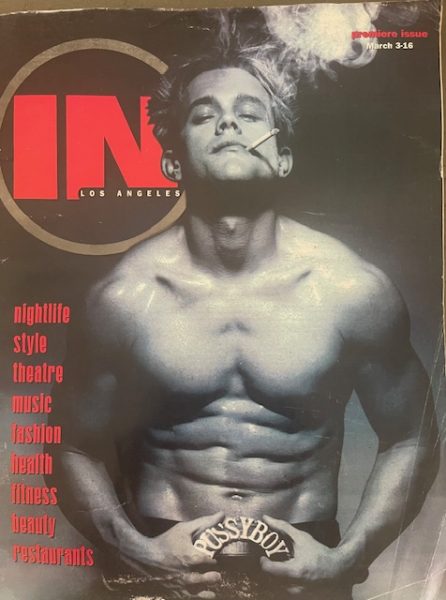 In Magazine’s 1st cover / Photo courtesy of David Stern
You saw the evolution of queer media and were a part of it. What is your current take on queer media – what is it getting right, what is it missing?
Regarding queer media, I’ve been out of the loop for a decade, but I will share my thoughts on the state of media in general. The following is the Preface of my book:
TODAY, AMERICA IS FACING A MEDIA CRISIS. It began in the 1980s when AIDS, ignored by the mainstream press and government, was raging on. Congress eliminated the Fairness Doctrine that opened a Pandora’s box, allowing the news media to turn into a tool for brainwashing. A functional, modern society needs courageous, trusted journalists on the ground to verify stories and report facts. Trusted news sources are shrinking as the media landscape becomes increasingly fragmented. Future generations will be trapped in this tower of babble, never distinguishing fact from fiction as the hope for freedom and justice fades. Society must find its way back to the earnest quest for truth. In the mid-1970s, at age sixteen, tragedy, fear, denial, and wild abandon turned my world upside down. I ran away from the newly developing suburbs of St. Louis. The parks and back alleys of the U.S. were home to over a million runaway youths. Sexual liberation defined the era. Compared to their heterosexual peers, the homelessness rate among LGBTQ+ youth was 120% higher. This ratio remains unchanged today. Elevator Boy is set in a time when news didn’t drown in the chaos of alternative facts, and meaningless opinions weren’t passed off as truth. Our anti-hero struggles with PTSD from childhood trauma, while society suffers from the same ailment caused by electronic information overload. Sound bites disguised as news are short-circuiting the system. Recognizing the illness is half the battle. Let the healing begin.
How does it feel to now have your life completely out in the open? There’s no going back.
It is completely freeing and healing.
What is your message to the younger queer generation?
Be kind to each other, and remember that Snapchat, TikTok, Instagram, or whatever, are not news sources. Learn how to vet facts.
David is currently working on his next book, a volume of poetry titled “The World of Rhyme and Reason.”
Elevator Boy – An Otherworldly Memoir is available on Amazon, Barnes & Noble, or wherever books are sold.