
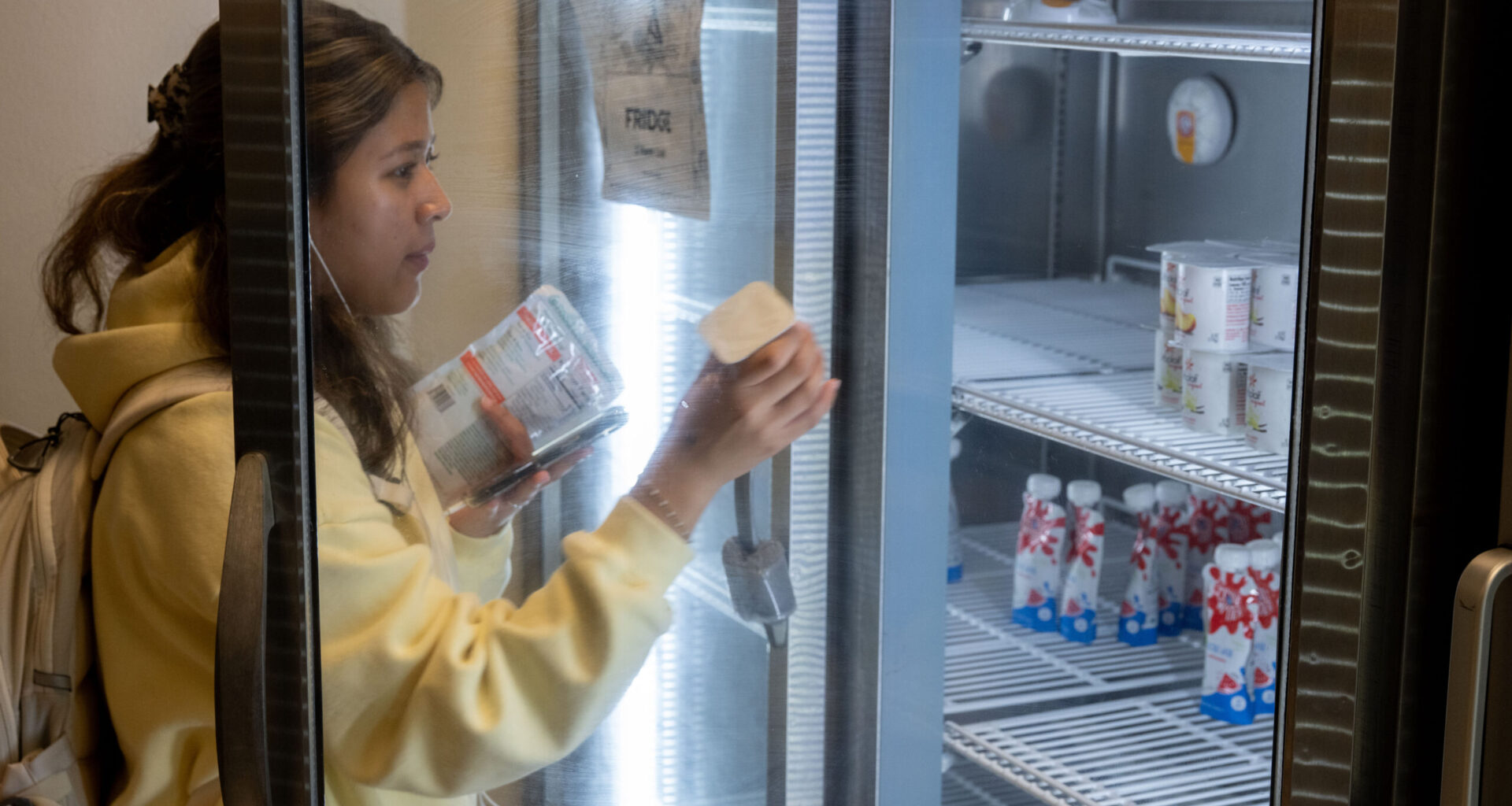
As food insecurity continues to affect college students nationwide, Long Beach State’s Beach Pantry is expanding its services to meet growing demand.
A new “mini pantry” on upper campus has opened with mobile pantry pop-ups to increase access to food for students.
However, students report mixed experiences with availability, long wait times and limited variety, even as the pantry expands its services and adds additional locations.
Second-year psychology major Keira Wallace, a student assistant at the pantry, said traffic through their doors remains consistent and high as they try to keep students fed.
“Per month, it’s around 2,000 [students] that we serve in total, including all of our services,” Wallace said. “We restock, we table, we keep the environment positive, anything to support students who come in.”
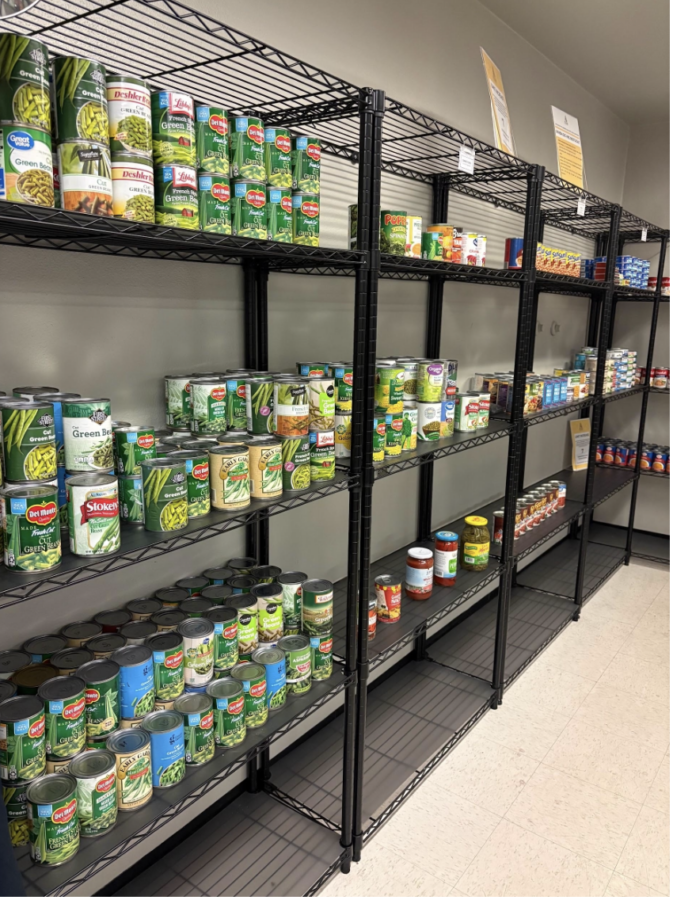
Canned vegetables and nonperishable food items line the shelves at the CSULB Beach Pantry. Monica Badolian | Long Beach Current
For many students, the first introduction to the Beach Pantry came from peers or campus programming.
Third-year criminal justice major Mya Miranda first came across it through an Instagram post advertising free sandwiches.
“It was easy to sign in with my campus ID,” she said. “And it’s easy to find, it’s in the middle of everything.”
She appreciated the ready-to-eat items.
“The free sandwiches were nice for lunch. I also liked the frozen bagels; helpful for something quick in the morning,” Miranda said.
Despite this, she noted that the pantry she used at Santa Ana College had a more consistent selection of essentials.
Fourth-year construction management major Vincent Chung previously attended Long Beach City College and Mt. San Antonio College.
“The waiting time is too long, and the items here are limited,” Chung said. “LBCC’s pantry is larger and more flexible. Students just grab what they need, no checking in and out.”
Before entering the Beach Pantry, students must enter their student ID number and then again to check out with selected items.
“It complicates and slows down the whole process,” Chung said. “They want to help students, not let us stand here waiting, feeling stressed.”
Chung typically picks up the basics like protein, grains, and vegetables when available, but many staples disappear early. “If you want eggs or milk, they don’t have it,” he said.
According to Chung, fresh produce, such as fruits and vegetables, is hard to get.
“You have to be super early or get lucky. If you’re ten minutes late, everything’s gone,” he said. “They give out 10 bags first, and once people grab them, that’s it.”
Students are allowed three visits per week to the main pantry. The mobile pantry, a table-style setup that appears at different campus locations, does not count towards that limit, allowing more flexibility for students.
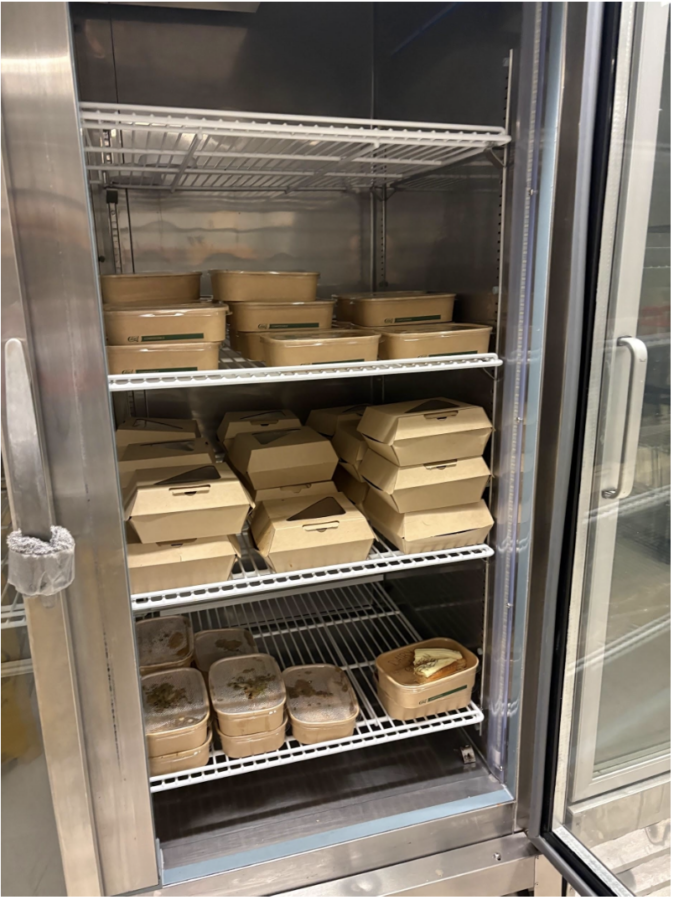
Prepared meals and refrigerated foods made by a Family Consumer Services Hospitality class. Monica Badolian | Long Beach Current
First-year public health major Kathleen Rodriguez heard about the pantry from her friends who live in the campus dormitories. She commutes roughly an hour and said the pantry’s limited hours can create challenges.
“I had to wait like an hour because they close at 3 p.m.,” she said.
This fall, the pantry introduced its newest addition, a mini pantry inside Peterson Hall 1, Room 213, open Monday through Thursday, 3 to 5 p.m.
The new location fills the service gap when the main pantry closes between 3 and 5 p.m. each day.
Beach Pantry program coordinator Christina Limon said student feedback, especially in the wake of the USU construction, directly shaped the decision.
“We really want ASI to keep students first,” Limon said. “Students told us this location was far from their classes, so the mini pantry gives that space closer to campus with grab-and-go items, fresh fruit and microwavable food.”
Unlike the main pantry’s grocery-style layout, the mini pantry is designed for speed, offering snacks, bars, cup noodles, fruit and quick meals that students can eat in between classes.
According to Limon, the Beach Pantry originally opened in 2016 after research from CSULB professor Rashida Crutchfield found that 25% of CSU students were food insecure, and 1 in 10 faced homelessness.
“We continue to grow,” she said. “We did see a small dip recently, but made up for it by expanding our mobile pantry.”
The pantry now serves 300-400 students per day. However, that number changes depending on the donations and inventory received. Availability of certain items changes daily, as the pantry is over 90% donation-based.
Fresh produce, donated by partners like Grow Beach Garden and Long Beach Organic, typically arrives on Mondays and Tuesdays and is stocked immediately.
“We try to have items that last students a couple of meals,” Wallace said.
“You might come one day and it looks empty, then the next day we get a huge donation. We never know what’s coming in,” Limon said.
Key partners include:
Latter-Day Saints food distribution program
Temple Baptist Church
Food Finders
Long Beach Organic
Student Lunch Box (run by a CSULB alum)
Local farmers markets
Community food drives
Amazon Wish List donors

Monica Badolian is a fourth year at California State University, Long Beach, majoring in journalism. Monica transferred to CSULB as a junior where she joined the Carpenter Performing Arts Center as a Digital Content Coordinator. She is also a sports assistant editor for the Long Beach Current. After graduation she plans to step further into her career and pursue a graduate degree in journalism and a minor in accounting. A fun fact about her: she’s a huge fan of the Anaheim Ducks and has had season tickets for eight years in a row.
