
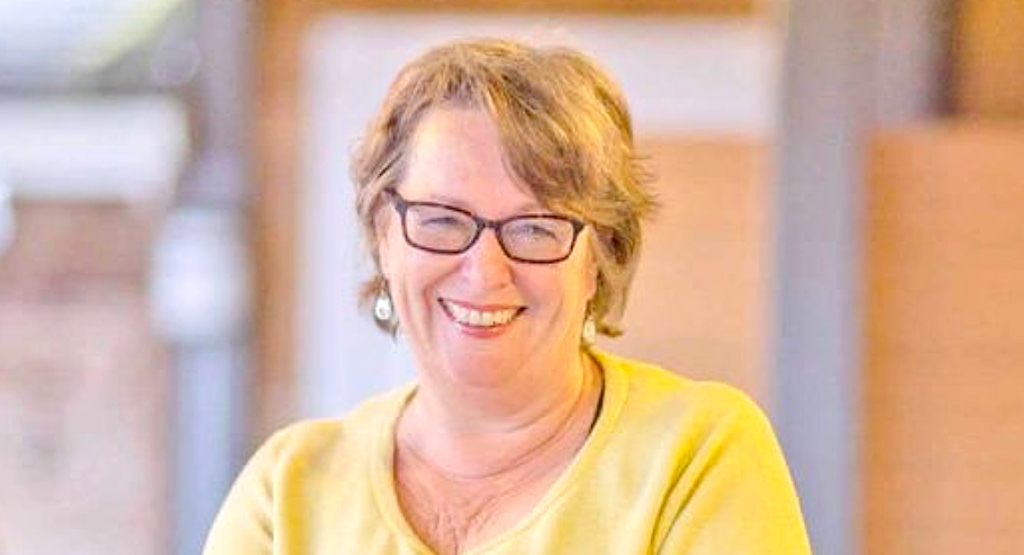
LONG BEACH — The end of this month marks the midway point of Long Beach Mayor Sue Svendsen’s first term in office.
Svendsen, who previously served for four years on the city council, is the first woman to serve as mayor in Long Beach’s history. She moved to Long Beach in 2010 and owns and operates the Peninsula Arts Center with her husband, Bill.
The Observer interviewed Svendsen on Dec. 11 to discuss her first two years in office as well as look ahead at ensuing opportunities and challenges facing the city. The transcript of that interview, which has been edited for length and clarity, can be read below.
Chinook Observer: Have there been any surprises these last two years relative to what your expectations were when you first stepped into the job? How do you think your relationship with the council has been?
Sue Svendsen: I would say the first surprise was how many boards and alphabet soup kinds of organizations I was obligated to, and so it was a little bit like drinking from the fire hose to see what each one of those does and what the responsibilities are. But once you get used to it, it’s not that overwhelming. I’ve gone to pretty much every educational opportunity that I’ve been able to find.
I think the biggest thing was kind of getting on an even keel with the council right after the election. There was a lot of change, but there was also enough of a history with the previous administration for me to have to kind of rebuild. The way that I run things is so very different, and [I wanted] to turn a lot of the power back over to the council — because that was a frustrating thing for me [as a councilor], that it was all filtered before it came to us. I’d rather not filter it.
One of the things I wouldn’t mind seeing moving forward is to have the council more involved in the workings of the city. So, coming to more of the trainings — they used to have one councilperson in charge of reporting back on the wastewater plant, for instance. I’m not sure that that is the place, but somewhere so that they understand in greater depth how the city works.
Observer: Are there any developments or action that’s been taken by the city that you’re particularly proud of during your tenure thus far?
Svendsen: Credit where credit’s due. Jerry [Phillips] left the city in really good condition. He got a lot of projects started — some of them completed, some of them I’m just continuing on with supporting. I don’t really do anything on [the latter]; once they’re funded, I get to help monitor in making sure that they’re on the budget, maybe answer a few questions and a lot of signing documents. But the boardwalk [project] is really his era, and he did a great job of moving that forward. The police station was already done when I came on board.
We have other infrastructure projects we went out [to find] money for, like the north-end sewer line. We ended up not getting enough, so we did the main lift station. We still have that sewer line, so that’s in my future. I came up with some ideas that hadn’t been looked at before about lining and bursting; there’s processes for replacing sewer lines without digging everything up. That might save us money and we’re going to the engineer with them. If that’s a possibility, that would be great.
There are some smaller things that are more visible that benefit both tourists and local residents, [such as] the dog park — as controversial as it was, which I didn’t expect it to be. It is built, but it won’t be opened until the boardwalk is done. Although it could have been delivered in a different manner, we’ve taken all the input and incorporated it.
We have really good signage [at the dog park]. It’s not a huge space, we don’t want it to be so big that dogs can get away from their owners. We want you to have control of your dog. We have security cameras that are live out there, which helped kill two things: We wanted more traffic in that area because that’s where people go to deal drugs, and they won’t be doing that now that there’s a camera down there; and also we had vandalism to the restroom, so getting people in and out of there and having it on security cameras is gonna be great, I think.
Observer: What would you like to see Long Beach accomplish — or overcome — in these next two years?
Svendsen: It’s going so well, and I would be tickled to death to get a conference center and an indoor farmers market. The study that we did for the conference center [which was completed earlier this year] has stirred some interest, so we’re working on two or three possibilities for that.
The U.S. Department of Agriculture has a farmers market designer on staff, and so we got a grant for an indoor farmers market design. Now we’re looking for funding for it. We can do some self-funding, but I hate to do too much of that because it takes away from something else and it’s kind of a juicy project that a lot of people want to fund. So it might be a whole bunch of small grants that get it [funded], but the cost for it was supposed to be somewhere around $650,000.
[The design] is basically an L-shaped pole barn with roll-up glass garage doors. It’s 25-30 indoor booth areas with restrooms, power and water, which they didn’t have before. Also right now with the farmers market, because they don’t have refrigeration or the availability of that, they can’t have meat and fish and eggs and things like that. An indoor farmers market will change that, and we could even have permanent refrigeration possibilities there for them. We just have to look at what makes sense.
It’s going to extend the season, and not just for the farmers market but for craft shows or if you’ve got music up on the stage and it gets drizzly they have some place to watch from. It’s got a lot of uses.
Observer: It seems like the city’s mostly been able to sustain the bump in visitation and economic activity that it saw in the immediate aftermath of the pandemic. Are there any steps you believe the city and its partners can take to further that growth?
Svendsen: It used to be just dead from Labor Day until Memorial Day and it no longer is. People are starting to see the virtue of coming out here. The tough thing ends up being Airbnbs, because that’s part of what people liked about coming out here but it also makes it impossible to run businesses out here if we don’t have housing.
So I understand the council’s need to scale back on the number of Airbnbs being licensed, and there’s plenty of open commercial and residential land that they can have on the whole north end — they can build long-term rentals, they can build Airbnbs or commercial facilities, whatever. There’s quite a bit of flexibility on that.
But my heart is in finding housing for the workers that are here serving the public, and keeping [housing] affordable. I’m also on a task force — for now; it’s going to be a board — for a community land trust, and that way it would be a nonprofit that owns the land [and provides affordable and renewable long-term leases to homeowners]. So we’re working on that for at least countywide and possibly regionally, because that is one way we can actually control the cost of housing.
Otherwise, how do you control [housing costs]? I can’t make it less expensive to build. We can make it as easy as possible for people to get building permits and things, but we already do; the city of Long Beach has one of the quickest turnarounds for building permits of any place, and pretty reasonably priced. So our hands get tied.
Observer: Are there any specific issues or concerns Long Beach is looking to address as it works on updating its comprehensive plan?
Svendsen: On the comp plan, right now we’re on our vacant land analysis. We have a pretty close idea that we could build up to either 1,500 units or enough units to house 1,500 people — but they’re still working on whether that will appease the state’s allotment. But we were talking about, OK, let’s say they mandate that we have this number and we [only] have room for this number. We either renegotiate with them or we have to look at annexation, and there’s nothing that makes sense for us right now [to annex].
It would cost us more money if we go north, because we’ve gotta put sewer lines in. We’re up to Cranberry Road now, and I’d like to be able to just run our water all the way around. We’d like to go across and down, because it gives us more water customers and it lets those people on that land house more densely. Right now they can only have one [house] for five acres, but if they had city water they could do three houses instead.
But until there’s a demand for that it doesn’t really make sense, because who’s gonna pay for it? And it’s mostly ag land headed east, and a lot of wetlands. And we can only build so high, because we’re on sand, so I don’t know what [the state] expects us to do.