
At a Board of Supervisors hearing on Monday, representatives from the U.S. Navy reassured San Francisco city officials that the discovery of radioactive contaminants at the Hunters Point Naval Shipyard last year was “unusual,” but no cause for concern.
But the feds were criticized for only notifying regulators 11 months after plutonium was detected in the air above Parcel C, a subsection of the shipyard, at twice the “action level,” which is the threshold requiring action to monitor and review dust control.
“Our greater concern is not notifying the regulators,” said Dr. Susan Philip, the director of the San Francisco Department of Public Health. The department on October 30 released a public letter soon after it was made aware of the elevated levels, which officials said today should not be an immediate danger for the public.
That level of plutonium is still “very, very small,” said Dr. Kathryn Higley, a professor of nuclear science and engineering at Oregon State University, at the city hearing today. The level is less than one would be exposed to on a flight from San Francisco to New York, for example.
Still, Philip said, that determination should have been made by the city and the EPA, not the Navy. The EPA said today it will review the Navy’s actions, and that it must notify regulators of any high reading within two weeks — even if the Navy doesn’t deem it to be a safety hazard.
“We need to get an understanding of what it means when they say they will do better,” said Michael Montgomery, the EPA’s director of its Superfund and Emergency Management Division.
The Navy has been undergoing a cleanup of the shipyard, located in southeast San Francisco, for over three decades since it was found to be contaminated with hazardous waste and designated a superfund site by the EPA in 1989.
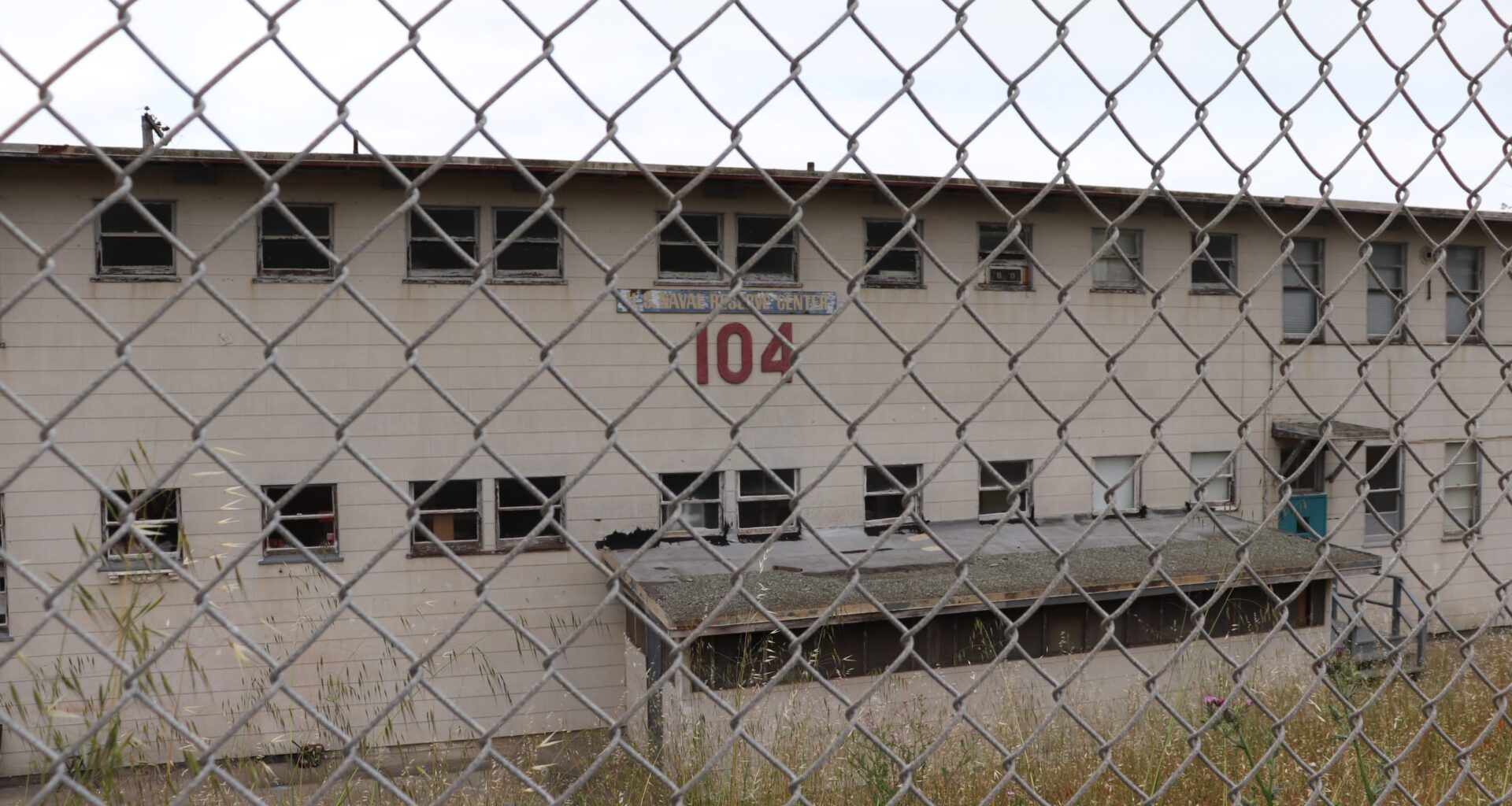
The former shipyard today employs dozens of workers who truck contaminated materials to dumping sites daily. It is home to a community of artists who work within the abandoned Navy buildings, and is surrounded by housing complexes.
Anthony Megiola, the Navy’s director of the Base Closure and Realignment Program, which aims to clean up the site and return it to the city, said that the lapse in reporting was due to a number of factors, including a third party audit of the laboratory conducting the test, their own testing to ensure the accuracy of the data, and their conclusion that the finding was not a threat to public safety.
Montgomery argued that the agency could have stepped in to help the Navy determine whether the finding was a public threat “early on.”
“We value accuracy over timeliness,” said Danielle Janda, base closure manager for the Hunters Point shipyard.
The finding, said Megiola and Janda, was “unusual.” Out of 200 samples of soil and materials taken from the shipyard since July 2023, the sample of plutonium found in asphalt at Parcel C, a subsection of the shipyard used for shipbuilding when it was used by the Navy, was the only “outlier.”
“But we’ll have to work to get that trust back,” Janda acknowledged.
Residents of the southeastern neighborhood’s trust in the Navy has been eroded over the past decade, since it was discovered through a report obtained by NBC that an engineering firm contracted by the Navy, Tetra Tech, falsified numerous soil samples to hide contamination of the site — setting the cleanup process back years.
“We can and will be better going forward,” said Megiola. “While the detection was an extremely small measurement, we fully recognize and appreciate how concerning news of plutonium detection is.”