
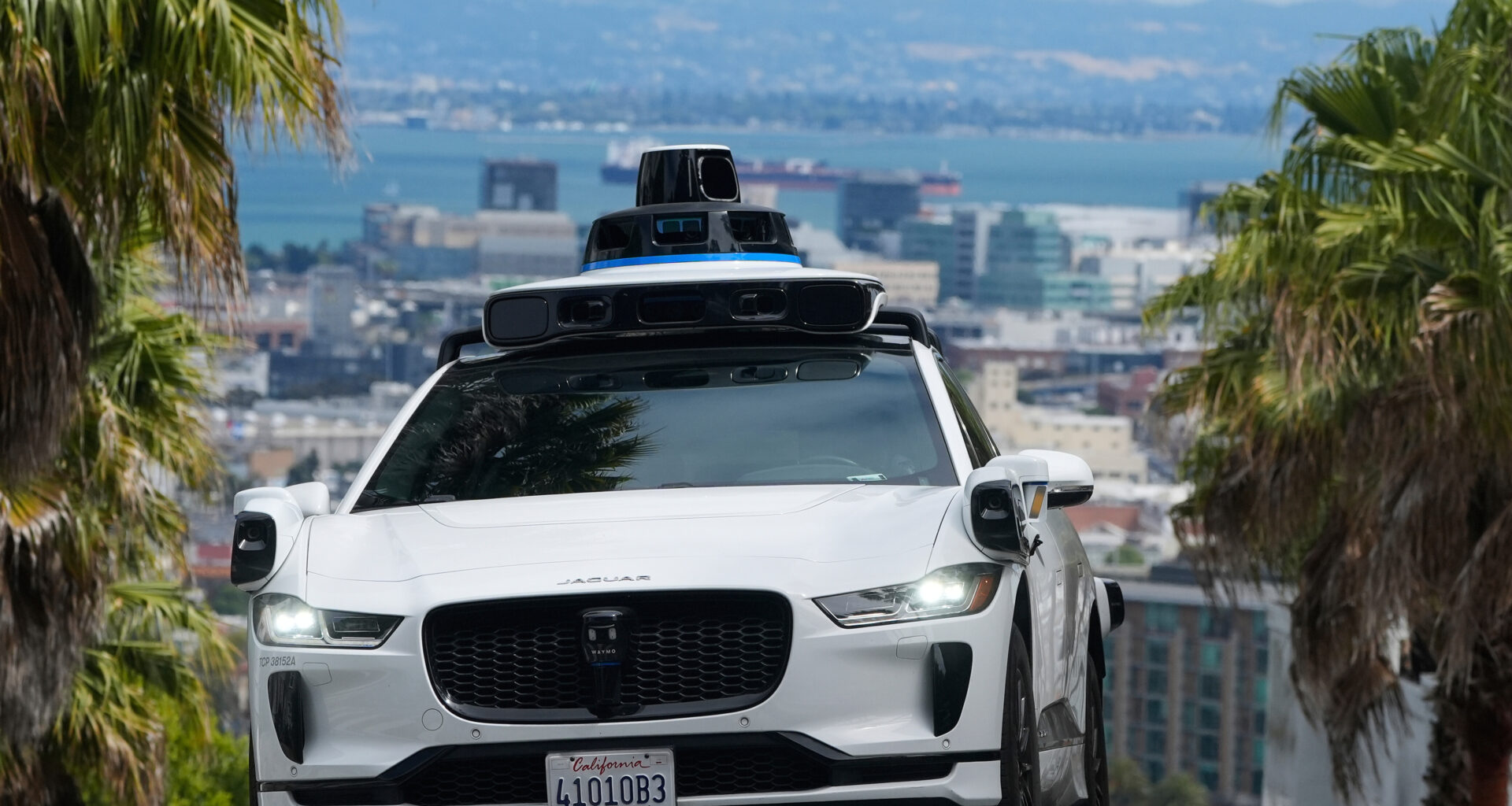
Waymos are becoming an increasingly common sight on the streets of certain big cities across the country.
The robotaxis were initially confined to certain parts of the Bay Area and Los Angeles, but could be coming to the Sacramento region in the near future.
Last month the California DMV approved new maps that greatly expanded the number of areas where Waymos can be tested, including Sacramento and Yolo counties. A Waymo spokesperson has not confirmed when the robotaxi could come to the Capital City, but said the company will be expanding to San Diego next year.
But self-driving cars have not escaped controversy. A well-known bodega cat was killed by a Waymo in San Francisco in October, while another drove through a police standoff in Los Angeles earlier this month.
Additionally, in 2023 a driverless car from the autonomous vehicle company Cruise ran over a pedestrian — who was previously hit by a human driver — and dragged them along the road. State officials later suspended Cruise’s permits after the company misrepresented details about the incident.
Mollie Cohen D’Agostino is a Senior Policy Analyst at the UC Davis Institute for Transportation Studies. Her work with the institute’s Mobility Science Automation and Inclusion Center (MoSAIC) focuses on autonomous vehicle technology and safety, as well as the social and policy aspects of these new systems.
D’Agostino spoke with Insight Host Vicki Gonzalez about the science behind Waymos, and the implications of letting technology take the wheel.
This interview has been edited for length and clarity.
Interview highlights
What are the technological differences between a Waymo and other self-driving cars, like Tesla’s Autopilot mode?
I think when people hear “autonomous vehicle,” they often do think of a “partially automated vehicle.” We think of a range of vehicles going from 0-5 with zero having no automation. A Level 2 vehicle will have automated steering and some features that allow folks to have some convenience or safety features that make it easier to drive. [Tesla] is the prime example. The full self-drive suite, full side drive suite, which is supervised on a Tesla, is a Level 2.
And then it goes up to Level 4 at this point… fully driverless. There’s no driver, no steering wheel or brakes. Waymos are in that category. Level 4 has a limited operational design domain. That means it can only operate in certain geographic areas or in certain weather conditions.
What are the benefits and limitations when you compare a Tesla, which is a pretty large fleet to a Waymo, which is a smaller fleet? Both collect data, right?
They’re all collecting data. With a Level 2 fleet where you have more vehicles, they’re collecting more but the data isn’t as rich and robust. With a Level 4 fleet you have more sensors… in addition to a camera suite you may also have LiDAR, which can collect a lot of information.
For now, it means a smaller fleet size. Waymo has about 1,000 vehicles across the country compared to millions of Teslas, so it’s a different data set. And for that reason, they’re able to make different conclusions about what is the next best, safest outcome for the car to take.
Last month the DMV expanded locations where Waymos can be tested. Were you surprised the Sacramento region made the cut?
I was honestly a little surprised but it’s exciting, it’s a big moment for Sacramento. You’re really seeing this wider area where Waymos will be available, but this is just a testing permit. We can’t get ahead of ourselves, they still would have to pursue a commercial permit to operate vehicles as a taxi service with the California Public Utility Commission. If they go that route there will be a different process to approve that final permit.
Six other companies [including Waymo] have driverless testing permits across the state, none of those are operating right now in Sacramento. Thirty companies have autonomous vehicles that are [being tested] with a safety driver.
What are some of the benefits that could come with having Waymos tested around here, compared to the biggest cities?
Waymo has been operating in Phoenix, in Austin, they’re operating in San Francisco and other places. They’re familiar with the landscape of Sacramento, which is in a mix of dense urban, suburban and and some rural. I think Waymo is ready to operate here, but there will be different types of interactions they’ll encounter when they’re in that type of landscape.
They’ll have to think about wildlife. This is a motivating thing for me because I’m from a small town and I’ve actually been in a number of wildlife related crashes. I had one involving a deer… it sent me and my friends to the hospital. I was in a coma for a week. I think that accident really reminded me that we have limitations. And I think we’ve seen that Waymos may be doing better. I was in a Waymo in Phoenix… a coyote crossed our path and the Waymo just slowed right down, waited for the coyote to pass and we just went on our way.
Some people may feel uncomfortable about having these new technologies tested on city streets. We’ve talked about the dangers and deadly accidents involving cyclists, pedestrians or vehicles before on Insight. What would you like people to know?
As researchers, we’re studying this closely. We want to know; are they performing better than humans? They may encounter issues, very unlikely scenarios, but can they perform better than a human being could? The dream is really this industry-wide learning so when one Waymo has an issue, their whole fleet can learn from that experience. And not just that, but the automotive industry can take the database of all crashes that have happened, replicate them in simulation, and train the robots on how to perform safety maneuvers… so they can figure out what the lowest risk scenario is that the vehicle could take.
Waymo so far claims that they’re reducing serious injury crashes by 91%. I think it’s promising but we need to push for ongoing transparency. We need to see that data, understand what this means for the future of the safety records. There are 30 other companies testing in California, many others around the world, and we want to make sure that they’re all doing their due diligence to make sure that their safety culture is a leading part of their work.
There have been a number of high-profile incidents involving Waymos and other autonomous vehicles in recent years. When people take in these headlines, what would you like them to keep in mind?
There’s no excuse, they need to be held to a high standard.
Accidents do happen. We hope that the autonomous vehicle industry can help us bring more accountability to this space. When we see a Waymo passing a school bus with [its] sign out…. that got reported so much the National Highway Traffic Safety Administration actually opened an investigation. Waymo was able to provide a software-based recall that immediately resolved the problem. If we could do that in the driving world, we wouldn’t have the 40,000 deaths a year that we have. I have pause [because] we still have work to do, and not every company is as safety-conscious and safety-aware as Waymo.
What about the concerns about self-driving cars taking jobs away from humans, like taxis or gig drivers for Uber and Lyft?
This is a real concern and something we want to work with policymakers to try and find some solutions. We’d like to think there could be a solution in which you have a thriving marketplace for safe transportation and available jobs.
Driverless cars will not be humanless forever. Right now Waymo has a fleet of 1,000 vehicles, but they have 2,500 employees. That ratio is going to come down over time, but humans will endure in the industry. There’s going to be pre-drive workers, in-vehicle workers, emergency and maintenance crews, remote workers. I think we need to think about transition plans to bring workers into this space, to future-proof some of the driving workforce who have that experience on the road.
When it comes to making transportation more accessible, convenient and affordable, what role do autonomous vehicles have?
We don’t see autonomous vehicles in a vacuum. We’re looking at the shared mobility ecosystem, as we call it, which could include bike share, ride share, robo-taxis, buses, shuttles. We want to make sure that as companies like Waymo emerge in this space, they’re offering opportunities that help folks get to where they need to go, and do so in a sustainable way that saves people money and also improves our climate impacts.
We know that cars are costly. They’re $32 a day, $12,000 a year for the average cost, and that has gone up 40% since 2020. We need to figure out ways for people to get around that’s better than this. There are people who can’t drive, people with disability impairments, vision impairments, older adults. For those folks autonomous vehicles can be a lifeline, but really for everyone there may be a way that for $32 a day, you may be able to hire a chauffeur. [That’s] opening up some pretty big value to our economy, and just a really exciting opportunity for folks to get around.
There was a UC Davis study some years back that showed that people, when given a chauffeur for two weeks, actually drove more. The most increases were folks who were in those categories, who couldn’t drive previously, so that’s improving accessibility. But we want to make sure that doesn’t also result in more emissions, more traffic. These are big picture policy questions we’re going to have to address.