
Sacramento State recently wrapped up its Fall 2025 semester, and graduated more than 3,000 students during Winter Commencement.
This milestone comes after the university celebrated its largest fall enrollment since 2021 at 31,307 students, and also amid a year of significant challenges and changes for Sac State and the greater California State University system.
Fiscal challenges on the state level led to a 3% cut in the CSU’s budget, which led Sac State to call for its own reductions. The CSU system in 2023 also voted to implement annual 6% tuition increases across five years.
At the same time Sac State is embarking on a new set of initiatives under President Luke Wood, who is now entering his third year at the university’s helm. These include a major focus on athletics, including building a new stadium, and setting an on-campus living requirement for some incoming students.
Wood has spoken about his goal of moving Sac State away from being a “commuter campus” and toward a residential model that provides for students’ basic needs and academic success.
But some of the announced changes have been met with opposition, from concerns about whether they could price out hopeful college students to desires for more investment in academics.
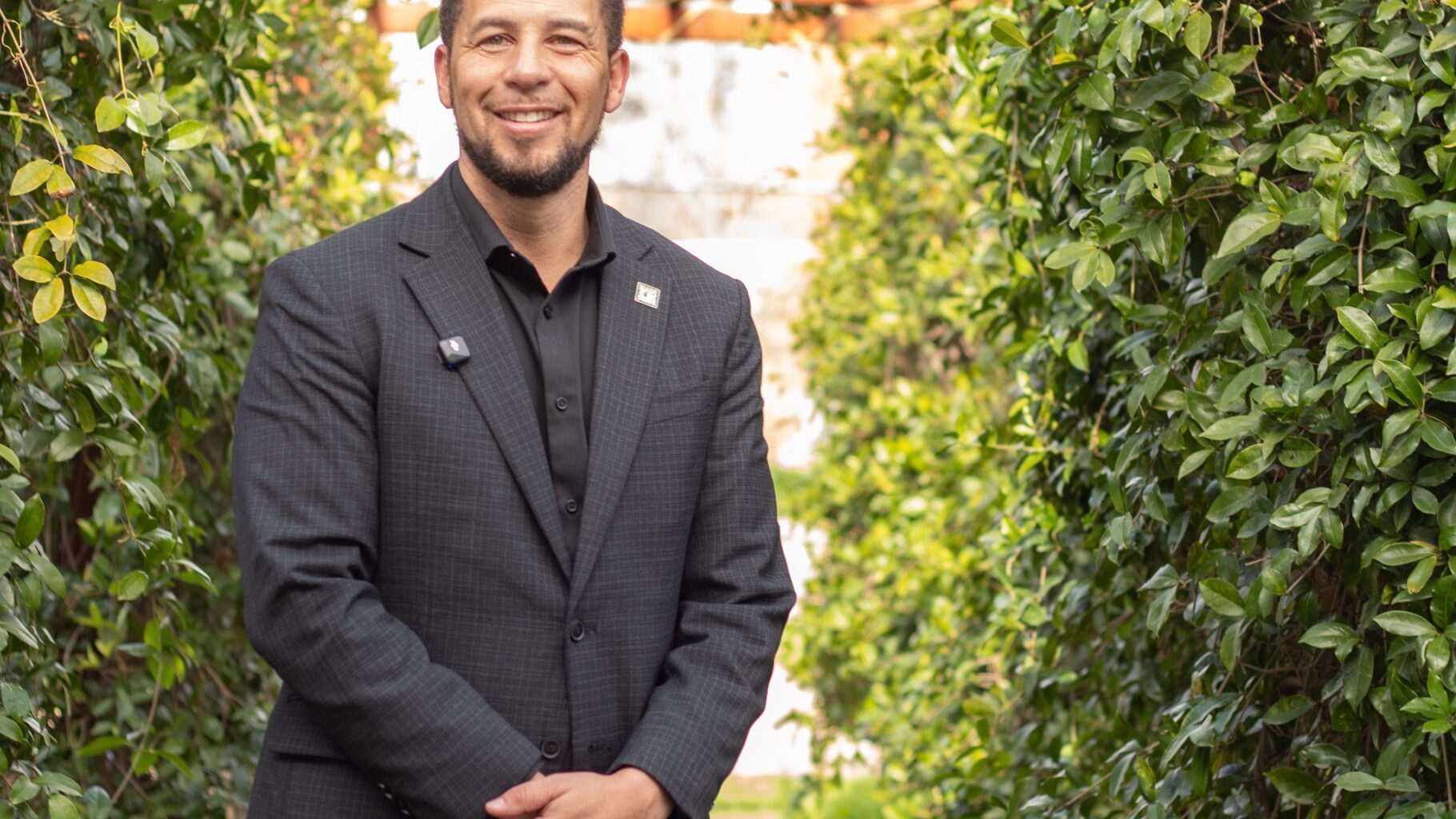
Sac State President Luke Wood spoke with Insight Host Vicki Gonzalez about the past year, and the changes that are on the horizon.
This interview has been edited for length and clarity.
Interview highlights
What are some of the biggest successes of the past year?
You started out with graduation so obviously that’s a big success for any person who works in a college or university. The culmination of all the hard work… seeing the students cross the stage at Golden 1 [Center], it’s powerful. We’re also happy to see that we’ve reached some of our largest incoming classes ever. We’re growing at a time when many universities in the northern part of the state aren’t growing, and are struggling with enrollment. Our graduation rates are at the highest that they’ve ever been.
If you think about the markers that people look for in terms of what makes a successful college or university, it’s whether or not they’re creating a welcoming campus environment; whether or not students are enrolling, whether or not they’re graduating and then for the parents out there, whether or not they’re getting jobs.
You’re two full years in as president of Sacramento State, and you’re an alumnus. How has that influenced your overall vision for Sacramento State, especially as president?
I’m a two-time alum. I love the campus, and many folks know that I’ve always wanted to be in this role since I was a young man. It was never about the title, it was about the impact that we can have on the community. We want to make sure that we have more students who are coming into Sacramento State who are graduating. We want to make sure that we have an environment that prioritizes hope and dignity in a world where there’s a lot of darkness out there.
We’ve been focusing on students who experience food and housing challenges… mental health services for our students. We want to focus on what’s going to improve student success, what creates an environment of hope and dignity and what elevates the brand of the campus. When it comes to things like the downtown campus and athletics and the stadium… these seem like disparate projects. But they’re actually directly interconnected to elevating the brand so that when our students graduate and they go on the market, they can go to any state in the country… their degree is worth more so that they’re going to earn more.
Do you take some inspiration from other schools or CSU campuses?
Absolutely. I went to school at Sac State, but then I also have two degrees from Arizona State and I spent 12 years at San Diego State on faculty and then in leadership there. I would say that I look at Arizona State and San Diego State, and also Boise… there’s different pieces of what they do that I think are good for where we want to go.
For example, Sacramento State has long been a commuter campus… there’s nothing inherently wrong with that. But when you have such a high population of students who are sleeping in their cars, sleeping in garages… and who don’t know where the next meal is going to come from, you’ve got to modernize and create more opportunities for students to be able to live on campus.
You’ve seen what Arizona State and San Diego State have done with the elevation of athletics. Many times people call it the front door or the front porch of the university, and it’s true. That is a way for us to draw them in. But make no mistake, what we do is not about athletics; what we do is about academics. Athletics helps to advertise what we do in a way that nothing else can.
Regarding that on-campus living requirement, it will first affect students who live 50 miles or further from campus and then narrow to 30 miles the following year. How will they afford to live on campus?
Living on campus is actually a better bargain for our students… both academically and financially. Academically, when you go home as a commuter student… you go home. But when you go home and you’re a residential student and you live on campus, you go home to academic advising. There’s tutoring, supplemental instruction, residence hall advisors, there’s all these events and programs that we do on campus.
Most people know that in a college degree, half of what you learn happens inside the classroom, but half also happens outside the classroom. There’s an extensive amount of research that has shown that when you have a housing live-on requirement, you do find that there are greater success rates for students. Students are more likely to graduate because they’re connected to those services.
But then financially, there’s a benefit for students. What we have to think about is the total package. When you live on campus it covers your food, your housing, electricity, Wi-Fi. You’re not spending as much money on gas and other things, so it actually is a cost reducer for students.
Will financial aid be expanded to help cover the costs of housing and living on campus?
For the vast majority of our low-income students, financial aid does pay for their housing. So that’s where the challenge tends to be with whether it’s a fee increase, a tuition increase. We have a lot of different strategies and practices that we put into place so that those middle income students have a lot of support. Many of our fees, for example, have a “return-to-aid” component. Everyone pays into that fee but then there’s a percentage set aside so that when those middle income students who have more of a difference they have to bridge, that there’s a pot of funds that they can go to for their support.
The Cal State system is facing budget cuts, and those are trickling down to the university level. Students have raised concerns and protested earlier this year over potential class reductions. Do they have the same or better access to courses?
We are a state agency, we’re part of the California State University system. When the state of California has a budget deficit, they have to pass on that deficit to their state agencies and then we have to adjust accordingly. What the state pays for is not really the co-curricular things, the enjoyable things that happen outside the classroom, they pay for the cost of instruction. When the cost of instruction is reduced, the result is fewer classes.
As an institution we have certainly been offering fewer classes because we have simply less dollars to go around. But one good thing just happened for us, that didn’t happen for a lot of other campuses. At the same time while the state has been cutting, we’ve been growing. We reached out to the chancellor’s office saying, “we have all these students who want to come here, we need additional resources.” They just did it and we just opened up 153 new class sections for students.
When do those additional classes take effect, and how does that number compare to the reductions that took place?
They take effect in January, so this is immediate. I would say based upon what I’m seeing in terms of student feedback, hearing from our deans, we probably need another 153.
Can you break down why, for example, if you need more classes, you can’t take funding out of campus experiences or athletics and put it into the classroom?
We have different buckets of money… tuition and fees which pays for classes, those are the standard ones. Then you have lottery funds that can be used for certain types of experiences that we can help support.
And then we have fees. A fee has to go through a process. It’s called the alternative consultation. You have focus groups, town halls, surveys, it’s an extensive process that’s regulated by the system. And at the end of that… a recommendation comes from the Student Fee Advisory Committee saying how expensive [or inexpensive] should the fee be. And then I either accept their recommendation or not. What we find here is that with those fees, they are specified — it needs to be used for internships, for campus life, for healthcare. I can’t just all of a sudden take those dollars and use them for something else because then that would be unethical, number one, but it’s also heavily regulated by our system and heavily audited.
How are faculty fairing? Are they doing more with less?
I would say that everyone is doing more with less. That is faculty, our facilities team, the staff who support academic infrastructure, administrators, even my office. [With] these budget cuts, we’ve tried to protect academic affairs. This year because of the cuts, every division took a cut somewhere between 20-29%. But academic affairs took a 15% cut, and the reason is we want to make sure we were prioritizing the most important thing we do, which is classes.
Turning to athletics, recently the NCAA rejected the waiver request for Sac State to join the FBS. What kind of feedback did you get from the NCAA?
Well the feedback was if you don’t have an invite from an FBS conference, then you’re not ready to be FBS. The challenge with that is that there’s only one FBS conference in the western United States that would take a school that is transitioning out of FCS. That’s, I would say, an unfair comparison to anywhere else in the country.
For us, this has always been about making sure that our students have access to be able to compete at the absolute highest level. We’re the only top 20 media market in the entire country that does not have an FBS football team. We see with all the destabilization with these conferences — the dissolution [and] rebuilding of the Pac-12, teams leaving [and] coming to California — that chaos is what we’re trying to take advantage of for the campus.
I certainly believe that we will be FBS in short order. I stand by what I’ve said previously, which is we do expect to be playing an FBS schedule this year [2026.]
A big piece of this is a new stadium, and Cal Expo is being considered as the location. How does that fit into being less of a commuter campus if students would have to travel to see games?
First, having a stadium that’s not on campus is a normal thing. There’s lots of universities that don’t have stadiums that are directly on campus, and a lot of it deals with space, Sacramento State is 300 acres but we’re also boxed in… there’s really no place for us to go and build out if we want to be able to have a football stadium that can serve the market we have.
We’re almost at a decision point now on whether or not we’re going to Cal Expo. We have been evaluating that grandstand that’s already currently in use for athletic events to put our football field there in front of it… and then to build stands around it. The benefit of Cal Expo is you’ve got multiple entrances and exits, unlike campus [which] only has two. You have parking for thousands of people and we have challenges with parking access on campus, and it also has the ability to grow to a much larger stadium. It’s two miles away from campus, not very far. We’re going to have all kinds of shuttles that are going to bring students there. There’s a bike trail that goes directly from campus to the site.
How would this be funded?
The Cal State system, and the state of California, can give you a bond for projects that will generate revenue. We can show over many years that football has generated revenue through ticket sales, corporate sponsorships, parking, food and beverages, apparel. They take that into account to determine how [many] resources they’ll give as you show a solid business plan on how you’re going to reach your performance goals.
When you started you inherited the financial mismanagement at CapRadio, and you said on Insight at the time CapRadio took up 75% of your time as president. What about now?
In a good way it’s probably down to 5%, that’s because we said that CapRadio is here to stay. There were a lot of people in the community who said, why spend that much money to do it? And what we said, and we stand by it, is CapRadio may not be part of the traditional educational mission of the university, but what you all do here is provide objective information about what’s happening in the community and in the wider world, and we think that that’s absolutely critical in a world that’s that’s led by alternative facts.
The Chancellor’s Office is expected to conduct another audit of CapRadio in January, what can we expect?
That we have made significant progress. We had 22 findings from the last audit, we’ve been able to address and close out every single one of those findings. We have different structures in place, and now we’re doing some really exciting things… exploring how the educational mission of Sac State and the broader mission of educating the public with CapRadio can better align.
As a public institution funded by the state, how has the change in administration at the federal level shaped your job as president on campus?
It has been a significant factor in how you lead the institution. Obviously there’s a lot of new policy directives that have come down, new executive orders. We have lost a lot of funding due to the federal government pulling back resources, particularly for anything related to diversity, equity and inclusion. Sacramento State, we’re a Hispanic-Serving Institution, an Asian Pacific Islander-Serving Institution, we’re the first Back-Serving Institution in the state… a lot of the work that happens at a place like that is organized around DEI.
At the same time, the federal government gets to make their decisions on how they want to fund, and our job is to be responsive to that. It’s been difficult, but we’re managing it. I think where the biggest challenge has been is the fear and anxiety among our students, particularly students who may identify as undocumented, international or part of a minoritized community because there are very clear policy directives that do target those communities. What we try to do is to provide an environment that’s safe, that’s healthy, and that has as much joy as possible to try to combat the darkness out there.
Editor’s note: CapRadio is licensed to Sacramento State, which is also an underwriter.