
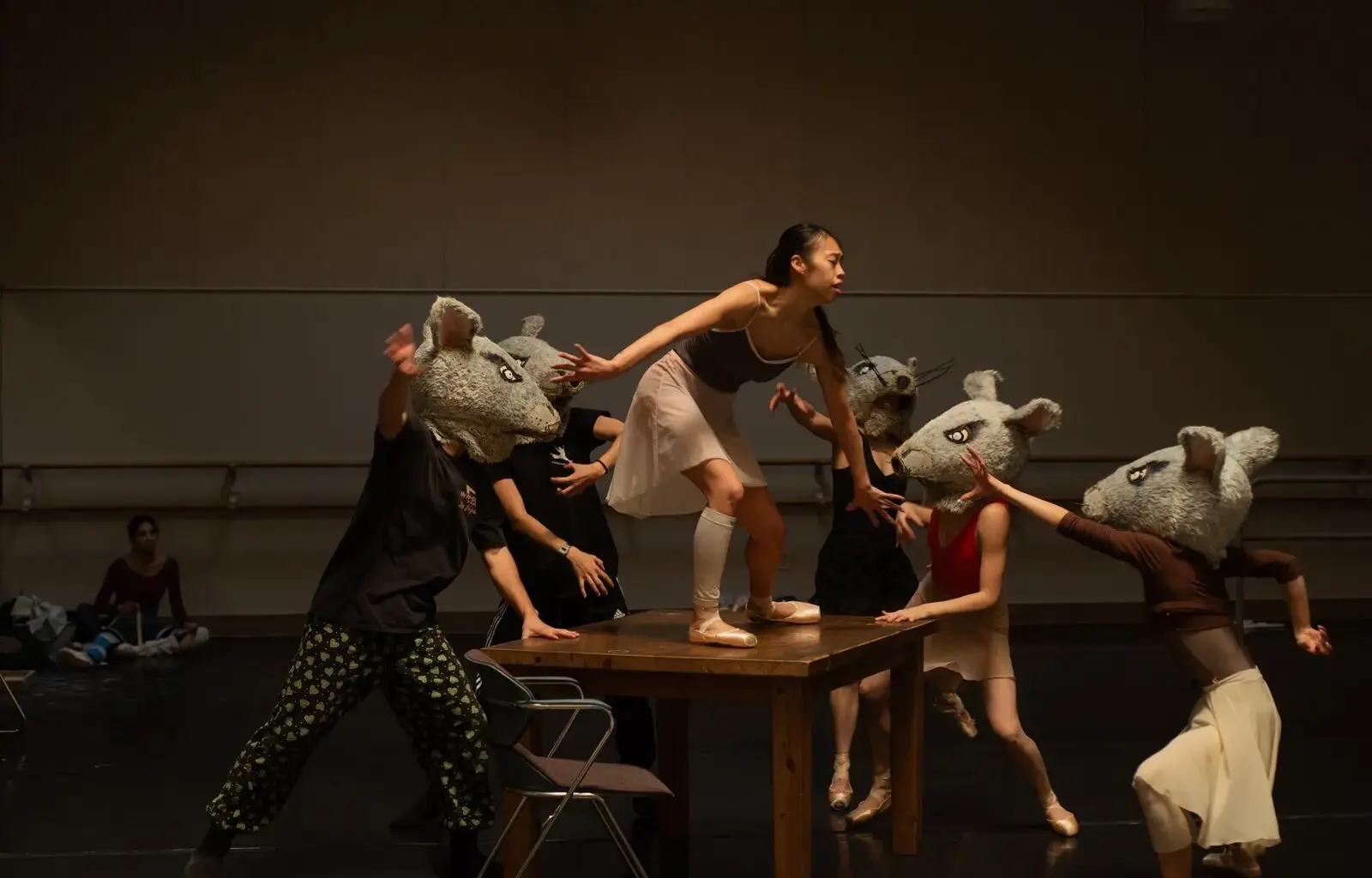
On a chilly Thursday afternoon in December, the ballet studio inside the Malonga Arts Center in downtown Oakland is starting to warm up with the spinning and thumping from danseurs and ballerinas landing pirouettes. The roughly two dozen dancers are on their fourth rehearsal of the week ahead of the Oakland Ballet’s “Graham Lustig’s The Nutcracker” performances at the Paramount Theatre on Saturday, Dec. 20, and Sunday, Dec. 21.
This year, the company celebrates its 60th anniversary and Graham Lustig’s 15th season as artistic director.
“This is about jumping to show those beautiful shapes in the air …” Lustig tells the group.
As the dancers rehearse, the sweat on their foreheads is visible from any angle in the studio. They have been going through the various scenes five days a week for the past 28 weeks.
Among the ballerinas is 25-year-old Jazmine Quezada, who is in her seventh season with the company.
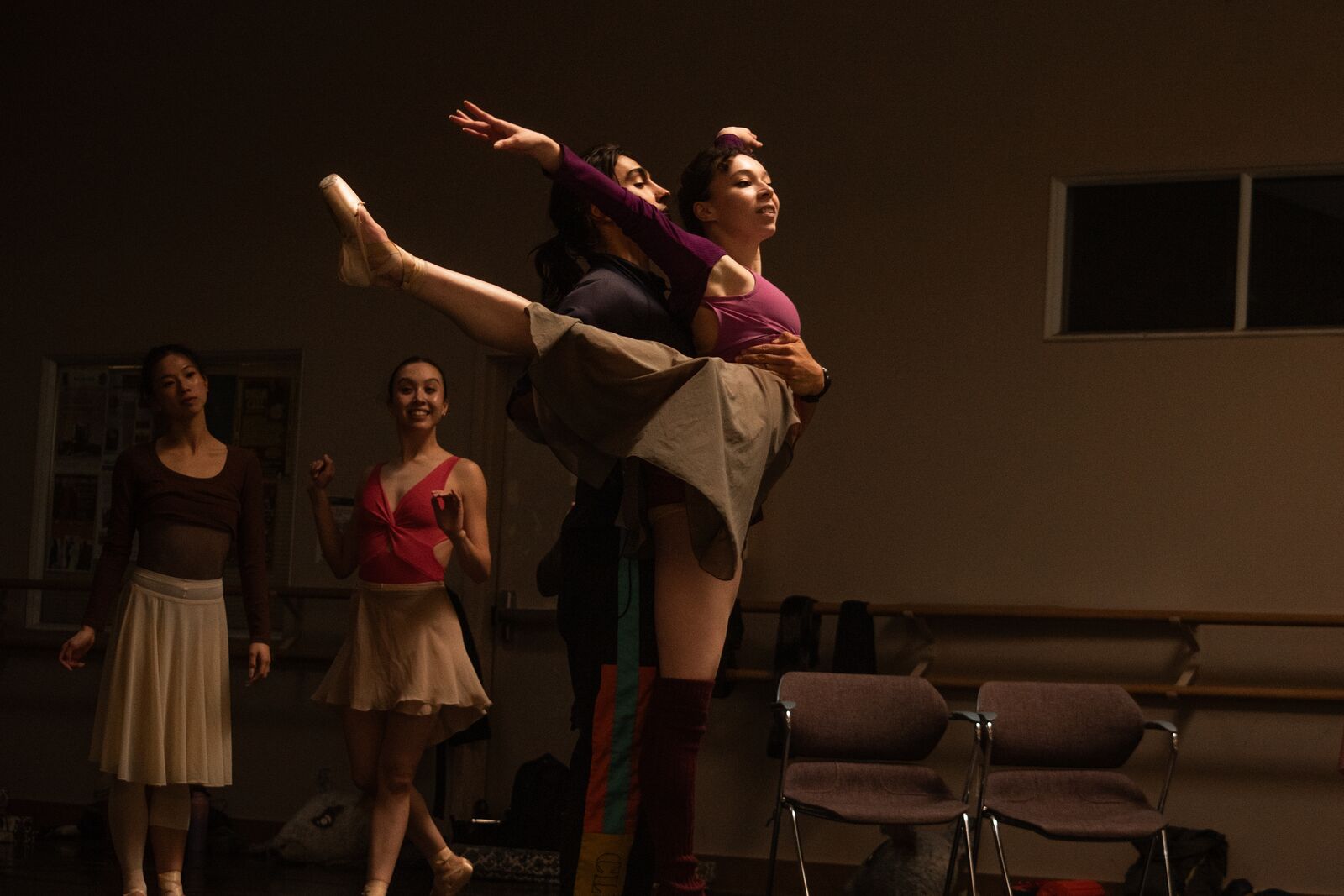 Dancers Jacob Seltzer-Rios, and Jazmine Quezada are two of the performers at this year’s “The Nutcracker” show. Credit: Ximena Natera for The Oaklandside
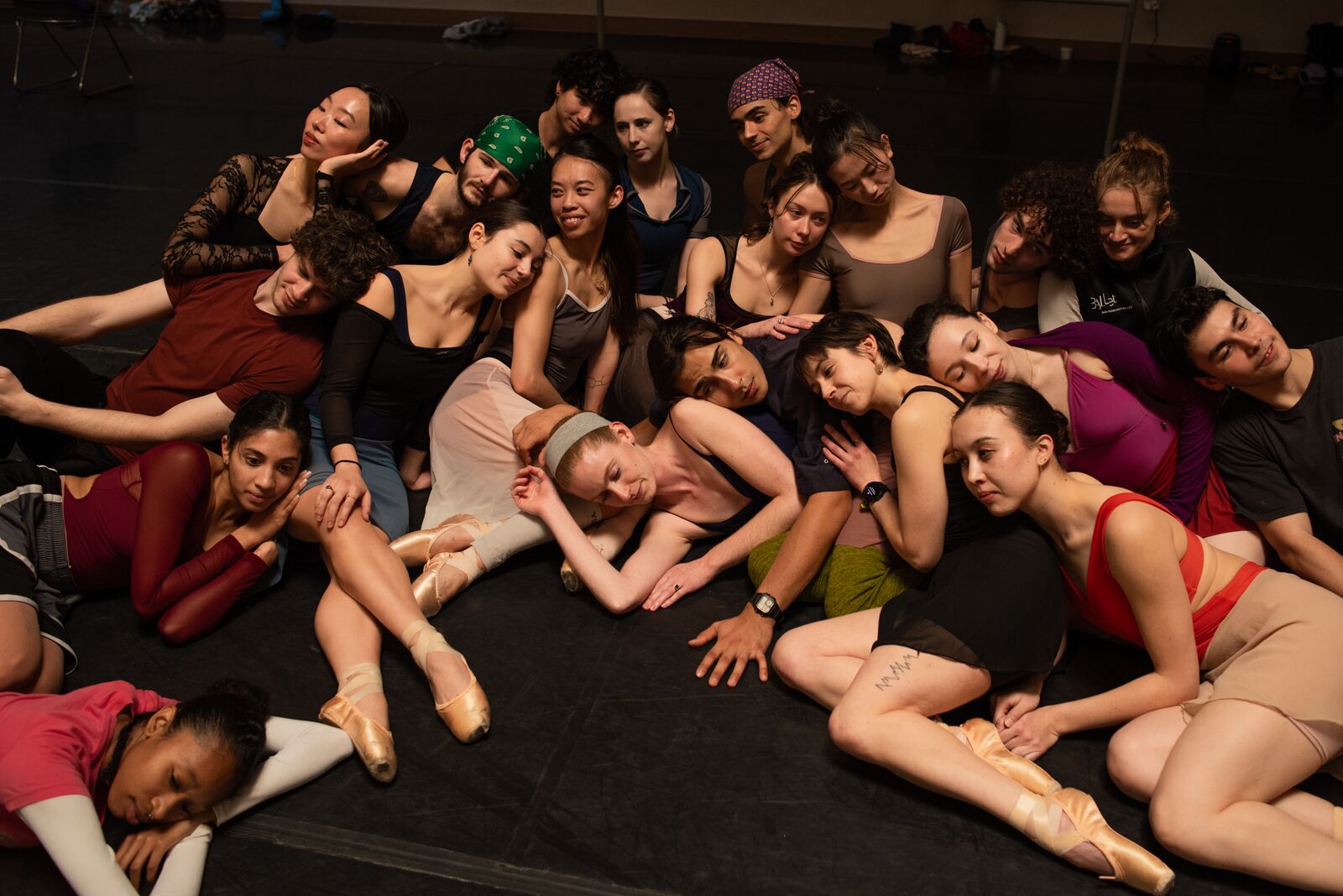 The Oakland Ballet employs 11 full-time dancers, plus another dozen or so more to complete the emsemble for the yearly production of “Graham Lustig’s The Nutcracker.” Credit: Ximena Natera for The Oaklandside
“When I first joined the Oakland ballet, Graham helped me with finding the artist side of me, not just the technique and the precision, but finding the artistry with the movement that I was doing,” Quezada said. “He pushed me to do more, and had a lot of faith. That helped me grow ultimately.”
This year, she once again plays the Sugar Plum Fairy, who welcomes Clara and the Nutcracker prince into her magical Land of Sweets.
“Playing the Sugar Plum Fairy is a fun, challenging piece,” Quezada said. “It pushes you as an artist, and it’s incredible. It is so much fun to do Graham’s version.”
Quezada has also played the lead, Luna, in “Luna Mexicana” since joining the company in 2018.
“My favorite is ‘Luna Mexicana’ because you don’t see much of Mexican culture in ballet, and it’s the part of me that I get to share with everyone, because my family is from Mexico,” she said.
“It is a part of my heritage, and I love being a part of it.”
Upon the ballet’s 60th anniversary, The Oaklandside is looking back at the history of the company and its biggest moments across six decades. From when Ronn Guidi founded the company in 1965, to the 1980s and 1990s when A’s players would perform as guest dancers, and the company’s closure and subsequent rebirth in the early 2000s, to today, when budgetary restrictions have limited the company’s scope but not its drive to continue showcasing the artform in Oakland.
1960s — The founding of the company
October 1965
Oakland-born dancer Ronn Guidi founds the Oakland Ballet Company, emerging from the Oakland Civic Ballet and establishing a company with a classical focus.
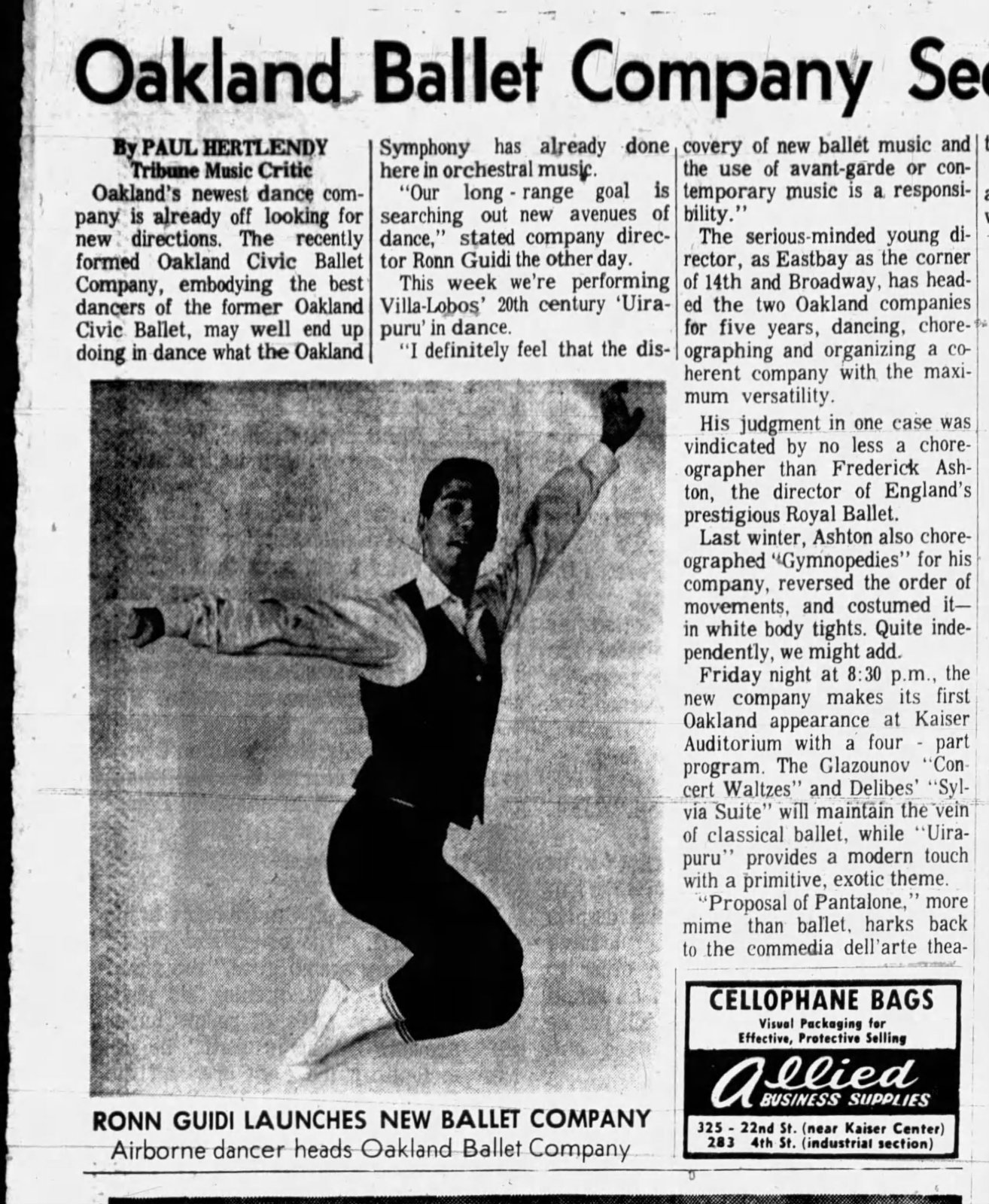 Ronn Guidi launched the Oakland Ballet in the fall of 1965. Credit: archival image of the Oakland Tribune from newspapers.com. Credit: archival image from Oc.t 14, 1965 edition of the Oakland Tribune from newspapers.com.com
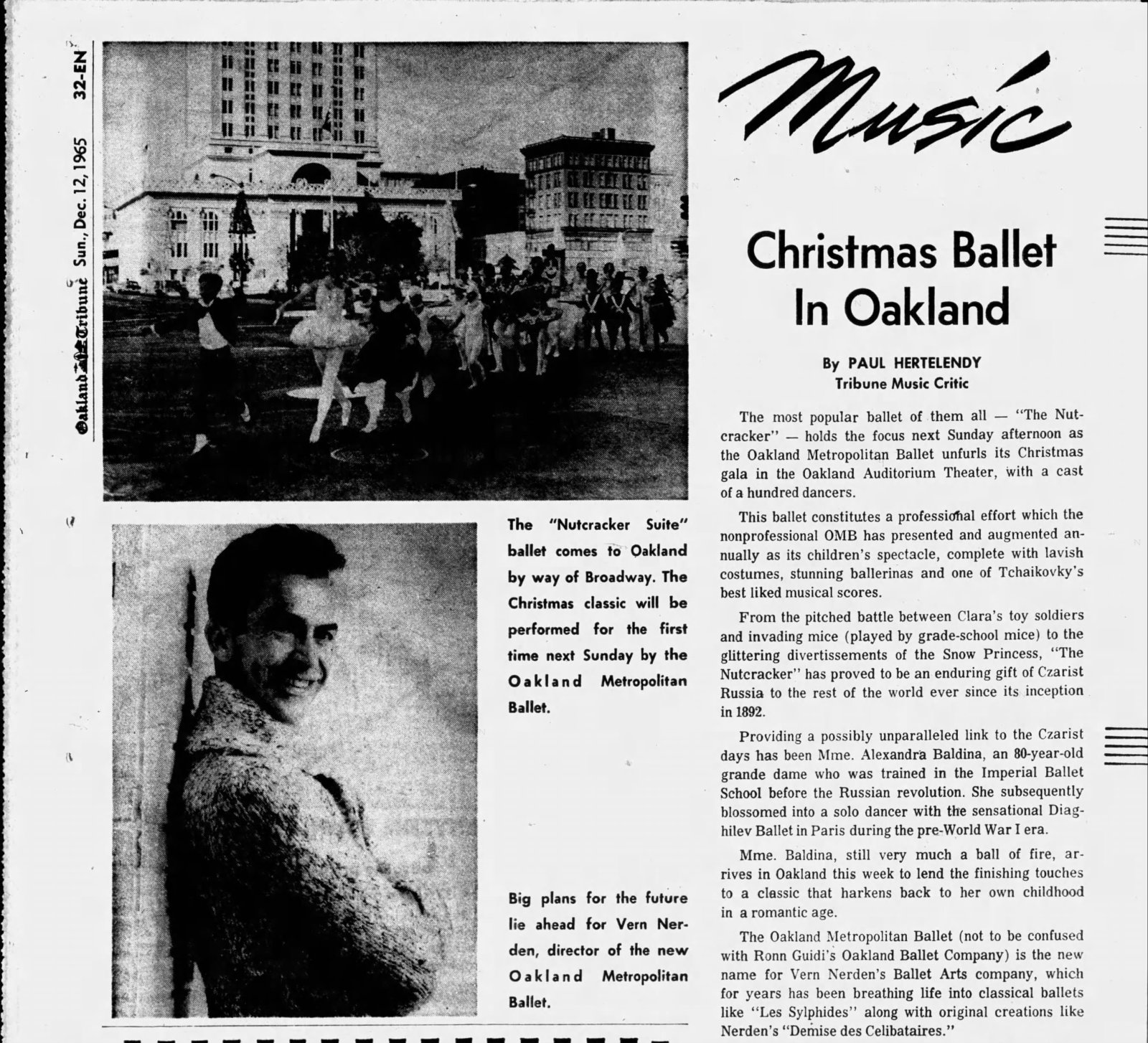 The holiday classic “The Nucracker” first came to Oakland in the winter of 1965. Credit: archival image of Oakland Tribune from newspapers.com Credit: An archival image from Dec. 12, 1965 edition of the Oakland Tribune from newspapers.com
December 1965
“The Nutcracker” comes to Oakland for the first time under the Oakland Metropolitan Ballet, a dance company not associated with the Oakland Ballet.
Late 1960s to the 1990s — Expansion and Recognition
Ron Thiele started dancing with the Oakland Ballet in 1969, and he was also executive director and co-artistic director until he moved to New York in 1997. When the dance company started, he said, there were about a dozen dancers. As it grew, there were 24 to 28 full-time dancers with contracts for 30 to 32 weeks.
Thiele was part of countless productions, including “Requiem” to celebrate the ballet’s 10th anniversary and “Hansel and Gretel” as part of the 1971 holiday season. That year, the ballet held an open house summer series at the Dunsmuir Hellman Historic Estate.
“Ronn [Guidi] had this philosophy that anybody can dance. It wasn’t about becoming a dancer. It was about the excitement and the artistic commitment to dancing,” Thiele said. “It was about human kindness and fellowship. It was moving together, telling stories through movement.”
During his time, Thiele said the company received substantial funding from the National Endowment for the Arts (NEA), individual donors, and other philanthropies. The robust financing allowed the company to put on continuous productions in spring and summer, 35 to 40 shows of “The Nutcracker” in Oakland alone, and travel around the country to perform.
The repertory seasons, he said, included at least four to five weekends of four performances each. About 24 dancers would go on tour from February to April.
“Ronn brought ‘Billy the Kid’ in with Eugene Loring. Ronn brought in people who were storytellers through the dance. They were bringing works of art that were well-known dance works,” Thiele said. “This elevated the repertoire and the reputation that the company had across the country. But from the late 1960s into the 1990s, there was also a dance explosion. Dance was big and many companies were out touring.”
Thiele said that it wasn’t just an investment in dance. It was across a broad swath of things.
“There was a lot of investment in the community to make it a better place to live,” he said.
While current funding is nowhere near the level of what it was during Thiele’s time, he applauds Lustig’s continued commitment to the company.
“Graham is engaged in this. He’s excited about what he’s doing in continuing to bring the dance to the community,” Thiele said.
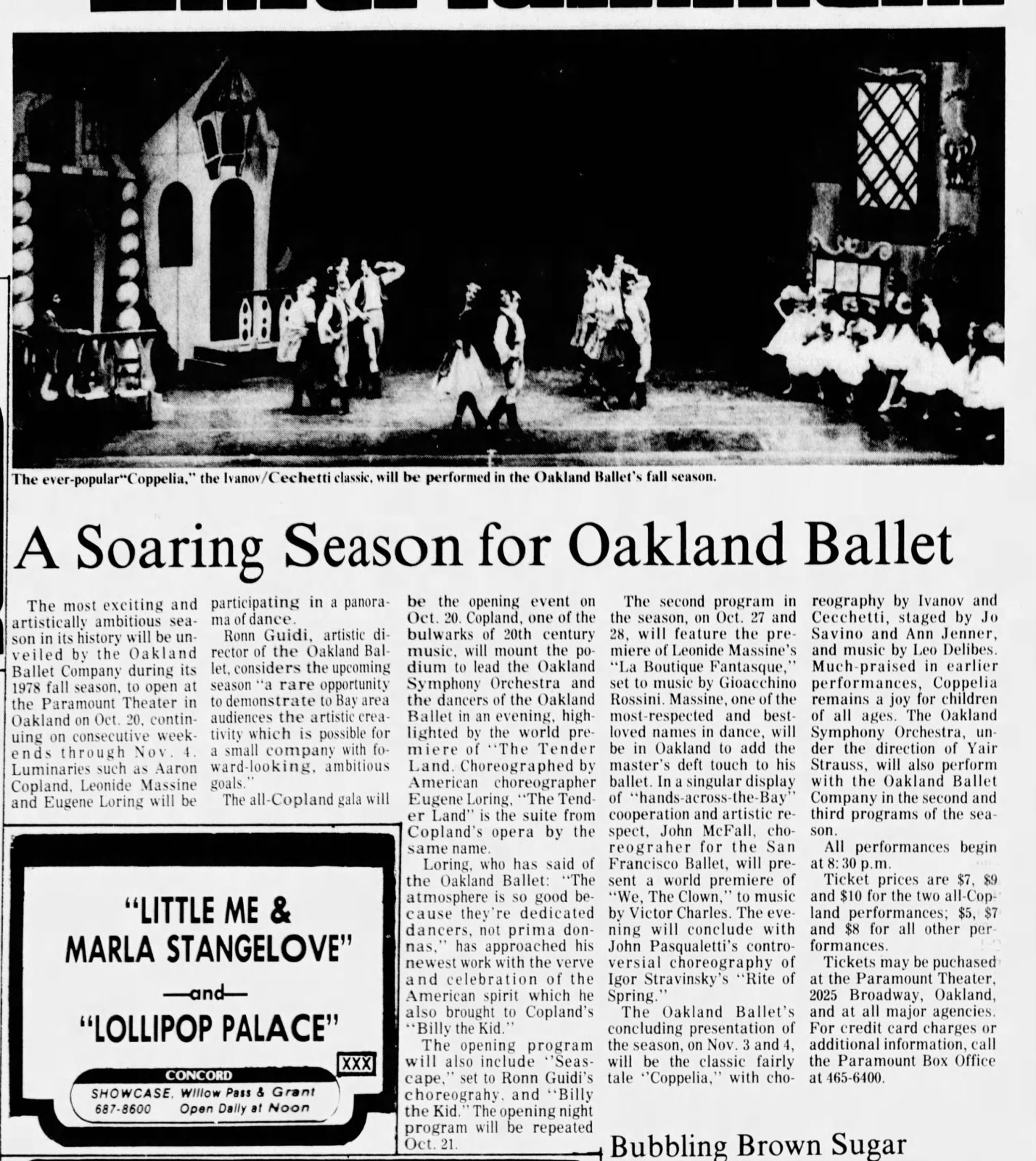 The 1978 season was one of the busiest for the company. Credit: archival image of the Contra Costa Times from newspapers.com
October 1978
The Contra Costa Times called winter 1978 the most “artisrically ambitious” season in the company’s history to that point. The dance company put on six different productions including the world premieres of “The Tender Land,” and “We, The Clown.”
September 1986
Under the guidance Guidi, the company built a reputation and gained international recognition among other dance companies, choreographers, and artistic directors. In 1986, after years of negotiations, Guidi was able to bring to Oakland the “Fall River Legend,” the acclaimed work telling the story of the infamous Lizzie Borden.
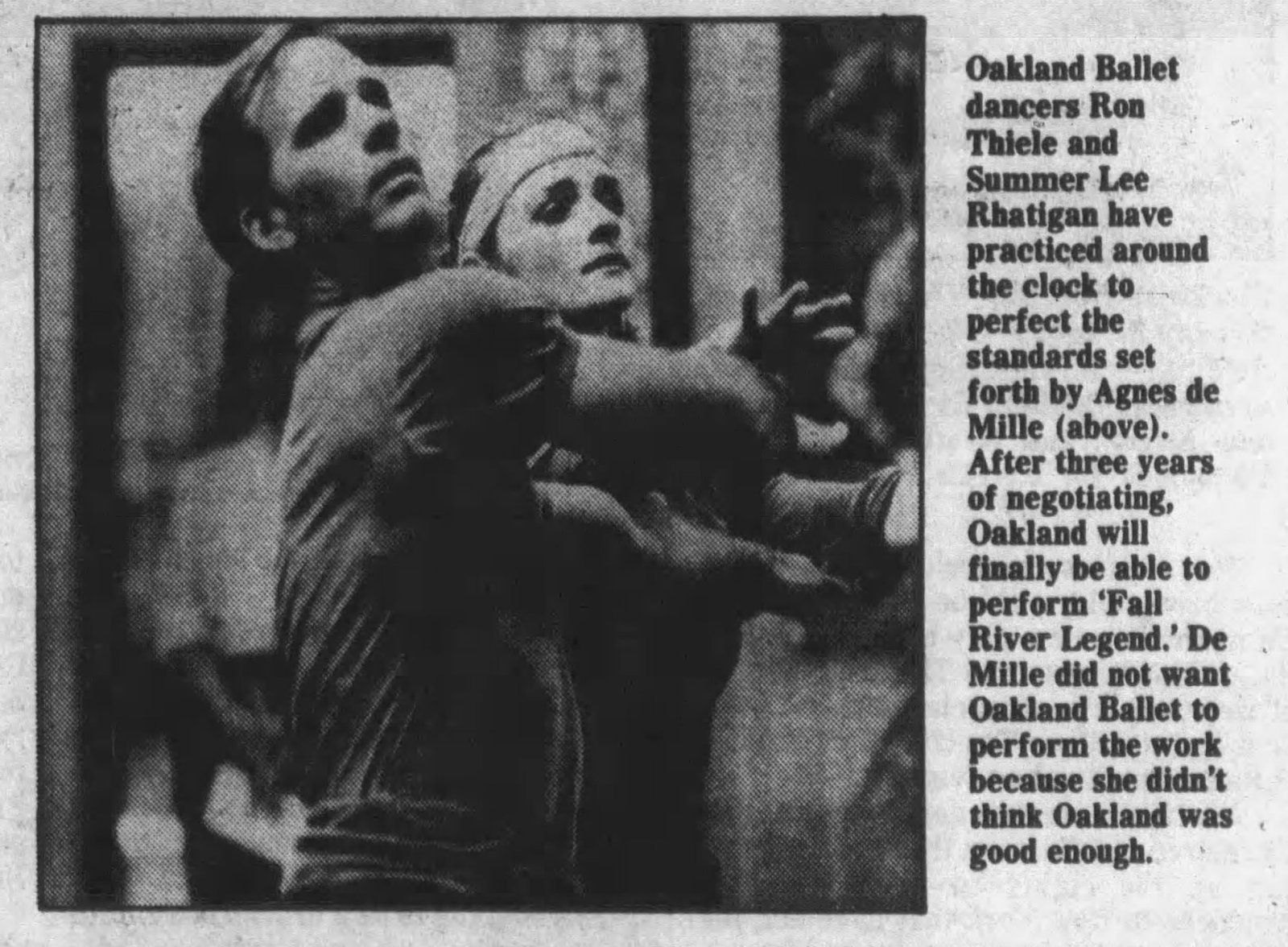 Ron Thiele (left) was a dancer with the Oakland Ballet from 1965, when the company launched, until 1997. Credit: archival image of the Sept. 7, 1986 edition of the Oakland Tribune from newspapers.com
1980s–1990s — A’s players join the ballet, and changes ahead
1986 to the 1990s
The then Oakland Athletics would take time during baseball’s off-season to make cameos in the Oakland Ballet’s production of “The Nutcracker.” Former baseball players like Jose Canseco, Dave Stewart, Carney Lansford, Dave Stewart, Mike Davis and Bill Krueger were among the participants. Other athletes who participated included former San Francisco Giants pitcher Shawn Estes, and former Golden State Warrior Adonal Foyle.
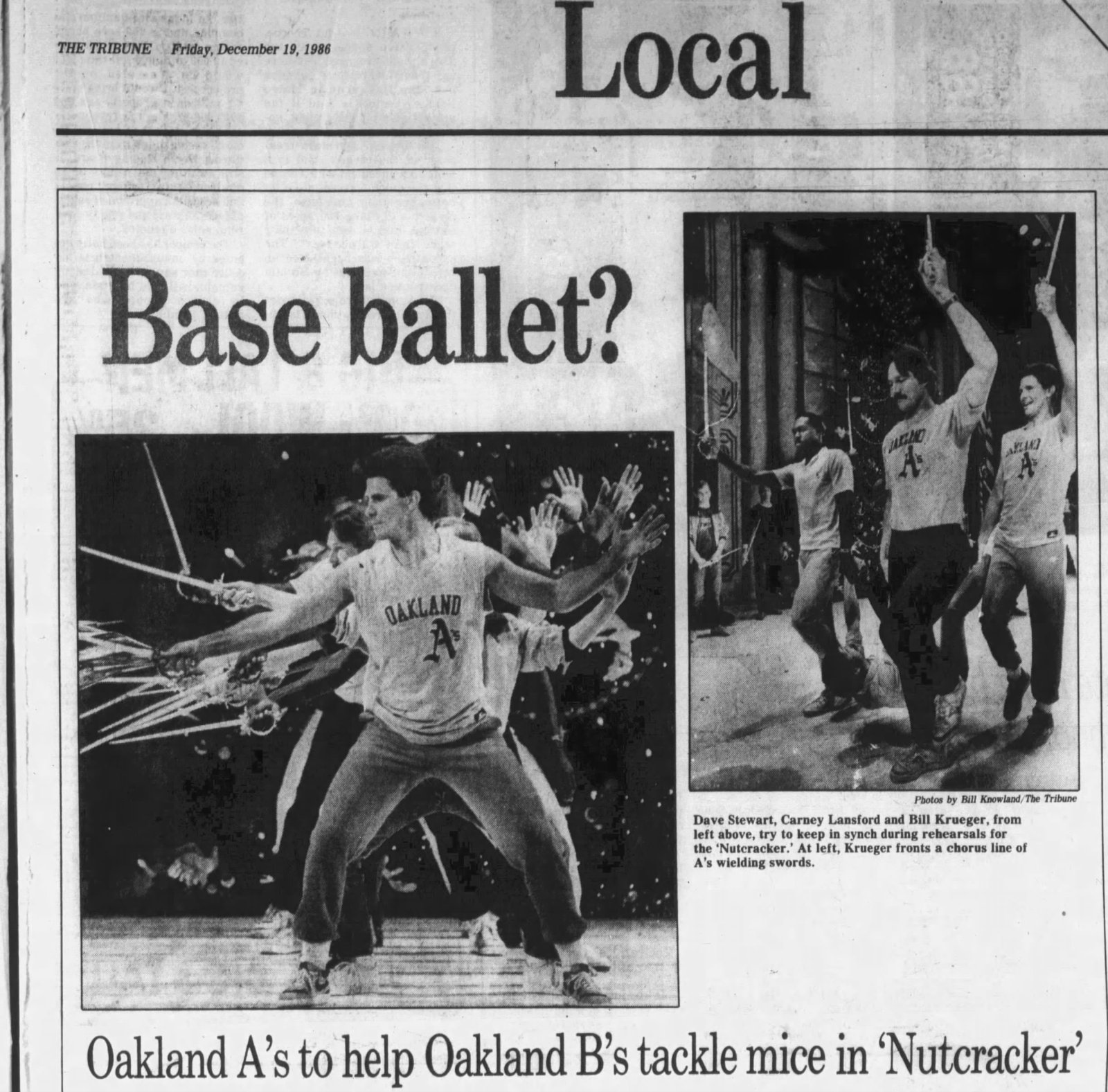 From 1986 to the mid 1990s, the then Oakland Athletics would make cameos in the Oakland Ballet’s production of “The Nutcracker” including Jose Canseco (left). Credit: archival image from the Dec. 19, 1986 edition of the Oakland Tribune from newspapers.com Credit: archival image from the Dec. 19, 1986 edition of the Oakland Tribune from newspapers.com
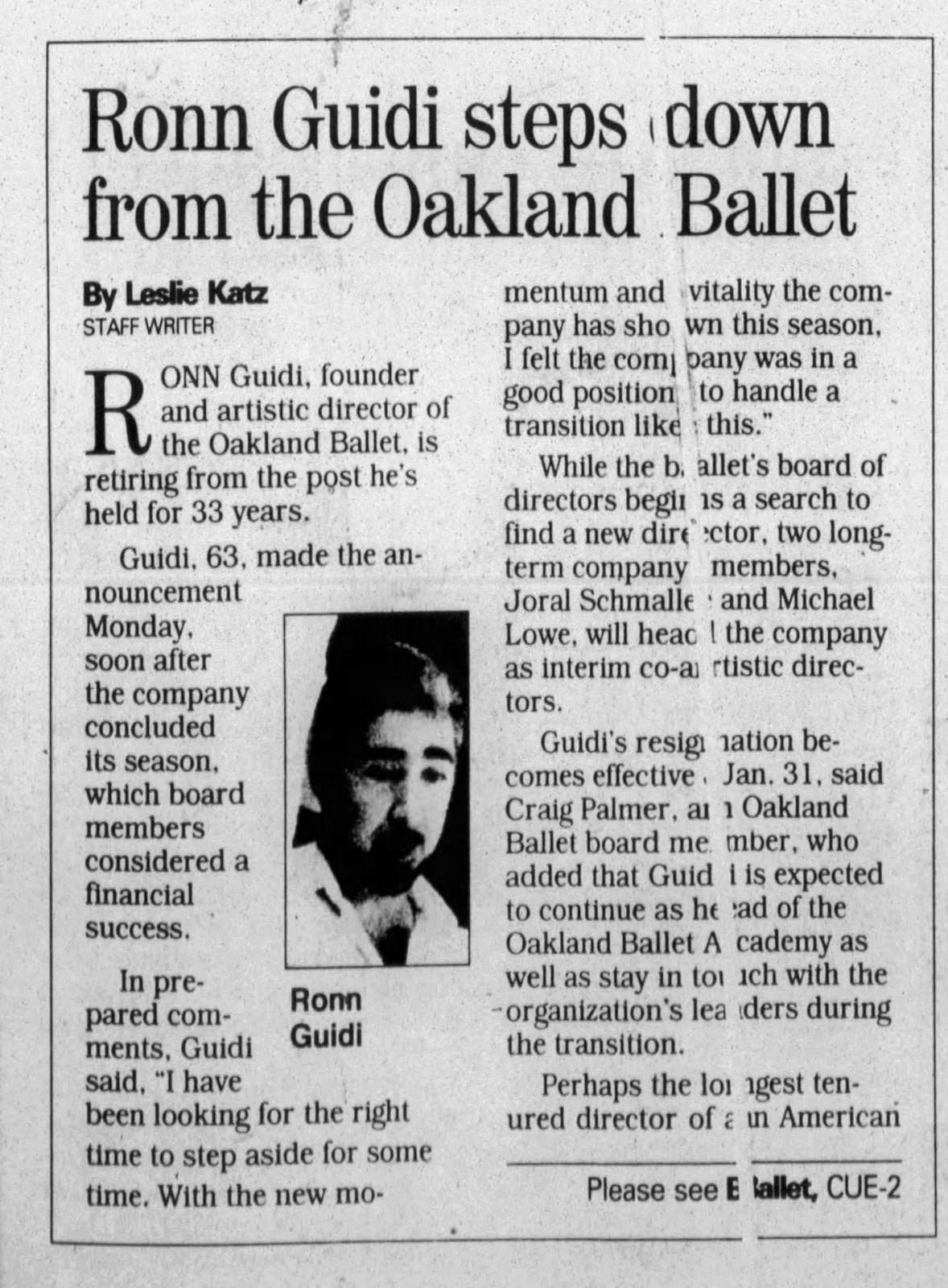 The Oakland Ballet’s founder Ronn Guidi first retired in 1998 after 33 years. Credit: archival image of the Oakland Tribune from newspapers.com
December 1998
For his last year with the Oakland Ballet, Guidi put on several shows including “Billy the Kid,” “The Emperor and the Nightingale,” and “Romeo and Juliet.”
2000s — Transition and Turbulence
April 2000
After one season under the direction of an acting artistic director, the Oakland Ballet hires Karen Brown to lead the company. Brown was a principal dancer with the Dance Theater of Harlem. Her tenure as artistic director began with the 2001 season.
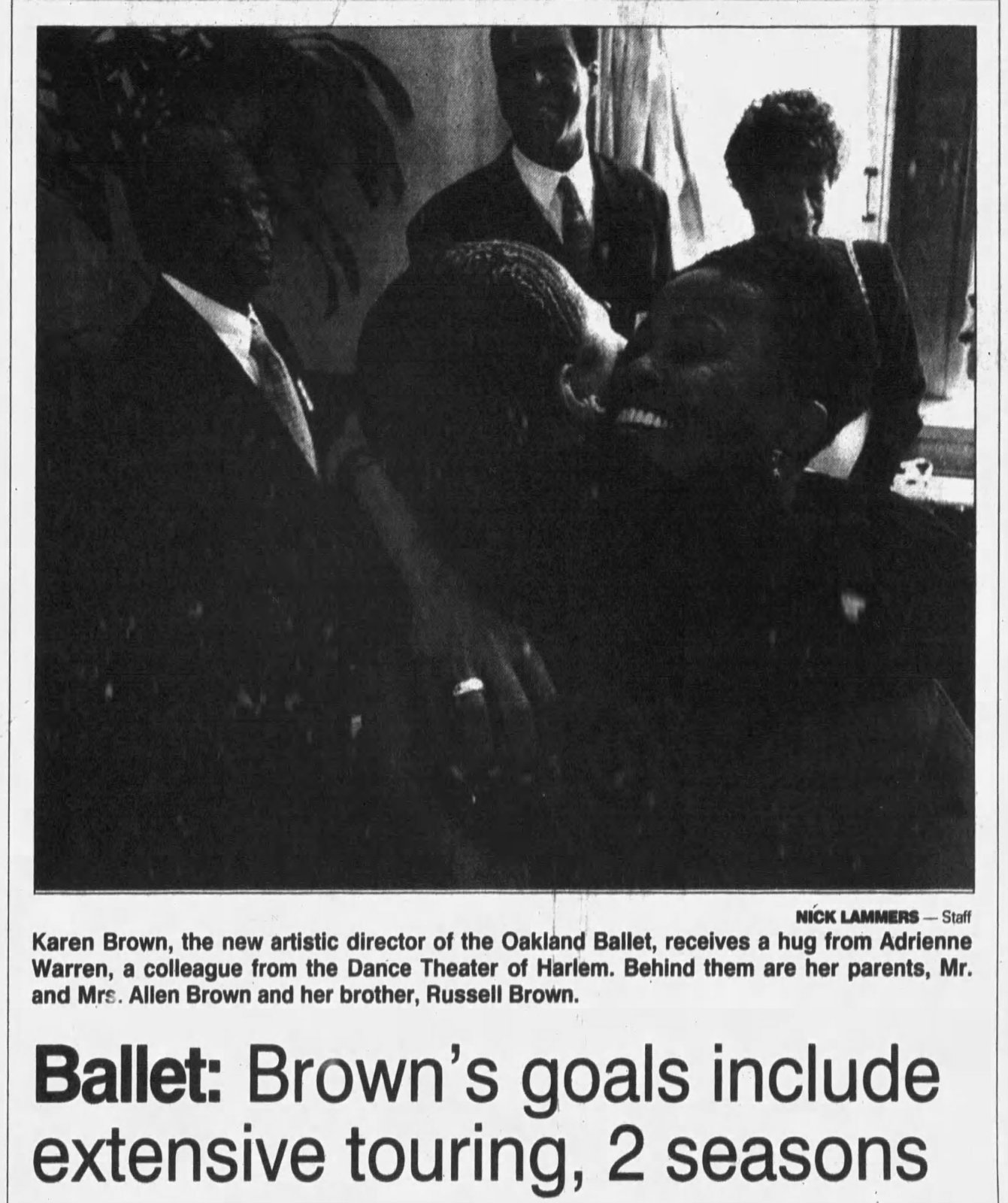 Karen Brown became the Oakland Ballet’s artistic director in 2000 when the company’s founder, Ronn Guidi, retired. Credit: archival image of the Oakland Tribune from newspapers.com Credit: archival image of the April, 26, 2000 edition of the Oakland Tribune from newpapers.com
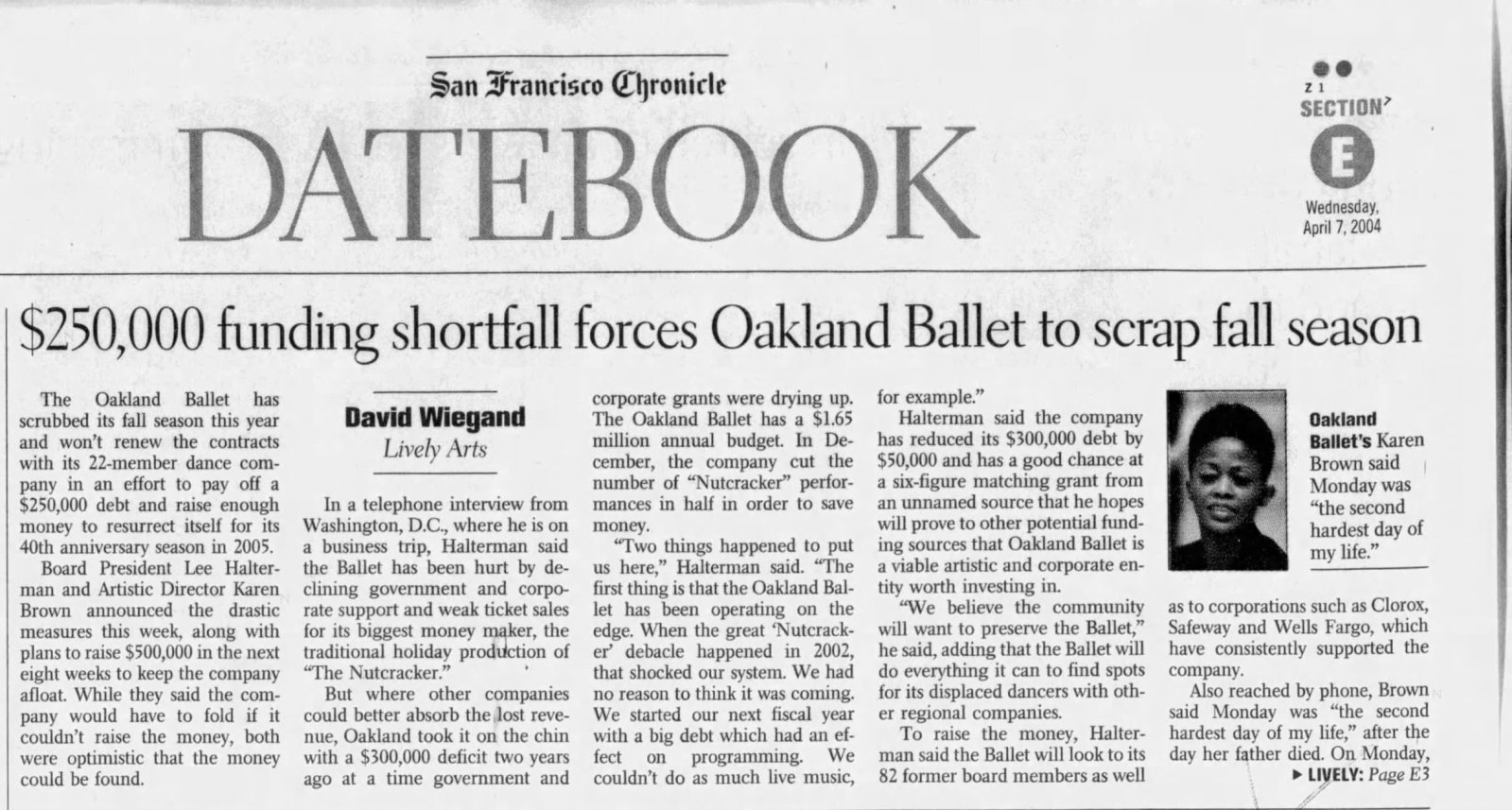 Karen’s Brown’s tenure was plagued with financial challenges. Credit: archival image from the April 7, 2004 edition of the San Francisco Chronicle from newspapers.com
April 2004
Karen Brown’s tenure was short-lived after financial struggles forced the company to cancel its 2004 season.
February 2006
After years of financial challenges, the Oakland Ballet closes its doors in early 2006. Donations to the ballet and other nonprofits plummeted after the terrorist attacks of Sept. 11, 2001 and a stock market crash in 2002. Costumes had to be liquidated to repay a loan to the City of Oakland.
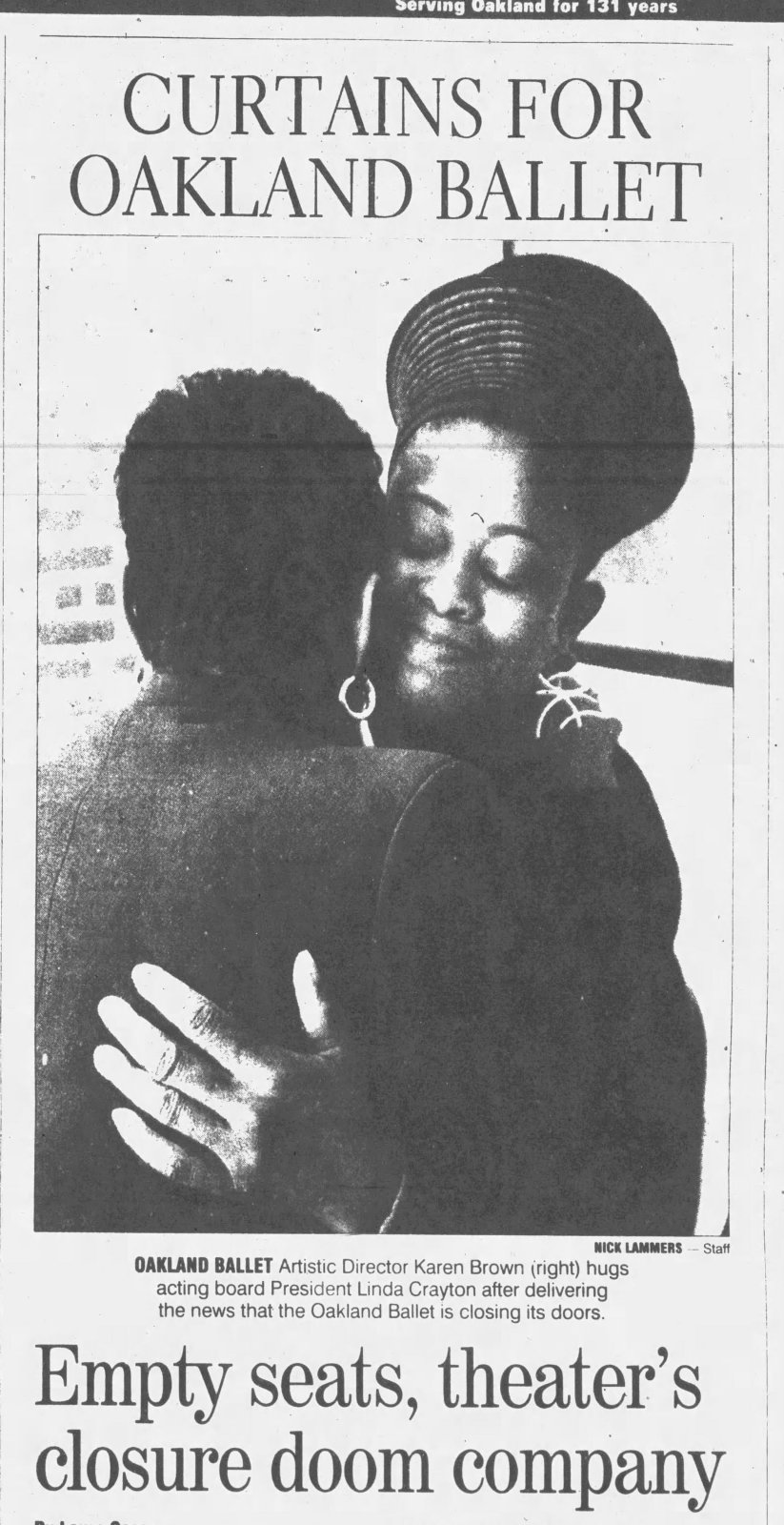 The Oakland Ballet struggled under Karen Brown’s direction and shuttered in 2006. Credit: archival image of the Oakland Tribune from newspapers.com Credit: archival image from the Feb. 1, 2006 edition of the Oakland Tribune from newspapers.com
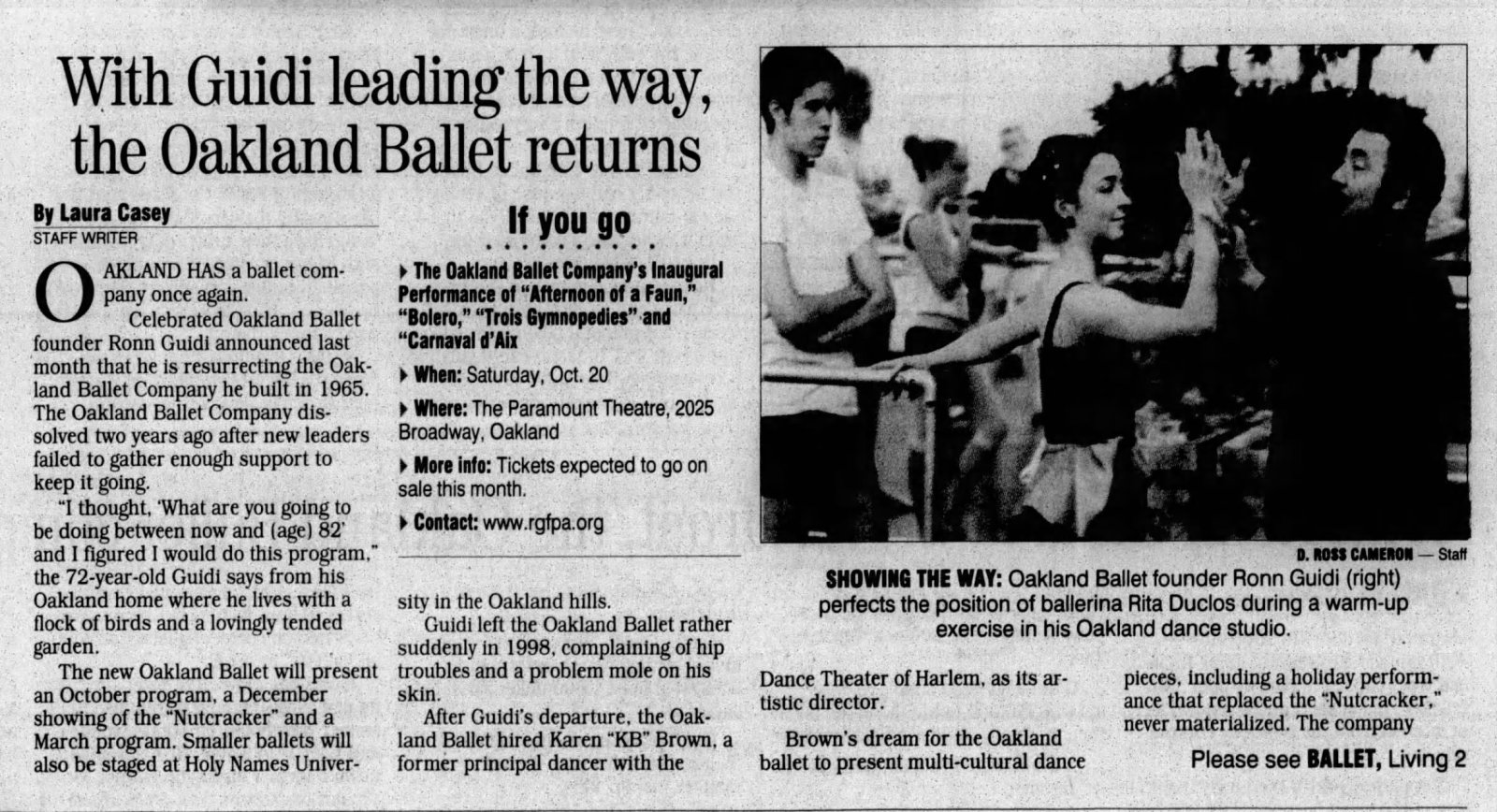 Ronn Guidi did not want to let the company go under. He returned to the stage in time for the 2007 season. Credit: archival image of the Oakland Tribune from newspapers.com
August 2007
Guidi briefly comes out of retirement to help spearhead fundraising and salvage the company from bankruptcy before retiring again in 2008.
2010s — A New Era under Graham Lustig, and more challenges ahead
Graham Lustig, then 55 years old, took over the reins of the Oakland Ballet right in time to debut his version of the holiday classic, “The Nutcracker.” His rendition first premiered in 2000 at the New Jersey American Repertory Ballet, where he served as artistic director from 1999 to 2010.
Lustig set his story in the early 20th century and changed the protagonist’s name (Clara in E.T.A. Hoffmann’s tale was Maria) to Marie.
“I wanted a story that reflected a girl taking agency of her own life,” Lustig said. “She lives during a time when women were fighting for the right to vote.”
In his adaptation, it isn’t the Nutcracker prince who kills the Rat King, but rather Marie herself.
His progressive take on the holiday classic isn’t the only thing Lustig is known for. Since taking over in 2010, Lustig has committed to bringing classical ballet to schools. Every year, during dress rehearsals, he welcomes over 2000 students to see the show.
Under his artistic vision, he also added additional shows to showcase more diverse stories. In 2016, the ballet debuted “Luna Mexicana,” a show that pays homage to Day of the Dead. In 2022, the company unveiled the “Dancing Moons Festival.” In 2023, the show included a new, all-Asian American Pacific Islander choreographed program.
“No other dance company in the world is doing a show like ‘Luna Mexicana,’” Lustig said. “No other company in the world is putting on a program which is supportive of AAPI artists, choreographers, composers and designers.”
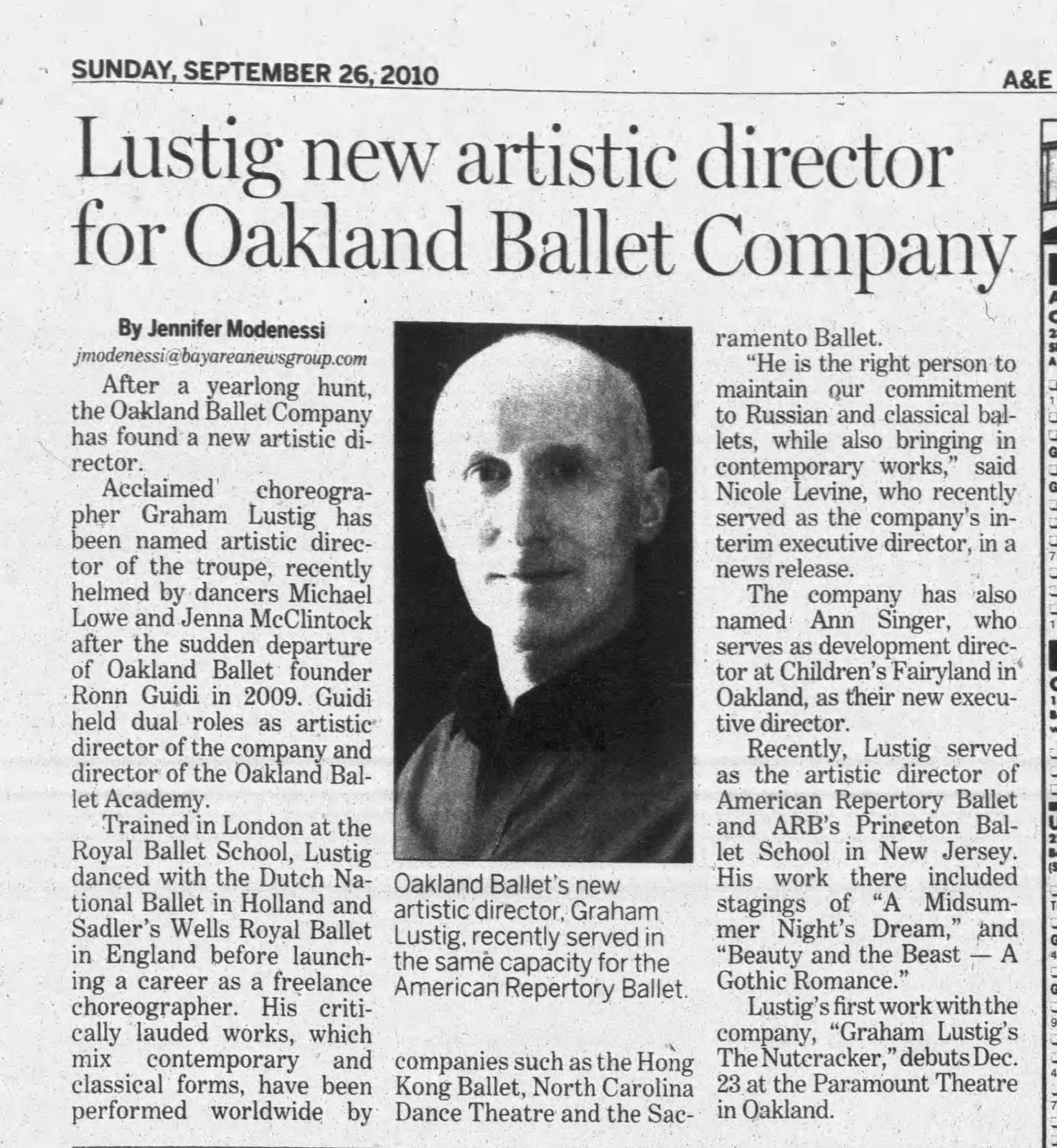 Graham Lustig has been leading the Oakland Ballet since he was hired in 2010. Credit: archival image of the Oakland Tribune from newspapers.com Credit: archival image from the Sept. 26, 2010 edition of the Oakland Tribune from newspapers.com
2010
When Lustig joined the Oakland Ballet, he unveiled his “Graham Lustig’s The Nutcracker,” a more progressive version of the holiday classic set in the early 20th century.
October 2016
“Luna Mexicana” makes its Oakland debut at the Paramount Theatre. The show tells the story of a girl named Luna whose departed loved ones come back in her dreams in the form of dancing skeletons.
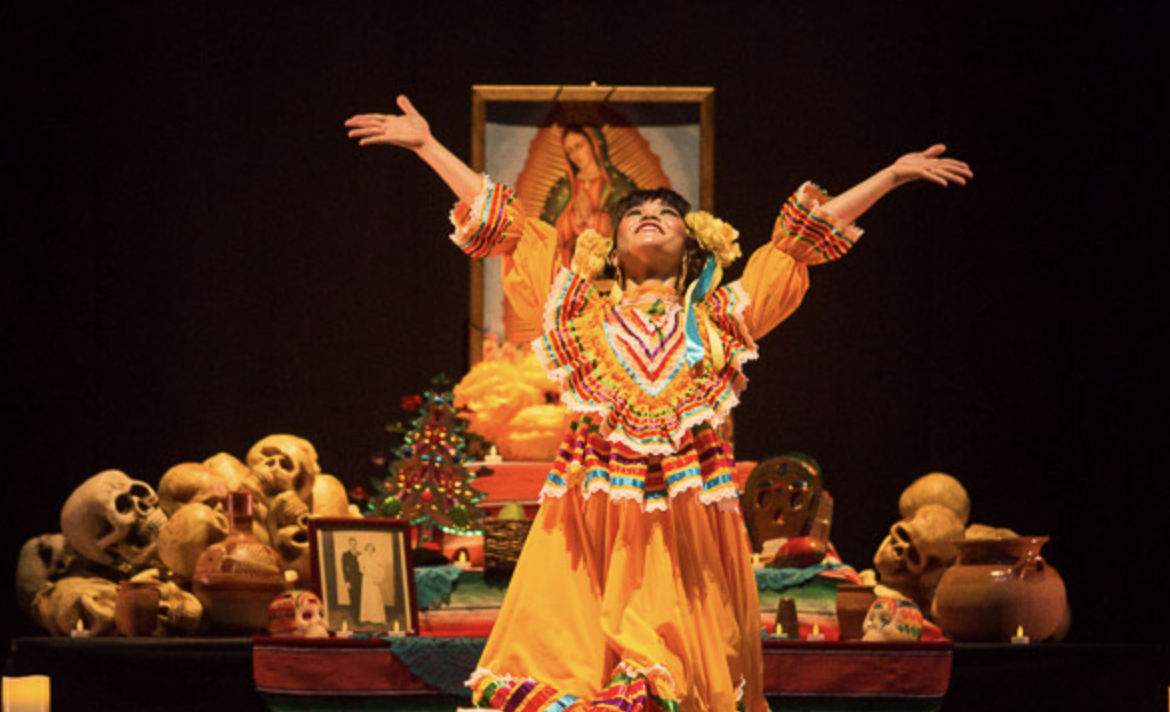 Under Lustig’s vision, he brought in “Luna Mexicana.” The production pays homage to Day of the Dead. Credit: courtesy of Dan Dion/Oakland Ballet
 Screengrab from the 2020 announcement of the cancellation of the Oakland Ballet season. Credit: Oakland Ballet’s website
September 2020
The COVID-19 pandemic forces the Oakland Ballet to cancel its season, except for an online version of “Luna Mexicana.”
April 2021
In the spring of 2021, the Oakland Ballet announced its return to the stage after the cancellation of the 2020 season due to the pandemic.
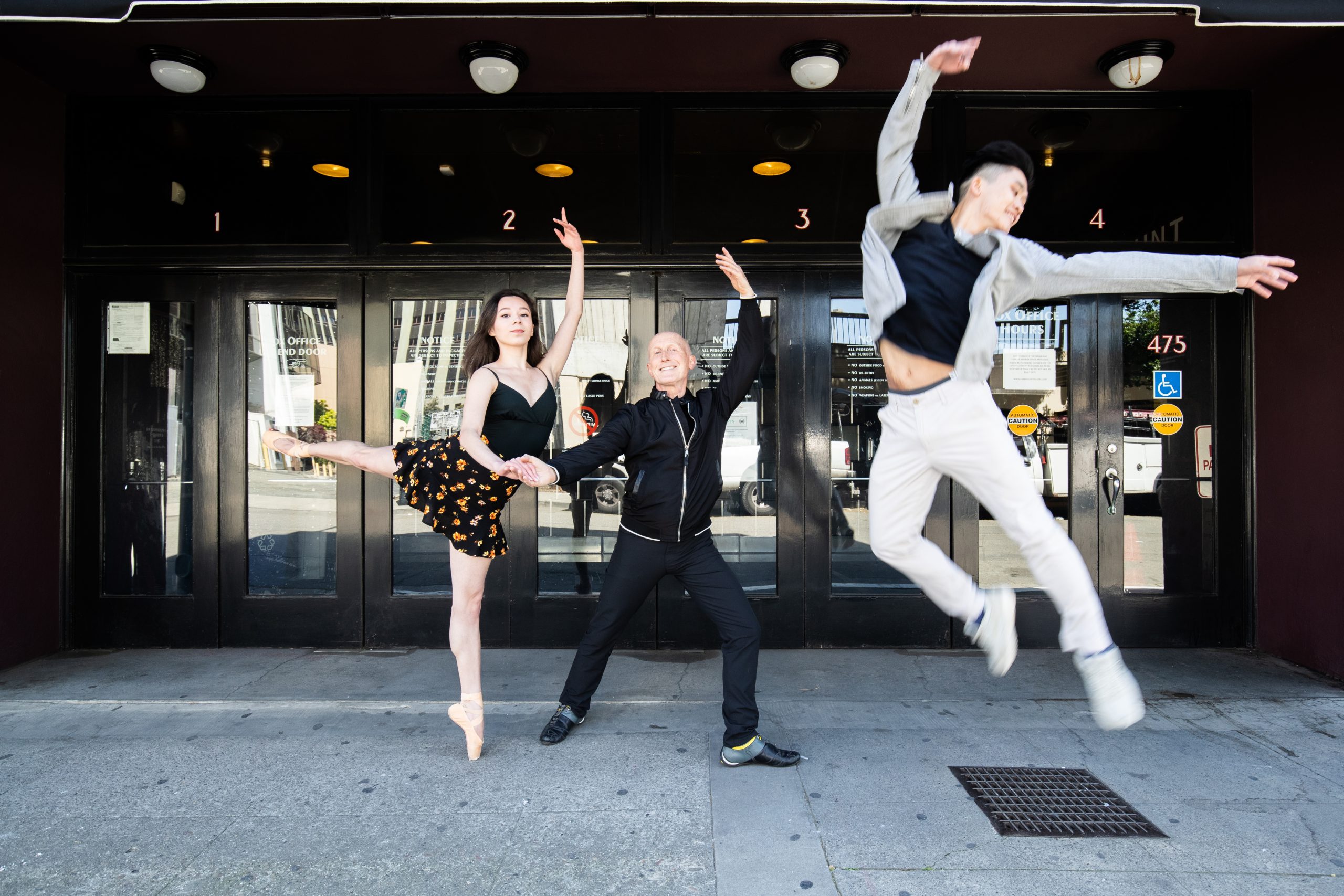 Graham Lustig (middle) with Oakland Ballet dancers Lawrence Chen (right) and Jazmine Quezada (left). Credit: Amir Aziz/The Oaklandside Credit: Amir Aziz
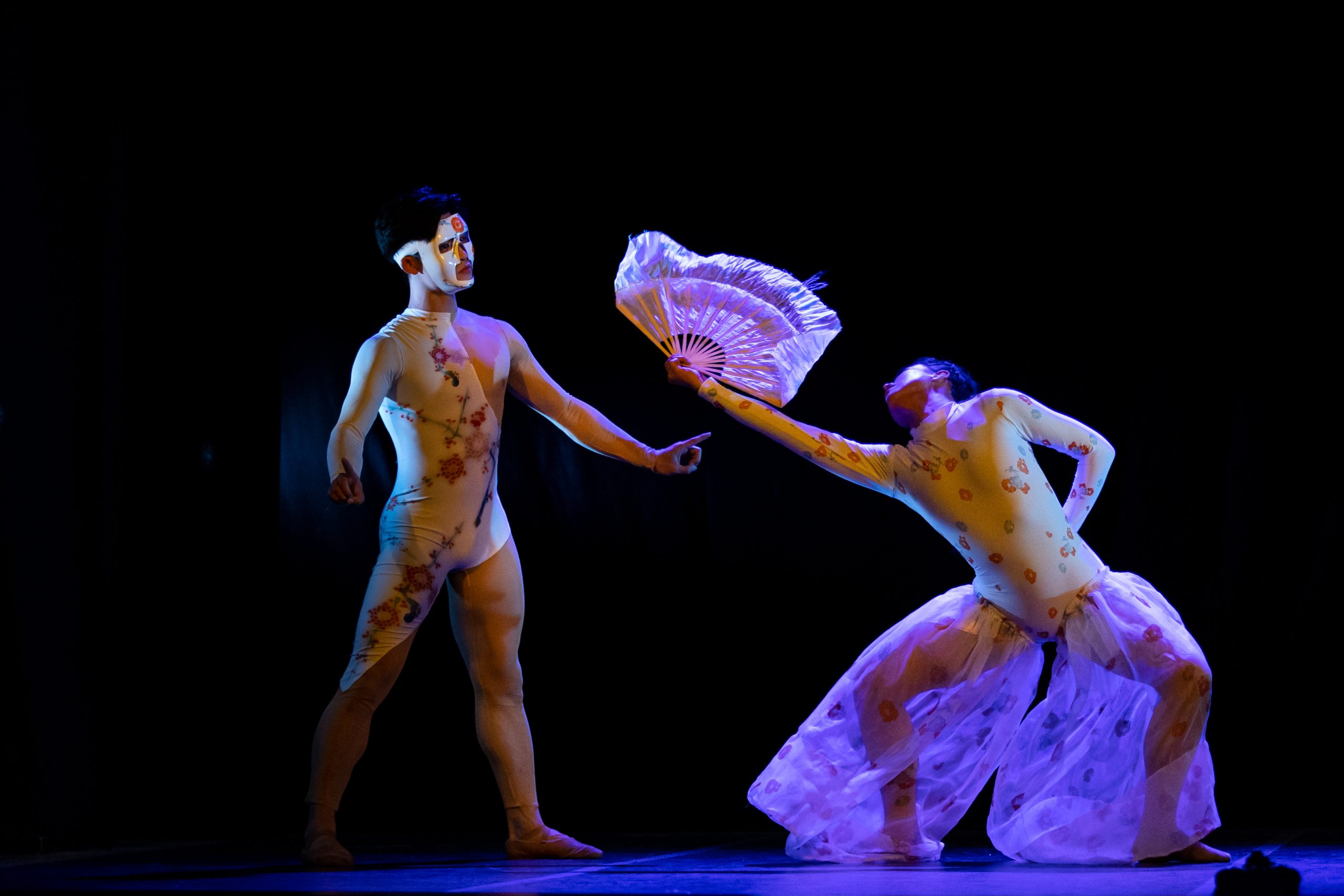 Dancers of the Oakland Ballet Company perform at the Dancing Moons Festival at the Oakland Asian Cultural Center on March 23, 2022. Credit: courtesy of the Oakland Ballet
March 2022
The company unveils its first-ever celebration of Asian American Pacific Islander choreographers
February 2024
The Oakland Ballet Legacy Project Digital Archive is launched. Judy Tyrus was a former dancer with the company from 1969 to 1977. In 2019, she founded Chroma Diverse to “help preserve, protect, and amplify dance history online.” In 2022, she began reaching out to other former dancers. Her company, Chroma Diverse, formalized a partnership through the Oakland Ballet and the Ronn Guidi Foundation for Dance to launch the archive. The website includes a digital vault with 2,730 items, 1,300 artist names, and data on over 341 productions.
 Former Oakland Ballet dancer Judy Tyrus spearheaded the Oakland Ballet Legacy Project Digital Archive
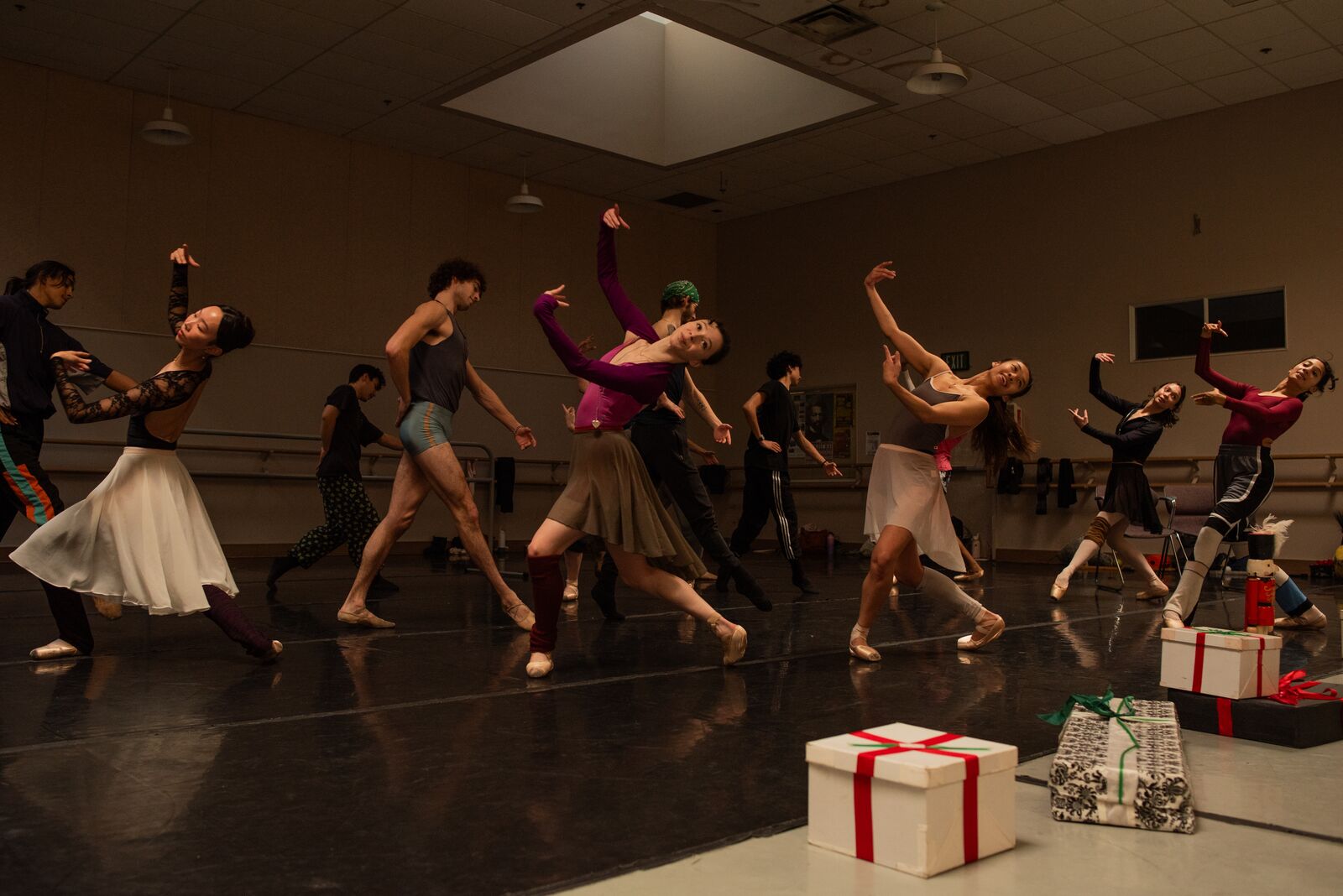 The dancers have been rehearsing five days a week for the past 28 weeks to prepare for this year’s holiday production. Credit: Ximena Natera for The Oaklandside
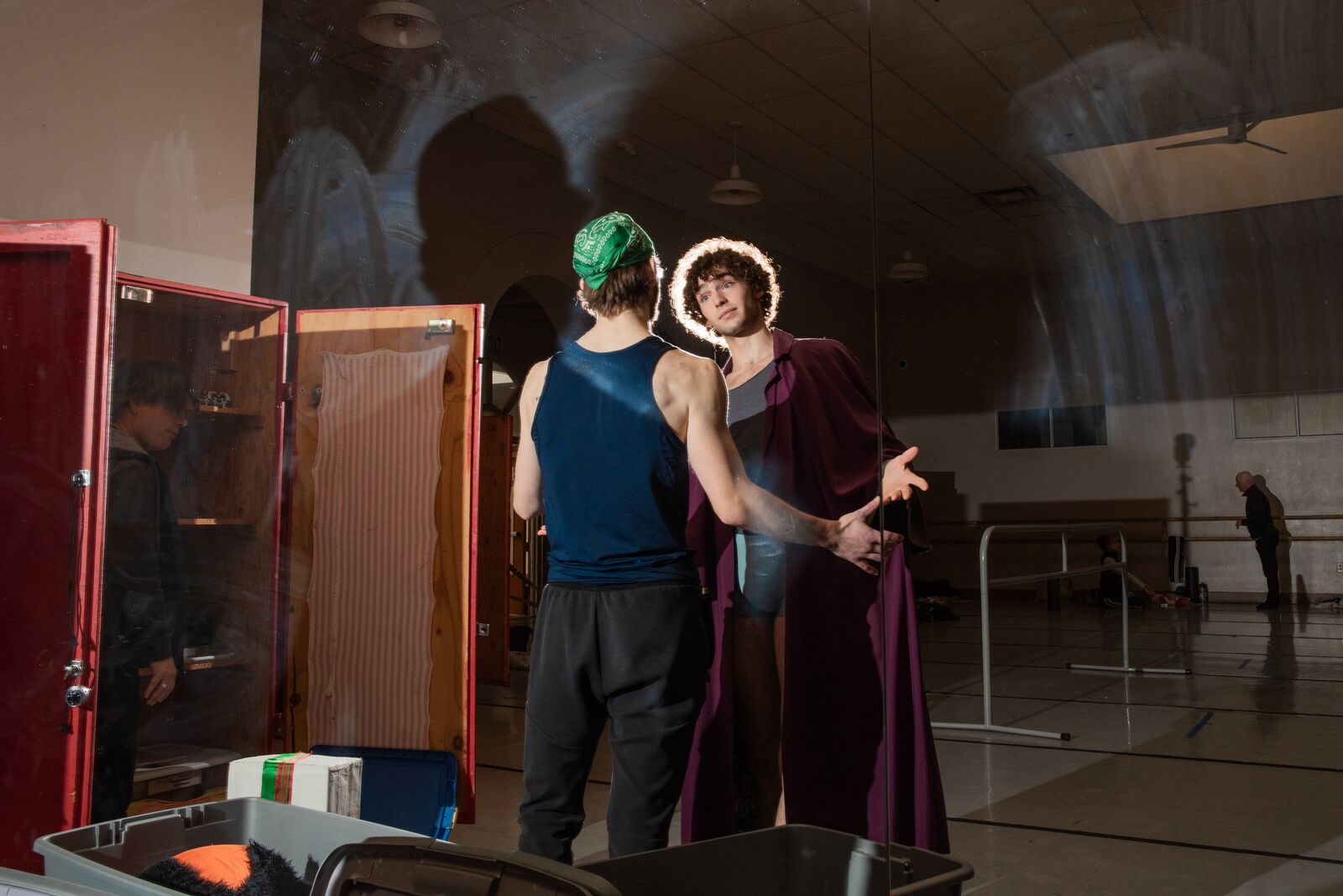 Phoenix Wilkins (right) is in his first year with the Oakland Ballet. He will perform alongside Alexander Griffith (left), and two dozen other dancers. Credit: Ximena Natera for The Oaklandside
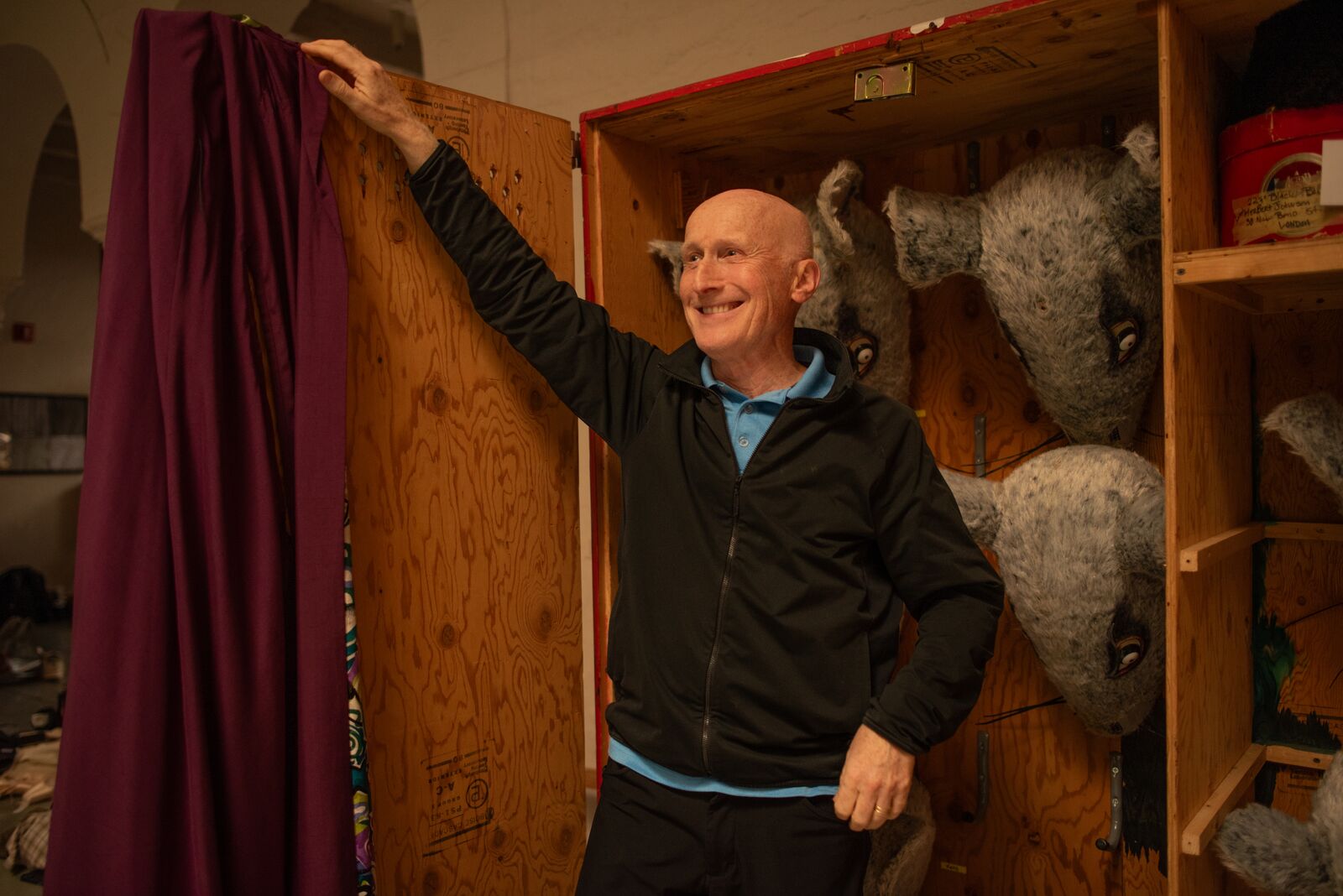 Artistic director Graham Lustig is in his 15th season leading the Oakland Ballet. Credit: Ximena Natera for The Oaklandside
2025 — a campaign to preserve the ballet’s legacy of 60 years
Lustig says he works 15 hour days in order to prepare for both “Luna Mexicana,” the show that celebrates Day of the Dead, and “The Nutcracker.” The holiday production involves 25 dancers, 50 students, a 40-piece orchestra, and a 35-piece choir.
Besides rehearsals, he has administrative responsibilities in addition to meetings with the board, donors, and sponsors. Currently, the ballet has three full-time staff: office manager Tawni Pizzagoni, assistant director Bat Abbit, and Lustig.
“I’m not trying to make it ridiculous, but it’s multi-layered, and it never seems to end,” Lustig said.
In an ideal world, he would love it if the company had a staff of five full-time employees and proper funding to hire dancers for longer than 28 weeks of the year.
In the heyday of the ballet, the company operated with a budget of about $2 million. In 2016, the budget was $740,000. In 2024, the company’s expenses were $1.19 million, while revenue was $977,000.
In the 15 years since joining the company, Lustig has seen his share of challenges beyond the decline in funding, including when he was forced to cancel the season during the height of the COVID-19 pandemic in 2020, unsure of when the dancers would be back on stage.
Despite the challenges the dance company has faced during his time, Lustig remains committed to his love for ballet and Oakland.
“What is of deep value to me is seeing the faces of the children at school watching, listening to the dancers talk, and watching them perform,” Lustig said. “That’s what I call artistic philanthropy. Where we give our art, our artistry, our love to the community. We just give it away, but it costs money to do that, and we need sponsors who say, this is vital work.”
December 2025
This weekend, 25 danseurs and ballerinas, 50 students, a 40-piece orchestra, and a 35-piece choir will be on stage at the Paramount Theatre for two performances of “Graham Lustig’s The Nutcracker.”
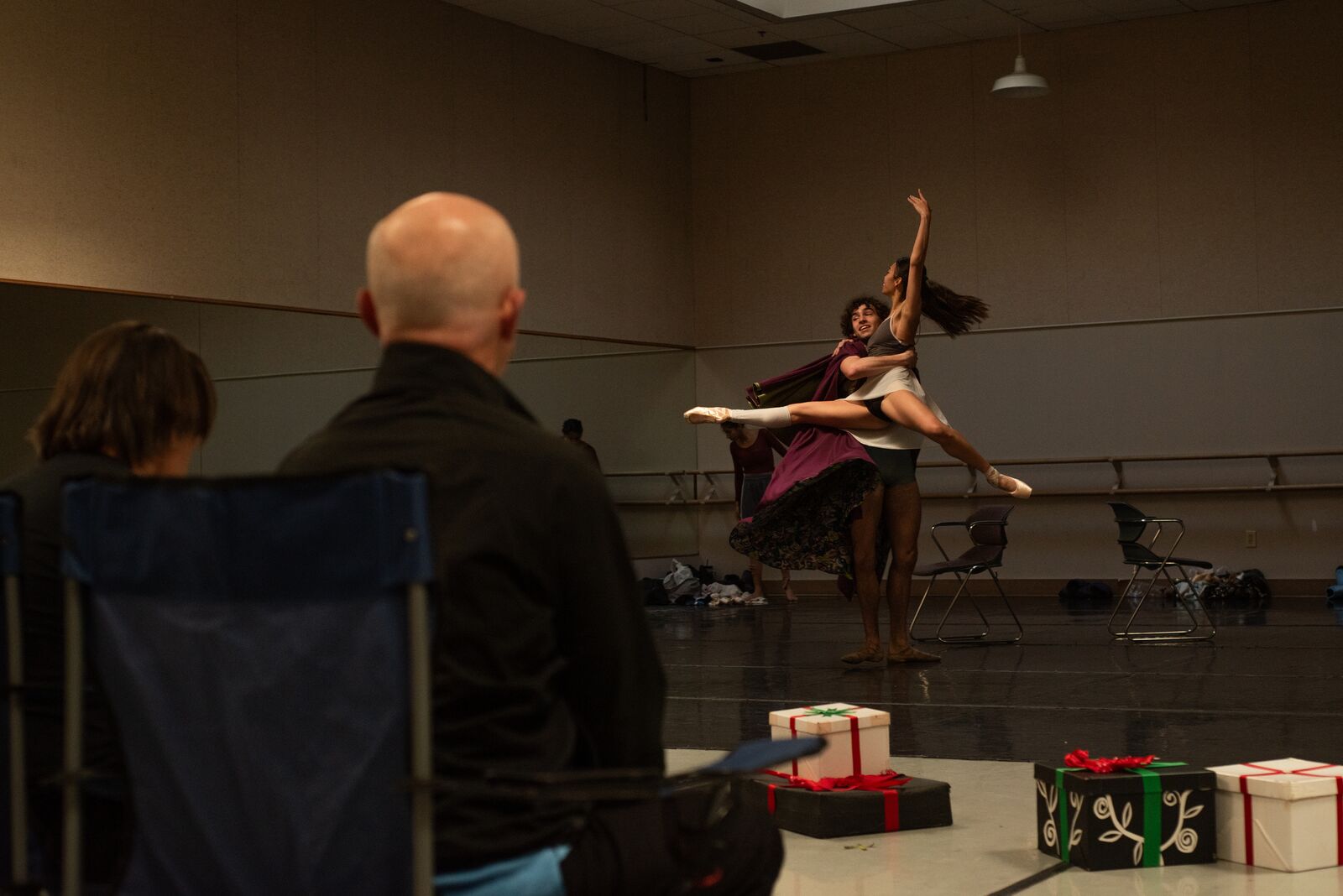 Oakland Ballet dancers rehearse for their upcoming “The Nutcracker” shows under the direction of artistic director Graham Lustig on Wednesday, Dec. 11 at the Malonga Casquelourd Center. Credit: Ximena Natera for The Oaklandside
“*” indicates required fields