
San Francisco’s long-brewing housing plan won final approval last week, but as soon as backers could pop champagne corks, a potential hangover hit the horizon.
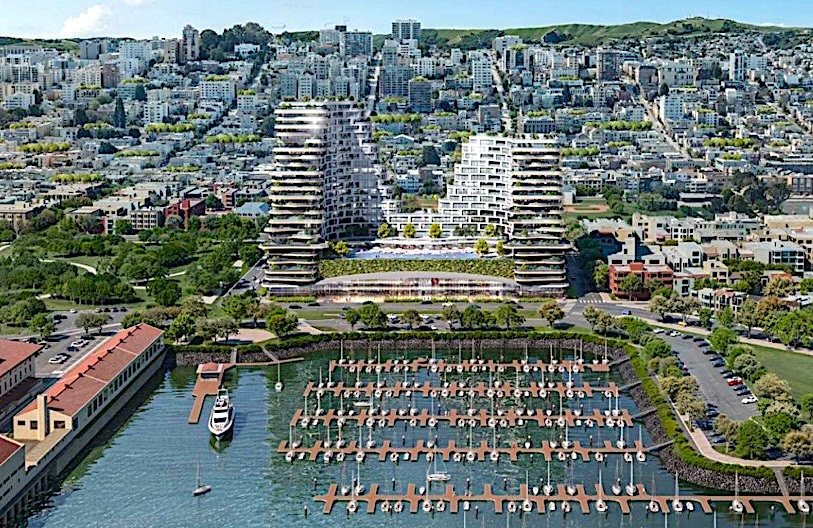
A real estate developer unveiled plans for a 25-story apartment building, piling nearly 800 homes on top of the Marina District’s famous Safeway. The proposal would expand the 60-year-old grocery store and include 86 affordable units.
The building immediately drew fire from opponents of the new zoning plan, who already feel emboldened to run political campaigns next year to fight back against taller, denser neighborhoods.
Given the political stakes, the Marina project also drew the scorn of the zoning plan’s big backers: Sup. Stephen Sherrill, who represents the neighborhood, and Mayor Daniel Lurie himself. The mayor’s office said the Family Zoning Plan, as they’ve dubbed it, would in fact make the design illegal.
Mayoral spokesperson Charles Lutvak says the developer Align Real Estate is “trying to sneak in a project before our plan takes effect” next year and calls it “a complete violation of the spirit” of the housing package. Align wasn’t immediately available for comment.
Anti-density folks say they’ve gained momentum from the Joel Engardio recall, even though it was primarily fueled by the Great Highway closure. But the drawings of the Marina building — quite tall, indeed, as well as bright white with sleek curves and distinctive U-shaped profile, like an alien cruise ship — serve as a notable moment as observers try to gauge, absent any polling, how hot the housing issue really is.
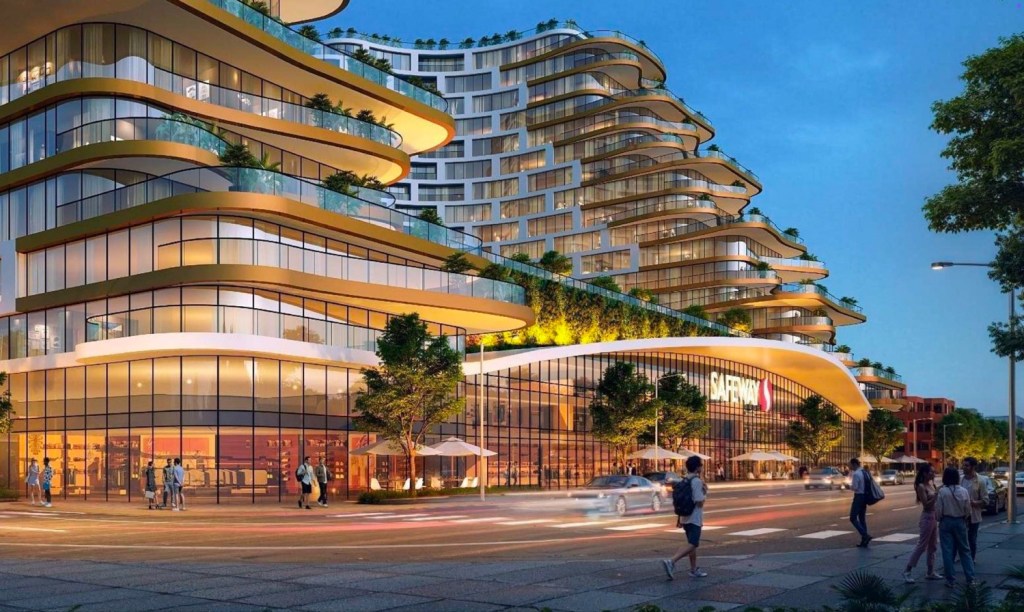 A street level view, via the architect’s rendering, of 15 Marina Blvd. The mayor’s office says they’ll do everything they can to block the proposal. (Arquitectonica)
“The problem with housing fights in San Francisco is it’s all speculative,” political consultant Jim Ross tells The Frisc. “But if they start proposing more towers like this,” the hypothetical becomes more real.
If SF residents, like many local politicians, have tipped over to believing in the benefits of a denser city, the “more real” of more homes might mean the Engardio recall momentum would stop at the boundaries of the Sunset District.
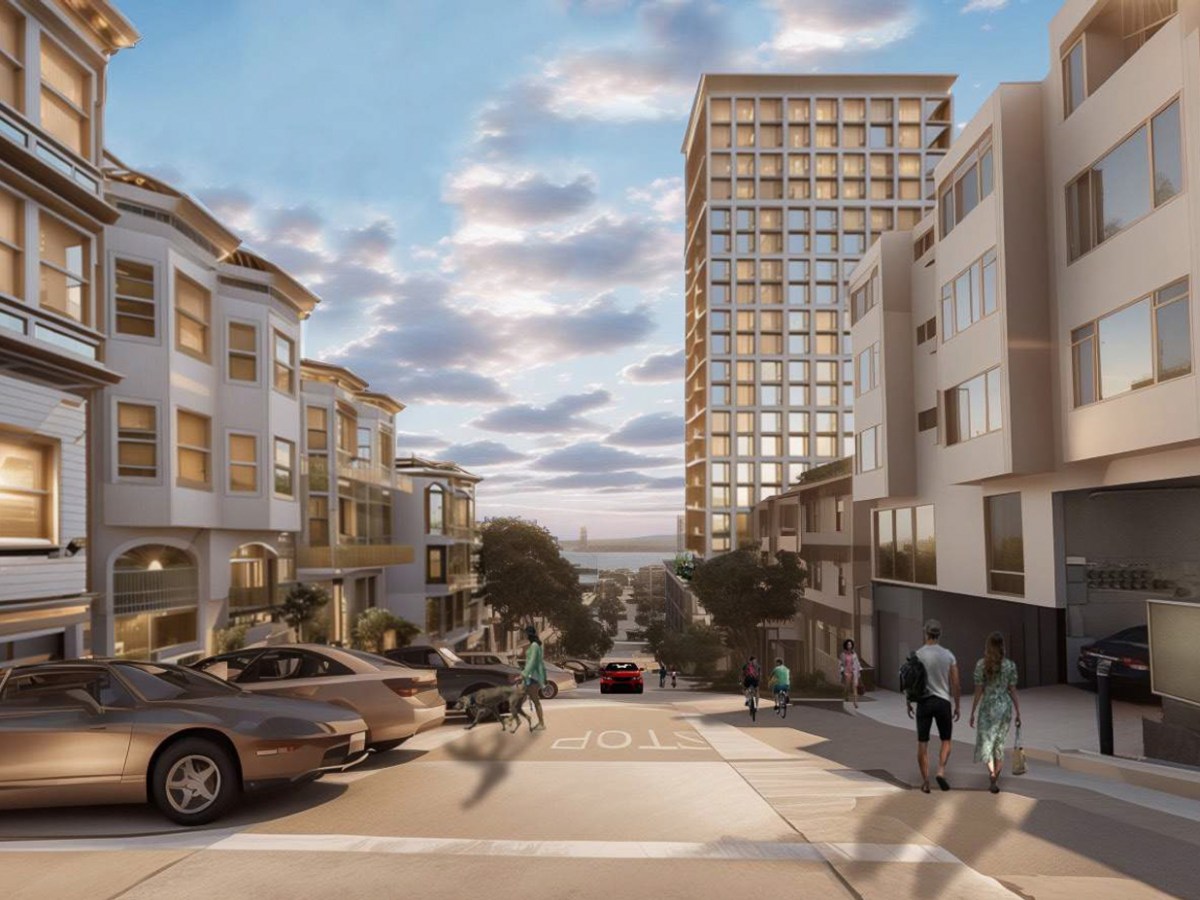
But if fear of towers is a hard habit to break, Lurie’s board allies, including Sherrill, could face tough elections in 2026. The board could even tip back to an anti-density majority in 2027. And if that happens, the Marina project’s resemblance to an iceberg will start to feel ominous.
That’s because the city will likely have to revisit its housing plan in 2027, thanks to a small clause in the governing documents. Some people call it a circuit breaker. (Some people call it a dirty bomb.) And because SF construction is a relative trickle these days, the clause is likely to set off new housing fights similar to the one we just finished.
Winter 2027 is coming
When San Francisco first crafted its housing blueprint — the Family Zoning Plan was just one part — state regulators said its development projections were too optimistic. They forced SF lawmakers to add a provision known as the circuit breaker.
The rule gave SF four years, from Jan. 2023 to Jan. 2027, to issue building permits for at least 29,049 new housing units. Coming up short could trigger a zoning do-over to encourage more development.
The clause doesn’t say precisely what the city must do, only that it will constitute “additional rezoning” and “additional constraints reduction.” In other words, everything that just got Lurie’s signature would just be the starting point.
The current pace of incoming permits would not lead us to where we need to be.
SFPlanning Director Sarah Dennis Phillips
The clause does give a target to shoot for: Whatever the gap between the actual permit count and the 29,000-plus goal, the city must create room for that many homes, plus another 15 percent.
Ultimately, state regulators would decide if this new new housing plan fulfills those goals.
And the time is coming: Of those 29,000 permits, SF delivered about 4,000 in 2023 and 2024, with about 4,000 more likely in 2025. It will need more than 20,000 new permits in 2026 to avoid tripping the circuit breaker.
“As of now, the current pace of incoming permits would not lead us to where we need to be,” Planning Director Sarah Dennis Phillips tells The Frisc. “Our planners have been working hard, but we can only move forward what is in front of us.”
Dennis-Phillips adds that they’re hoping more projects in the housing pipeline move towards the permit stage.
Planning has not identified which neighborhoods and streets might be in play if the circuit breaker demands a new round of upzoning. But the same “priority equity” neighborhoods, such as Chinatown, the Tenderloin, and the Mission, will remain off-limits, says Dennis Phillips.
Here’s where next year’s political maneuvers come in: the Board of Supervisors must approve new zoning plans.
If SF lawmakers vote no, the city risks state fines and other penalties, including the Builder’s Remedy, just like it did if the Family Zoning Plan hadn’t passed.
Do the supervisor math
The Family Zoning Plan passed by a 7 to 4 margin. Five of the “yes” votes represent districts with elections next year. Only one of the “nays,” Sup. Shamann Walton, comes from a district on the 2026 ballot. (Walton is termed out.)
So if two of Lurie’s allies are replaced by upzoning opponents, and if the anti-density faction holds onto Walton’s seat, the new board that convenes in 2027 could be a slight anti-density majority.
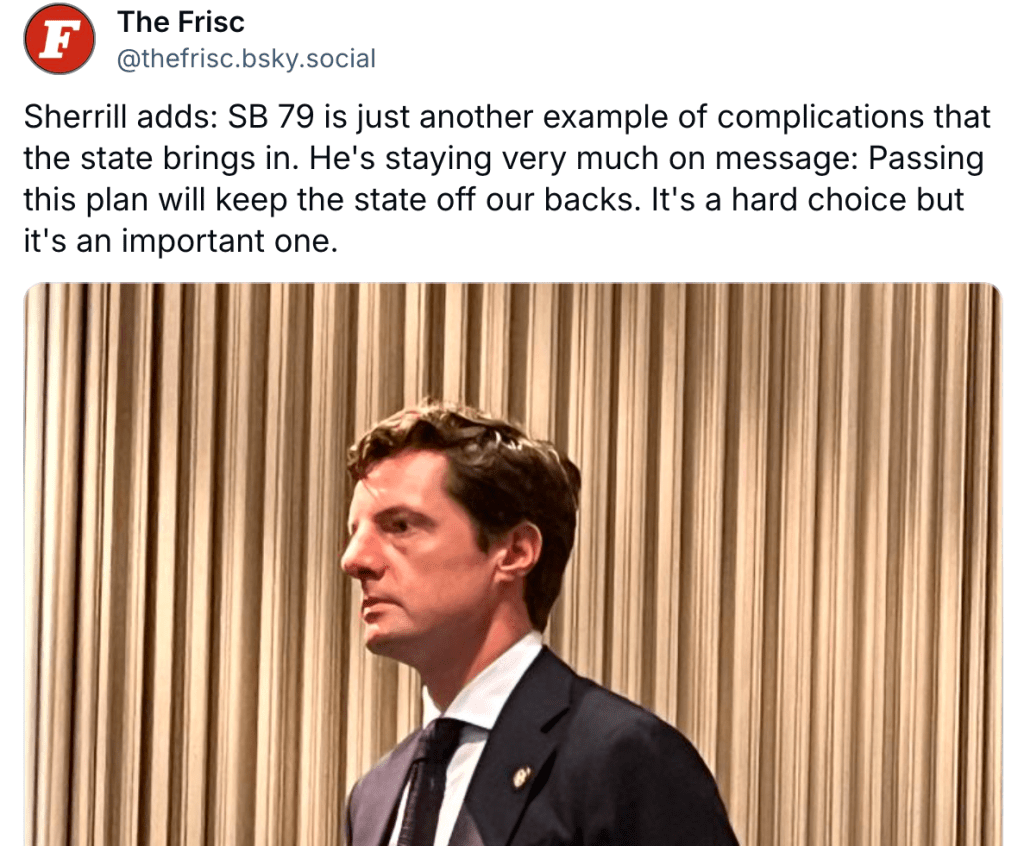 At an October town hall, Sup. Stephen Sherrill defended the Family Zoning Plan as a way to keep local housing control. Sherrill is facing a challenge next year over his support for the plan.
“They have staked out a politically popular position that they can use to hammer Lurie and his allies,” says San Francisco State University political scientist Jason McDaniel.
Board President Rafael Mandelman (District 8) is termed out next year. Sherrill (District 2) is already facing a challenge from a staunch Family Zoning Plan opponent, Lori Brooke. Perhaps most closely watched will be the ever-volatile District 4, which has already seen the Engardio recall and his replacement, Beya Alcaraz, last one embarrassing week in office.
Lurie then turned to Alan Wong, who must first run in a June special election to make it through to November’s contest. Opponents will try to use his Family Zoning Plan “aye” vote — his first major act in office — against him.
“I thought it was an insensitive vote,” Sunset business owner Albert Chow told The Frisc one day before Chow announced plans to run against Wong. Longtime Walton aide Natalie Gee is running as well and tells The Frisc the city should be willing to defy the state even when threatened with penalties.
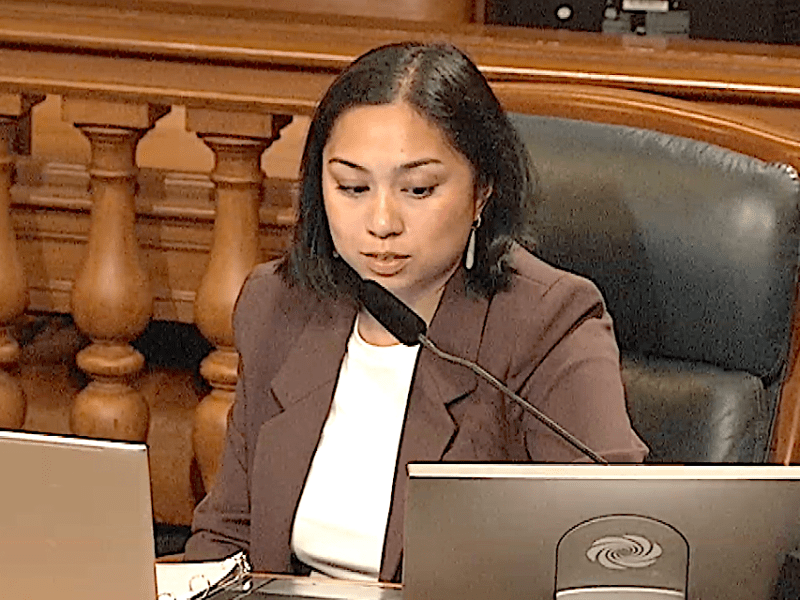
Wong tells The Frisc he stands by his vote: “It’s my duty to make tough, practical, and responsible decisions.”
The board’s biggest Family Zoning Plan champion is Sup. Myrna Melgar, who shepherded it through her key Land Use Committee. Melgar’s term runs through 2028, but zoning opponents are threatening to mount a recall. Melgar has brushed off the threats.
With so many variables in play, it’s plausible a new board will be quite hostile to the idea of more upzoning, even if faced with Sacramento’s ire, which means 2027 could make for a housing staredown between the city and state. Just weeks after the new board members are seated in Jan. 2027, the circuit breaker deadline will arrive.
Threats from allies too
District 2 challenger Brooke has surprised no one by threatening a lawsuit against the Family Zoning Plan via her group Neighborhoods United, according to a letter the group’s lawyers sent to the supervisors.
More surprising is a legal threat from a fervently pro-housing group, the California Housing Defense Fund. It usually makes headlines for suing NIMBY-aligned cities for dragging their feet on new housing. But the fund also says the Family Zoning Plan doesn’t go far enough, despite raising height limits and encouraging more density in SF neighborhoods that rarely catch a whiff of a construction site.
Executive director Dylan Casey tells The Frisc they’ll file a lawsuit after the plan hits its state deadline at the end of January.
Critics got a boost in October from SF chief economist Ted Egan, who projected that the new housing map, in the rosier of two scenarios, would only produce about a third of what planners have hoped for.
Egan did nevertheless encourage the city to vote the plan through. Even his guarded math predicted thousands of new homes and lower housing prices for the average San Franciscan.
But those savings would amount to only a few hundred dollars and would take decades to appear. “The biggest savings would be in 2045,” Egan told The Frisc. That leaves the plan exposed to criticism from the YIMBY flank, and possibly even litigation.
As for the Marina Safeway site, the mayor’s office tells The Frisc they plan to use “every lever” available to block the proposal. That’d be one less thing to worry about going into the election year. There’s already plenty to go around.
More from The Frisc…