
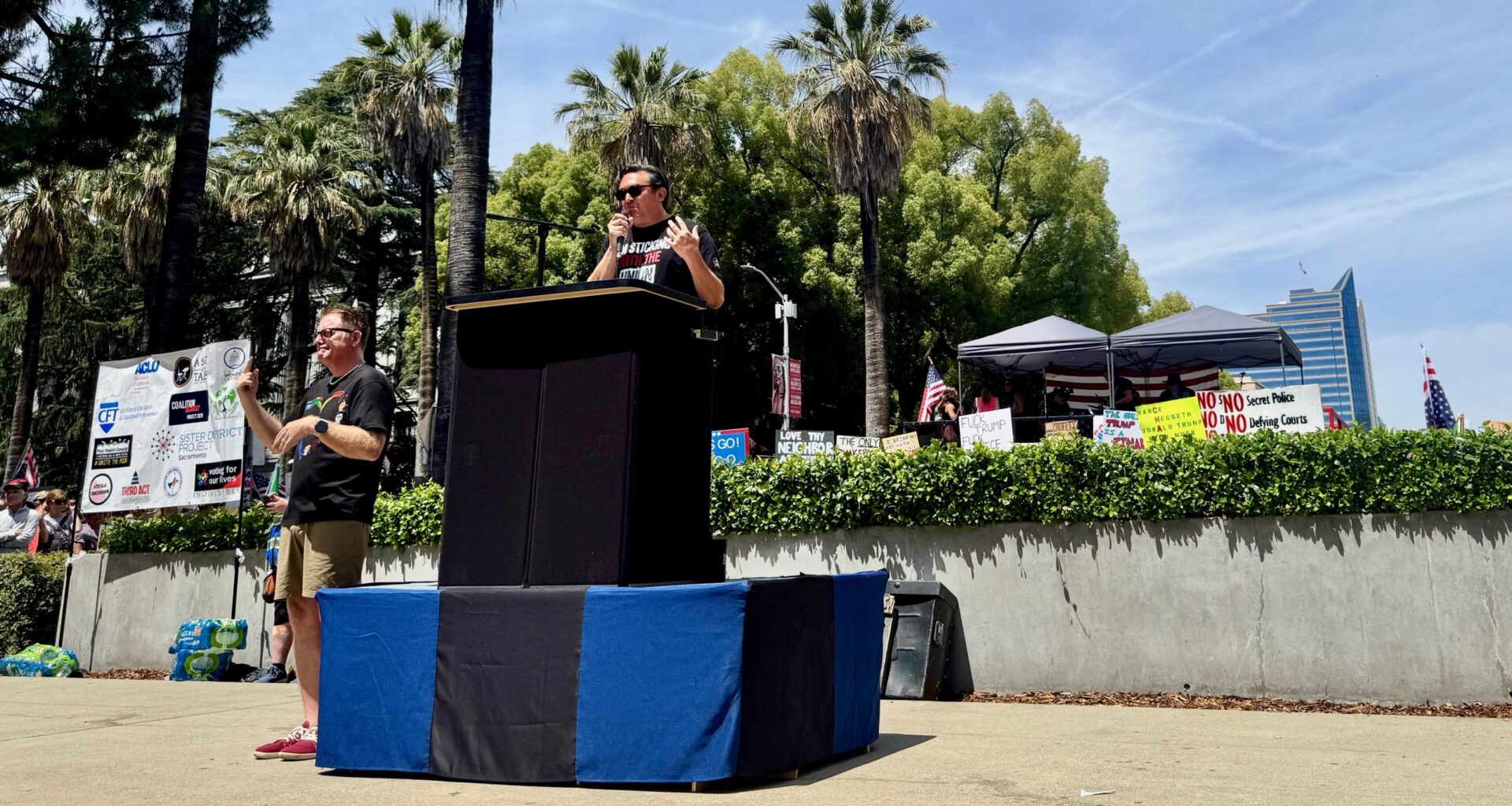
When I heard Sacramento Central Labor Council Executive Director Fabrizio Sasso speak at the first No Kings Rally, his remarks stood out immediately. He offered a clear, working-class analysis of how corporate power has reshaped American politics over the past half-century. And judging by the crowd that day, his perspective resonated deeply with many—but also irritated others, especially those uneasy with criticizing the Democratic Party at a moment when it is already wrestling with internal divisions.
That mix of reactions suggested his framework was worth exploring more closely, particularly for readers trying to understand why so many working people feel politically abandoned—and why so many Democrats are rethinking what the party stands for.
Sasso has led the Sacramento Central Labor Council since 2015. The council, the regional body of the AFL-CIO, represents more than 175 unions and roughly 170,000 workers across the region. Its role is to coordinate political action, support organizing drives, develop worker leadership, and serve as a central voice for labor on economic and community issues. Under Sasso’s leadership, the council has become known for its direct engagement with voters, its focus on working-class issues, and its willingness to critique both major parties.
Our conversation ranged from the 50-year corporate strategy to weaken worker power, to the rise of Democratic moderates, to the deliberate construction of culture wars—and what it will take to rebuild a broad working-class movement. What follows is a condensed Q&A.
SN&R: You’ve said corporate capitalism has spent 50 years tearing down American democracy piece by piece. If you had to point to the most blatant examples—especially how they’ve weakened working people—what would they be?
Fabrizio: Yeah, so, over the last 50 years what you really see is corporate capitalists trying to take power away from working people and concentrate it among themselves at the very top. And this wasn’t accidental. It was strategic.
A lot of it started with attacking the labor movement. The whole push for “right-to-work,” especially in the Southern states, was designed to deny working people a voice on the job. That started to proliferate around the ’60s and it continues today, even though we’ve had some wins and even reversed it in one case.
There came a moment when the business class—the capitalist class—realized they were losing ground. And once they recognized that, they really began strategizing on how to seize power back into their own hands. They did that through a couple of major things.
The first is the Powell Memo. Louis Powell, a corporate attorney who later got appointed to the Supreme Court, wrote this private memo that basically laid out a strategy for how the capitalist class should take control of society. It’s the framework for what we see now.
Then that memo sort of paved the way for groups funded by the Koch brothers to use social issues to divide the working class. If you divide us, we’re not paying attention to the bigger economic plan they’re implementing.
Another part of that strategy was looking for ways to privatize what was once public. You see this especially in the public sector—public goods and services turned into profit centers.
And then in the ’70s, you get the Trilateral Commission pushing neoliberalism and expanded global markets. A lot of industries leave the United States in search of cheaper, more exploitable labor overseas. So you have industries failing here at home but thriving elsewhere. And the wealthy really start making gains from that.
Other major moments include Citizens United, which basically lets corporations and the rich buy elections, and the monetizing of basic human needs—healthcare, housing—turning them into profit-driven investments.
People feel this every day. It’s not theoretical. It’s their rent. It’s their medical bill. It’s their paycheck staying flat.
SN&R: So, here’s my recap: Roosevelt and the post–World War II era lift people up, unions expand, the middle class grows. Then Powell and others say, “There’s too much democracy,” and we get a coordinated backlash. Can you give me a shorter summary of that shift?
Fabrizio: Yeah. For over 50 years, the gains made under Roosevelt—the gains that helped working-class people rise out of poverty—were seen as a threat to the capitalist elite. So they attacked unions. They attacked civil rights movements. They privatized public goods. They allowed more and more money into politics, which is basically seizing democracy itself.
So, this is a coordinated attack that gained traction in the ’70s with the Powell Memo and the Trilateral Commission paper, and it’s been the playbook ever since—through Reagan, and then even adopted by Democrats like Bill Clinton in the ’90s.
SN&R: You’ve said the moderates—the “mods”—didn’t just fail working people; they helped the far right consolidate power. What decisions by the moderates caused the most harm?
Fabrizio: Yeah, so when I say “mods,” I mean moderate Democrats who’ve embraced today’s economic status quo. On social issues, a lot of them look like traditional social democrats—they support choice, civil rights, LGBTQ rights. But their economic ideology is very similar to the right’s. And that’s a problem.
I always say you can’t have social justice without economic justice. If your economic model is still the right-wing model, you’re undermining the very social justice you say you support.
So what have the mods done? They take corporate PAC money. That limits what they can say about the economic pain people are experiencing because they don’t want to challenge their donors.
They support privatizing what was once public—education, parts of public safety—echoing the right-wing narrative that government can’t do anything right. Democrats should be defenders of good governance. Instead, many have surrendered that ground.
They also lower expectations. They tell working-class people to “be realistic” about wage gains while giving subsidies and tax breaks to the very wealthy. You see it at the local level: private developers get tens of millions in tax subsidies, and nobody demands high-wage jobs or strong community benefits in return.
So yeah, the mods adopted big pieces of the corporate playbook. Once campaigns became more expensive—especially after Citizens United—they chased big donors. And that has starved government of the revenue it needs to function.
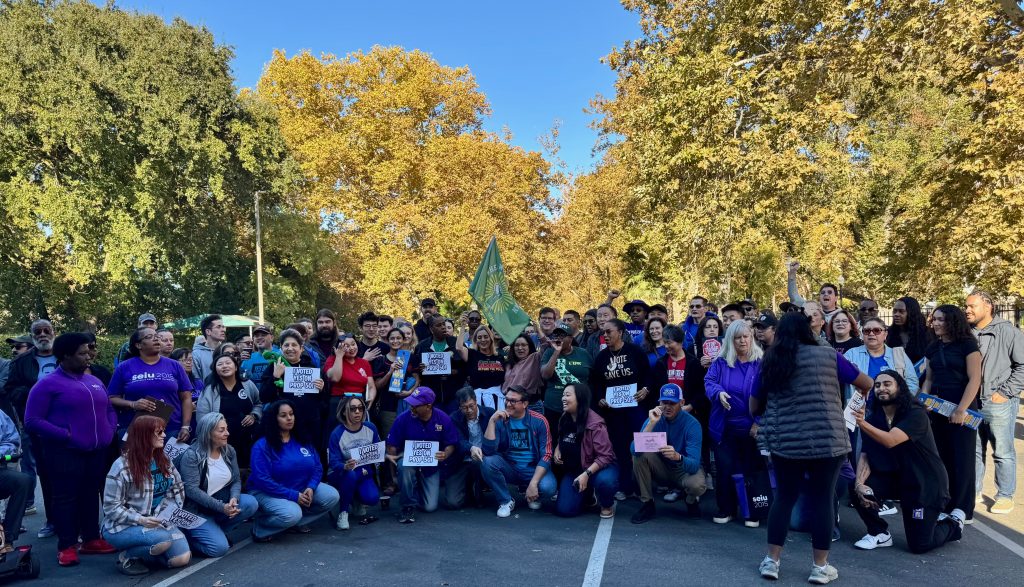 Courtesy photograph
SN&R: You’ve argued the culture wars weren’t organic—they were designed. Who designed them, and what has the working class lost while the country turns against itself?
Fabrizio: They were engineered by the same folks who worked for decades to weaken worker power. Think tanks, billionaires, political operatives funded by the business class—the Koch network in particular.
They knew productivity was rising, but wages weren’t. They knew people were getting squeezed. So they needed a way to channel people’s frustration away from the people actually benefiting from this system.
So they weaponized guns, abortion, immigration, LGBTQ rights—anything that would divide working people. All of that is intentional. And it distracts people from the fact that productivity kept going up while wages basically flatlined.
They starved communities, then told people to blame immigrants or “welfare queens.” That wasn’t accidental either.
Meanwhile, you’ve got billionaires on one side and homeless encampments on the other. You hear about government shutdowns and tax cuts for the rich while healthcare premiums go up for everyone else. People notice. They’re starting to connect the dots. Now they just need to connect them all the way up to the people at the very top.
And the whole “socialism” thing—they say it’s bad when it applies to helping working people, but when it applies to corporations or the rich, somehow that’s just normal. Look at the financial crisis. Wall Street got bailed out. Regular people got sold out. It’s a slogan because it’s true.
SN&R: You’ve said Trump is a symptom, not the disease. If the system doesn’t change, what comes next?
Fabrizio: Yeah, so that’s the scary part. We could follow Trump with another moderate Democrat who keeps the status quo. Someone who doesn’t make the deep economic changes we need. If that happens, then yeah—you’re going to see another Trump. Maybe smoother. Maybe more dangerous.
We could end up with a permanent oligarchy—government run by billionaires and for billionaires. More criminalizing dissent. More rollback of basic rights. A democracy that only exists on paper.
The other scenario is a big shift back to our core values—taking care of people, lifting everyone up. But that requires a movement. We are in a democracy crisis. And democracies don’t survive unless people push back.
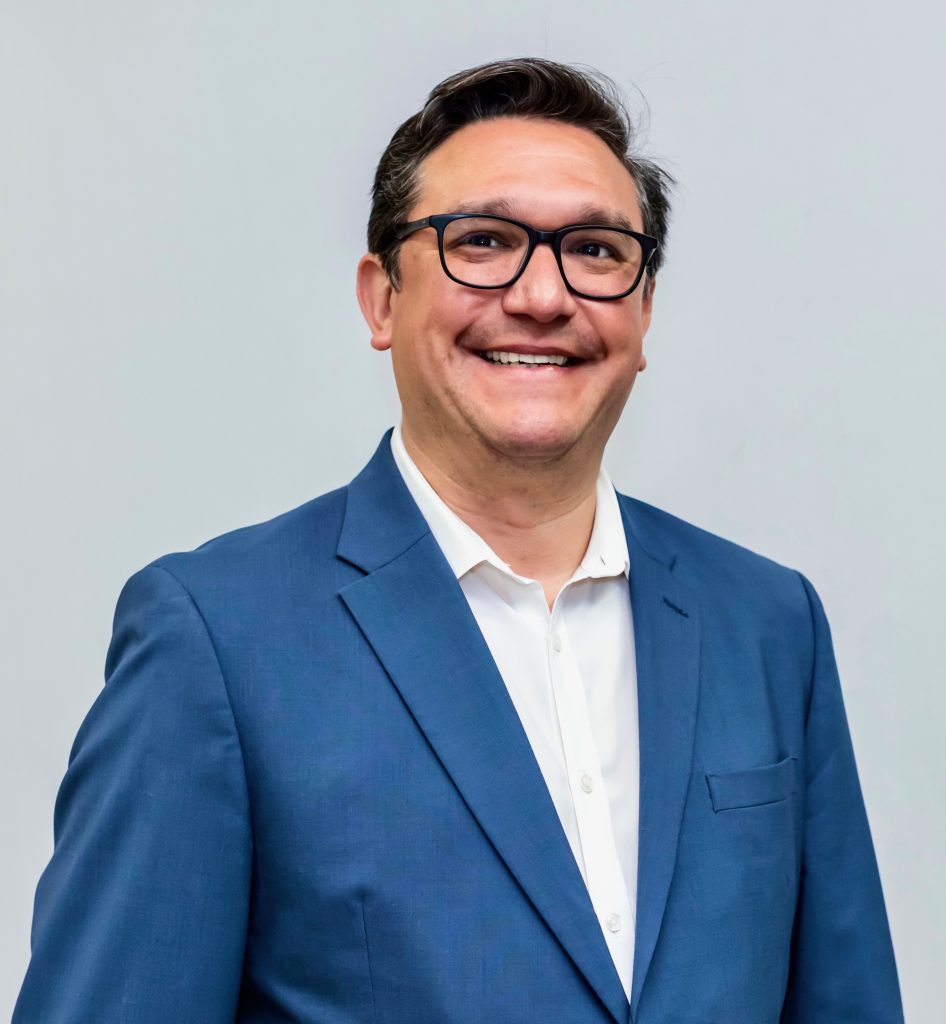 Fabrizio Sasso. Courtesy photo
SN&R: You’ve talked about a “50/51” strategy—showing up everywhere, not just safe districts. What does that look like on the ground?
Fabrizio: Yeah, so the 50/51 strategy—here’s how I see it. If people show up to a rally, they’re probably ready to take the next step. And what matters is: what do they do after the rally?
At the labor council, we knock on doors. We have conversations. Not just around elections but around issues—healthcare, housing, wages. We ask people, “How are you doing? What’s keeping you up at night?”
And when you talk to Trump voters? Most of them aren’t extremists. They’re just not seeing hope from either party.
Real power comes from workers being organized—union or not—and being willing to withhold their labor when needed. The economy still runs on our work. And if we ever use that leverage at scale, the people at the top feel it.
California’s ahead, but we need other states building long-term strategies too. Mods have money. But we have people—if they wake up and decide to act.
SN&R: You’ve organized outside California. What did you learn from those experiences?
Fabrizio: You learn we have a lot more in common than people think. People in red states want the same things as people here: wages that keep up, housing they can afford, healthcare that doesn’t put them into debt.
There’s this stereotype of the Trump voter, but honestly, a lot of them just don’t see hope coming from either party. They feel abandoned.
And when you talk to them, the issues always come back to economics. Guns, abortion, immigration—they’re there, but underneath those things is economic stress.
We beat right-to-work in Missouri because we talked to people, we listened, and we helped them connect the dots.
Anyone can be an organizer if they’re willing to listen.
SN&R: For people in Sacramento who want to take action right now, what’s the most important thing they can do?
Fabrizio: If you care about your paycheck and your quality of life, the labor movement is a natural place to plug in. We organize around economic issues, but we also partner with immigrant-rights groups, housing groups, civil rights groups.
NorCal Resist is great for immigrant-rights work—ICE watch, know-your-rights trainings. ACCE does a lot around housing and tenant protections. They all need more people.
And look, you don’t need a perfect plan. Just take one step. Show up. Volunteer. Talk to your coworkers. That’s when things start shifting—when working people stop believing they’re alone.