
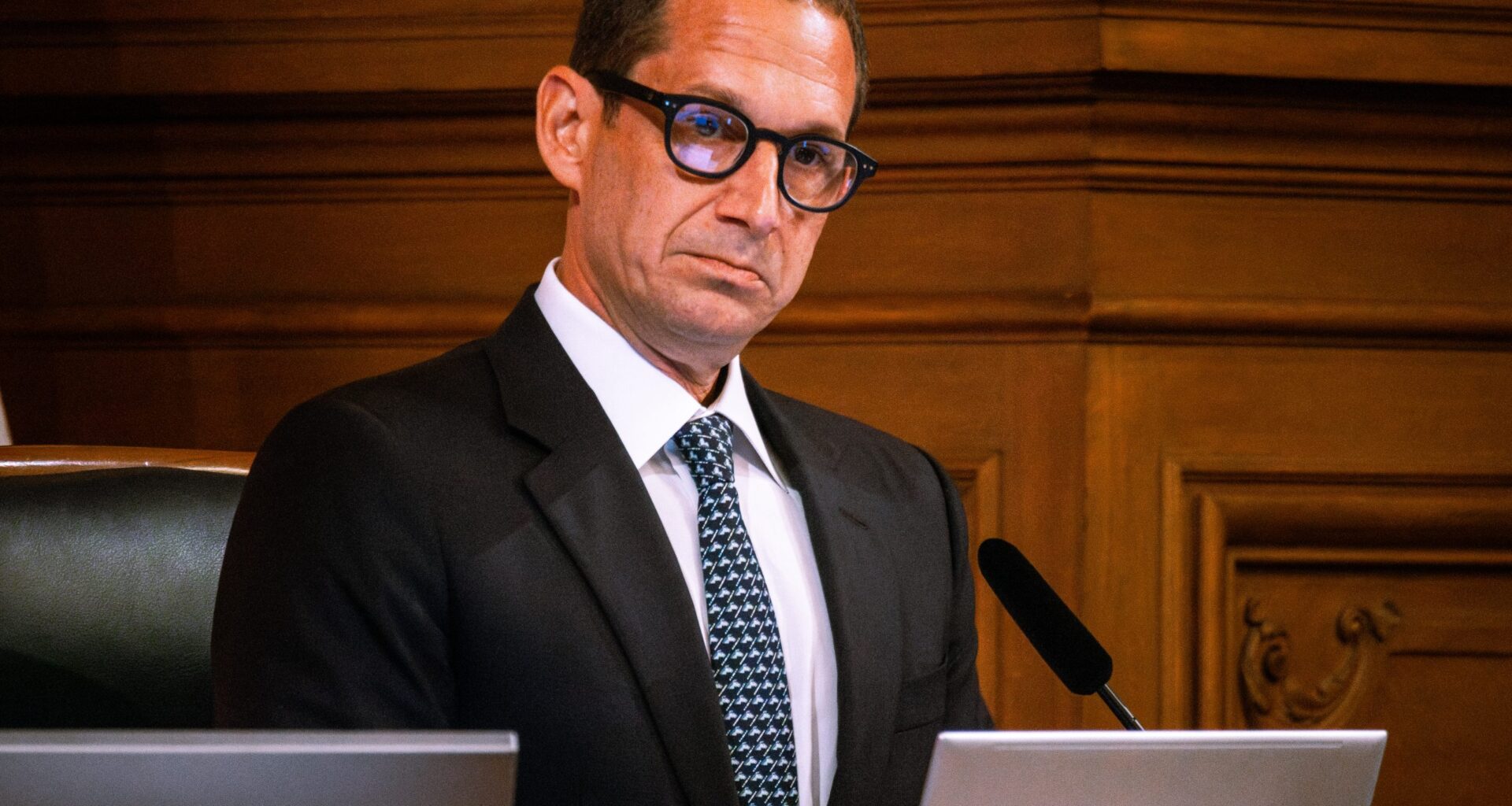
Mayor Daniel Lurie’s office has violated California public-records law by refusing to release information about the mayor’s October call with President Donald Trump, a committee of city public-records commissioners ruled on Tuesday. The pivotal conversation between the two men preceded the president cancelling a planned “surge” of immigration agents to the Bay Area.
A three-person committee of the city’s Sunshine Ordinance Task Force, the body responsible for compliance with the city’s public-records law, said Tuesday that Lurie’s office had broken the California Public Records Act by claiming records related to the Oct. 22 call, including any logs, transcripts, and notes, are exempt under “attorney-client privilege.”
While it was possible that some records related to the call were exempt, the committee concluded, it was unlikely that all of them were.
The committee ruled unanimously that the mayor’s office applied “inappropriate standards for withholding privileged documents,” said Dean Schmidt, an attorney and chair of the Sunshine Task Force. It recommended that the full task force take up the issue and order Lurie to “produce all non-privileged documents” related to the phone call.
Lurie and Trump spoke on the phone the evening of Wednesday, Oct. 22, after a coterie of billionaires reportedly facilitated a detente when Trump promised a Bay Area-wide immigration enforcement blitz.
Though the content of the call was widely reported, the sources of information for that reporting have been people within the mayor’s office. Supervisor Jackie Fielder and others have publicly expressed concern that not everything discussed between Lurie and Trump has been disclosed.
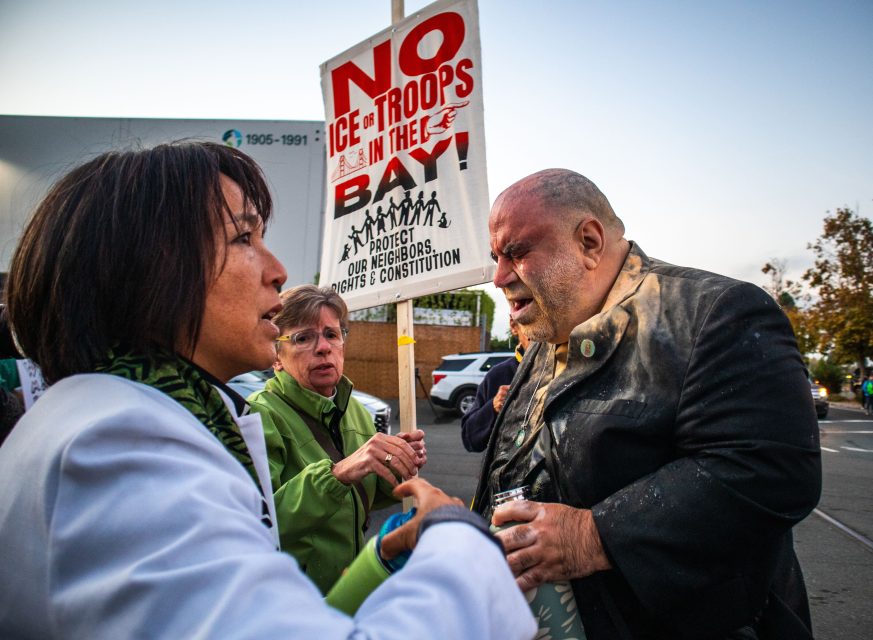 Rev. Jorge Bautista outside Coast Guard Island in Oakland after he was shot by a chemical weapon on Oct. 23, 2025. Photo by Mariana Garcia
Lurie has said no deals were struck with the White House. But it remains unclear why San Francisco has been the only city to get a reprieve after a Trump order to send in immigration agents and the National Guard.
The committee’s ruling came in response to a complaint lodged against Lurie on Oct. 29 by Hazel Williams, a community organizer and frequent filer of public-records requests.
Five days before filing the complaint and just two days after Lurie’s call, Williams had asked for “all records related to the mayor’s phone call with the President this week and the decision to call off the federal deployment to San Francisco.”
Williams’ public-records request was broad. It sought “phone-call records” like audio recordings and transcripts, emails, text messages, “records of the planned federal deployment,” “documentation of the decision to call off the deployment,” and “any agreements or understanding” related to the call.
Under California law, communiques like those between Lurie and Trump are generally considered public records. They can be obtained by anyone seeking them.
But Lurie’s office fought Williams’ request. It claimed on Oct. 29 that the records sought were protected from disclosure under attorney-client privilege because city lawyers were “included” in the documents.
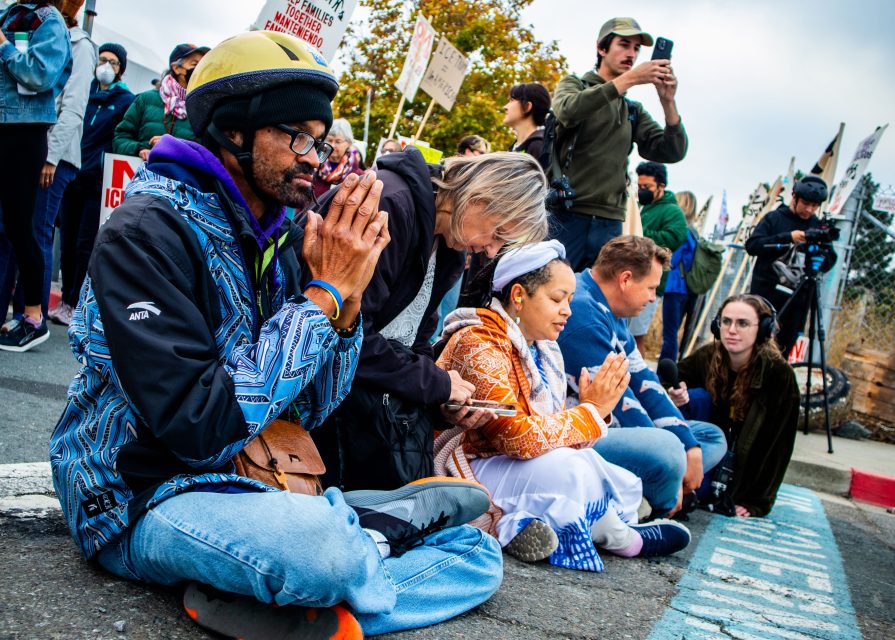 Protesters rallying against the federal deployment on Coast Guard Island on Oct. 23, 2025. Photo by Mariana Garcia.
“Attorneys from the San Francisco City Attorney’s Office are on documents that could be responsive to your request, but the Office of the Mayor is withholding them because of attorney-client privilege,” wrote Dexter Darmali, a legislative and ethics secretary for Lurie.
Several First Amendment experts were skeptical of Lurie’s reasoning. California law only exempts records involving attorneys from disclosure if they involve confidential communication, disciplinary proceedings, and certain kinds of work-product. It is unclear how city attorneys were involved in the records and whether the claimed exemption would pass legal muster.
“I’ve dealt with some pretty bogus assertions of attorney-client privilege in my long career,” said Karl Olson, a longtime public records attorney. “I just really don’t see any basis for claiming attorney-client privilege.”
“If there are any communications between the mayor’s office and any one else in the federal government, that is not attorney-client privilege,” added David Loy, an attorney and the legal director of the First Amendment Coalition.
Attorney-client privilege is a very narrow exemption under the California Public Records Act, the experts said. For example: if Lurie sought legal advice from a city attorney before or after the call, that would be considered confidential. Any other call records, including who was present for the phone call and what was said or promised, should be public, they said.
The call between Lurie and Trump, Olson said, was a “matter of great public importance, and the Public Records Act has to be construed broadly, and exemptions have to be construed narrowly.” The mayor’s assertion of secrecy, he continued, appeared to be a “knee-jerk attempt” to keep potentially “sensitive” information private.
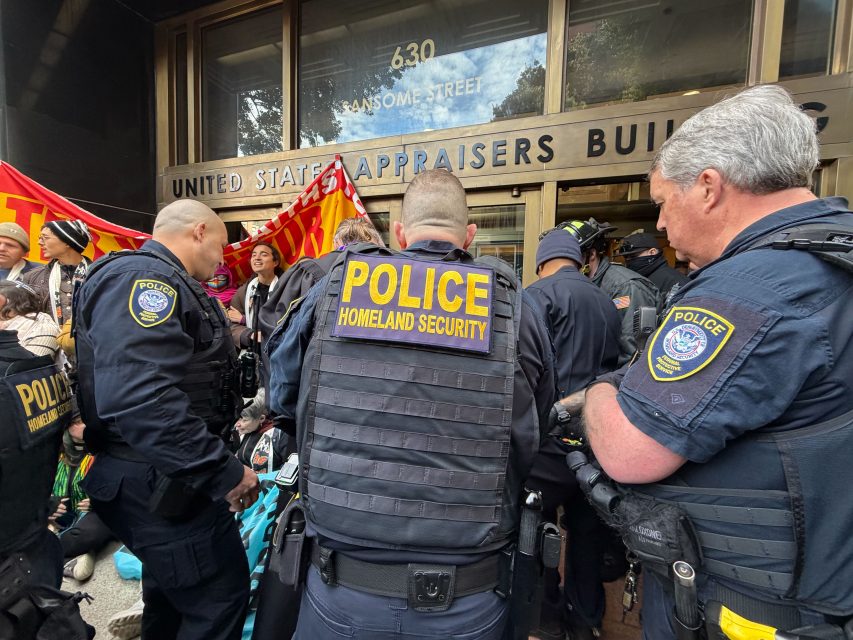 Federal police arresting protesters outside the immigration courthouse at 630 Sansome St. on Dec. 16, 2025. Photo by Mariana Garcia.
Documents related to the call are public even if “an attorney [was] listening in on the call,” Loy said. “It has to be a confidential communication between an attorney and client,” he said, for the document to be exempt.
Williams used a similar argument in an email exchange with a mayoral staffer seven minutes after being told their request was denied. “The request is for records between the Mayor and the President. That relationship does not constitute an attorney-client relationship,” Williams wrote to Darmali. “The president is not the mayor’s attorney. The mayor is not the president’s attorney.”
Williams then launched a formal complaint with the Sunshine Ordinance Task Force. The city attorney’s office has “determined that the Mayor’s office did not improperly withhold records,” mayoral staffer Darmali wrote.
The Sunshine committee disagreed. It now goes to the task force’s 10 voting members. If they vote in support of Williams, the matter could be brought before the ethics commission, though that body’s power is limited.
It’s not the first time the group, which is composed of different First Amendment and press freedom experts, has censured a sitting mayor.
Last year, the Sunshine Task Force ruled unanimously that Mayor London Breed and City Attorney David Chiu violated state and local law by deleting text messages that dealt with city business. That practice was also uncovered after Williams filed a complaint.
So far, Breed and Chiu appear to have eluded consequences for that alleged rule-breaking. It remains to be seen if the same will be true for Lurie.