
Homelessness among young adults often goes unnoticed, yet its long-term impact can be devastating. Losing stable housing during such a formative stage affects mental health, education, employment and even life expectancy. What starts as a temporary crisis can shape an entire future.
Every year in the United States, millions of youth and young adults experience some form of homelessness. On a single night in 2024, the Department of Housing and Urban Development reported over 770,000 people without housing, and more than a quarter were under 25. For those ages 18 to 25, roughly one in ten will experience homelessness within a year.
Many of these young people are not “choosing the streets.” They are aging out of foster care, leaving unstable homes, surviving abuse or trying to study while juggling low-wage jobs. Some are also new immigrants navigating language barriers and complex systems.
As a health care professional in Jacksonville, I have seen how quickly young people can spiral, losing opportunities, struggling to find work, lacking food and a safe place to sleep or facing violence and illness. These risks are not abstract; they happen right in our communities.
This is not just a housing issue, but a matter of fundamental human rights. Every young person deserves a safe, stable place to sleep, study and grow.
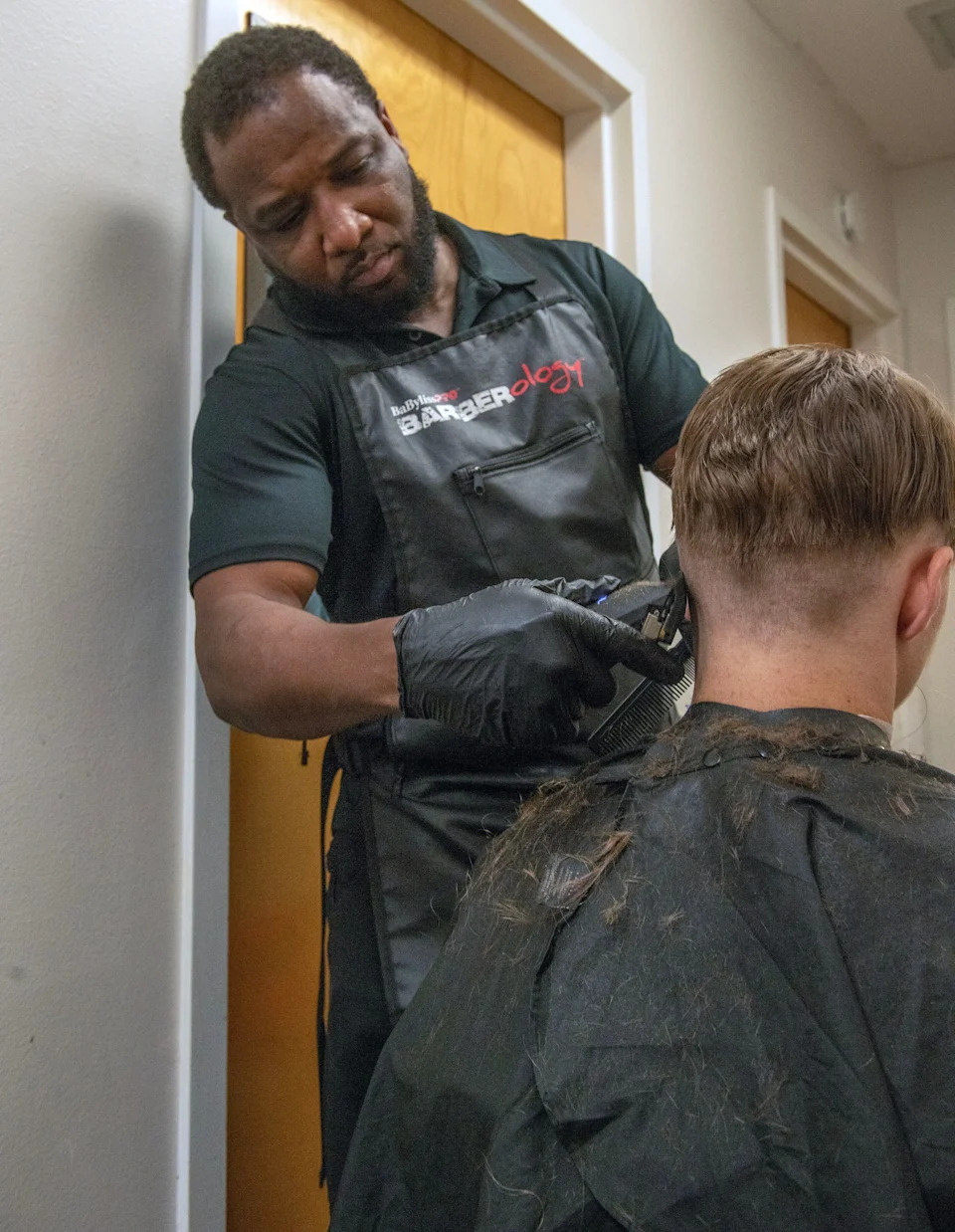
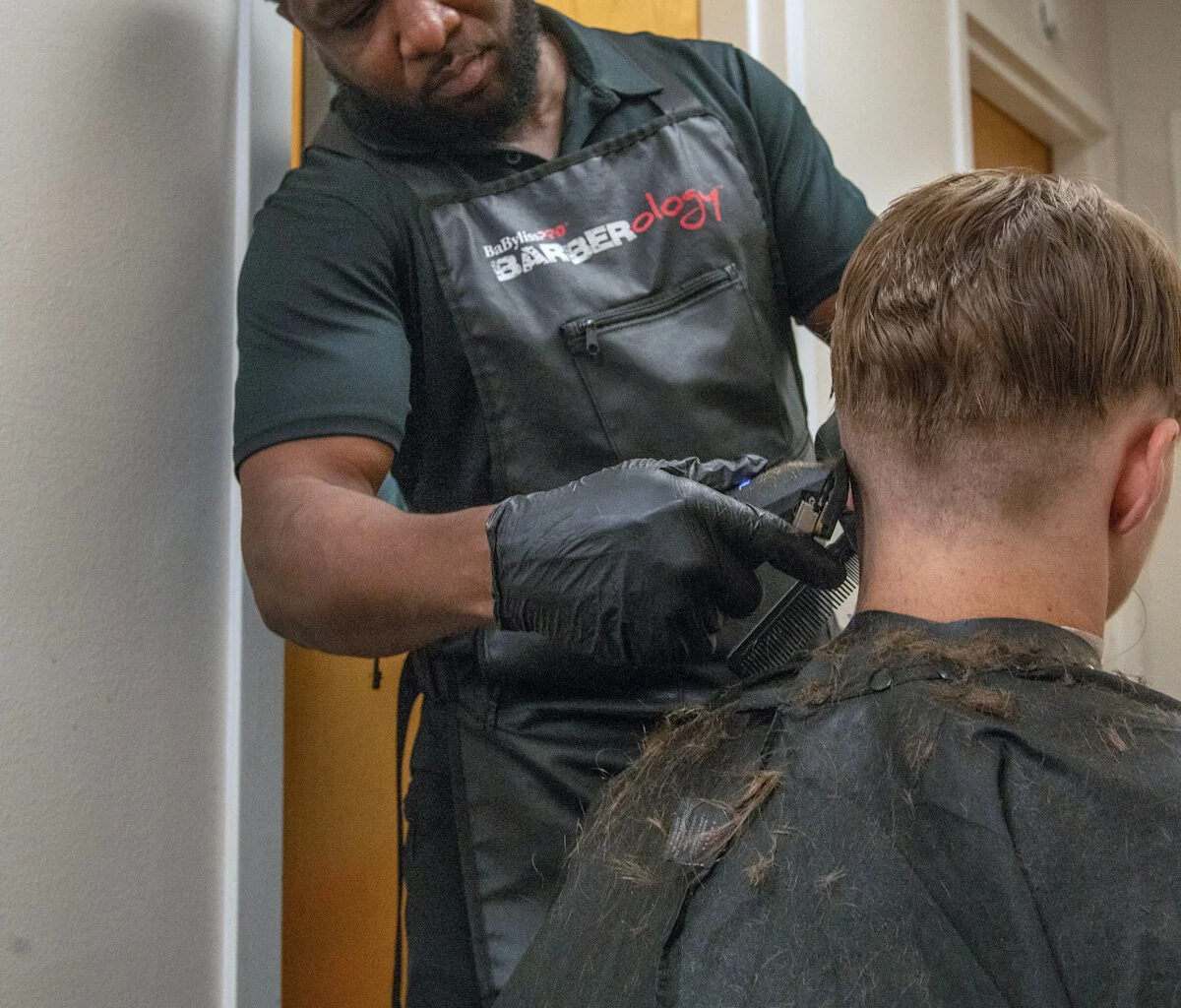
Carmello Colley of VIP Barber Shop gives free haircuts during the Bliss Summer Bash for Hope at Curie House on Aug. 2. The luau-style celebration was designed to provide a safe, uplifting space for youth currently living in a homeless shelter. The event included free haircuts, free food, music, Hula Hoop contest, limbo and more.
Providing stable housing addresses multiple challenges at once. It improves health, supports education, reduces reliance on emergency services and helps youth transition successfully into independent adulthood.
While the moral imperative is clear, these outcomes also reduce long-term public costs across health care, social services and the justice system. Thus, housing is both a human right and a smart investment in the future of our communities.
When a young person in America has nowhere safe to sleep, we fail them and our community as well. It is time for policymakers, health care leaders and communities to treat housing as the foundation of public health — and act with urgency.
Yanely López Bencosme, pediatric resident, UF Health Jacksonville
A Trump supporter’s lament
I voted for Donald Trump twice in the presidential elections. I didn’t really care for him as a person, but I did so because I supported 90% of his policies (and because no one else was running who I could support).
I supported his sealing the border, putting America’s interests first globally and making us stronger militarily. I also supported his anti-woke actions, his battle against the trans movement and his support for other basic conservative positions.
I applaud that he has largely kept his campaign promises, unlike other politicians. Without his presidency, Democrats would have taken us deeper into the far left’s craziness.
Now my support is waning, however, because of the way his true personality issues are becoming more and more prominent.
I hate the way his egotism and narcissism have come to the forefront, such as putting his name on the Kennedy Center (with his hand-picked board’s approval), and his plaques under presidential portraits — in a display he created — that contain his personal critiques.
There are also his over-the-top arrests of illegal aliens, where innocent people are often grabbed who have obeyed our laws (except for crossing the border illegally) and worked here for years. Surely we could handle these people in a more sensible way.
Finally, his comments on the murder of Rob Reiner and his wife are simply not reflective of a born-again Christian. These and other actions that display an arrogant attitude are hurting not just his base, but will hurt Republicans in maintaining the majority in Congress, which is my biggest concern.
My dilemma, like millions of others, is that the alternative to expressing our feelings about President Trump is to let Democrats take over again. I’m glad they don’t realize that being more moderate and sensible could get their party back in power. Thank God for that.
W T. Weaver, Jacksonville
What’s wrong with being ‘woke?’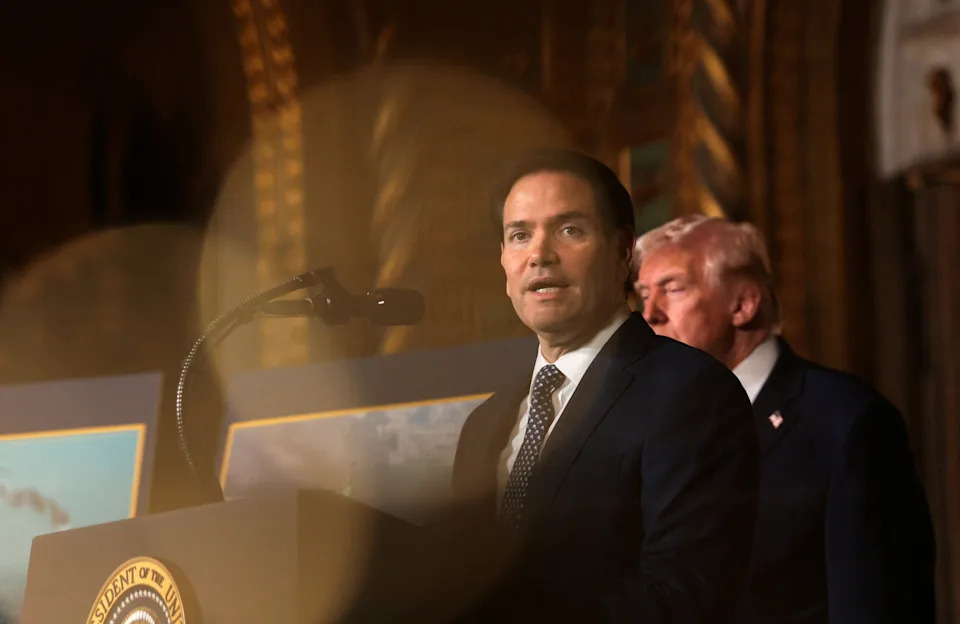
U.S. Secretary of State Marco Rubio speaks, after President Donald Trump announced the Navy’s “Golden Fleet”, at Mar-a-lago in Palm Beach, Florida, U.S., December 22, 2025. REUTERS/Jessica Koscielniak
Recently, a group of our friends were gathered around a dinner table. We started wondering about the breathtaking decision to change from the Calibri font — used by the Biden administration — to Times New Roman for all correspondence at the U.S. Department of State. According to Secretary of State Marco Rubio, the reason for the change is that Times New Roman is less “woke” than Calibri.
This led to two questions: “How can a font be woke?” and “What’s wrong with being woke?” None of us had answers. From what we could work out, being woke means being sensitive to (and caring about) the needs and feelings of others, especially those less advantaged. It implies an awareness of social injustices and inequalities.
The Biden administration changed the State Department font to Calibri because its clean style is easier to read for people with learning or reading difficulties, as well as for those with impaired vision. Secretary Rubio commented that the cleaner Calibri font was another “wasteful” DEIA move.
It takes people with a very negative mindset to turn such a simple attempt to help less-advantaged people into a detriment.
The Trump administration has shown time and again, however, a callous disregard for the feelings and comfort of others. From making fun of a disabled journalist to calling out individuals as “stupid” and “unfit” for a job, the president and his advisers have made it clear that concerns for others are not their concerns.
Being woke should be something one aspires to — not mocked and degraded.
Fran and Pete Sheridan, Atlantic Beach
Bear hunt missing public trust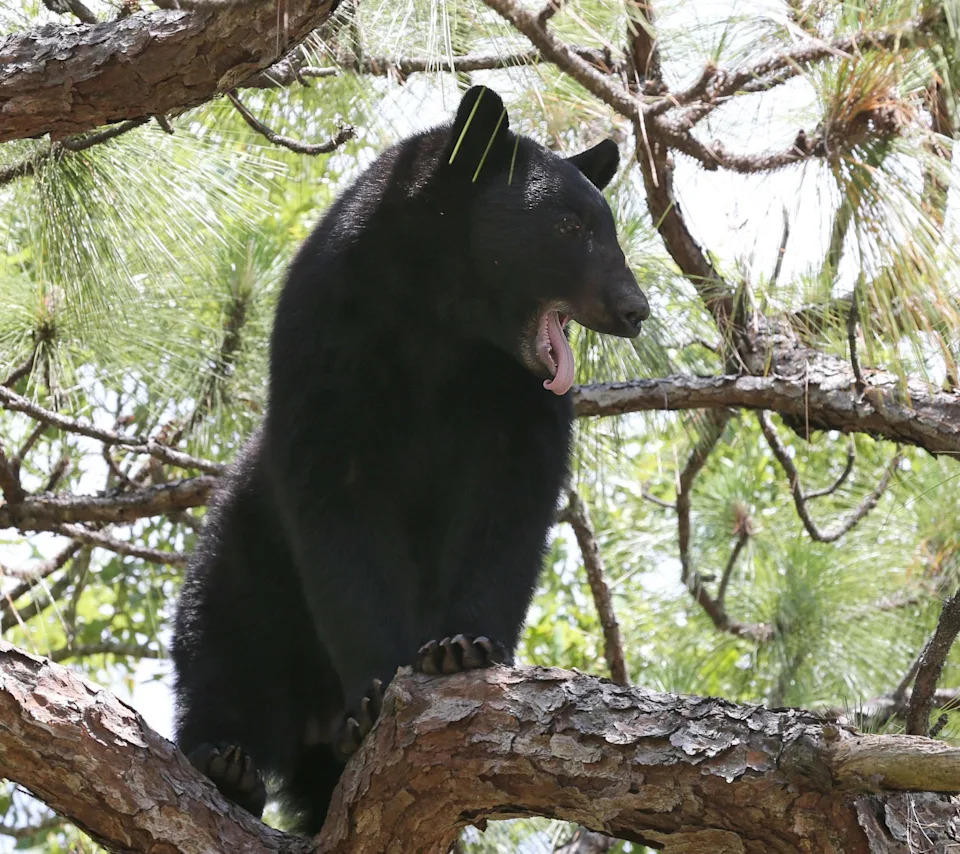
A young Florida black bear sticks his tongue out as he rests near the top of a pine tree near Ocala in May.
Floridians are still being kept in the dark about the black bear hunt, and that darkness appears to be deliberate. The Florida Fish and Wildlife Conservation Commission (FWC) has failed to release clear, timely totals of bears killed, where they were taken and what safeguards — if any — were enforced.
This isn’t a clerical delay. It’s stonewalling. When an agency hides the numbers, it’s usually because the data is ugly.
The FWC would like the public to believe this is “science-based management.” Real science, however, is transparent, peer-reviewed and accountable.
What Floridians are seeing instead is a commission packed with trophy hunters and development interests: People who view wildlife as targets and habitat as an inconvenience. Unsurprisingly, a board built like that isn’t eager to show its work.
Let’s be clear about responsibility. Gov. Ron DeSantis appointed every single one of these commissioners. He didn’t inherit this commission — he curated it. If secrecy reigns, it’s because secrecy serves the agenda.
Florida’s black bears are a public trust, not a private plaything. Some bear subpopulations are already under stress from sprawl and habitat loss, yet the state rushed headlong into a hunt and now refuses to own the outcome. That’s cowardice, not conservation.
If the governor wants to prove this isn’t a rigged game for insiders, there’s an easy fix — release the data and replace commissioners who treat transparency as optional. Until then, every unanswered question smells less like management and more like a cover-up.
Sarah Younger, Jacksonville
Wildlife must be managed in our world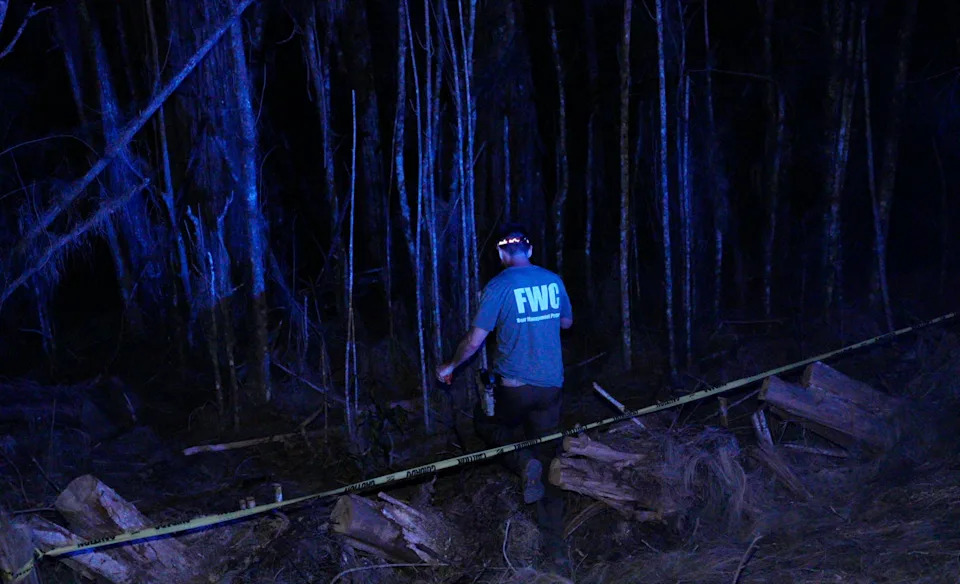
Members of the FWC work to remove a dead bear near the home where a man and dog were found dead after a bear attack in Jerome in Collier County on May 5. Multiple shots were heard.
The horror of animals not being managed locally is to leave them to the mercy of our environment. That would be okay if it was Florida’s native environment, and not man’s environment. While we have not always done the best, management of our environmental resources is essential.
Why do we manage our deer population? Because of deer starvation, crop destruction, property damage and motor vehicle deaths. We also manage fishing (both commercial and recreational) to insure the fishing industry and sport fisherman can access all the native species of fish.
We do it by creating a state agency to manage it. This agency is financed in part by selling hunting and fishing licenses to offset the management cost.
Now we come to the bear population, which by most accounts is shown to be overpopulated. While the state uses its revenue to try and relocate many of these bears, the reality is that several of them will be euthanized. This costs the state more, instead of raising revenue from bear hunting licenses.
Unfortunately, animal rights advocates will not understand and continue to fight managed hunts. The reality is that the only way for wild animals to exist in our environment is for their population to be managed. Hunting is just one remedy.
William D. Kelly, Jacksonville
Trump ‘did nothing,’ but not blameless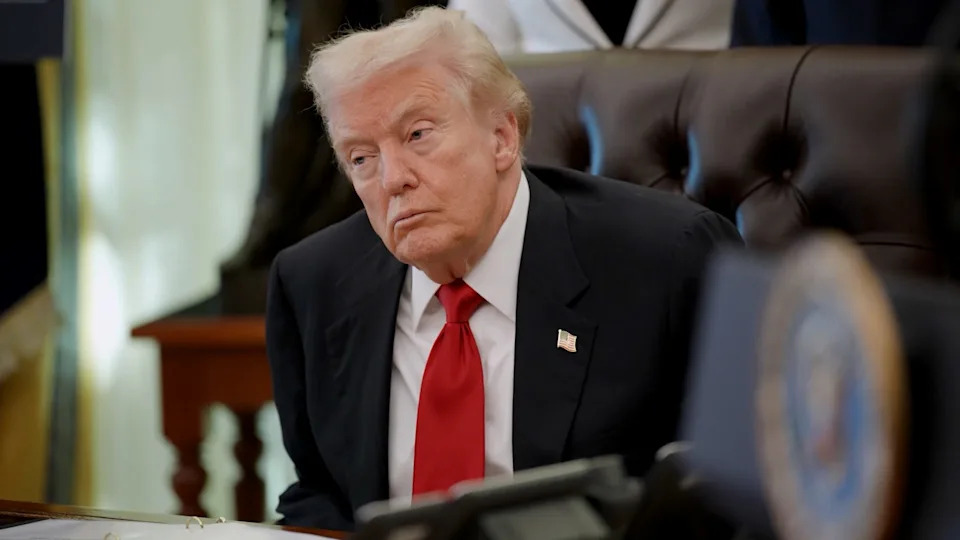
New Epstein files reveal President Donald Trump’s jet trips, Mar-a-Lago subpoena and photo with Ghislaine Maxwell.
White House Press Secretary Karoline Leavitt recently said that the Jeffrey Epstein e-mails released in early November prove that President Trump “did nothing wrong.” I think she got it mostly correct, in that he “did nothing.”
He did nothing to protect the victims, nothing to stop Epstein and nothing to stop the assaults. While we are at it, the same goes for Bill Clinton, Larry Summers, Alan Dershowitz, Steve Bannon, Bill Gates and any of the other guys who socialized with Epstein.
How did these guys not know what was going on? Apparently we had a Rhodes Scholar, a few Harvard graduates and a self-proclaimed genius, but none of whom could figure it out. Really?
I think they knew what was happening and decided to remain quiet. Whatever their reasons, I’m not sure this is any better than committing the assault themselves.
Scott Schleifer, Jacksonville
This article originally appeared on Florida Times-Union: Homeless youth in Jacksonville can feel impact for decades | Letters