
From neighborhood streets underwater to billion-dollar redevelopment deals, and from classrooms under pressure to courtrooms in crisis, The Miami Times spent this year tracking the forces reshaping Black life across South Florida. Our top stories of the year chronicle moments of accountability, resilience, and resistance, spotlighting residents demanding answers, institutions adapting to change, and communities fighting to secure their future.
Together, the reports below capture a year defined by high stakes decisions and the people most affected by them.
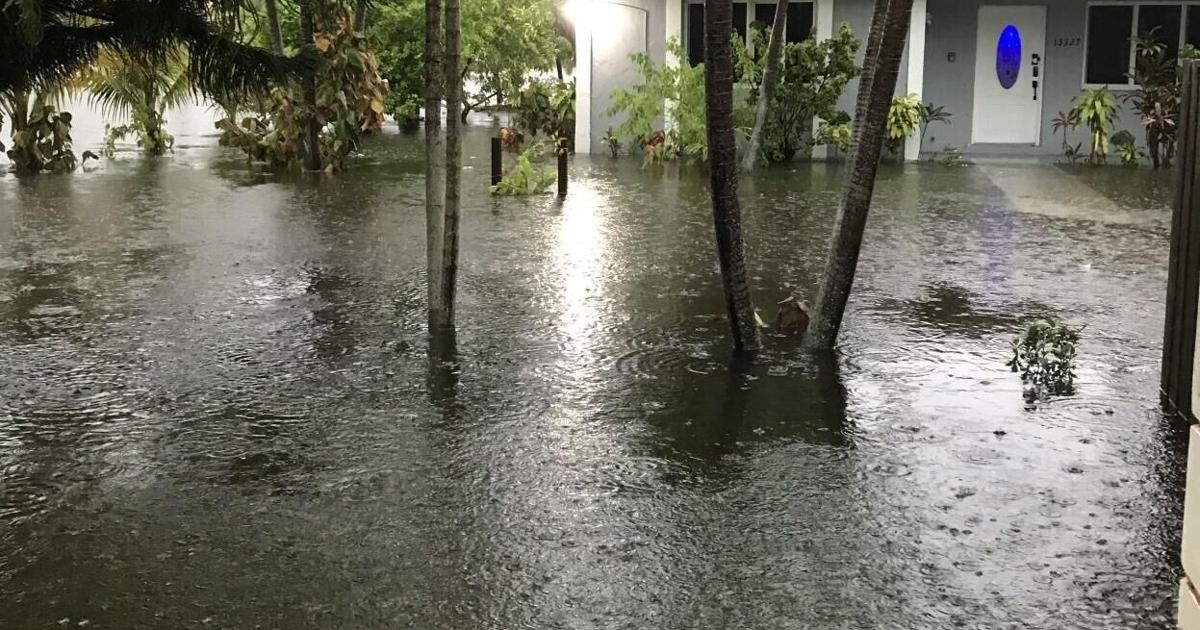
North Miami confronts flooding woes


The Bicabas say they have experienced significant flooding since 2018, when new construction began on their street.
(Amelia Orjuela Da Silva for The Miami Times)
On Jan. 20, 2025, North Miami homeowner Eileen Bicaba and her husband filed a lawsuit against multiple developers, alleging negligence in drainage management that caused persistent flooding, sewage backups and structural damage. Still caught up in the legal battle today, Bicaba hopes the lawsuit will force accountability and end what she calls seven years of “hell.”
In May, the City of North Miami introduced a preliminary Stormwater Master Plan, aiming to update its 2012 plan with a proposed $11 million investment to address 22 identified flood-prone areas. The plan suggests new infrastructure installations, like exfiltration trenches, and a retention pond at Enchanted Forest Elaine Gordon Park. Despite resident criticism, city officials anticipate further improvements pending grant funds.
Later over the summer, a report released by Guardian Service ranked the city as the least resilient among U.S. coastal communities.
Little Haiti’s public housing gets $2B makeover

SG Holdings, a joint venture, aims to transform a nearly mile-long stretch of Miami’s Little River and Little Haiti neighborhoods.
(Swerdlow.com)
In April, the Miami-Dade Board of County Commissioners approved a multibillion-dollar redevelopment plan by SG Holdings to revitalize public land in Little River and Little Haiti. The plan, championed by District 3 Commissioner Keon Hardemon, aims to address Miami’s affordable housing needs, creating over 5,000 mixed-income units.
Resident engagement helped fuel a community benefits agreement that includes job opportunities for local residents, support for small businesses, and robust worker protections. SG Holdings also committed to no displacement for current public housing residents.
Final legacy families resettle in Liberty Square

Minnie Davis, a legacy Liberty Square resident.
(Amelia Orjuela Da Silva for The Miami Times)
In a major step forward for the Liberty Square redevelopment project, the last 27 legacy families moved into their new homes at Serenity at Liberty Square in Miami this spring, marking the fourth phase of a nine-phase redevelopment. Spearheaded by Related Urban Development Group, the project has built 793 housing units at a cost of over $220 million.
U.S. Housing and Urban Development Secretary Scott Turner visited Miami-Dade to cut the ribbon on the new development, featuring 193 residential units and new community facilities like a Jessie Trice Community Health clinic and business incubator.
Black churches resilient among change

Half of the New Jerusalem congregation now comes from younger generations.
(New Jerusalem Primitive Baptist Church via Facebook)
South Florida churches face mounting financial and demographic challenges, including rising costs, gentrification, aging facilities, and dwindling attendance – trends intensified since the pandemic. Foreclosures, mergers, and property sales are redefining the local faith landscape, prompting some congregations to innovate: launching housing projects, pursuing nonprofit partnerships, and leveraging technology. In Miami Gardens, Liberty City, West Grove, and beyond, these shifts reflect deeper questions of equity, transparency, and legacy for South Florida’s Black churches, with some congregations already reorganizing or relocating to survive.
This year, The Miami Times explored how local Black churches facing post-pandemic challenges have learned to adapt with innovation, with leaders stressing the importance of community engagement, diversified revenue, and accommodating younger generations. Exemplifying this trend of resilience among change, Miami’s Trinity Christian Methodist Episcopal Church celebrated its 100th anniversary this year, even as its congregation seeks a permanent home.
Justice, Interrupted: A Miami Times series

Rosalyn Sia Baker-Barnes is the first Black woman to lead the Florida Bar since its inception.
(Courtesy of Sia Baker-Barnes)
Justice, Interrupted is a four-part reporting series from The Miami Times examining how Black lawyers across South Florida are navigating a legal system under strain in 2025. From immigration courtrooms shaped by political pressure to civil rights battles amid federal retreat, gender bias, burnout, and the rising cost of entry into the profession, the series centers the lived realities of attorneys working to uphold justice while the rules, resources, and stakes continue to shift.
Miami-Dade nonprofits fight against budget cuts
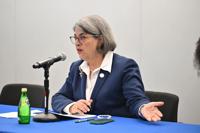
Miami-Dade Mayor Daniella Levine Cava during a Black media budget briefing on July 16, 2025.
(Armando Rodriguez/ Miami-Dade County)
Over the summer, Miami-Dade Mayor Daniella Levine Cava proposed a $12.9 billion budget for FY 2025–26, featuring significant cuts to nonprofit subsidies, community-based organization grants, and small business and cultural grants, responding to a $402 million county budget shortfall. The proposal sparked a monthslong effort by community leaders who warned the cuts would jeopardize vital services for underserved neighborhoods, including violence intervention, immigrant support, youth services, and small business aid.
After the majority of those cuts were later reversed following widespread community backlash, the Miami-Dade Board of County Commissioners advanced a major ordinance aiming to stabilize funding for local nonprofits through a new CBO Trust Fund. Sponsored by Commissioner Kionne McGhee, the measure would allocate 2% of county contract spending to nonprofit support, dividing funds between direct disbursement and an endowment.
Vouchers and charter expansions threaten public schools

Power U advocates raised alarms about charter school expansions now made easier by Florida laws defunding public education.
(Amelia Orjuela Da Silva for The Miami Times)
In July, Miami-Dade County Public Schools tentatively approved a $7.4 billion budget for 2025–26, about $100 million less than last year, sparking warnings from educators and advocates who say public education is being eroded by state and federal voucher programs and charter school expansion.Critics highlight policy shifts diverting money to charters and private schools with limited oversight, calling it “privatization by design” that disproportionately affects low-income communities.
Opposition groups in Miami-Dade are mobilizing specifically against Schools of Hope, a Florida program that lets nonprofit charter operators open in or co-locate within public school facilities deemed low-performing. Critics argue it shifts facility, security and custodial costs onto districts and reduces community oversight.
Miami grapples with extreme heat

Eric Bason in Overtown said he doesn’t walk anymore during the day because of the heat.
(Amelia Orjuela for The Miami Times)
This year, a grant from the C40 Cool Cities Network allowed Miami to collaborate with community-based organizations to launch a research project, installing indoor and outdoor heat sensors in 70 homes across seven neighborhoods, including Liberty City and Overtown. The initiative aims to bridge data gaps and inform future policies while equipping communities with tools to validate heat-related challenges.
The project comes as a new analysis by the Union of Concerned Scientists showed people in older, under-resourced affordable housing face dangerous heat exposure. The UCS review of nearly 8 million subsidized, public and manufactured homes found most experienced at least seven heat-alert days between May and October 2024, while nearly half faced 21+ days. Florida — including Miami-Dade — ranked among states with large numbers of exposed affordable homes.
Overtown closes on $175 million bond

The SEOPW CRA had already invested over $90 million in housing projects by the time it closed on the new bond series.
(SEOPW CRA via Facebook)
In August, the Southeast Overtown/Park West Community Redevelopment Agency (SEOPW CRA) closed on a $175 million municipal bond to revitalize Miami’s historic Overtown neighborhood. The bond, approved earlier by the City of Miami and Miami-Dade County Commission, will fund affordable housing, cultural centers, green spaces, and infrastructure upgrades. Key highlights include plans for 2,500 new affordable and workforce housing units, the transformation of the Women’s Detention Center into a contemporary African Diaspora museum, and investments in youth support programs. Leaders emphasize that these investments aim to restore Overtown’s legacy while preventing displacement of current residents.
The Miami Times investigates: Did Miami Gardens’ $5M F1 deal deliver?

The Formula 1 Grand Prix Race started in 2022 and promised a community benefits package focused on STEM programming and economic development.
(f1miamigp.com)
Four years after Miami Gardens approved a $5 million Formula One Community Benefits Package to offset resident concerns, public records show only about $1.07 million had been spent as of July 2025. While F1 and city officials promised investments in education, jobs, and local business opportunities, residents say spending priorities favor parties and events instead. Exclusive Miami Times interviews reveal community demand for stronger oversight, transparency, and tangible program impact, especially as the F1 contract extends to 2041 without new benefits negotiations.
Black voters demand results from Miami’s new mayor

Miami Mayor Eileen Higgins received overwhelming support from historically Black neighborhoods that have long demanded more than campaign-season promises.
(Eileen Higgins via Facebook)
When Eileen Higgins made history in December as the City of Miami’s first woman mayor and the first Democrat to hold the seat in nearly 30 years, change seemed inevitable to many. But for the city’s Black communities, who played a crucial role in getting her elected, skepticism remains. In a Miami Times exclusive, community leaders demand measurable action on housing, transit, public safety, and economic opportunity, noting that the election is a mandate that must be followed by concrete policy, accountability mechanisms, and protections against displacement for long-time Black Miamians.