
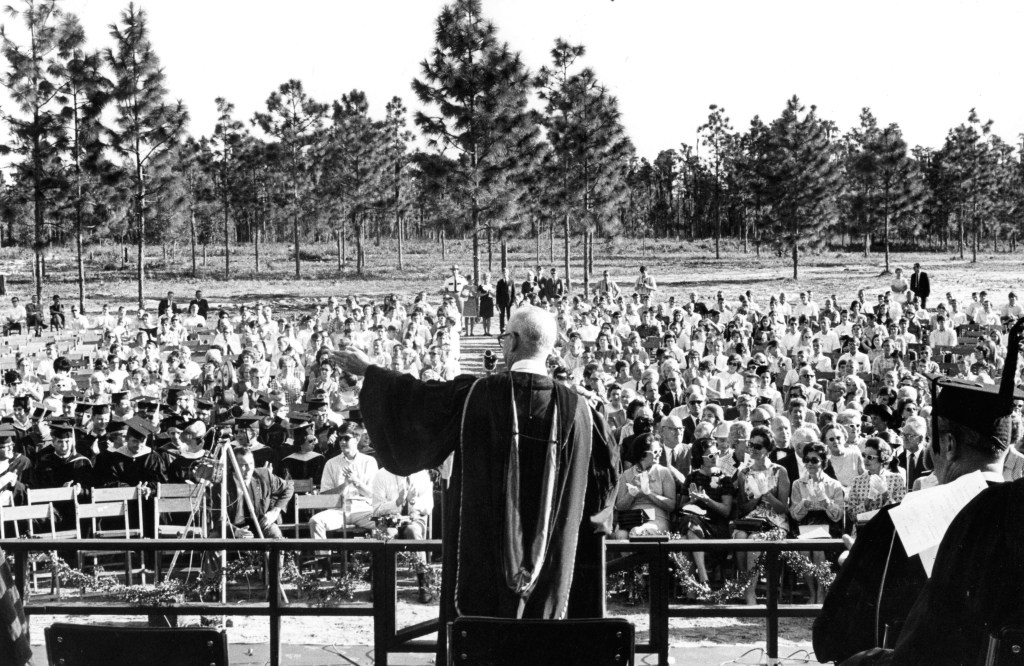
As part of the Orlando Sentinel’s 150th birthday, on the first Sunday of each month we will report on a topic that helped shape the Central Florida of today and how we covered that topic. Today we begin with higher education in Central Florida.
In 1968, the Orlando Sentinel’s editorial board marked a historic milestone for higher education in Central Florida.
“Monday Oct. 7. Write it down. Remember it as the day that changed Orlando and Central Florida forever,” the editorial said.
That day was the first day of classes for about 2,000 students at the newly minted Florida Technological University in Orlando. The state launched the campus to help train the next generation of aerospace engineers to work at Kennedy Space Center in the midst of the nation’s space race.
That school a decade later would be renamed the University of Central Florida and has since grown into Florida’s largest university and one of the largest universities in the United States.
UCF is easily the most recognizable higher education institution in the region, with its 1,420-acre campus in east Orange County and an undergraduate enrollment of about 60,000.
But in the history of higher education in the Orlando-area, UCF is the undeniable new kid on the block. Its 60-year history pales in comparison to its smaller, much older siblings – Rollins College in Winter Park and Stetson University in DeLand, which both date to the 1880s.
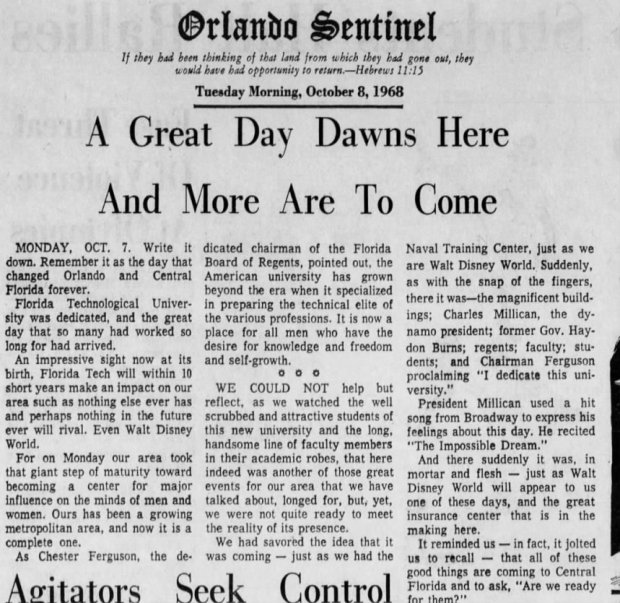 An Orlando Sentinel editorial about the opening of Florida Technological University, what would be later renamed the University of Central Florida, that ran Oct. 8, 1968. (Orlando Sentinel file)
The Orlando Sentinel, which celebrates its 150th anniversary this year, has covered each school as it pushed into an unknown educational frontier, established itself and then became woven into the fabric of Central Florida.
A ‘daring’ new college
When the Sentinel — first known as the Orange County Reporter — was founded in 1876, the region was largely a center for railroads, agriculture and manufacturing.
But Florida Congregationalist church members decided Winter Park, where rich northerners made their home for winter months, was where they wanted to start a new college.
Other communities, including Daytona, Mount Dora and Orange City, made bids, but church leaders picked Winter Park, in part because it offered the most money and land.
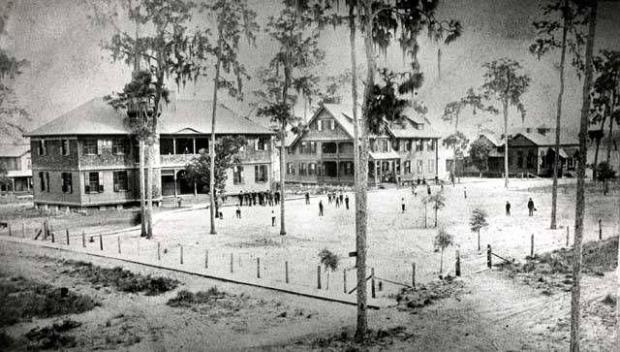 ROLLINS COLLEGE
This photograph is one of the earliest taken of the Rollins College campus in 1888. The main buildings, from left, are Knowles Hall, Pinehurst Cottage and the dining hall. (Rollins College archives)
Launching Rollins was a risky venture, said Jack Lane, a history professor emeritus at Rollins, who was tapped in 1984 to document the school’s history for its 100th anniversary.
“It was one of the most daring, to be generous, and one of the most foolhardy things that ever occurred … for that group of Congregationalists to stick a college in the middle of the frontier with very few people here,” Lane said. “It was amazing that they thought that it could ever succeed.”
The pioneering college opened in 1885 and weathered difficult times early on, as the infamous winter freeze of 1894 destroyed orange groves throughout the state and crippled a key revenue source for Rollins, Lane wrote in his history of the school.
The school faced bankruptcy in the 1890s, and also prejudice from those in the northeast, who it hoped would send both money and students.
Then-President Charles Fairchild said in his 1893 inaugural address that northerners viewed Florida’s climate as ill-suited for serious learning. Harsh winters bred academic thought was the attitude, he said, while warm weather bred “dreams of romance.”
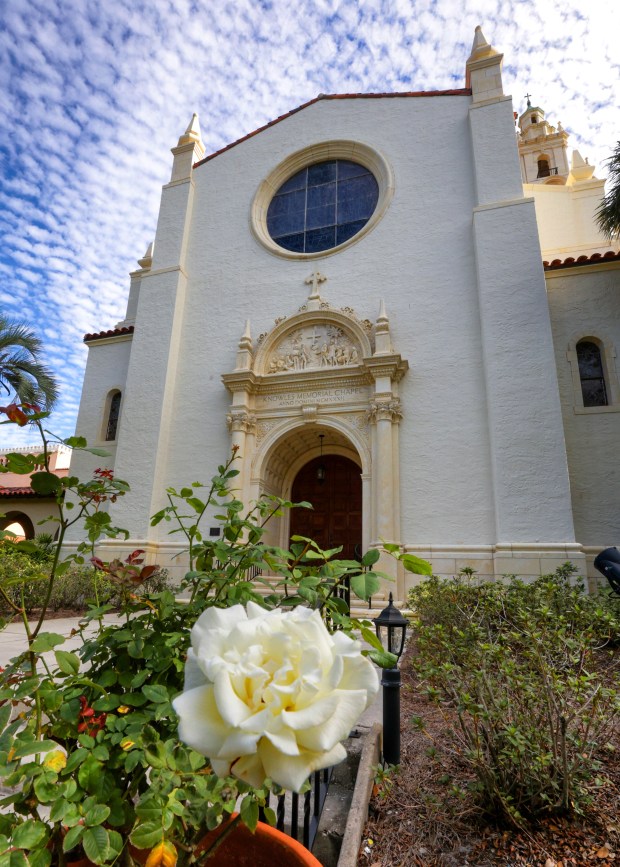 The renowned Knowles Memorial Chapel on the Rollins College campus in Winter Park, Tuesday, Dec. 30, 2025. The chapel opened in 1932. (Joe Burbank/Orlando Sentinel)
But Rollins persevered. In a 1911 ad in the Orlando paper, it bragged it was the “oldest college and most beautiful campus in Florida.”
The college, built on the shore of Lake Virginia, by then had 12 buildings, business, music and science programs and robust athletic offerings — including a baseball team that had been state champs five years in a row.
The Rollins ad also boasted there was “no malaria.”
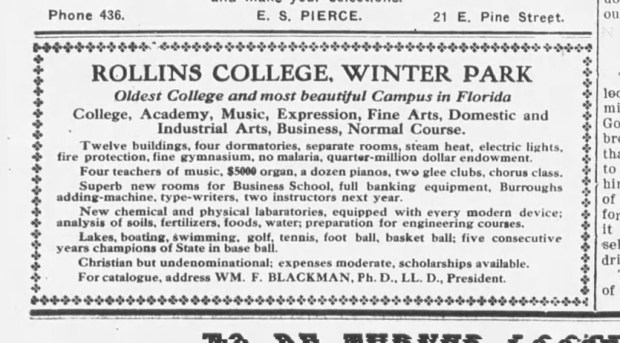 An advertisement for Rollins College that appeared in the Orlando Evening Star on June 12, 1911. (Orlando Sentinel file)
By 1924, the editorial board of the Orlando Evening Star — another predecessor of the Sentinel — lauded the school as a “big asset” to Orange County’s education system and to the region, attracting “desirable people” due to the “charm as a college community.”
The college would thrive but, as Lane noted in “An Uneasy Imbroglio, Rollins College and Race in the Era of Segregation”, its early leaders faced “a persistent dilemma” as their “liberal social values” clashed with those in their new “southern rural, conservative culture,” with the the big sticking point race relations.
Florida was a Jim Crow state then, and the college’s Congregationalist leaders long championed “African American causes.”
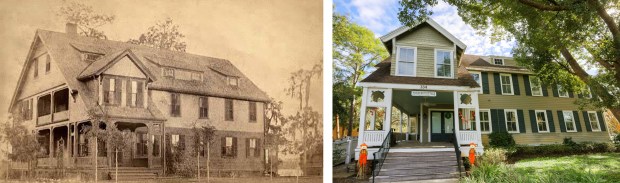 Pinehurst Cottage as seen on Rollins College’s campus ca. 1909 (left) and as seen on Dec. 20, 2025 (right). The building is the longest standing at Rollins College, which traces its history back to 1885. (Rollins College archives, Joe Burbank/Orlando Sentinel)
But in its early days, Rollins leaders bent to the rules of their new home. An effort to enroll Cuban students around 1900, for example, fell apart when locals noticed the new students’ skin color, and parents then threatened to withdraw their children, Lane wrote. The college’s president, Lane said, responded with new rules: “Public opinion is such in the South that we cannot accept Cuban students if there is in them any admixture of colored blood.”
By the mid-20th Century, Rollins seemed steeped in local life. A 1956 Sentinel story on the “glamourous” opening of The Town Club showed Rollins’ president and his wife among the “distinguished” fur-draped guests and said a water ballet staged by the college was the highlight of the evening’s entertainment.
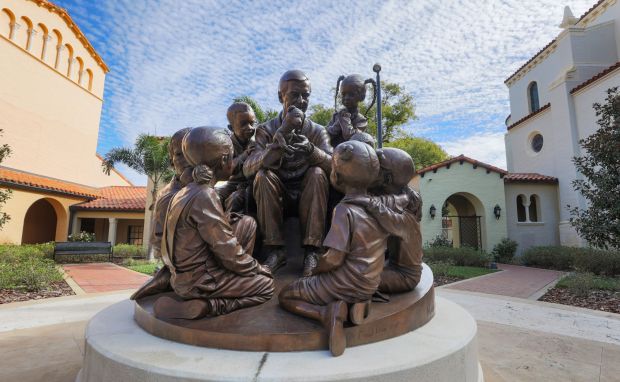 The Mister Rogers sculpture on the Rollins College campus in Winter Park, Tuesday, Dec. 20, 2025, honoring famed alumnus and children’s TV show host Fred Rogers. The statue was installed on campus in 2021. (Joe Burbank/Orlando Sentinel)
The college frequently hosted concerts in its chapel, which were announced in the paper, and Rollins alumnus Fred Rogers, well before he became famous for Mr. Rogers’ Neighborhood, got a newspaper note in the mid 1950s when his music was used in an NBC children’s show.
Today, Rollins enrolls more than 3,000 students and offers more than 60 different degree programs. In October, it celebrated the opening of a new tennis and golf athletic center, as the school now fields 21 NCAA Division II teams.
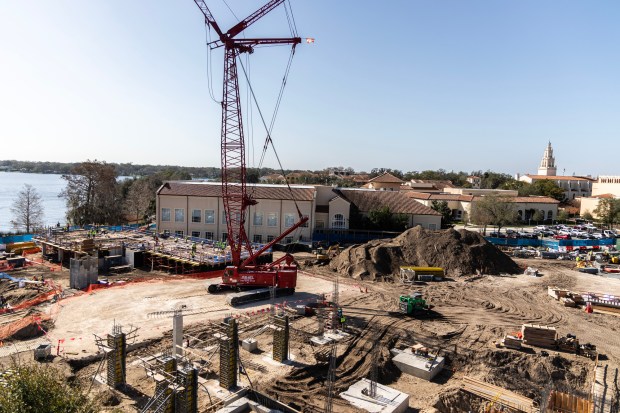 Construction continues on a new residential housing area on Rollins College named East End Neighborhood in Winter Park on Feb. 14, 2025. (Orlando Sentinel file)
The school is growing too. Rollins will open a new residence hall for the Fall 2026 semester to house an additional 217 students. It also opened a $71-million residence hall for 500 students in 2021.
“Rollins’ future is bright,” said President Brooke Barnett, the college’s president, in a statement.
It is committed to preparing students for “global citizenship and responsible leadership” and to remain “good neighbors” to the Central Florida community,” she said.
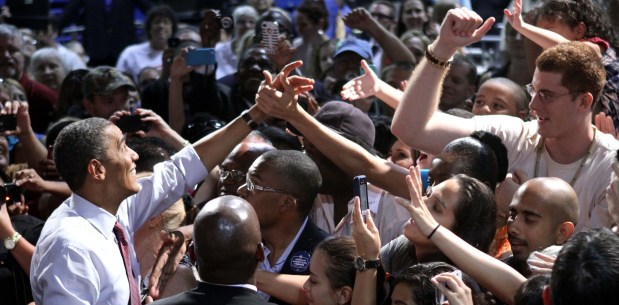 President Barack Obama greets supporters during a rally at Rollins College in Winter Park on Aug. 2, 2012. (Joe Burbank/Orlando Sentinel file)
Part of that mission is through the school’s lecture series, which has hosted former President Barack Obama and the namesake founders of Ben and Jerry’s ice cream.
Obama spoke during his re-election campaign and a few days before his 51st birthday, a 2012 Sentinel story noted. The crowd sang “Happy Birthday” to the president.
“Winning Florida wouldn’t be a bad birthday present,” Obama replied to the crowd.
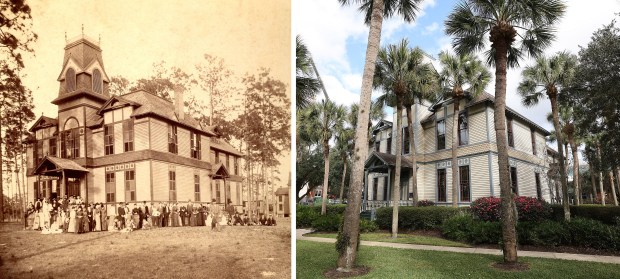 Historic DeLand Hall, where the precursor to Stetson University started, as seen in 1884 (left), and the same building as seen on Dec. 10, 2025 (right). DeLand Hall is the oldest building in continuous use for higher education in Florida, according to Stetson. (Stetson archives, Stephen M. Dowell/Orlando Sentinel)
A ‘beautiful’ location for a school
Further north in DeLand, Stetson University also got its start in the 1880s, opening as a kindergarten through grade 12 academy run out of a Baptist church building in 1883. That building called DeLand Hall, still in use today at Stetson, is the oldest in Florida in continuous use for higher education.
Accredited as a university in 1887, the school was renamed after cowboy hat magnate John B. Stetson. Stetson was started in partnership with the Baptist church — an affiliation it carried for more than 100 years until dropping it in 1995.
Stetson launched the state’s first law school in 1900, allowing Central Floridians to study the law without needing to move to Chicago or New York.
Stetson’s DeLand campus sits in its namesake town, as Henry DeLand — a baking soda manufacturer from New York — founded the university and donated much of his purchased land for churches, schools and roads in the community.
A 1907 advertisement in the Evening Star promoted the school’s academic offerings to the community and added: “The location is beautiful and healthful, and the expenses are low.”
A 1911 story praised the caliber of its law school graduates – all men – and Stetson’s law library, which it said was the best in Florida.
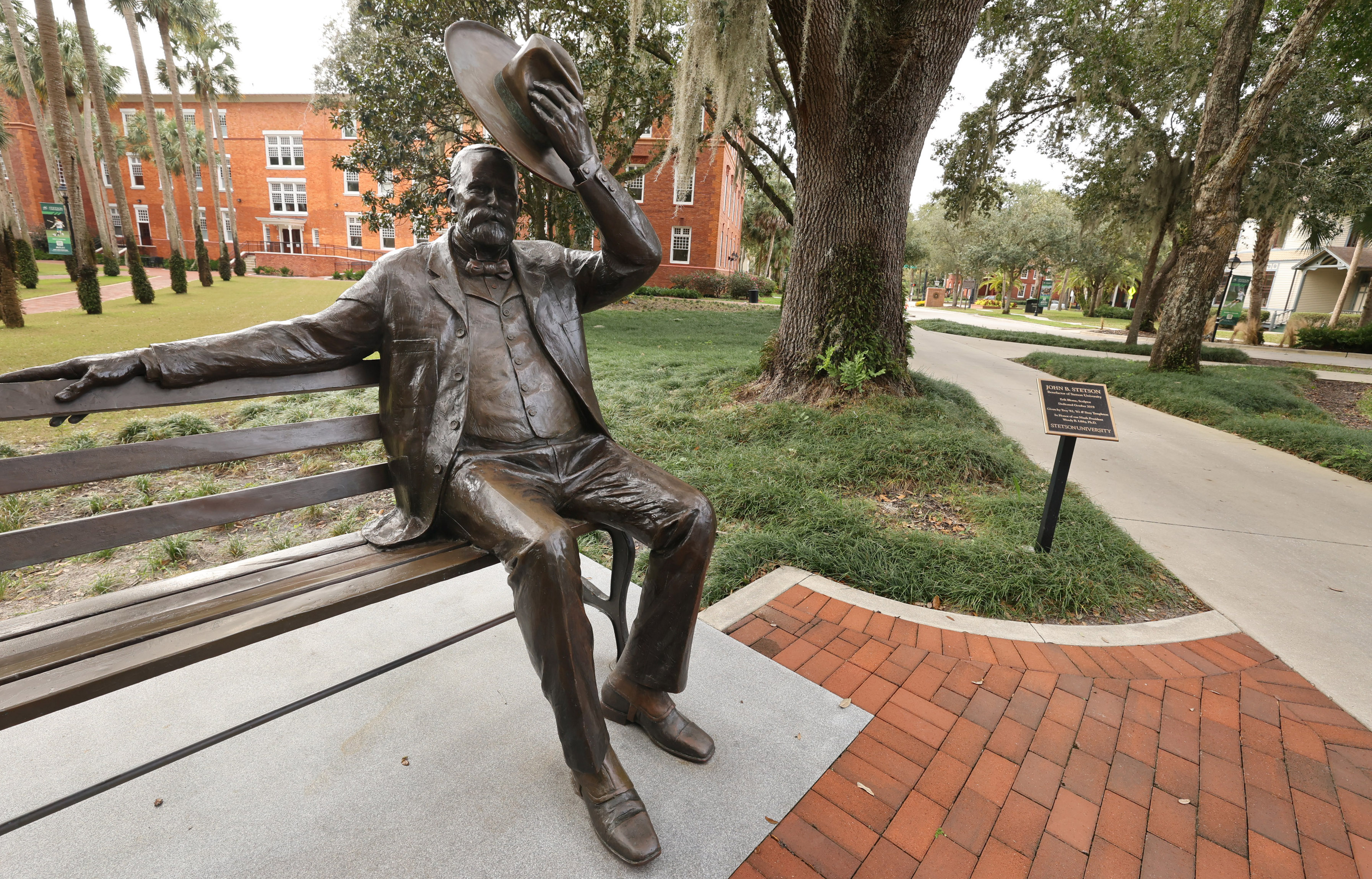
A statue of John B. Stetson is pictured at Stetson University on Dec. 10, 2025. (Stephen M. Dowell/Orlando Sentinel)
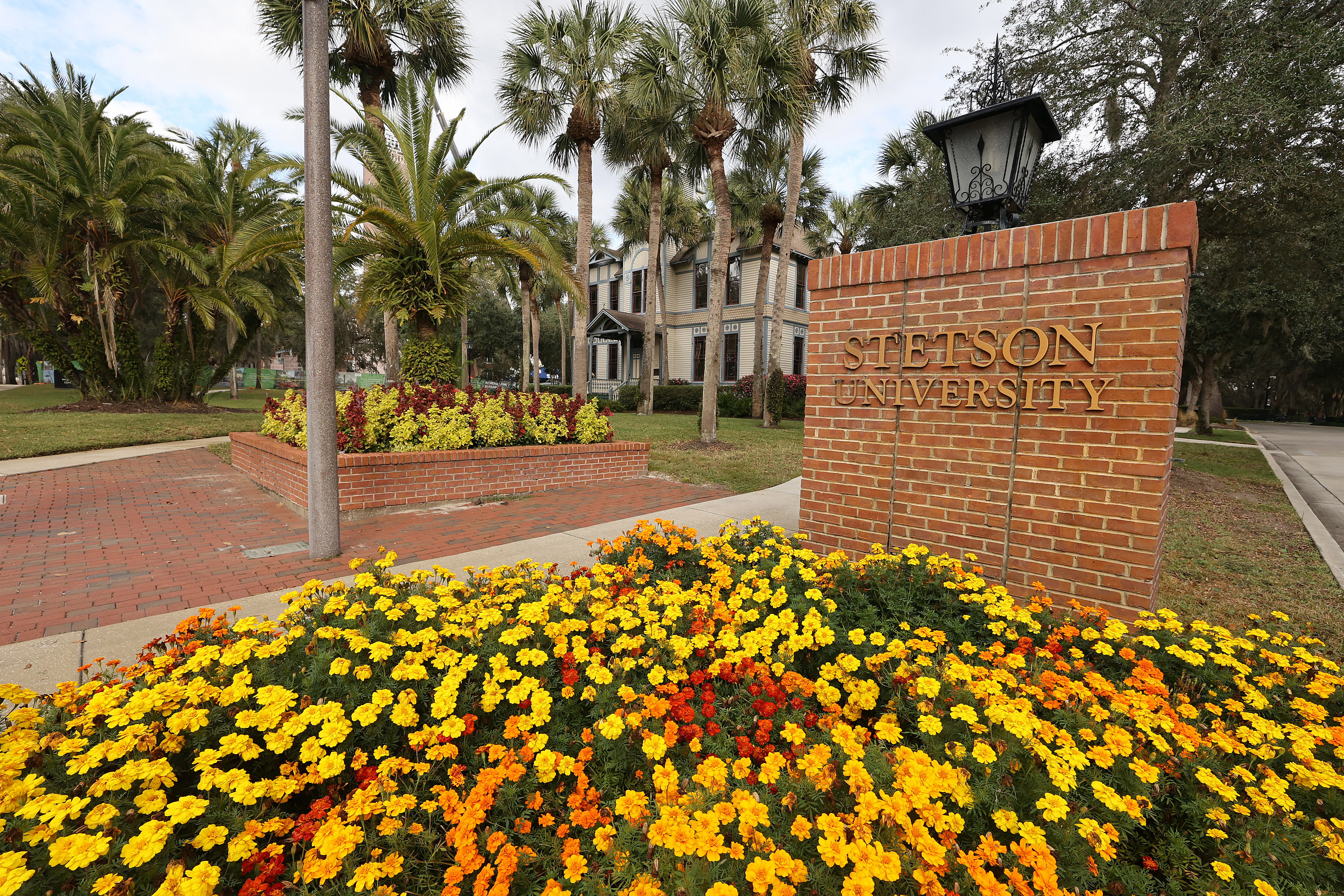
Stetson University is pictured on Wednesday, December 10, 2025. (Stephen M. Dowell/Orlando Sentinel)
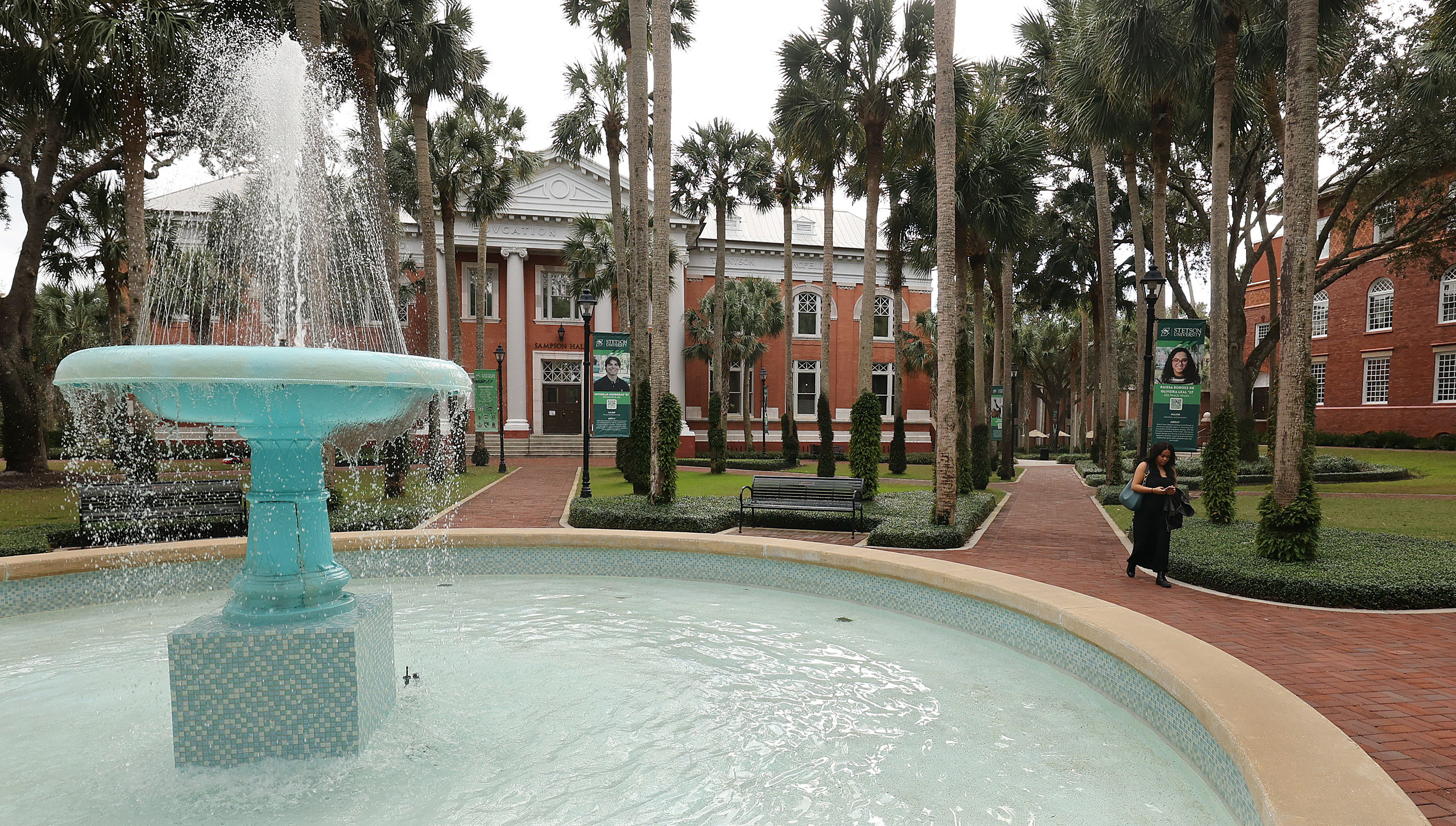
Stetson University is pictured on Wednesday, December 10, 2025. (Stephen M. Dowell/Orlando Sentinel)
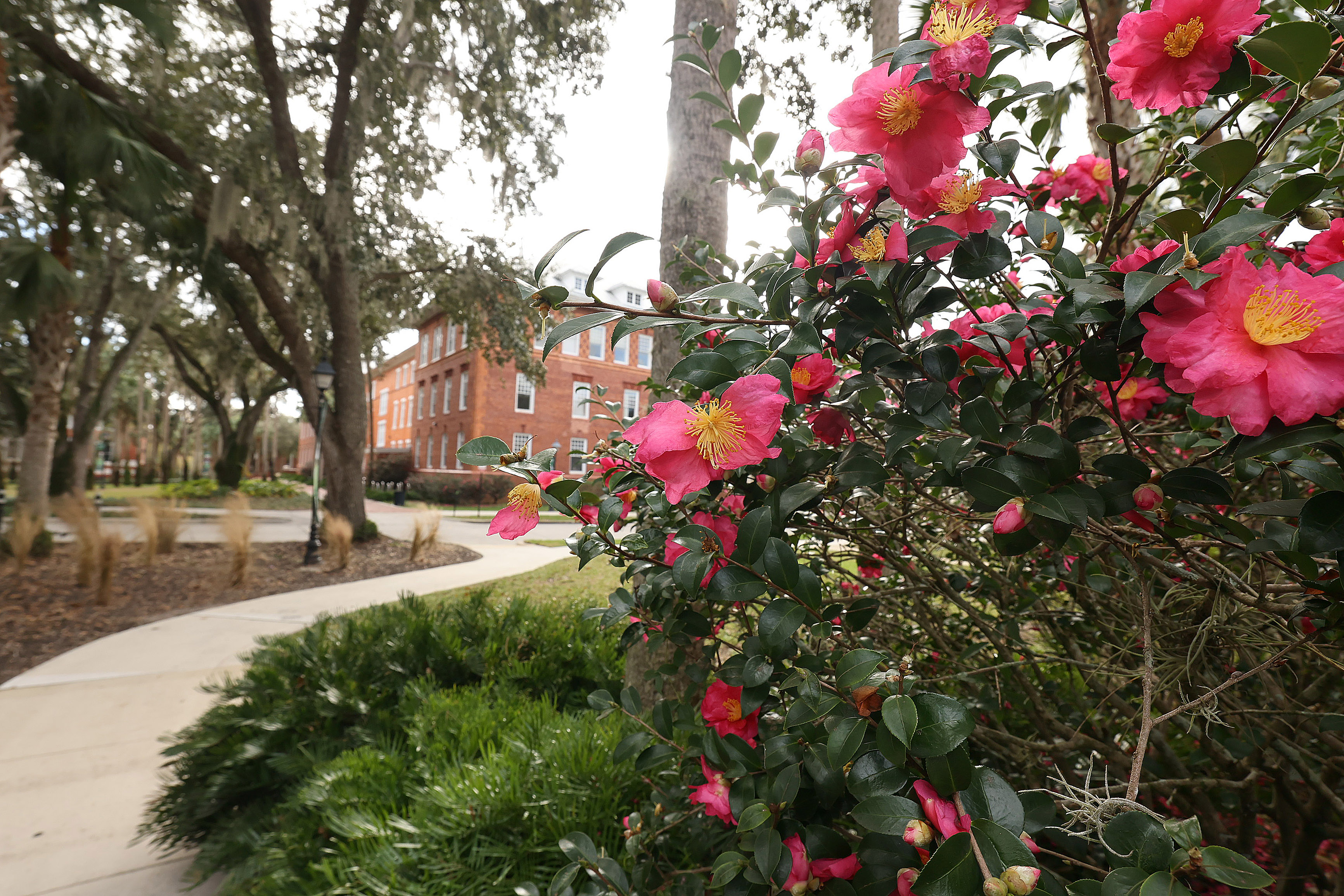
Stetson University is pictured on Wednesday, December 10, 2025. (Stephen M. Dowell/Orlando Sentinel)
Show Caption
1 of 4
A statue of John B. Stetson is pictured at Stetson University on Dec. 10, 2025. (Stephen M. Dowell/Orlando Sentinel)
Stetson fielded sports teams, often playing Rollins in a long-standing baseball rivalry.
In a 1976 column, Sentinel’s legendary sports writer Bill Buchalter declared the Tangerine Bowl basketball tournament a success and a “triumph for Central Florida with Stetson and Rollins gaining the championship round for the very first time.”
Stetson today enrolls about 2,400 undergraduates and 1,400 graduate students. It has 18 sports teams and is still known for its law school, which is on a separate campus near Tampa.
The university will open a new residence hall in 2026, housing another 300 students on its 175-acre campus.
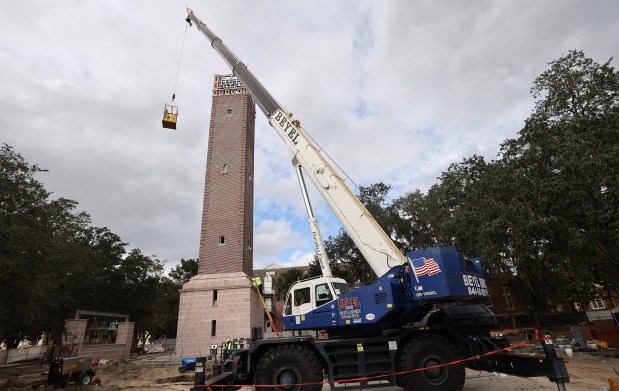 Renovation on the bell tower is underway at Stetson University on Wednesday, December 10, 2025. (Stephen M. Dowell/Orlando Sentinel)
Stetson also plans to rebuild Hulley Tower, a campus bell tower and mausoleum that was destroyed by several hurricanes. In a 2024 speech, Stetson President Christopher Roellke said rebuilding the structure would help take the school from a “Florida gem to national treasure.”
Like Rollins, Stetson hosts speakers and events that are open to the public.
That is a way “to continue the education of the citizenry, not of just the students that are on campus, but also the local community,” said Jeffery Gates, Stetson’s senior vice president of enrollment and marketing.
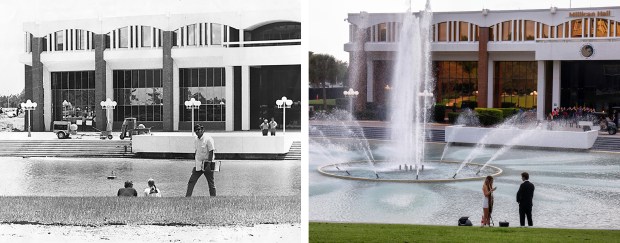 Florida Technological University student swalk and lounge near the Reflecting Pond in front of Millican Hall in 1970 (left), and a University of Central Florida student prepares to pose for graduation photos in front of the same pond on Dec. 10, 2025 (right). (UCF archives, Joe Burbank/Orlando Sentinel)
A ‘well-rounded university’ in east Orange County
UCF, with its much shorter history, sees its youth as an advantage.
“We create our own lane. We form our own speed. And that’s why we’re versatile,” said Manoj Chopra, UCF’s associate dean of academics.
Chopra, an engineering professor, has been at the university since 1992 and served on the school’s board of trustees from 2005 to 2009.
UCF has matured into a sense of self-confidence — especially after its undefeated 2017 football season brought national attention to the Orlando campus, Chopra said.
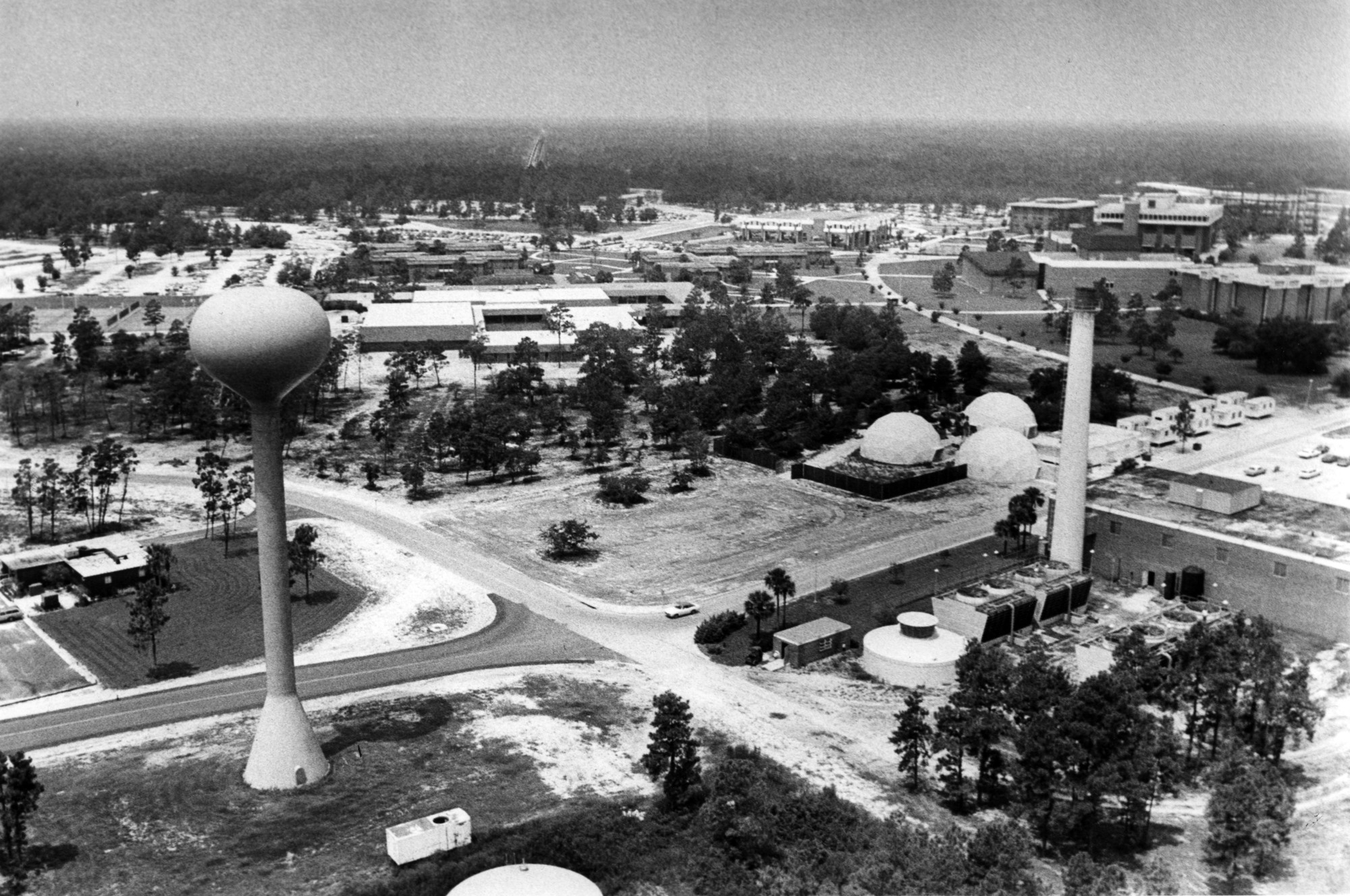
Aerial of Florida Technological University (now the University of Central Florida) in August 1973. (Orlando Sentinel file)
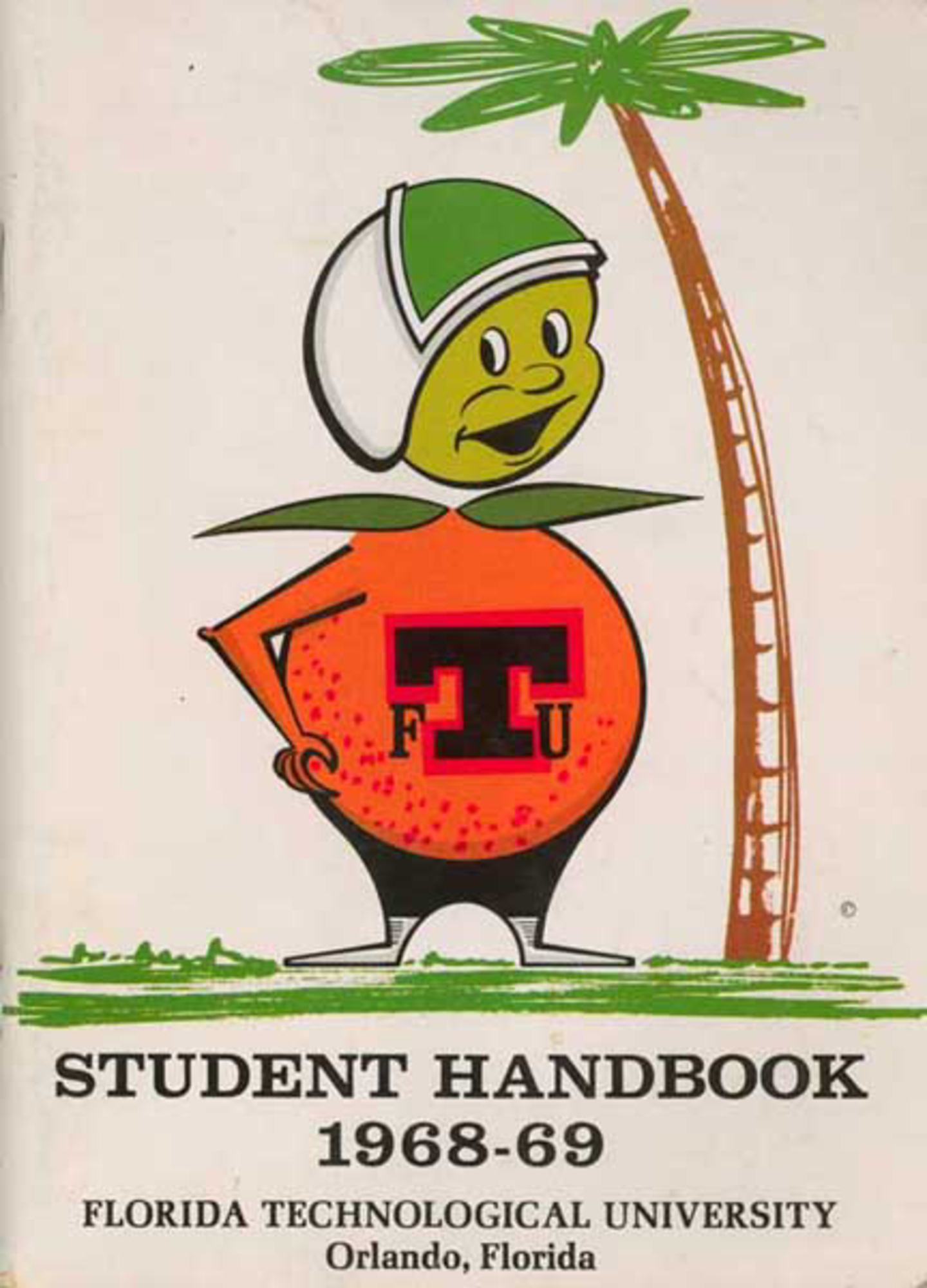
The Citronaut was the first mascot of Florida Technological University, which later became the University of Central Florida. (Courtesy UCF)
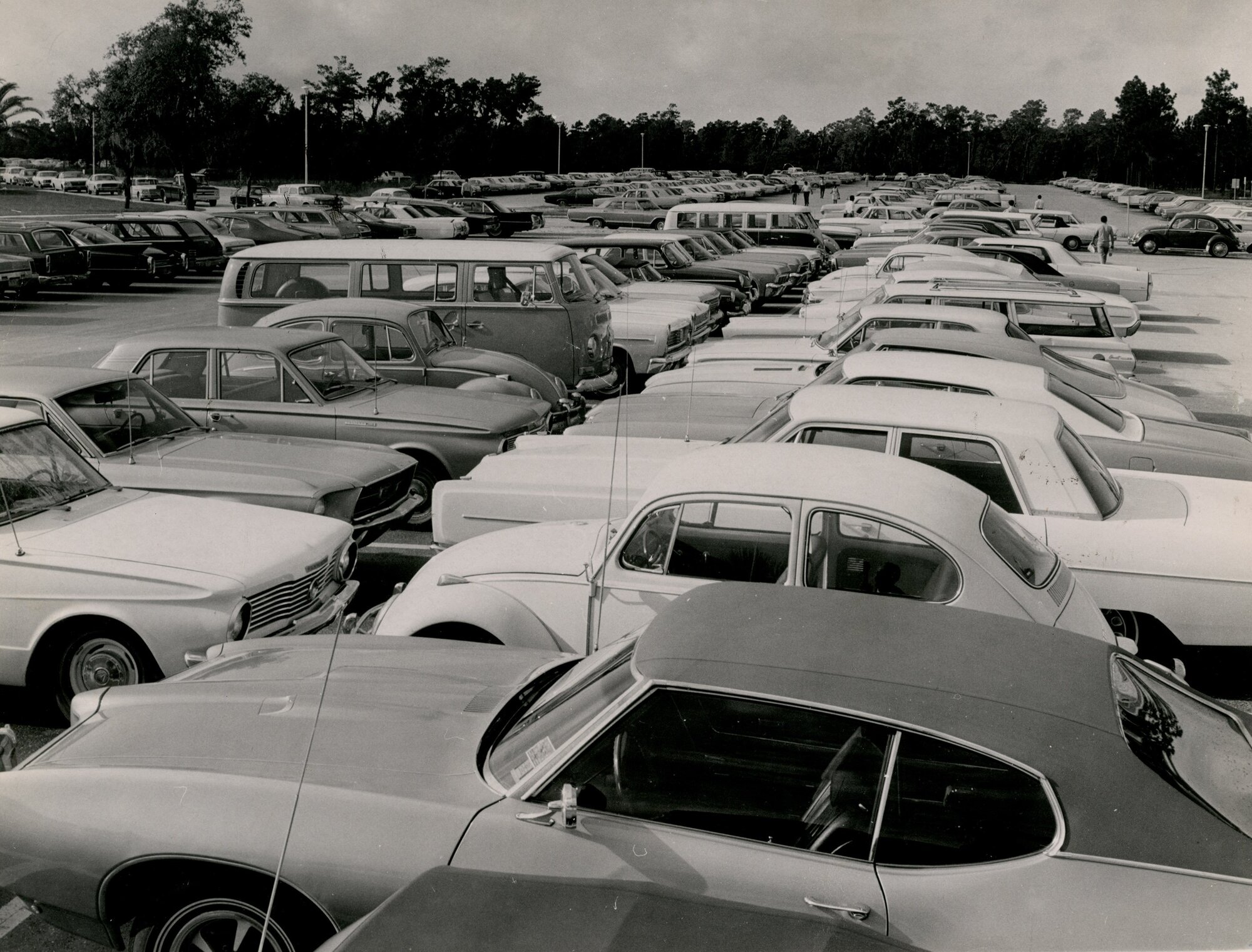
Parking at Florida Technological University on Oct. 3, 1969. (Orlando Sentinel file)
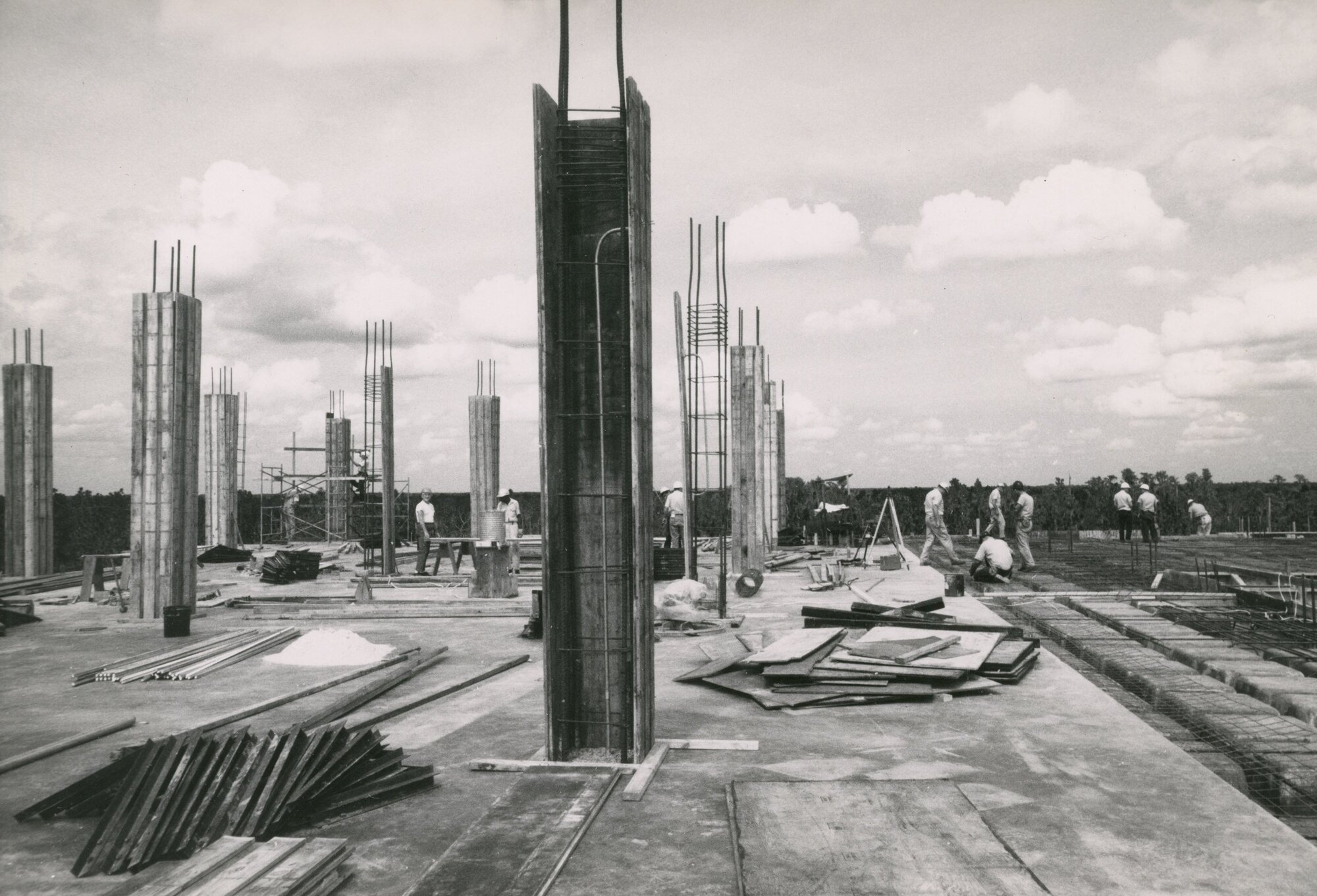
Construction workers shown on the third floor of Florida Technological University library building on Oct. 6, 1967. The library is the largest of FTU buildings and will house most administrative and faculty offices and some classroom space. (Orlando Sentinel file)
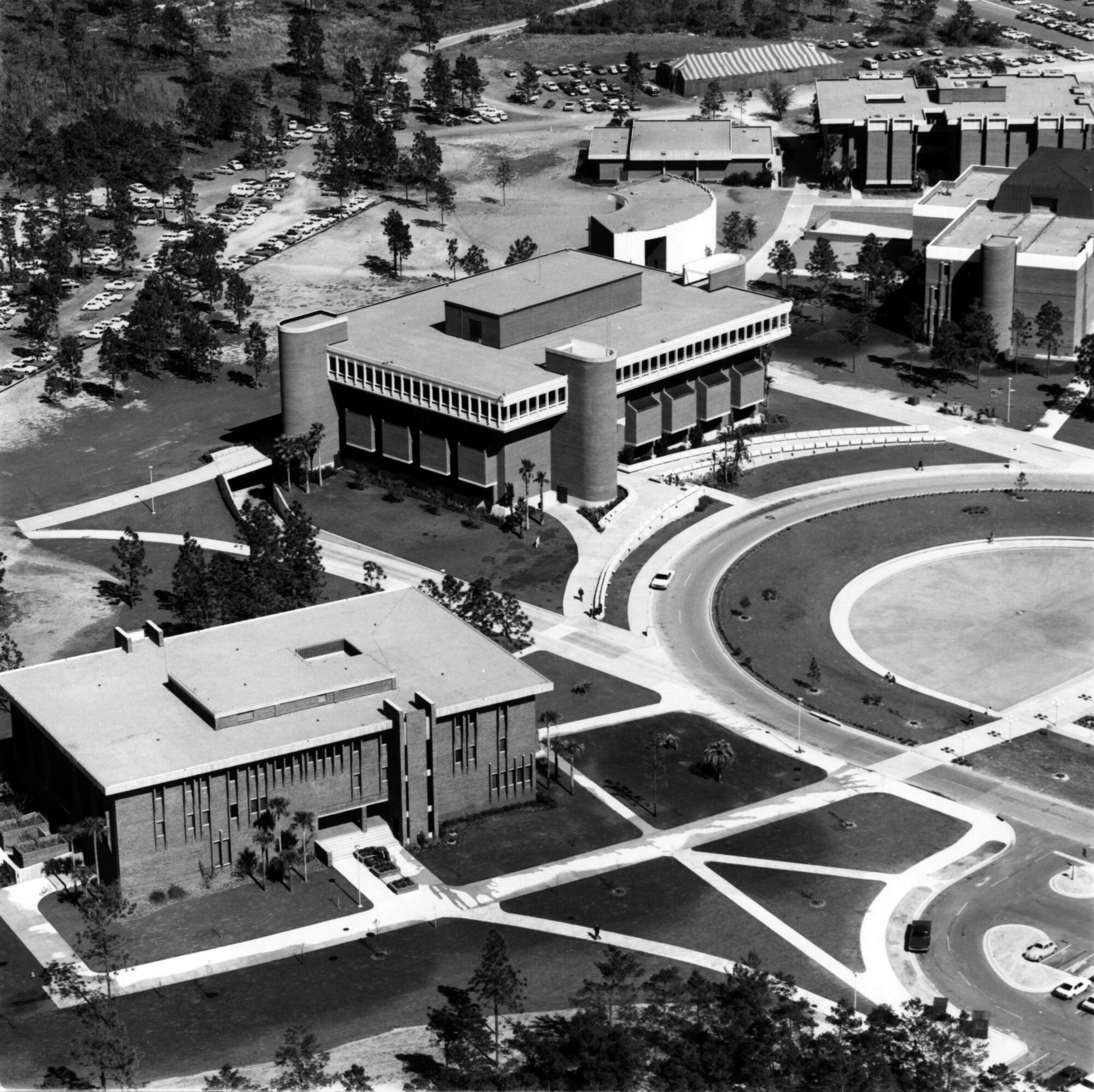
Aerial view of the Florida Technological University campus (now the University of Central Florida) in 1971. (Image courtesy UCF Special Collections)
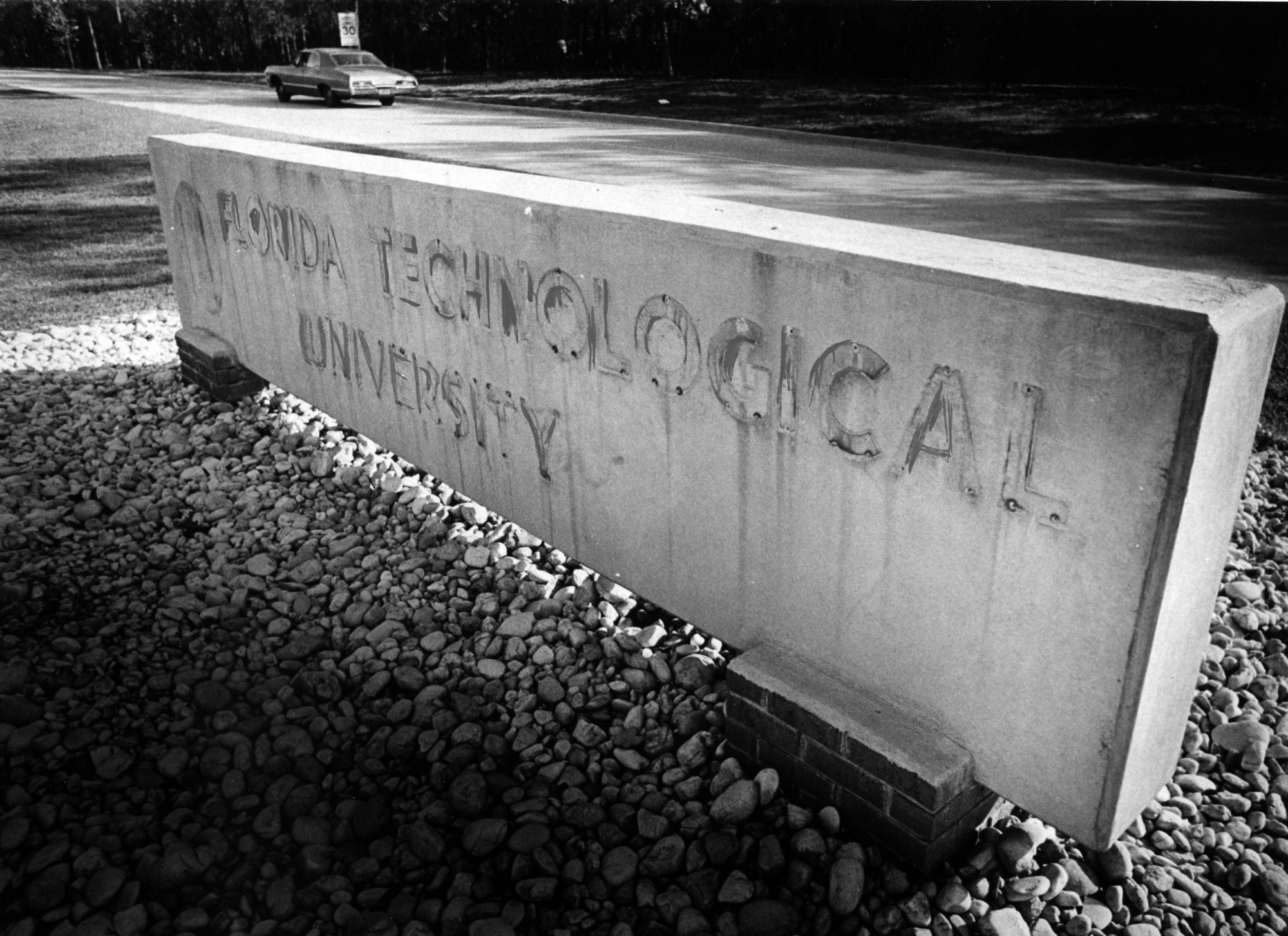
The letters are removed from the university sign on the corner of FTU Blvd and Alafaya Trail on December 13, 1978. Florida Technological University became the University of Central Florida on Dec. 6, 1978 when Gov. Reubin Askew signed legislation changing the name of the university. (Orlando Sentinel file)
Show Caption
1 of 6
Aerial of Florida Technological University (now the University of Central Florida) in August 1973. (Orlando Sentinel file)
Since its inception, UCF has largely fulfilled the mission to educate engineers and scientists to work in the space industry. Almost 30% of employees at Kennedy Space Center are UCF alumni, according to the school, and its graduates also fill jobs at local aerospace companies such as Lockheed Martin.
The Sentinel’s editorial board called the school “space university” in a 1963 column — a moniker the university has embraced through advertising and specialized “Space U” football uniforms.
But the school also has evolved beyond that engineering pipeline mission. In 2025, UCF’s most popular major was psychology, followed by computer science and health science.
It also moved from a largely commuter school to a full-scale campus under the tenure of President John Hitt, who was at UCF’s helm for 26 years.
As the Sentinel reported when Hitt died in 2023, he oversaw the addition of more than 100 new buildings, a medical school and on-campus football stadium — plus an enrollment jump of nearly 40,000.
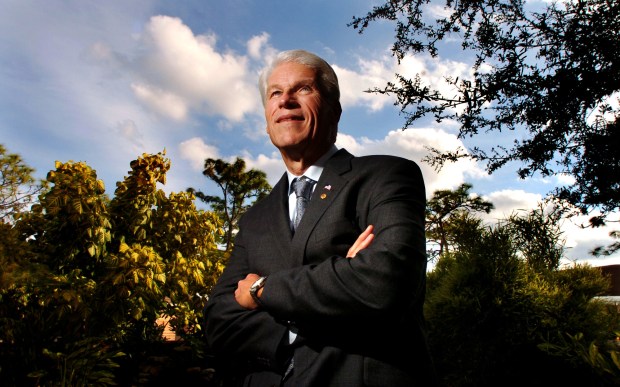 University of Central Florida president John Hitt, looking to the future, outside the Burnett Honors College at UCF on Dec.15, 2005. (Joe Burbank/Orlando Sentinel file)
UCF ushered in its “direct connect” program with local state colleges in 2005, guaranteeing admission to students who’d completed their associate degrees and showcasing what Hitt said was its commitment to “access and excellence.”
UCF’s admission standards have also become more competitive. The percentage of first-year applicants admitted dropped to 33% in 2025 from 49% in 2015.
The construction of residential towers, an indoor sports arena and an on-campus football stadium in the early 2000s changed UCF’s campus, with the 45,000-seat football stadium at the heart of that.
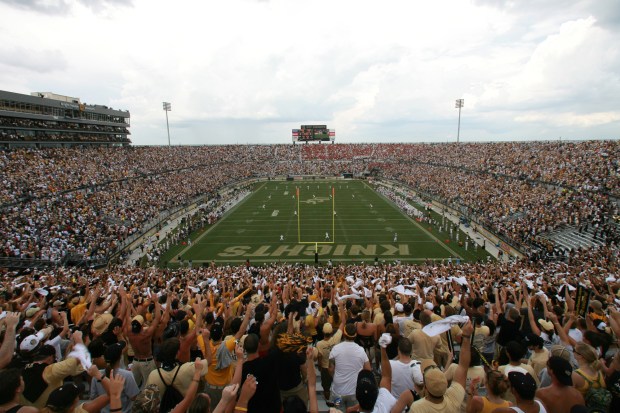 Fans cheer during the sold-out game between UCF and Texas at Bright House Network Stadium in Orlando on Sept. 15, 2007. (Orlando Sentinel file)
The stadium, soon dubbed The Bounce House, was packed for its September 2007 opening game.
“Sizzling debut,” said the Sentinel’s front-page headline on a story that noted how many students and alumni felt it was a transformational moment for UCF, creating a campus focus and school spirit.
In 2010, UCF opened its medical school in Lake Nona.
Before then, Manoj recalled riding a bus to Tampa with the football team when Hitt beckoned him to look out the window as they rode on State Road 417.
“He pointed out to a vast area of nothingness but green. There’s nothing there. And he says, ‘This is where the next UCF incredible impact will be,.’” Manoj recalled.
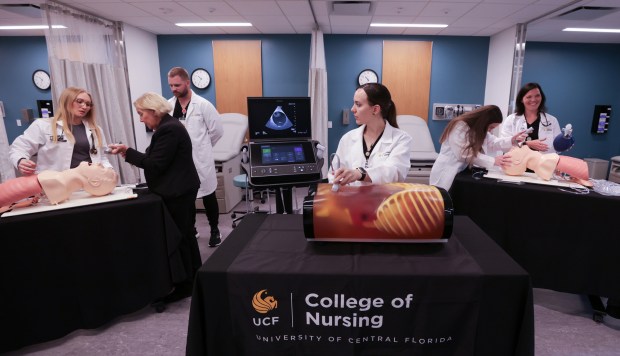 University of Central Florida nursing students work on a lesson in the UCF Simulation, Technology, Innovation and Modeling (STIM) Center on the first day of classes at the new Dr. Phillips Nursing Pavilion at the school’s Academic Health Sciences Campus at Lake Nona on July 18, 2025. The 90,000 square-foot, state-of-the-art facility will increase capacity for nursing student graduates by 150 annually. (Joe Burbank/Orlando Sentinel file)
The medical school helped spur hospitals and medical research facilities to open in what is now dubbed “medical city.” In August, UCF opened a new nursing school building there, too.
The school’s arts programs have grown, too. UCF students can study theatre, music and visual arts with strong local industry connections at Disney, Universal and at Electronic Arts.
Stella Sung, UCF’s director of the Center for Research and Education in Arts, Technology and Entertainment, said the university has added a visual arts building and art galleries since she arrived in 1987.
“We seek to be that well-rounded university. We seek to be able to have a variety of students who have a variety of interests,” Sung said. “UCF isn’t just about space and science, it’s also about arts and humanities and what makes us a great university.”
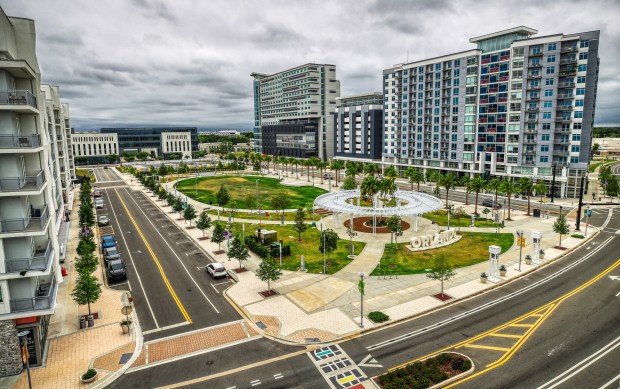 View of Luminary Green park in the Creative Village on April 22, 2024. (Ricardo Ramirez Buxeda/ Orlando Sentinel)
UCF also opened a 15-acre campus in downtown Orlando’s Creative Village in partnership with Valencia College in 2019.
Now, the school is renovating its chemistry and biology buildings, overhauling its Rosen College of Hospitality Building and expanding its football stadium to add more than 60 suites.
All four renovations are expected to be completed later this year.
When the Sentinel was founded 150 years ago, there were no colleges in the Orlando area and just a few in Florida.
But as Lane, the Rollins professor, noted, once those Northern church leaders began talking about starting a Central Florida college, the newspaper embraced it.
In an 1885 editorial, Lane wrote, the paper’s editor called Orlando a commercial center for Florida.
And, in what seems prescient in a community thousands of college students now call home, then added, “Why not an educational center?”