
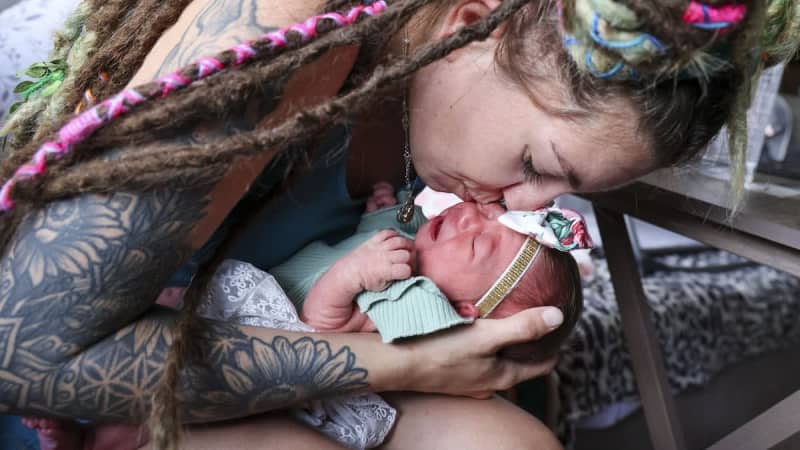
The air conditioning unitin Kaitlin Greenough’s Tampa rental sputtered.
Sometimes it worked, sometimes it didn’t. Then in June, as the summer heat surged,it died.
Florida law does not require that rentals have working AC, so there was little she could do to get her landlord to fix it.
She was about five months pregnant.
Greenough’s living room baked near 90 degrees. Her bedroom had no windows, so she sleptrestlessly in the stifling air.
“It’s a sweatbox,” said Greenough, 29.
She Googled how to make an at-home air conditioner, then jerry-rigged one with fans, ice and wet rags.
She threw up every day. She was always sweating. Her limbs swelled.
Her pregnancy grew complicated as her baby’s weight lagged, forcing repeated hospital visits.
Greenough’s experienceamid a warming world,particularly in southern states like Florida, is not unique. A growing amount of research shows that exposure to extreme heat can lead to dire consequences for pregnancies, resulting inhigh blood pressure or early labor, among other complications.
Just one day of exposure to extreme heat can increase these risks, according to the Centers for Disease Control.
In Tampa, human-caused climate change has added 20 extra days of dangerously hot temperatures for pregnanciesannually from 2020 to 2024, reported Climate Central, a nonprofit that compiles weather data.
The Tampa Bay Times talked to a dozen pregnant or formerly pregnant women about thechallenges they endured during the Florida heat.
Women described pregnancy as depleting and demanding. Add extreme heat and those months become intolerable.
“You plan on pregnancy being this beautiful experience, like sunshine and rainbows,” Greenough said. “But the reality of it is sometimes this is very hard and very traumatic on your body.”
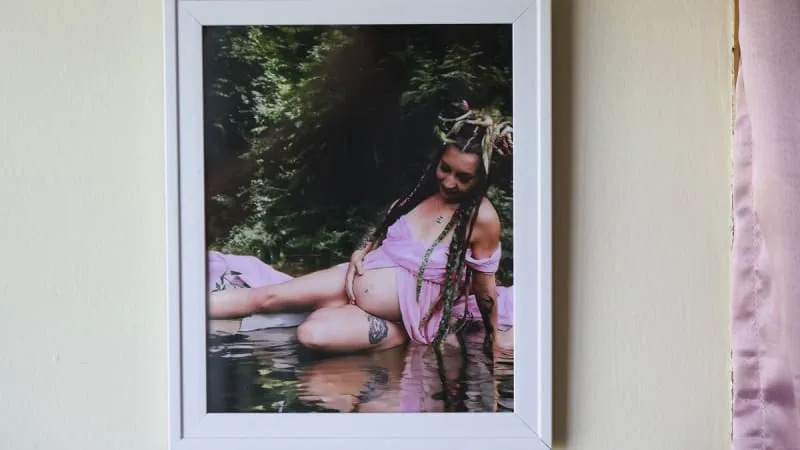
Growing a baby is like turning on a furnace inside the body.
Pregnant women work double time to develop a fetus and a placenta, which leads to higher core body temps.
Their hearts work harder and they gain more weight, trapping heat.
Because they breathe faster and pump more blood, they sweat more easily,said Sabari Radhakrishnan, the director of women’s health services at Tampa Family Health Centers.
Sweating is a natural way to cool down. As it dissipates from our bodies, it pulls heat with it.
But when it’s humid, sweat evaporates more slowly,reducing a person’s ability to cool. That’s because the atmosphere is like a soggy sponge ― itcan’t hold more water.
Radhakrishnan said pregnant women may feel dizzy, nauseous or cramping from exposure to heat. Women who are at least 24 weeks along and who become dehydrated could have contractions.
Near the end of her pregnancy, Kristin MacRone’s doctors gave her a shot to help her baby’s lungs develop.
The 38-year-old already was having a difficult pregnancy; she developed high blood pressure, and the burgeoning summer heat was an added burden.
Even a walk from her Indian RocksBeach home to her car for doctor appointments was a chore. She often asked her son to start the car so it would be cool before she got in.
“You’re also carrying all that weight in one part of your body,” MacRone said. “And then having to get into a hot, super hot vehicle.”
Around early May, when she was eight months pregnant,doctors said she could give birth at anytime. They suggested bed rest until birth to help the baby develop.
But her great aunt had died, and an outdoor funeral was planned for the following weekend in Tarpon Springs’ A.L. Anderson Park.
MacRone was moving across the country soon, and it would likely be the last time to see her entire family.
“What do you do when a family member dies?” she’d said.
MacRone sat under a pavilion, getting up only for a plate of food. The heat was unbearable.
At 2 a.m. the next day, she woke to contractions. She gave birth to her son, Thomas, about a month early.
To her relief, he was and is healthy.

But MacRone believes the hot temperatures at the funeral led to her early labor. When she arrived at the hospital, staff questioned whether she had overexerted herself, and her doctor mentioned the heat of that day, MacRone said.
MacRone and her family moved to Washington state in August, partly to escape Florida’s weather.
“It’s like something is bearing down on you at all times,” she said.
Research conducted by the Centers for Disease Control has found that chances for “adverse pregnancy outcomes” rise with longer exposure to high temperatures.
In addition to early labor, the risks include stillbirths and low delivery weight.
A scientific review published in Nature Medicine in November looked at nearly 200 studies that measured how pregnant women and their fetuses are affected by heat exposure.
The findings included increased odds for problems at birth during exposure to higher heat days and heat waves — and called for more emphasis on maternal and newborn healthin climate planning.
As the director of the avian hospital for the Seaside Seabird Sanctuary in Indian Shores, Melissa Edwards cares for about 80 injured birds.
Edwards spends most of her time inside the hospital. But in June 2024, when she was six months pregnant, the air conditioning went out for two weeks.
“I would say July and those first couple weeks of August were really tough,” Edwards said.
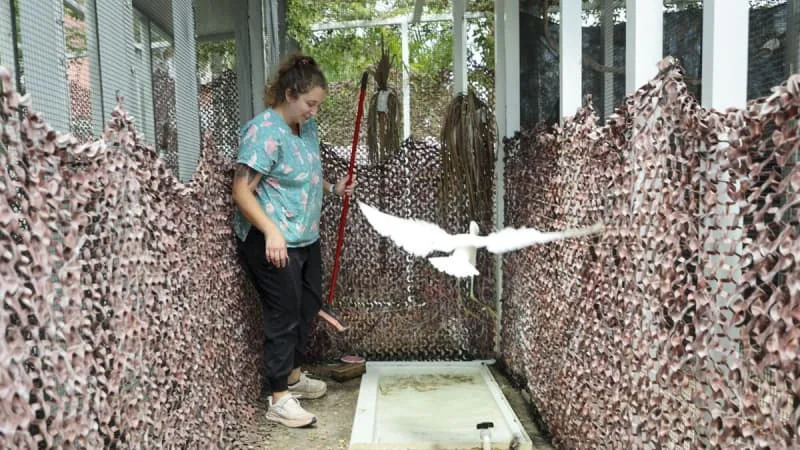
She was working in the outside hospital while late in her pregnancy. A visitor stopped to ask her some questions, when she felt faint.
“All of the sudden, it just washed over me, like ‘Oh my God, I am not feeling OK,’” Edwards said.
It’s easy to overdo it, she said.
She’s the leader of a small staff, and she felt a responsibility to help as best she could.
But her staff helped her, too. One person bought her a portable fan that wrapped around her neck.
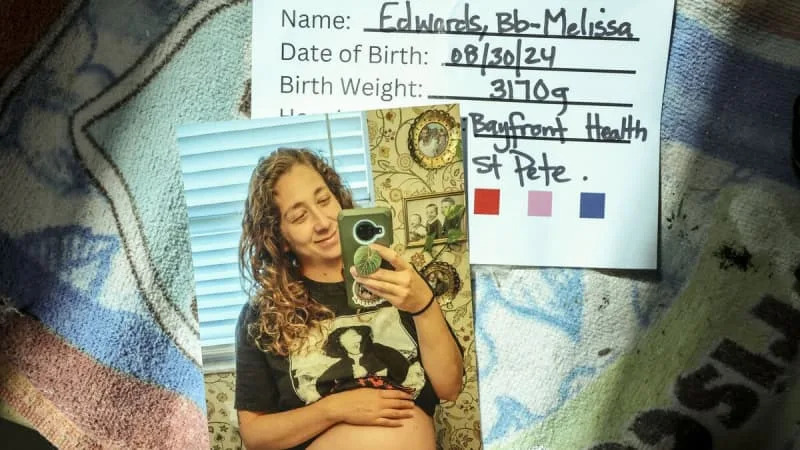
Edwards stayed on the jobuntil her unplanned C-section, then returned to work when hurricanes Helene and Milton were barreling toward Tampa Bay.
“For a lot of women, especially if they’re working while pregnant, you just kind of have to tough it out,” she said.
About a decade ago, Ashley Ward went to rural communities in the Carolinas to ask residents how climate change was affecting their lives.
Ward, who led a team focused on climate and health for the National Oceanic and Atmospheric Administration, expected questions about hurricanes.
Instead, residents asked her about heat. They often brought up worries about pregnant women.
“That fell outside of farmworkers, construction workers, student-athletes — that’s who you expected to hear,” said Ward, now the director of Duke University’s Heat Policy Innovation Hub.
In 2019, Ward and her team studied preterm labor in regions of North Carolina over a 5-year period during the annual warm season from May through September.
Researchers found higher overnight temperatures led to up to a 6% increase in preterm births in some regions of North Carolina.
In the Southeast, including Florida, climate change is leading to higher humidity and more nights with higher temperatures, which will likely magnify hardships pregnant women already face, said Ward.
A March of Dimes report showed that in 2024, the highest percentage of preterm births in the nation were in the Southeast. Florida averaged slightly better than some states but had the same preterm birthrate as North Carolina, which was 10.7%.
A person without access to cooling could historically open a window at night and find relief.
“But when outdoor temperatures overnight remain high, it means that mechanism for cooling isn’t really available anymore,” Ward said.
In Tampa over the last several decades, the number of nights when temperatures remained 80 degrees or higher has ballooned.
In 1985, just one day reached that threshold.
In 2025, there were 36.
Jennifer Mesen, 38, was in her third trimester in the summer of 2017.
“Exhaustion really was probably the biggest feeling … just feeling a little bit more irritable,” Mesen said.
The heat made situations unbearable.
Late in her pregnancy, Mesen and her family went to Busch Gardens. She sought shade and seating while her family was on rides.
“I remember, nobody got up from the benches,” Mesen said.
She sat on the ground for an hour, near the Congo River Rapids.
“I felt sad that no one really acknowledged a pregnant person sweating on the ground.”
“I think that we just believe that pregnancy is achallenging and difficult period, so we don’t acknowledge that heat can have dangerous impacts on it,” Mesen said.
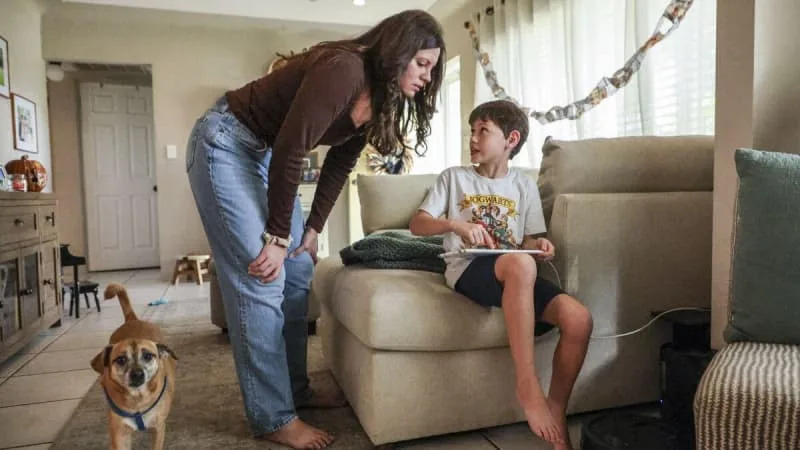
Mesen and other women told the Times how difficult it was to stay hydrated in Florida.
She had to have a C-section to deliver her baby because her fluids were so low.
Despite the complication, her child, Owen, was born healthy. He’s now 8 years old.
Mesen didn’t find out how much water she should have been drinking until her last doctor’s appointment. They suggested she drink about a gallon a day. She estimated she drank about half that.
“I couldn’t even drink that much, because at one point you just don’t have enough room,” she said.
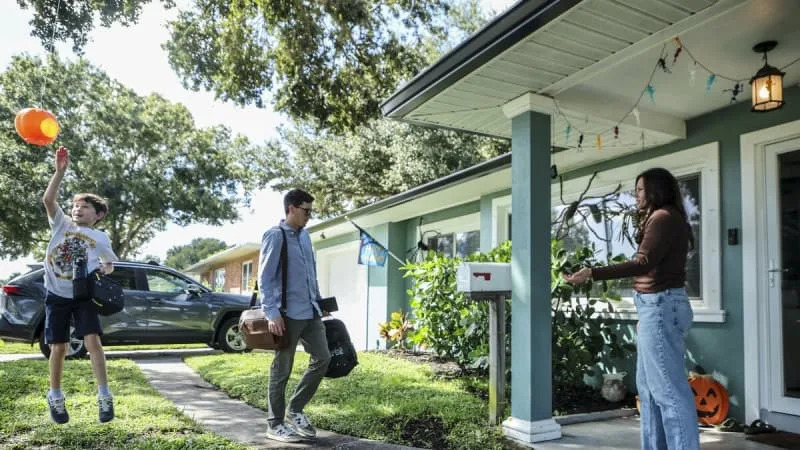
Heat protections for all people are sparse.
However, in 2023 the federal government enacted the Pregnant Workers Fairness Act, which requires employers to “provide reasonable accommodations” for pregnant women, those who recently gave birth or who havea related medical condition that would cause that employee harm.
The kinks are still being worked out on federal rules that seek to protect outdoor workers from extreme heat. In Florida, the state mandated in 2024 that cities and municipalities cannot pass their own heat protections after Miami tried to do so.
The state did pass a law in 2025 that allows pregnant women to apply for a disability parking permit. In late October, a federal lawsuit against the Florida Department of Highway Safety and Motor Vehicles alleged these permits violated the federal Americans with Disabilities Act. The department filed a motion to dismiss the case in mid-December, which the plaintiff, Olivia Keller, filed a response to on Tuesday.
Cheryl Holder, the co-founder and executive director of Florida Clinicians for Climate Action, said education and protection for pregnant women likely won’t come from the state.
“The only way will be at the community level, clinician level,” Holder said.
Working with funds from the CDC Foundation, Holder has partnered with doulas in South Florida to educate pregnant women about their risks from extreme heat and disasters like hurricanes.
Holder chose doulas because she found that populations most at risk to climate-related stresses, like low-income communities, often trusted them.
Lower-income areas typically have fewer shady trees and more aging buildings, which leads to higher energy costs and hotter homes.
She hopes to see providers use a screening process to determine a patient’s risk to extreme heat.
The Centers for Disease Control created a questionnaire for that purpose.
It includes questions like: Does a patient have working air conditioning? Do they know how to locate a cooling center if needed? Does the patient have stable housing?
Of the women the Times spoke to who are pregnant or were pregnant during the summer months, nearly all said doctors did not talk with them about heat.
Often, doctors just told them to drink a lot of water.
No longer living in her Tampa rental with no working AC,Greenough got out of her lease early and is now living in a place with consistent cooling.
For much of her pregnancy, she was high-risk. Her baby’s weight was low. She herself had barely gained weight.
She wasn’t eating much, and she believed it was partly from the heat.
“You can’t really gorge yourself or eat when you’re hot, or I can’t, anyway,” Greenough said.
Near the end of her pregnancy, her baby’s weight was in the fifth percentile, and then in the first percentile, she said.
She spent time in and out of the hospital, and doctors induced her in early October.
Greenough gave birth to Aurora, a tiny, squishy 5-pound, 6-ounce girl. The newborn, while little, was big enough that she didn’t need a lengthy stay in the hospital.
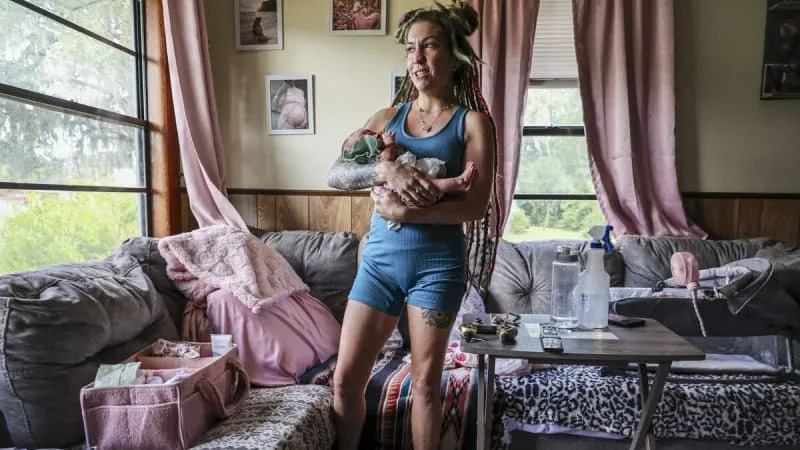
A week later, in Greenough’s Zephyrhills home, Aurora was about the length of her mother’s forearm. She cried, her lungs producing those healthy newborn baby wails.
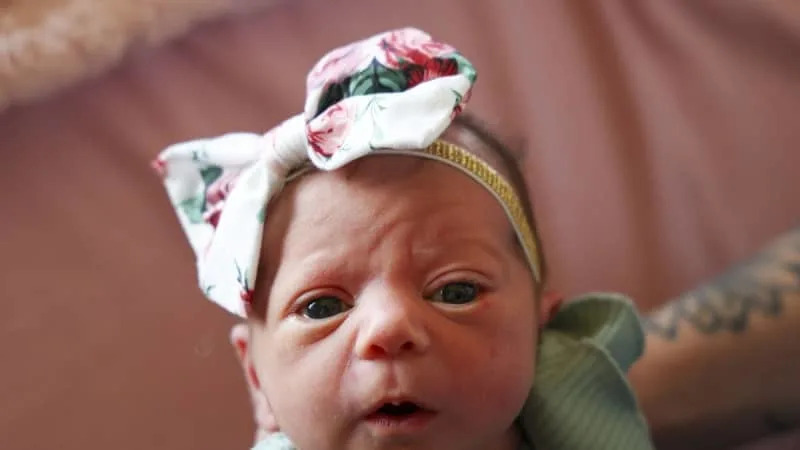
Greenough curled her index finger, letting the baby nibble on it. Aurora calmed, opening her eyes, her long eyelashes fanning her small face.
“She’s perfect,” Greenough said, over and over again.
• • •
The Tampa Bay Times launched the Environment Hub in 2025 to focus on some of Florida‘s most urgent and enduring challenges. You can contribute through our journalism fund by clicking here.