
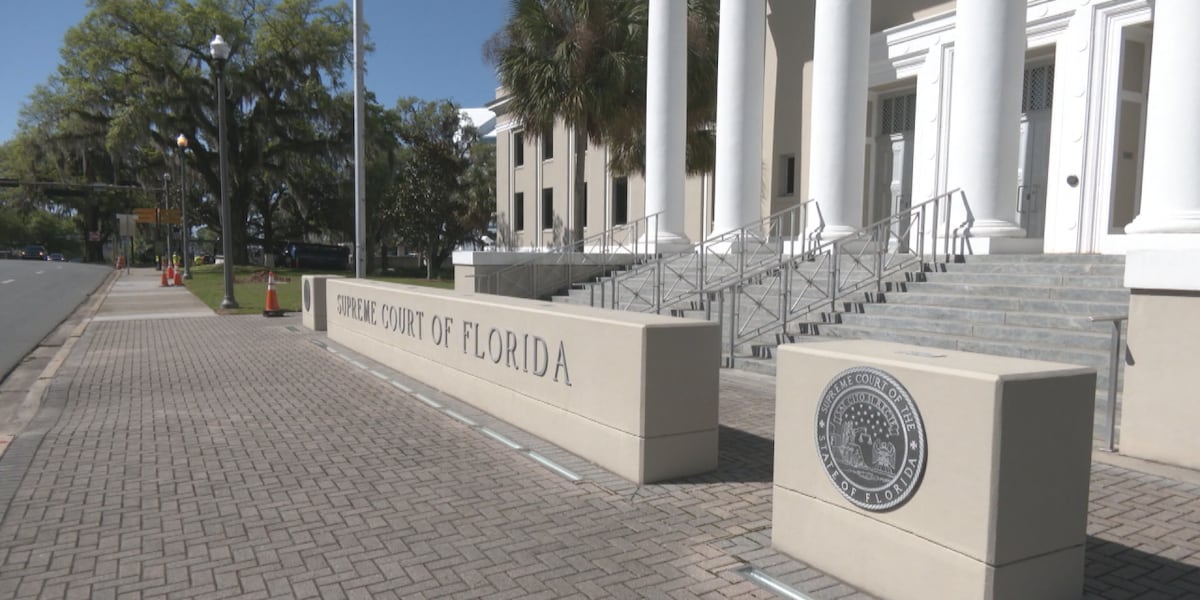
TALLAHASSEE, Fla. (WCTV) – The Florida Supreme Court ruled on Tuesday that a man who provided his sperm to a couple for at-home artificial insemination didn’t automatically give up his paternal rights.
The 4-3 decision determined that the previous legislation surrounding artificial insemination only applied to the use of “assisted reproductive technology (ART),” which is defined as “procreative procedures which involve the laboratory handling of human eggs or preembryos,” according to the ruling.
The case in question involves Angel Rivera, a Florida man who gave his sperm to Ashley Brito and Jennifer Salas for use with an at-home artificial insemination kit. Brito gave birth to the child and she and Salas were listed as the child’s parents on the birth certificate.
The couple raised the child together for a little over a year before separating, according to the ruling. Rivera then filed a petition in circuit court asking to be recognized as the child’s legal father.
The court denied the petition on the grounds that he gave up his paternal rights under section 742.14, which states “the donor of any egg, sperm or preembryo, other than the commissioning couple or a father who has executed a preplanned adoption agreement under s. 63.213, shall relinquish all maternal or paternal rights and obligations with respect to the donation or the resulting children.”
In the court’s decision, it said Rivera was a sperm donor who did not meet either of the statute’s two exceptions of relinquishment. Additionally, the court said that the artificial insemination procedure, not being done in a clinical setting, does not change the applicability of the statute.
The Second District affirmed the circuit court’s ruling.
More Florida politics:
The Florida Supreme Court’s majority opinion, written by Justice Jamie Grosshans, argues the statute only applies to assisted reproductive technology, not at-home insemination.
“Because ART was not involved…Rivera has not automatically relinquished his paternal rights and obligations to the child at issue,” the majority opinion read.
While the Supreme Court ruled that Rivera did not automatically give up his paternal rights, it emphasized that his legal rights must be determined by other sources of law addressing paternity.
This decision did not come without contention as Justice John Couriel penned a dissenting opinion that two other Justices joined, saying it’s clear Rivera was a donor under the current statute.
The dissent claimed Salas and Brito’s parental rights haven’t come into question in this case. “But now, the majority authorizes Rivera to become parent number three,” the dissent reads. “This might be good or bad policy by the Court’s lights, but it is not our law.”
In the majority opinion, the “third parent” argument is disputed. “We do not address, as the dissent implies, whether Rivera is likely to succeed in establishing any legal rights under the statutes governing paternity, especially given that the child in question was born within an intact marriage,” the majority opinion reads.
Chief Justice Carlos Muniz and Justices Charles Canady and Jorge Labarga joined Grosshans opinion.
Justices Renatha Francis and Meredith Sasso joined the dissent.
To keep up with the latest news as it develops, follow WCTV on Facebook, Instagram, YouTube, Nextdoor and X (Twitter).
Have a news tip or see an error? Write to us here. Please include the article’s headline in your message.
Be the first to see all the biggest headlines by downloading the WCTV News app. Click here to get started.
Copyright 2026 WCTV. All rights reserved.