
PUNTA GORDA, Fla. — Representatives from Lee and Charlotte counties met Monday in an effort to find common ground over new parking restrictions on Boca Grande, a barrier island shared by both counties.
Although the meeting concluded without a resolution, both sides agreed to reconvene with their full county commissions to discuss potential compromises, including proposals from Charlotte County.
The meeting served as a conflict resolution hearing required under state law, preceding any potential legal action, with officials debating whether the parking rules are improving public safety or limiting access to the beach and harming local businesses.
Residents, many from Charlotte County, filled the Punta Gorda Charlotte Library, some holding signs that read, “Keep Boca Grande Open for All.”
Although the meeting was open to the public, it did not allow for public comments. Audience reactions, including brief groans, punctuated parts of the discussion and at one point nearly brought the meeting to an early end.
“I chose to come up here in the spirit of trying to come up with a discussion,” Lee County Commissioner Kevin Ruane said, addressing Charlotte County Commissioner Joe Tiseo. “If you can’t control your public, then I’m going to leave.”
“I would just say that you’re a very seasoned elected official, as well as I am,” Tiseo said. “While I asked for the decorum, I don’t think the comments they said are that outrageous.”
The meeting wrapped up minutes later, less than 30 minutes after it began.
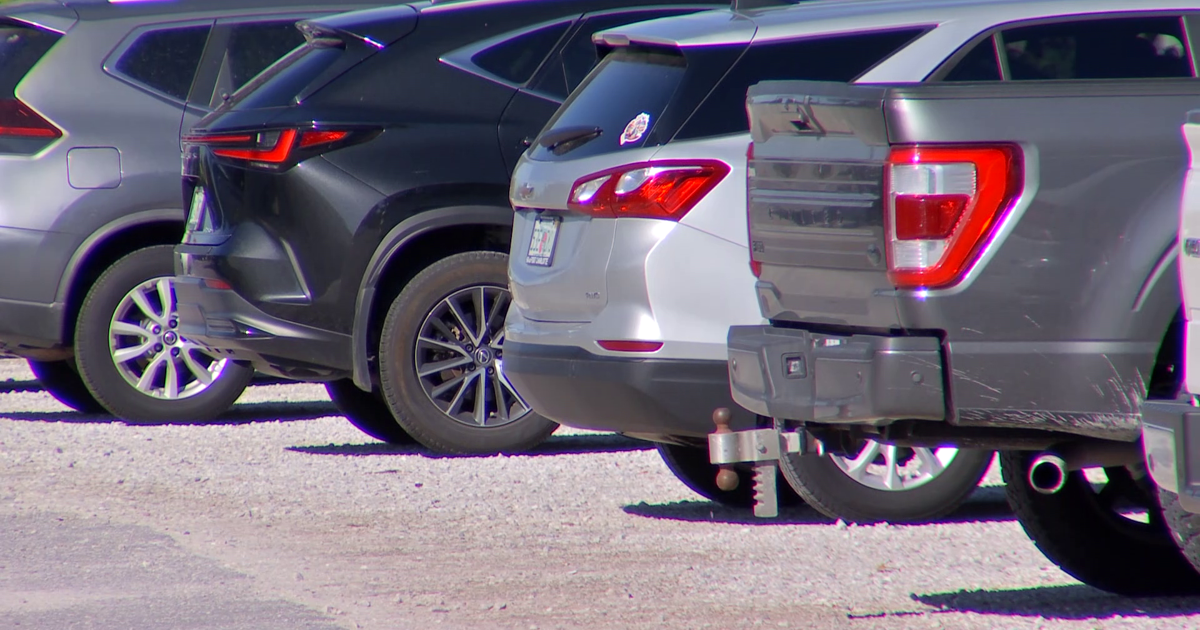
The discussion centered on Lee County’s parking ordinance, passed unanimously in August, which limits most visitors to three hours of parking on Boca Grande. Residents and employees are required to display parking decals. Lee County officials stated that the rules were implemented to address congestion, public safety, and environmental concerns on the island.
Charlotte County residents and business owners argue that the ordinance disproportionately affects their ability to access the beach and visit the island.
“I live here in Punta Gorda, and that’s my closest beach,” said Lisa Hochuli. “I don’t think people should live so close to the water and have to drive three hours to get to a public beach. There are businesses on that island that we support.”
Tiseo proposed several potential compromises during the meeting, including temporarily pausing enforcement of the ordinance while both counties work together on a pilot program or parking study.
“I made three recommendations today,” Tiseo said. “One of them was basically to pause the enforcement while we work through some type of pilot program or pilot study to see if we can come up with some concrete recommendations moving forward.”
He also suggested seasonal adjustments to the ordinance. “During the off-season, could the ordinance completely be lifted? Is it even necessary at that point? I mean, anybody knows in the off-season who’s been out there, parking is not an issue.”
Tiseo said his goal was to find a balanced solution and avoid legal action. “Courts are a last resort,” he said.
Ruane pushed back, saying he did not hear a proposal that addressed what he described as the root cause of the issue — rapid residential development in Charlotte County, increasing demand on Boca Grande’s limited infrastructure.
“The real red herring is the fact that they’ve built 32,000 residents within three miles of Boca Grande,” Ruane said. “Parking has increased dramatically. People have essentially entered a situation with no public safety concerns whatsoever. The visitors block driveways, they urinate on people’s pools, they do whatever they want to do, and it’s created a real issue within the county.”
Residents and business owners at the meeting said the ordinance discourages visitors and negatively impacts restaurants and shops that rely on tourism. They argue the three-hour limit makes it challenging to spend a whole day on the island, and the cost of accessing Boca Grande, including the $6 toll, no longer feels justified.
To end the meeting, Ruane asked Tiseo to put his recommendations in writing for Lee County’s board to review. Both sides agreed to continue discussions with their full county commissions before considering legal action. No date has been set for the next meeting.
For now, Lee County’s parking ordinance remains in effect as discussions continue.
Charlotte County Commissioner Joseph Tiseo’s Suggestions:
Would Lee County consider pausing or narrowing enforcement while ROW parking is restored and studies are completed?
Could seasonal, time-limited, or targeted measures address concerns more proportionally?
Is Lee County open to collaborative study or pilot programs before permanent restrictions remain in place?
Exceptions to the 3-hour limitation are as follows:
A vehicle displaying a ‘C’ permit is not restricted to the 3-hour limit in non-residential zones.
A vehicle displaying a ‘B’ permit is not restricted to the 3-hour limit in a non-residential zone that is adjacent to the hotel/motel where the permit holder is a registered guest.
Vehicles displaying an ‘A’ ‘B,’ ‘C,’ or ‘D’ permit and vehicles parked for attendance at an event sponsored by organizations located, as of January 1, 2025, on Gilchrist Avenue are not subject to the 3-hour restriction in those parking areas located at the western end of 5th Street, between Gilchrist Avenue and the Gulf of Mexico.
Visitors are encouraged to review the full parking map and to check on-site signage to avoid violations.
To learn more about the ordinance, view the parking map, or learn how to obtain a parking permit, click here.