
Before the sun could fully rise and warm the frigid warehouse, the day had already begun for Tampa Bay Solar.
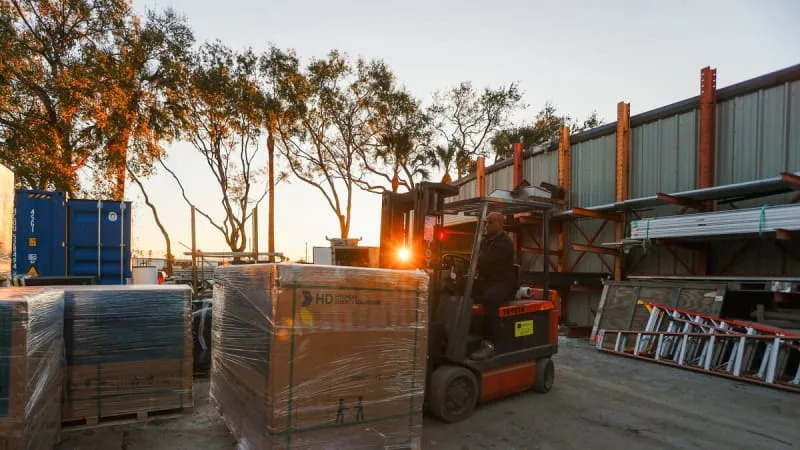
Lively Latin music trumpeted from the open windows of a company van, providing the soundtrack as workers loaded solar panels onto vehicles with a forklift.
It was Dec. 31, a day that had already defined half of their overtime-filled year. That’s because the One Big Beautiful Bill Act, signed into law by President Donald Trump in July, moved up the end of the 30% federal tax credit for residential solar projects by nine years, to the end of 2025. A crush of customers put in orders, trying to save thousands on their rooftop arrays while they still could. Solar workers around the state worked six or seven days a week. Distributors started running out of panels.
As the hoodie-bundled workers gathered their equipment in Tampa, it was less than 24 hours until the deadline.
For now, Steve Rutherford, founder and president of Tampa Bay Solar, and his employees focused on getting these final jobs completed sothey’d still qualify for the discount. As one employee plucked one of the last Keurig pods from the office coffee bar, the morning felt less like a frantic scramble and more like the exhausted end to a long, deliberate push.
“Slow and steady wins the race,” said Rutherford, a retired Navy SEAL. “It’s not rush to failure.”
The solar industry is one constantly adapting to new technology, selling customers on the once-futuristic idea that they can power their homes without a utility company. Throughout the warehouse, though, was also a reminder of Tampa Bay’s recent past: Hundreds of panels from homes destroyed by the 2024 hurricanes lay in stacks, which the company offered to store for displaced customers.
But today, all that mattered was the present. Had they run this customer’s credit card yet? Have the backordered roofing materials arrived? Rutherford’s team, comprised largely of military veterans and immigrants, headed out on their final jobs of 2025.
DeSantis names sponsor of bill striking ‘climate change’ from Florida law to utility board
To get in by the year’s end, customers had to get on the list by September, Rutherford said. This final group included new homeowners, a Tampa Bay Lightning player (Rutherford declined to provide a name) and Tampa Mayor Jane Castor.
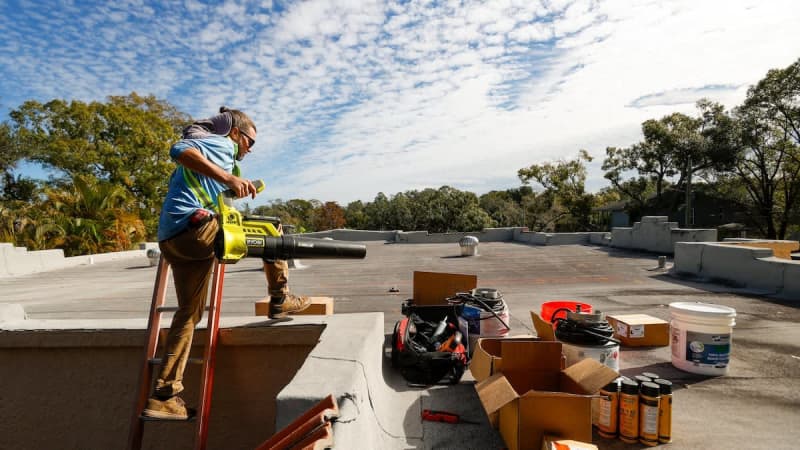
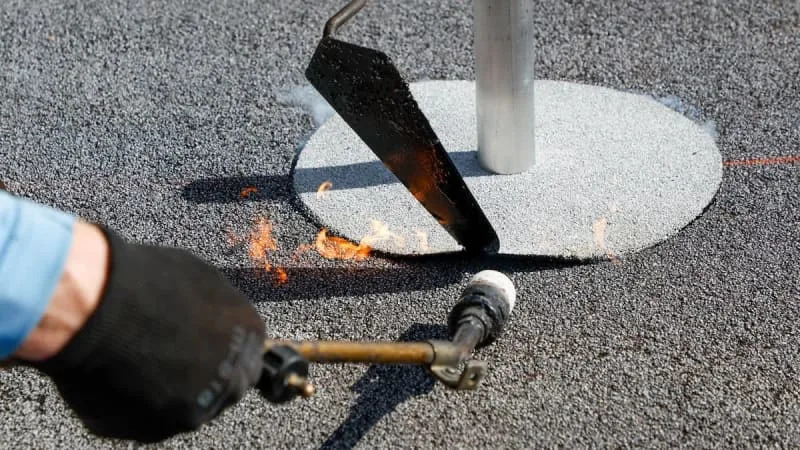
At Castor’s house, solar technician Dan Harmon worked on wiring the panel system into the meter monitored by Tampa Electric. The previous day, he and his team had climbed on the roof to draw a grid in yellow and orange chalk that they then replaced with metal mounts and rubbery roofing material cut into doughnuts. They used a propane torch to melt the tar on one side, then pressed the circles into place with a metal spade, like browning toast on a griddle.
Much of solar panel installation requires well-honed skills if it’s to be done right, Rutherford said. That meant he wasn’t able to rapidly hire more workers to meet the surging demand.
Horror stories have started circulating about homeowners who hired less reputable companies out of desperation to get the tax credit. The tales include shoddy jobs, untrained workers and outlandish promises from salespeople that could never be fulfilled.
“I’m hearing more and more about lawsuits that are coming out for companies that had this rapid growth and took on more than they should’ve,” he said. “It’s unfortunate because it gives the industry a poor reputation.”
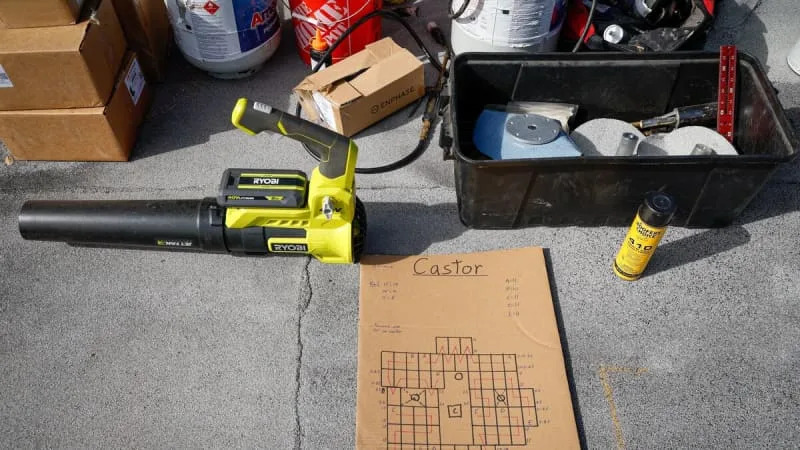
Castor said she’d been considering rooftop solar panels for a while, but the end of the program pushed her to act. Meanwhile, she and her staff are also working to determine the impacts to the city of Tampa, which has also installed solar panels on municipal buildings using the program.
Castor has been hearing from more and more residents concerned about their electric bills, which were particularly high in 2025 because of hurricane fees, a record-hot summer and rate hikes.
“It doesn’t take a rocket scientist to figure out they’re not going to decrease anytime soon,” she said.
Here’s what people across Tampa Bay are paying for electricity
Castor is hoping the panels will more than halve her electric bill, which have climbed higher than average because of a backyard koi pond and a heated pool. (Castor declined to disclose her exact bill amount, but Rutherford said water features like hers are “energy hogs.”)
People in the solar industry for months have been confused about exactly how far along the rooftop solar projects needed to be on Dec. 31 to qualify for the tax credit.
The law reads that “expenditures made after December 31, 2025″ are ineligible. But a related fact sheet from the Internal Revenue Service, released after the law’s passage, said the projects needed to be fully installed by the end of the year to qualify, not just paid for.
Rutherford said his teams were working to get all the projects as close to completed as possible by the deadline.
On Jan. 2, workers finished Castor’s roof, the dark panels glimmering cobalt blue in the overcast light.
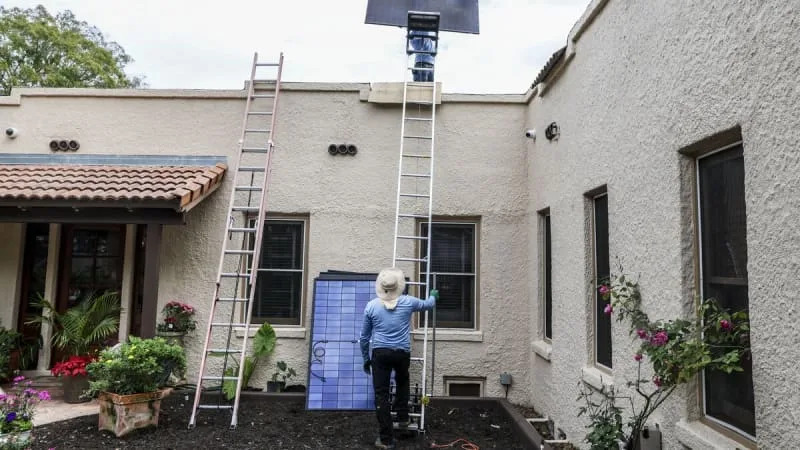
Even with the turbulence, Rutherford said he feels cautiously optimistic that Tampa Bay Solar will survive through 2026. He isn’t so sure about some of his peers, and he’s bracing for roughly half of Florida’s solar companies — around 200 firms — to go under this year.
For Tampa Bay’s mobile home residents, high electric bills can be a crisis
“My bankers are telling me they’ve got solar companies going out of business,” he said. “There’s going to be a thinning out.”
Harmon, one of the solar technicians, said he’s worried about people he knows at smaller operations.
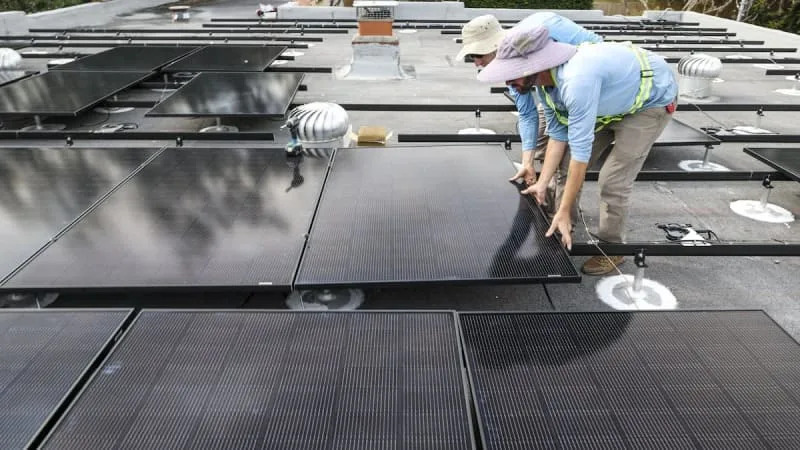
At least for Tampa Bay Solar, the end-of-the-year rush still helped fill work schedules for the beginning of 2026. Dozens of customers called too late to make the tax credit deadline, Rutherford said, but still decided to invest in rooftop solar because they’re so fed up with electric bills.
Still, the pitch is getting harder just as people already feel their budgets tightening.
His company has jobs booked through April. It’s unclear what will happen after that.
• • •
The Tampa Bay Times launched the Environment Hub in 2025 to focus on some of Florida’s most urgent and enduring challenges. You can contribute through our journalism fund by clicking here