
Written by Michael Lewis on January 7, 2026

Advertisement
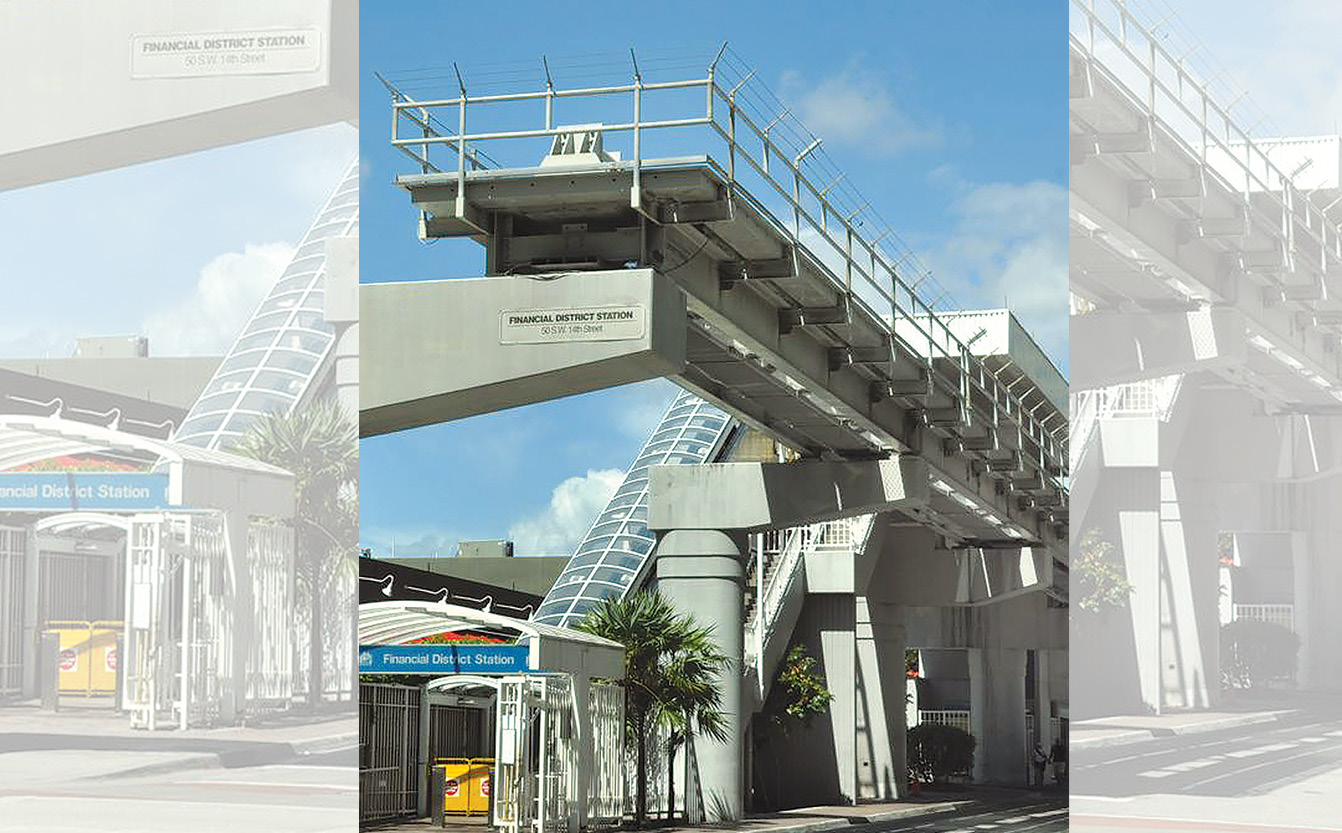
Three years ago, it seemed smart to extend Metromover to Miami Beach and the Design District. Today, the county struggles just to keep Metromover rolling where it is now, much less add on.
The aging Metromover that opened on a fixed elevated guideway through downtown in 1986 got a contract in 2021 for a vital $150 million upgrade, shutting down from time to time to finish work by a May 2025 deadline.
Yet this month, county commissioners will vote to extend a separate contract just to oversee the lagging upgrade, spending an added $15.5 million in hopes work will end by 2028 or 2029.
Worse, apparently only one company can actually do the upgrade – Alstom, which is now years behind – and presumably that would be the only company that could extend Metromover to Miami Beach. To say the least, that doesn’t instill confidence.
Alstom is the prime contractor upgrading Metromover. In 1986 Metromover was the first urban application of the Westinghouse Automated People Mover, “which is now part of the Alstom product portfolio,” Alstom said in a June 2021 news release.
“Over the years, the system has been expanded and the vehicle fleet has been replaced but some of the major subsystems are reaching the end of their design life,” that release said. “We are pleased to be supporting Miami-Dade County in modernizing the iconic Metromover system, which has been serving area residents and visitors for 35 years, and to be helping the county meet its future mobility requirements.”
But in examining a contract to oversee the work, members of the Citizens’ Independent Transportation Trust were told last month that Alstom isn’t working ahead on future mobility but on past-due patches and is headed into legal quagmires.
“Due to the prime contractor, Alstom Transport USA Inc., failure to meet required milestones and continued performance deficiencies, additional [construction, engineering and inspection] services are necessary to maintain continuous inspection and compliance monitoring, enforce schedule requirements, support Metromover maintenance coordination, and assist with emerging and anticipated claims, including mediation and arbitration processes,” the trust learned in a memo from Executive Director Javier Betancourt.
As trust members grappled with more than doubling the cost for AtkinsRealis USA Inc. to oversee Alstom’s work, adding $15.5 million to that fee, they properly questioned why that spending is needed. Stacy Miller, county director of transportation and public works, talked about the years-late Alstom work and hinted at future operational outages that will flummox passengers.
“Unfortunately, this project is not on schedule and continues to delay,” she said. “We have modified the hours of service from Metromover to try to provide the contractor with more service hours to instill some opportunity for them to advance this project. In addition, we are working with them on a completely new schedule – it’s a hybrid schedule that would allow them to hopefully advance work and get greater production rates.”
That hybrid schedule, according to Mayor Daniella Levine Cava, “would allow closure of limited segments of the system to expedite installation and certification while maintaining at least 75% of the system in service.”
That’s like rolling blackouts of electricity, where different areas of Metromover would be shut down from time to time. What would that mean to reliability of service?”
Also like electricity from a utility, it seems only a single company can work on Metromover.
“I will say that this is a very specialized type of project,” Ms. Miller said. “There’s very few firms that are capable of assisting us, and there are very few contractors who are capable of performing this work. In this instance, this is the contractor that originally produced the project … and often is the only contractor who’s available to perform any upgrades to the service.”
“So you’re not happy with them, I guess, but you’re working with them?” asked trust member Robert Ruano.
“I don’t want to say I’m not happy,” Ms. Miller responded. “I’m not happy with their production rates, I will admit that. We want to get this work done,” she added emphatically. “We need to get this work done. We will find ways of working with them…. We are out of time already. We do need to extend the contract time.”
Maybe so, but in late 2022 the mayor changed plans for Baylink running to Miami Beach from a privately funded $1.3 billion monorail across the bay to a $1 billion Metromover extension. In December, the trust was told the $1 billion cost has become $2 billion.
Given a doubled cost, a system that’s taking forever for maintenance, and a single vendor with which the county is struggling, we shouldn’t rely on expansion of Metromover anywhere – certainly not as a Baylink that was proposed almost 40 years ago and has yet to be put under a contract that the mayor pledged would be signed in 2023.
There’s just one letter separating mass transit from a transit mess.