
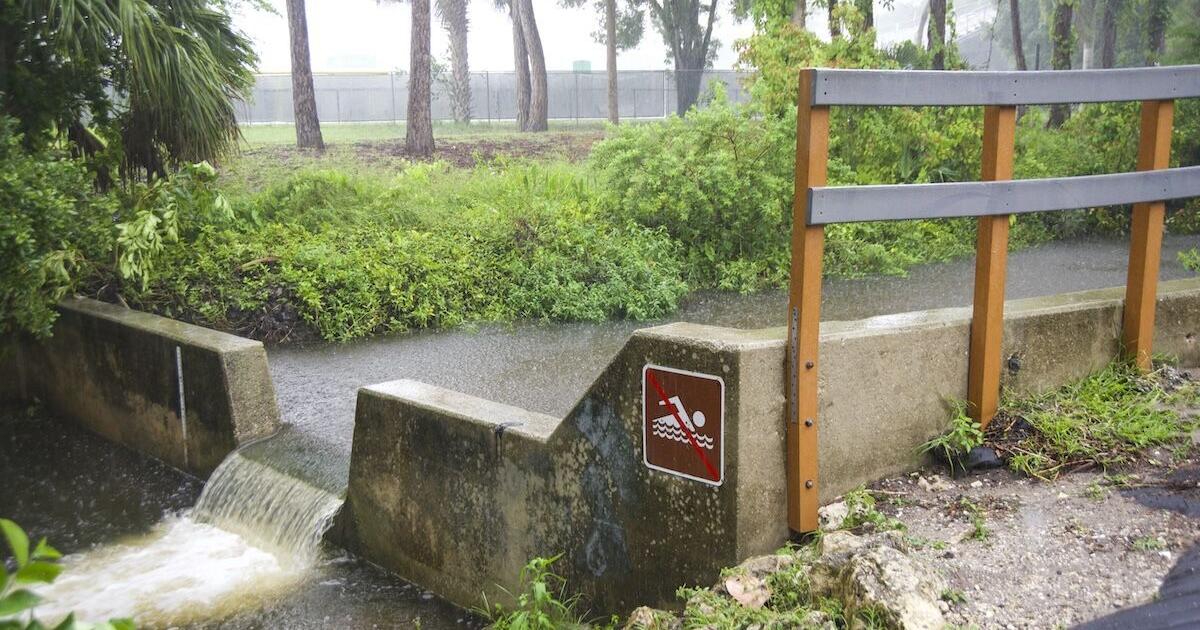
After nonprofit Calusa Waterkeeper found potentially dangerous levels of human fecal bacteria in Manuel’s Branch, an urban canal and creek in Fort Myers, the city’s Environmental Advisory Board heard an update on efforts to monitor and address the problem.
At the board’s Jan. 6 meeting, city staff said bacteria levels remain elevated but stable in Manuel’s Branch. The city conducts monthly monitoring and has worked with community stakeholders on trash cleanup and other mitigation efforts, said Justin Mahon, Fort Myers’ environmental compliance manager. More intensive actions, such as dredging the canal or expanded testing to pinpoint pollution sources, would require additional funding.
“The city is doing what we feel we can within the constraints we have,” Mahon said, noting staff are pursuing competitive state grants for water-quality improvements.


Members of the Fort Myers Environmental Advisory Board discuss water-quality monitoring and mitigation efforts during a Jan. 6 meeting at City Hall.
Fort Myers government
The Environmental Advisory Board also approved a motion recommending that city staff provide regular updates to City Council on pollution monitoring and mitigation efforts in the canal system.
Elevated fecal indicator bacteria is a longstanding issue in Fort Myers and in urban waterways across Florida. Manuel’s Branch and Billy’s Creek, another urban tributary, have been identified as hotspots for decades, according to the Waterkeeper’s report. Exposure to fecal pollution can increase the risk of eye, ear, throat, skin and gastrointestinal illnesses

Stormwater runoff, legacy pollution and other factors contribute to elevated fecal bacteria levels in Manuel’s Branch, city staff said.
Evan Williams
Calusa Waterkeeper’s citizen scientists collected nine groundwater and surface-water samples in Manuel’s Branch during 2024 and 2025, confirming human microbial contamination. The samples tested positive for HF183, a human DNA marker, and sucralose, an artificial sweetener used as an indicator of human wastewater.
Neither the city nor the Waterkeeper has identified a single source of contamination. Officials said it likely results from multiple factors, including trash, stormwater runoff, legacy pollutants in creek-bed sediment, wildlife and other sources.
Manuel’s Branch is a 2.5-mile stream that runs past Lee Memorial Hospital, Fort Myers High School and Manuel’s Branch Neighborhood Park before discharging into the Caloosahatchee River. Despite its scenic appearance, elevated pollution levels pose potential public health risks.
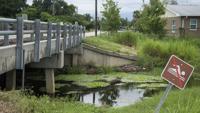
Billy’s Creek, another Fort Myers urban waterway, has long faced water-quality concerns similar to those found in Manuel’s Branch, according to Calusa Waterkeeper.
Evan Williams
In 2020, a sewage spill of more than 180,000 gallons into Manuel’s Branch prompted increased monitoring. Fort Myers adopted a pollution-reduction plan based on Florida Department of Environmental Protection standards, but the Waterkeeper’s report suggests those measures are not improving conditions and may be insufficient.
City staff and board members discussed adding warning signage at Manuel’s Branch Neighborhood Park, expanding participation in the city’s Adopt-a-Canal program and other steps recommended by the Waterkeeper. Those include targeted vegetation removal to aid cleanup, plugging unused pipes, testing lift stations for leaks, modifying embankments to reduce runoff and increasing the frequency of water-quality testing.