
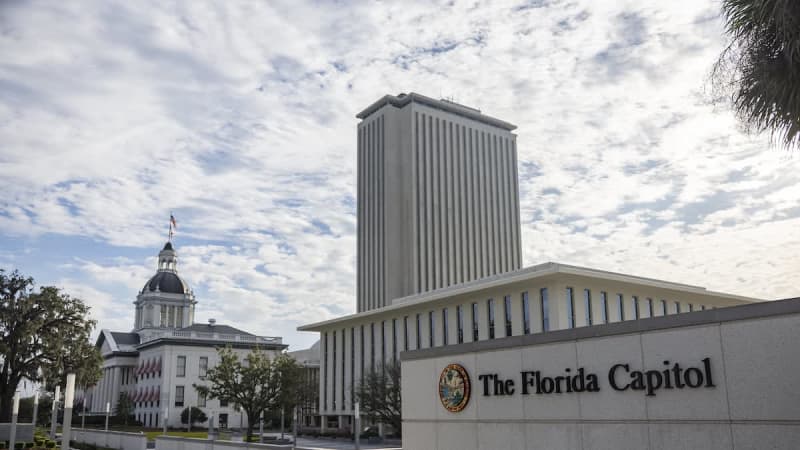
With Floridians facing soaring home insurance premiums, rent hikes and rising property tax bills, state lawmakers heading to Tallahassee for this year’s legislative session agree on one thing: Affordability will dominate the agenda.
How — and whether — the Republican-controlled Legislature can meaningfully lower costs for Floridians is another matter.
Leaders in the House are pushing sweepingchanges to property taxes, saying lawmakers should give voters the option this November to cut bills for homeowners. Senate leaders are signaling caution, warning that dramatic tax cuts could destabilize local governments, which rely heavily on property taxes to fund local services.
Democrats, who have little power in the Florida Capitol, are framing affordability as a crisis driven by insurance markets, housing shortages and stagnant wages, and have rolled out a slate of bills aimed at lowering costs and increasing oversight.
With the session set to begin Tuesday, the question is not whether lawmakers will talk about affordability — but whether they can agree on solutions that survive inter-chamber negotiations, gubernatorial scrutiny and, potentially, voter approval.
“Costs are skyrocketing, and it’s getting harder to make ends meet,” said House Minority Leader Fentrice Driskell, a Tampa Democrat. “Floridians need help now.”
The stakes are high — and patience is thin.
A September report by the United Way found that nearly half of Floridians are living paycheck to paycheck. Meanwhile, utility bills are going up for many after a state commission approved a settlement that paves the way for billions of dollars’ worth of rate hikes for customers of Florida Power & Light over the next four years.
The cost of housing is also increasing: The rental cost of a one-bedroom apartment in Hillsborough and Pinellas counties grew by roughly 70% between 2020 and 2025, estimates from the Department of Housing and Urban Development show. Nearly three in 10 Tampa Bay renters are spending 30% or more of their income on rent, according to 2023 census data.
Fees are rising as well. In 2024, condo fees in Tampa rose more than 17%, according to data from Redfin. Many condo owners are also being hit with special assessments, as kicking maintenance projects down the road has become more difficult under new state safety law passed in the wake of the 2021 collapse of the Champlain Towers South in Surfside.
State Sen. Ileana Garcia, R-Miami, said the strain is touching nearly every aspect of daily life. “It’s everything from housing to every basic need to out-of-pocket health insurance costs,” she said.
This fall, after the United Way published its report, the head of the Florida Chamber of Commerce warned that many people in the workforce, particularly parents aged 20 to 45, could leave — “and they’ll take their kids with them” — unless something is done to “make living in Florida more affordable.”
Seniors, too, are vulnerable. Many older Miami-Dade residents are “barely getting by,” Garcia said, as fixed incomes collide with escalating expenses. Federal and local data show more people are experiencing homelessness, with the elderly driving up the numbers.
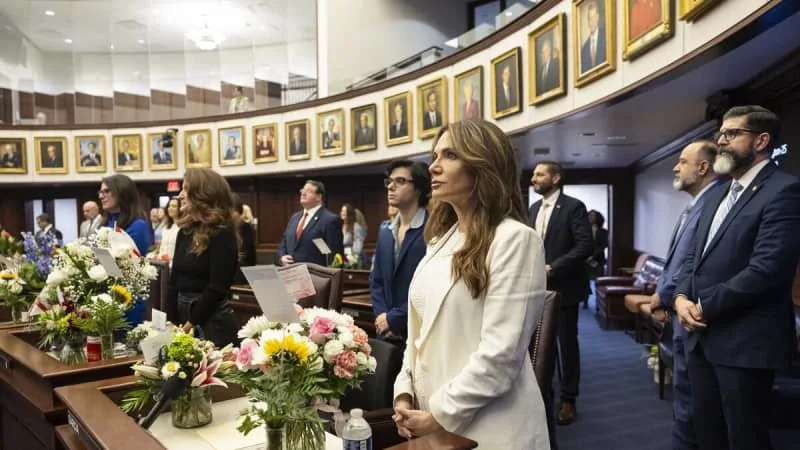
In an interview with the Times/Herald, House Speaker Daniel Perez, R-Miami, said property tax relief will be a centerpiece of the chamber’s agenda to help Floridians keep more money in their pockets.
The House is advancing multiple proposals that would require voter approval. Among them: eliminating non-school property taxes on homesteaded homes, expanding tax breaks for seniors, increasing the portability of “Save Our Homes” benefits when residents move and tying tax relief to carrying comprehensive homeowners insurance.
But the push is unfolding amid an increasingly icy relationship with Gov. Ron DeSantis, who has publicly criticized the House’s strategy of placing multiple tax measures on the ballot, calling it counterproductive, “a political game” and “not a serious attempt to get it done for the people.” The governor, who says he is working with lawmakers on presenting his own property tax cut proposal, on Wednesday floated an 11th-hour special session to address the issue.
Supporters say the changes would provide immediate relief to homeowners squeezed by insurance premiums and mortgage increases. But the strategy has drawn skepticism not only from local government leaders worried about budget impacts, but also from within the Republican Party.
Considering the effect they’d have on local governments, which rely heavily on property-tax income to fund local services, “it’s not something I would consider as a legitimate affordability strategy,” said Ned Murray, an affordable housing expert and associate director of Florida International University’s Metropolitan Center.
Annie Lord, the executive director of local affordable housing advocacy group Miami Homes For All, agrees. “We’re not seeing property taxes as the primary culprit” for rising housing costs, said Lord. Reducing that revenue stream, she added, could actually hinder local governments’ efforts to invest in affordable housing.
Stubbornly high property insurance prices, which also drive up prices for Florida’s renters, are a more pressing concern, both Lord and Murray said. Nearly a third of Florida’s housing units are occupied by renters, according to the U.S. Census Bureau.
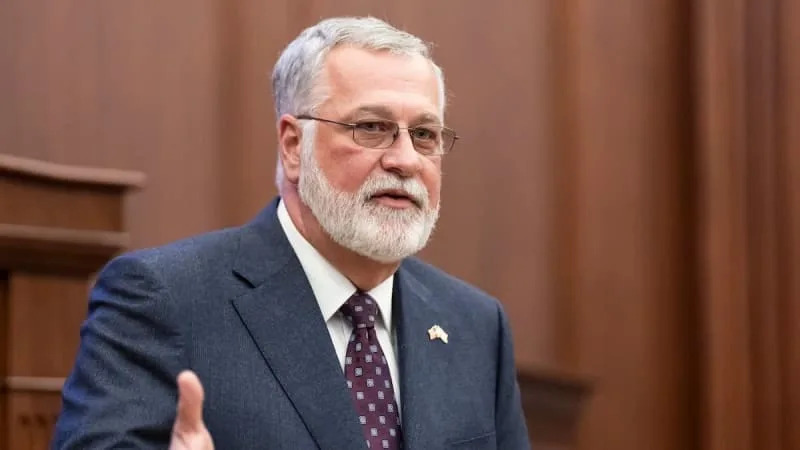
Senate President Ben Albritton, R-Wauchula, has warned that property taxes fund essential local services — particularly in rural communities — and that deep cuts could carry unintended consequences.
In a statement, he said lawmakers should be candid about the limits of state government when it comes to rising costs. The Senate president pointed to federal tax policy as a major factor affecting household budgets, arguing that extending the Trump-era tax cuts provided the most direct relief to Florida families.
“We have to be honest with constituents. The ability of the Florida Legislature to influence the price of goods and services within a state economy that is largely driven by national and international economic trends is pretty limited,” he said.
Albritton noted that many essentials — including groceries, children’s items and hurricane preparedness supplies — are already tax-free, and said the Legislature plans to pass a balanced budget that pays down debt, cuts taxes and saves for the future.
If property taxes are the House GOP’s flagship affordability issue, property insurance has become the Democrats’ rallying cry.
Democratic lawmakers have rolled out an “affordability agenda” anchored by proposals to cap insurance rate increases, increase transparency in insurer finances, strengthen consumer protections and provide direct assistance to homeowners facing premium spikes. They argue that prior Republican-backed reforms — which curtailed litigation and restructured the market — have failed to deliver lower premiums.
“Affordability is the number one issue facing Floridians,” Senate Democratic Leader Lori Berman of Boca Raton said last month. “Property insurance costs are crushing homeowners and renters alike.”
But Republicans, including DeSantis,say the new reforms are working. State regulators point to companies filing smaller rate hikes or, in some cases, rate reductions.
It hasn’t been proven whether that’s a product of fewer homes damaged by windstorms or the result of prior legislation, but Republicans have said they aren’t interested in changing the system.
“I think we’ve actually done a pretty good job here in recent years, and we’re starting to see that come to fruition,” Perez said.
Lord disagrees. “(The reforms) don’t appear to have done anything to lower” property insurance prices, she said.
Among the Democratic proposals are bills to cap annual rate increases, permanently eliminate sales taxes on impact-resistant home improvements, require mediation in disputed insurance claims, expand whistleblower protections and create a $500 million trust fund to help homeowners offset premium spikes.
Other bills would require insurers to provide more detailed justification for rate hikes, limit what financial information can be shielded as a “trade secret,” and scrutinize payments to affiliated companies — an issue critics say has allowed insurers to move profits off the books while seeking higher rates.
All are changes Murray, the FIU Metropolitan Center’s associate director, would like to see. “There’s got to be more done relative to oversight, transparency at the state level.”
But making homes more resilient to disaster will play an important role in stabilizing insurance prices, said Alexander Miles, associate director of state and local policy for the Southeast at Enterprise Community Partners, a nonprofit that works to increase housing supply and quality.
Sen. Ana Maria Rodriguez, R-Miami-Dade, has introduced legislation that would offer tax credits to encourage resilient building.
One of the subtle drivers of elevated costs that could get a look this year from lawmakers: artificial intelligence.
Insurance Commissioner Mike Yaworsky has indicated that he wants to better regulate insurance companies’ use of artificial intelligence. Two Republican lawmakers, Rep. Hillary Cassel of Dania Beach and Sen. Jennifer Bradley of Fleming Island, have introduced bills that would ensure that humans make decisions about denying claims.
Consumer Reports, meanwhile, reported last month that grocery delivery app Instacart was running AI-enabled experiments that priced identical products differently from one customer to the next by as much as 23%. (In response, Instacart stopped the experiment.)
Target’s app has been found to charge higher prices for products when the user is near a store. Hotel booking sites have been found charging customers from wealthier areas higher rates than those in poorer ones.
Lawmakers in other states introduced 54 bills across 24 states targeting algorithmic pricing in the first half of last year, Consumer Reports found. New York passed legislation last year banning landlords from using price-fixing software to set rental rates.
Prohibiting companies from using AI or computer algorithms to charge you more than someone else for identical products or services is not among the proposals included in newly filed legislation to regulate artificial intelligence, including creating an AI “bill of rights” for Floridians.
Those rights, according to the bill filed by Ormond Beach Republican Sen. Tom Leek, include knowing whether you’re communicating with AI, whether an AI company collects personal or biometric information and having the ability to sue someone who uses your likeness in AI-produced commercial content.
But Rep. Christine Hunschofsky, D-Parkland, who has introduced two bills limiting artificial intelligence in counseling and for children, said she thinks the use of AI in pricing should be scrutinized.
“I think we’re going to have a lot of great discussions regarding AI,” she said.
Beyond taxes and insurance, lawmakers are also grappling with housing costs and supply shortages that have driven up rents and home prices.
A bipartisan bill filed in the Senate would require many local governments to allow guest houses — called “accessory dwelling units” in government parlance — in residential neighborhoods, a move supporters say could expand rental supply and help homeowners offset costs.
The Legislature unsuccessfully tried to pass similar measures last session. Over a decade, those bills would have created between 32,000 and 58,000 accessory dwelling units, estimated the Florida Housing Coalition, an affordable housing advocacy group.
Miles, the associate director of state and local policy for the Southeast at Enterprise Community Partners, said greenlighting guest homes is “an immediate opportunity, especially in places like Miami, given the lack of land.”
Democrats have also refiled the “HOME Act,” which would eliminate documentary stamp taxes for certain first-time homebuyers, reducing upfront closing costs. Another proposal would limit base rent increases during a lease term for some publicly subsidized affordable housing units.
These efforts build on the Legislature’s 2023 Live Local Act, which offered incentives for affordable housing development but has drawn criticisms of uneven implementation and limited impact.
House Republicans are also framing health care costs as part of the affordability crisis.
Perez has promoted a sweeping health care package that would roll back regulations, expand the workforce and loosen certificate-of-need requirements.
Supporters argue increased competition and supply will lower costs for patients. That’s important in a state where last year more than 1 million people enrolled in the Obamacare marketplace, tops in the country. That number is likely to drop now that Congress has allowed expanded, pandemic-era subsidies to expire.
Democrats and consumer advocates counter that deregulation could benefit providers without guaranteeing savings for families. They warn that rural hospitals could be particularly vulnerable.
Garcia, the Miami senator, said affordability has become a unifying issue across political lines, adding that the problem is now impossible to ignore.
“All of our constituents — Democrats, Republicans, and those that want nothing to do with us — are not getting by,” she said. “I’m going to tell you, 2026 is going to be all about affordability, all about the bread and butter pocketbook issues.”
Tampa Bay Times reporter Rebecca Liebson contributed to this report.
This story was produced with financial support from supporters, including The Green Family Foundation Trust and Ken O’Keefe, in partnership with Journalism Funding Partners. The Miami Herald maintains full editorial control of this work.