
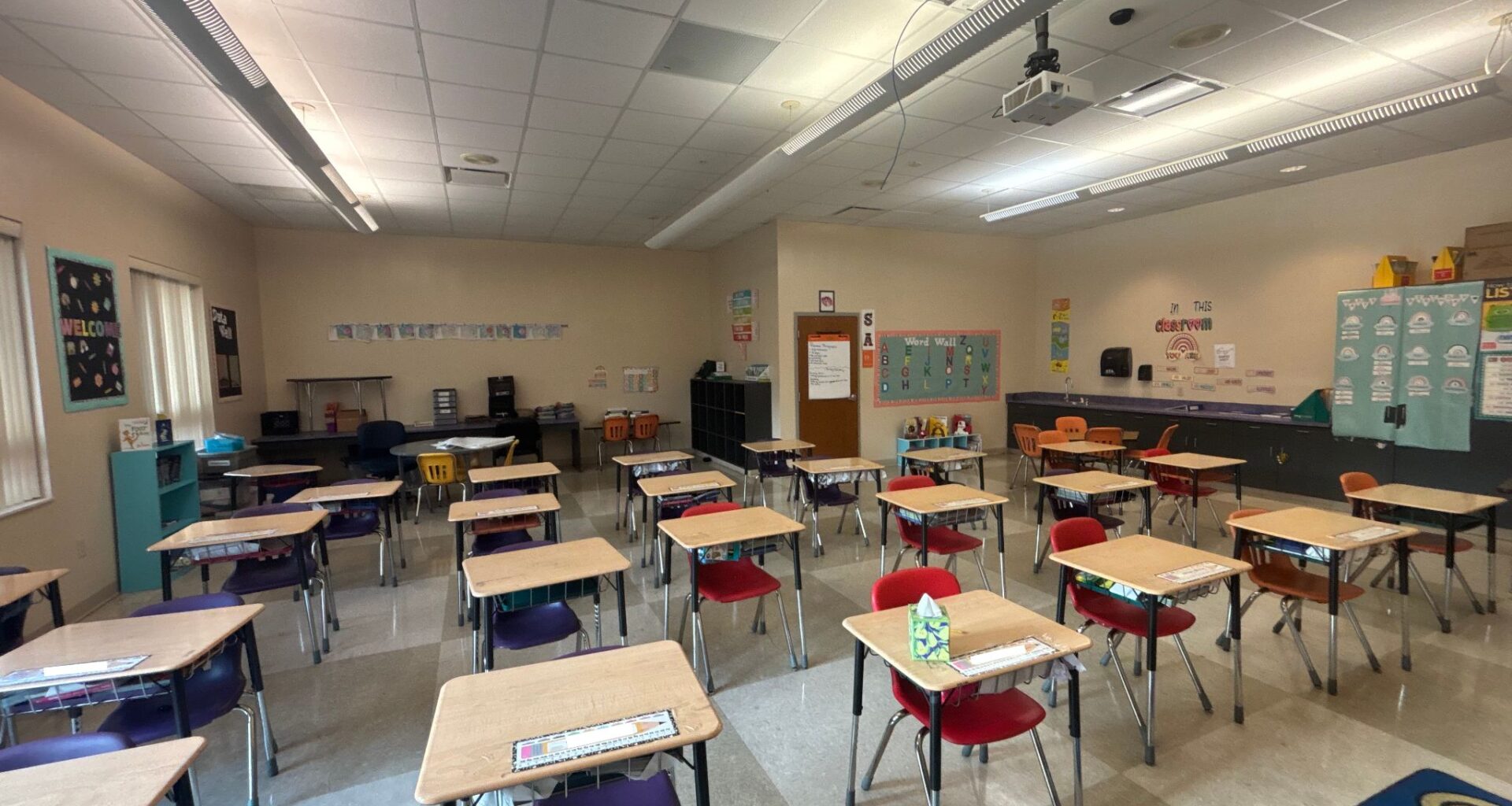
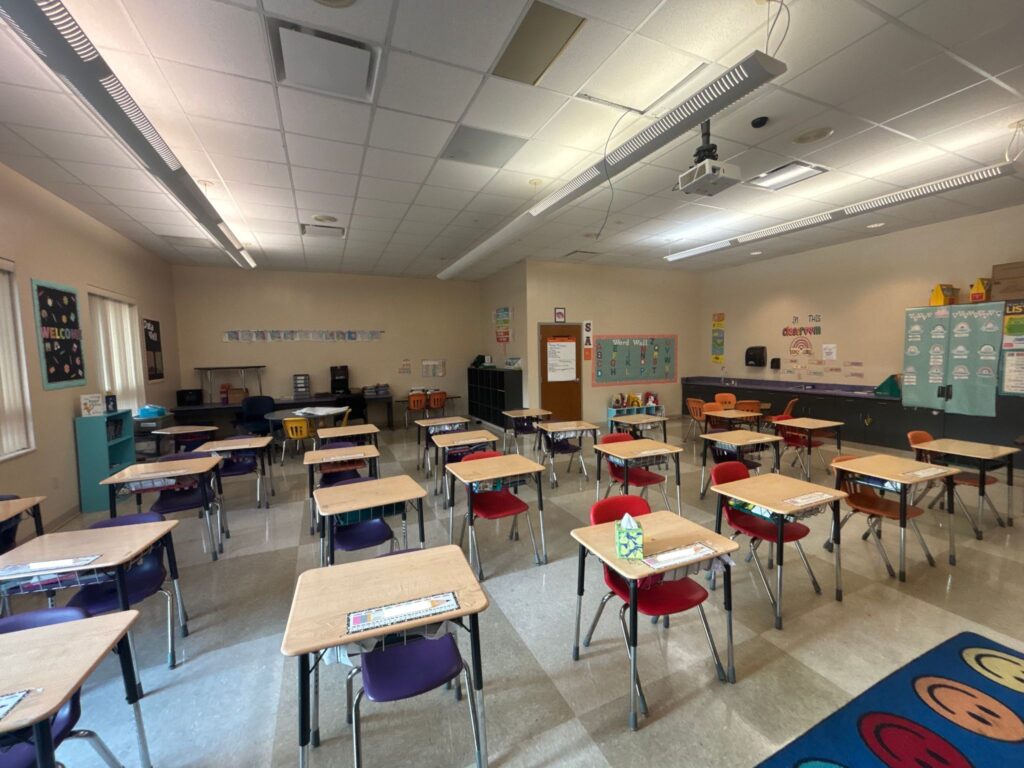
Desks in a FAMU DRS classroom. (Venecia Easter/FAMUAN)
Across K-12 schools in Tallahassee and throughout the state of Florida, many new teachers enter the classroom eager to teach but find themselves facing obstacles with shortages of school supplies.
A survey conducted by AdoptAClassroom.org found that in the 2024-2025 academic school year, $905 is the average amount teachers spent on school supplies. Many first-year teachers in the district are forced to spend their own money to buy basic supplies for students, on top of adjusting to the classroom.
Many experienced educators step in to help the newer teachers, often donating extra supplies or sharing resources they have collected over the years. Even with these efforts, teachers say there are rarely enough to sustain an entire classroom for the school year. New teachers often find themselves scrambling to provide the supplies or stretching limited supplies as far as possible, while still trying to provide their students with the materials they need to learn and succeed.
With limited income, many teachers say that paying out of pocket for supplies adds another
financial burden to their personal lives.
“I watched my mom constantly trying to scrape together money for classroom resources, and it would upset me,” said Lauren Wright, a previous language arts teacher from Raa Middle School. “I’m like we need this at home, and it takes away from your own home.”
Michelle Gayle, deputy superintendent of Leon County Schools,shares that the district is working to maintain open communication with teachers about the need for additional funds for classroom supplies. The school board continues to advocate for teachers to ensure they have materials for the classroom.
“We want teachers to be able to have what they need,” Gayle said. “We want to, as building level administrators and or district administrators, be able to listen to teachers about what they need.”
First-year teachers receive a stipend to help the cost of classroom supplies, but many argue the amount falls short. In some cases, the funding is issued as a reimbursement, leaving teachers to cover the expenses until later in the school year.
“I knew that it wasn’t going to cover the money that I had to put into my classroom,” said Shaelyn Jenkins, second-grade teacher at Florida A&M University Developmental Research School. “I was upset finding out that we weren’t going to get the money until the middle of the year.”