
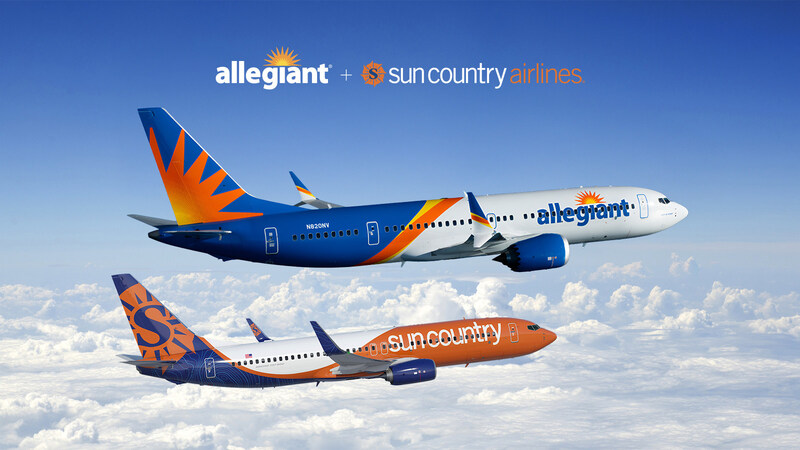
 Allegiant and Sun Country Planes
The landscape of ultra-low-cost air travel appears poised for a seismic shift, with ripples set to be felt intensely along the terminals of Fort Lauderdale-Hollywood International Airport (FLL) and Palm Beach International (PBI).
News of a proposed merger between Las Vegas-based Allegiant Air and Minneapolis-based Sun Country Airlines has sent shockwaves through the aviation industry. While aviation mergers are often analyzed from national headquarters, the real-world implications of this potential combination would play out dramatically on the tarmac of South Florida, where Allegiant has aggressively cultivated one of its most vital operational bases.
For residents of Boca Raton and the surrounding Palm Beach and Broward communities, FLL and PBI serve as a crucial gateway for both business and leisure. The proposed union of these two discount carriers is a move that could redefine flight options, gate dominance, and passenger volumes at FLL, an airport already operating near capacity. It also could fortify a stronger position at PBI.
Allegiant’s South Florida Fortress
To understand the impact of this merger, one must first understand Allegiant’s existing footprint at FLL. Over the past decade, Allegiant has transformed its Fort Lauderdale operation from a simple outstation into a cornerstone of its network. It also serves Palm Beach International, but PBI serves as a spoke, with only four year-round nonstop destinations.
Unlike traditional carriers that focus on connecting hubs, Allegiant’s business model relies on connecting smaller, underserved northern cities directly to premier leisure destinations. FLL is one of jewels in that crown for Allegiant alongside Las Vegas and the Orlando area (Sanford Airport).
Operating heavily out of Terminal 1, Allegiant has invested significantly in the airport. In recent years, they have expanded their gate usage, established a crucial crew base where pilots and flight attendants live locally, and utilized FLL as a maintenance hub. For thousands of weekly tourists flying in from places like Lexington, Grand Rapids, Asheville, Knoxville, or Allentown, the Allegiant tail fin is their first glimpse of a South Florida vacation. In March, Allegiant will serve a whopping 37 destinations nonstop from FLL.
The Sun Country Synergy
Entering the picture is Sun Country Airlines. While smaller than Allegiant, Sun Country occupies a unique niche. Known for its strong presence in Minneapolis/St. Paul and its seasonal “snowbird” routes, Sun Country also operates a robust charter division and flies cargo for Amazon.
The logic of the merger rests on complementary networks. Allegiant dominates the secondary city-to-sun destination market, while Sun Country has strongholds in the Upper Midwest and major metropolitan areas that Allegiant sometimes avoids.
Currently, Sun Country has a modest presence at FLL compared to the Allegiant juggernaut and serves PBI from just Minneapolis/St Paul. However, a combined entity would instantly alter that dynamic.
The New FLL Landscape
If finalized, the merger would likely see the combined airline consolidating operations at FLL, potentially creating a “super-hub” for discount leisure travel in Terminal 1.
The immediate benefit for the new entity would be scale. By combining fleets and crew resources, the merged airline could optimize scheduling out of Fort Lauderdale, potentially offering higher frequencies to popular destinations and utilizing Sun Country’s larger Boeing 737s on routes currently served by Allegiant’s A320 family where demand is high.
Furthermore, the merger could open up new network possibilities. Boca Raton-area travelers could potentially see new “one-stop” options, linking Allegiant’s diverse southeastern network with Sun Country’s northern hubs through seamless connections at FLL—something neither airline focuses on individually today.
What It Means for the Boca Traveler
For the consumer in Boca Raton, the proposed merger presents a mixed bag of potential outcomes.
The optimistic view is that a stronger, combined discount carrier will have the fortitude to expand route maps and offer more reliable service. A combined fleet means more backup aircraft during mechanical issues, potentially easing the delays that sometimes plague budget carriers.
The wary view, however, concerns competition. In the tight ecosystem of ultra-low-cost carriers—which includes Spirit and Frontier, both major players at FLL—consolidation can sometimes lead to reduced fare wars. This was a premise behind the DOJ casting a negative eye towards potential mergers during the Biden years. But this DOJ may have a different view of those sorts of things.
As regulatory bodies begin their scrutiny of the deal, locals should watch closely. A merged Allegiant-Sun Country would become an even more formidable tenant at FLL, potentially accelerating discussions about future terminal expansions and gate utilization. And perhaps the combined entity would have interest in growing PBI beyond a mere spoke.
Related